How to Safely and Effectively Implement Veterinary Laser Therapy
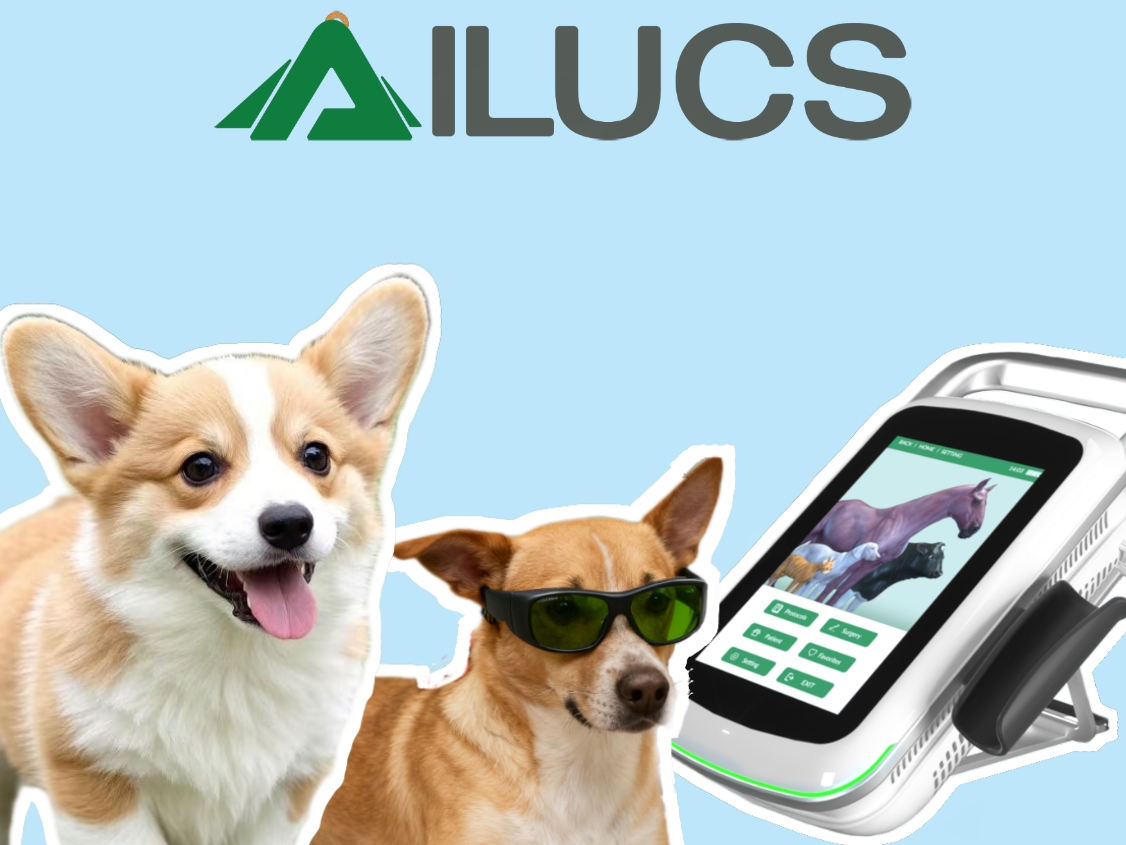
As laser therapy continues to gain wider adoption in veterinary clinical practice, its value in pain management, inflammation control, and rehabilitation support is increasingly recognized. However, the effectiveness of laser therapy does not depend on “how high the power is,” but rather on whether it is applied correctly, safely, and with full consideration of individual animal differences.
Establishing a scientific and standardized treatment protocol is essential to achieving an optimal balance between safety and clinical outcomes.
In this article, Ailucs laser invites you to systematically explore how veterinary laser therapy can be safely and effectively implemented in real-world clinical practice.
1. Why “Correct Application” Matters More Than “High Power”
The core principle of laser therapy lies in delivering an appropriate dose of light energy precisely to the target tissue in order to trigger the desired biological response. Excessive or improperly applied energy does not enhance therapeutic outcomes and may instead increase clinical risks.
In daily practice:
Excessively high power may cause excessive energy accumulation in superficial tissues
Improper parameter settings may result in localized thermal stimulation or animal discomfort
Ignoring individual differences reduces treatment predictability and control
Therefore, scientific parameter selection, standardized operation, and continuous observation of animal responses are far more important than simply pursuing higher power. These principles form the foundation of safe and effective veterinary laser therapy.
2. Appropriate Timing for Veterinary Laser Therapy
There is no universal timing that applies to all cases of veterinary laser therapy. Treatment scheduling should be determined based on the animal species, disease stage, and overall health condition. Common clinical scenarios include:
1) Early Stage of Acute Injury
In the early phase following trauma or acute injury, laser therapy may be used as an adjunctive approach to:
Relieve pain and discomfort
Control inflammatory responses
Support the tissue repair process
2) Long-Term Management of Chronic Conditions
For conditions such as degenerative joint disease or chronic soft tissue disorders, laser therapy is often incorporated into a comprehensive management plan:
Delivered in scheduled treatment cycles
Combined with other rehabilitation or therapeutic modalities
Focused on long-term, stable condition management
3) Postoperative Rehabilitation
During postoperative recovery, laser therapy may support tissue healing and reduce local reactions. However, it is important to:
Avoid direct application on incisions that have not fully healed
Strictly follow veterinary evaluation and operational guidelines
Note: Treatment timing and frequency should always be determined and adjusted by a qualified veterinarian based on the individual animal’s condition.
3. Key Pre-Treatment Assessment Considerations
Comprehensive evaluation prior to veterinary laser therapy is the first step in ensuring safety and effectiveness. This assessment typically includes:
1) Individual Animal Assessment
Species, breed, body size, and weight
Age and overall health status
Presence of skin lesions, infections, or acute inflammation
2) Treatment Area Assessment
Degree of skin pigmentation
Hair length and density
Depth and extent of the target tissue
3) Medical History and Treatment Background
Recent physical therapy or rehabilitation interventions
Postoperative recovery status
Current medication use
Medication-Related Considerations
Tissues with high water content absorb laser energy more strongly. Therefore, areas that have received local injections of NSAIDs or corticosteroids within the past week are generally not recommended for laser therapy.
For other injectable medications, it is advisable to wait at least 24 hours before applying laser therapy, or to perform laser therapy prior to medication administration.
Laser therapy can enhance microcirculation, improve oxygen transport, and promote ATP production, providing energy to support tissue recovery. It may also facilitate more efficient drug absorption in animals. For this reason, performing laser therapy before medication administration may help enhance overall therapeutic outcomes.
Through thorough assessment and appropriate timing, veterinarians can develop safer, more individualized treatment plans that improve effectiveness while minimizing risk.
4. Key Operational Principles During Treatment
During veterinary laser therapy, the following principles should be followed:
Begin with lower parameters and adjust gradually based on animal response
Ensure good contact between the probe and the skin to maximize energy transfer(contact application should be avoided over inflamed skin or open wounds)
Avoid prolonged exposure to a single small area
Continuously observe animal behavior (e.g., avoidance, agitation)
Immediately adjust parameters or discontinue treatment if abnormal reactions occur
These practices help ensure even energy distribution and enhance treatment stability and safety.
5. Differentiated Approaches for Different Animals and Anatomical Areas
Differences Between Animal Species
Dogs and cats: Relatively thinner skin; greater attention should be paid to epidermal responses
Horses: Deeper tissue layers and larger treatment areas require careful planning of irradiation pathways
Differences Between Treatment Areas
Joints and tendons: Treatment should account for tissue depth and appropriate exposure time
Postoperative areas: Avoid direct application to incompletely healed tissues
Spinal or neural regions: Extra caution is required to prevent localized energy concentration
Individualized treatment strategies based on animal type and anatomical location are central to ensuring both safety and therapeutic effectiveness.
6. Recovery Process and Post-Treatment Care
Recovery following veterinary laser therapy is influenced by multiple factors, including disease type, treatment area, treatment depth, and individual variation.
Basic Care Recommendations
Keep the treated area clean and dry
Avoid strong external stimulation
Follow veterinary recommendations for follow-up evaluations
Closely monitor changes in the animal’s condition during recovery
Appropriate post-treatment care supports the recovery process, while the specific recovery timeline should be determined by a veterinarian based on individual circumstances.
7. Why Choose the LYRA Laser to Support Clinical Practice?
Beyond standardized protocols and scientific assessment, the professionalism and controllability of laser therapy equipment play a crucial role in achieving safe and consistent clinical outcomes.
The LYRA veterinary laser therapy device is designed around real clinical needs, enabling veterinarians to achieve precise parameter control across different animal species, conditions, and treatment stages.
Core Advantages of LYRA Include:
Multifunctional laser therapy with multiple wavelength combinations, supporting both superficial and deep tissue applications
Adjustable power and multiple operating modes, allowing individualized parameter settings based on animal size, treatment area, and disease stage
Stable and controllable energy output, improving treatment efficiency and reproducibility within standardized clinical workflows
LYRA is not designed to pursue higher power for its own sake, but rather to help clinicians apply laser therapy technology more safely and precisely, integrating it effectively into comprehensive treatment plans.
Conclusion
Safe and effective veterinary laser therapy is built upon scientific assessment, standardized operation, and professional laser therapy equipment. Rather than focusing on higher power, greater emphasis should be placed on correct application and individualized treatment strategies.
When used within established clinical guidelines and professional judgment, and supported by reliable systems such as the LYRA laser therapy devices, laser therapy can become an important component of veterinary pain management, inflammation control, and rehabilitation support.