How to Prepare Your Pet for Laser Therapy
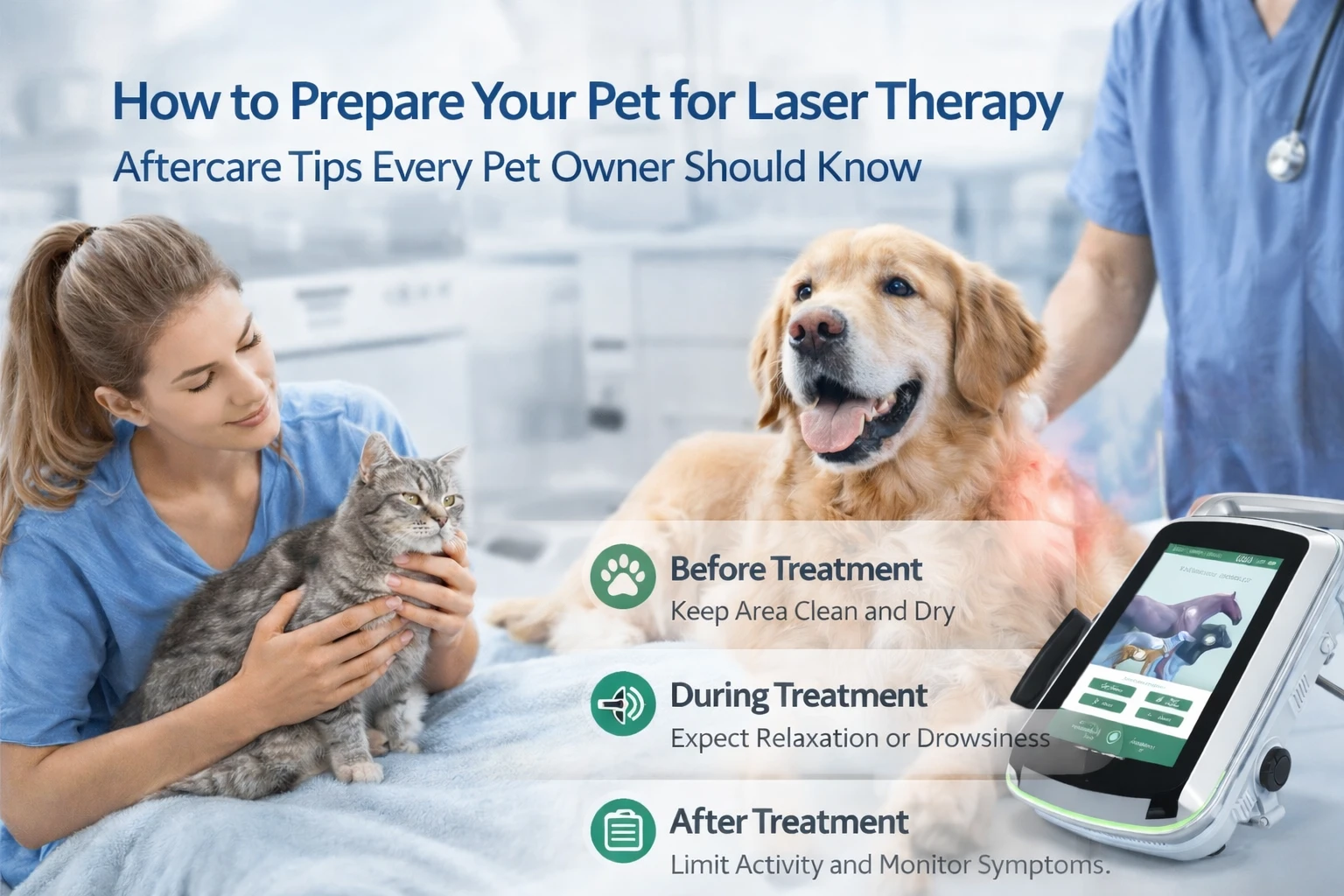
Aftercare Tips Every Pet Owner Should Know
Veterinary laser therapy is a safe, non-invasive treatment commonly used to manage pain, reduce inflammation, and support healing in pets. As more clinics offer laser therapy, many pet owners ask the same question: How should I prepare my pet for laser treatment, and what care is needed afterward? This guide explains what pet owners should expect before and after laser therapy, helping ensure the best possible outcome.
Preparing Your Pet for Laser Therapy
In most cases, laser therapy requires minimal preparation, but a few simple steps can help the session go smoothly.
Pet owners are usually advised to:
Keep the treatment area clean and dry
Avoid applying creams or ointments unless instructed by the veterinarian
Ensure pets are calm and comfortable before the appointment
Laser therapy is painless and does not require sedation, so pets can typically eat, drink, and take prescribed medications as normal unless otherwise directed.
What Happens During a Veterinary Laser Therapy Session?
During treatment, a veterinarian or trained technician applies the laser handpiece to the affected area for a short period. Sessions are generally brief, often lasting a few minutes, depending on the condition being treated.
Most pets remain relaxed during treatment, and some may even appear drowsy due to the gentle warming sensation.
Post-Treatment Care and What to Expect
After laser therapy, pets can usually return to normal activities right away. However, pet owners should follow their veterinarian’s guidance, which may include:
Limiting intense activity for a short period
Monitoring the treated area for mild warmth or sensitivity
Attending follow-up sessions as recommended
In some cases, pets may experience temporary soreness as healing begins, which is generally mild and short-lived.
When Should Pet Owners Contact the Veterinarian?
While laser therapy is considered very safe, pet owners should contact their veterinarian if they notice:
Unusual swelling or discomfort
Changes in behavior or appetite
Symptoms that worsen instead of improving
Clear communication with the veterinary team helps ensure treatment remains effective and comfortable for the pet.
Supporting Long-Term Recovery
Laser therapy is often most effective when used as part of a comprehensive treatment plan, which may include medication, rehabilitation exercises, or lifestyle adjustments. By following professional guidance and attending scheduled sessions, pet owners play an important role in their pet’s recovery and long-term well-being.