
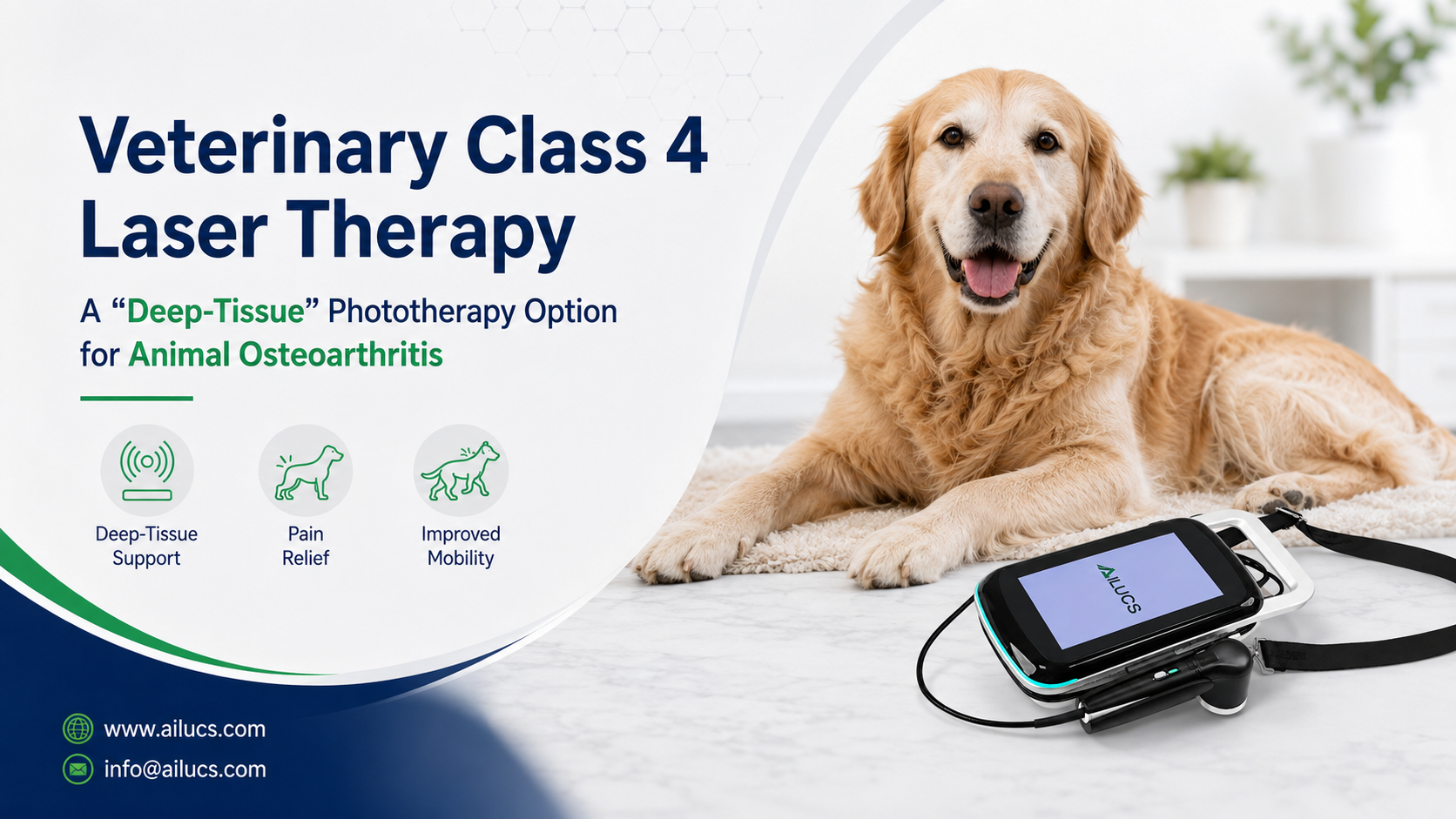
Veterinary Class 4 Laser Therapy: A “Deep-Tissue” Phototherapy Option for Animal Osteoarthritis
Osteoarthritis is a common degenerative disease affecting many middle-aged and senior animals, especially dogs and cats. Conventional treatments—such as non-steroidal anti-inflammatory drugs (NSAIDs), analgesics, and joint supplements—can be effective in the short term, but long-term use may place stress on the gastrointestinal tract, liver, and kidneys, and often fails to reverse chronic inflammation or functional decline.
In recent years, Class 4 Laser Therapy has gained increasing attention in veterinary rehabilitation as a high-power, non-invasive physical therapy modality, offering a new approach for the long-term management of animal osteoarthritis.
How Does Class 4 Laser Therapy Combat Osteoarthritis?
Four Core Mechanisms of Action
Class 4 laser therapy is not merely “pain relief.” Through photobiomodulation, it intervenes in multiple stages of the osteoarthritic disease process:
1. Deep Anti-Inflammatory and Analgesic Effects
When laser energy is absorbed by cellular mitochondria, it stimulates ATP production and the release of nitric oxide (NO), improving local blood circulation and accelerating the clearance of inflammatory metabolites. At the same time, it inhibits inflammatory mediators such as prostaglandins and tumor necrosis factor-α (TNF-α), reducing intra-articular inflammation at its source and providing more sustained pain relief.2. Cartilage Repair and Protective Potential
Research indicates that specific laser wavelengths can stimulate chondrocyte activity and promote proteoglycan synthesis. Proteoglycans are essential components of the cartilage matrix, responsible for maintaining elasticity and load-bearing capacity. This suggests that laser therapy may offer a degree of cartilage protection and help slow degenerative changes.3. Relief of Muscle Spasm and Disuse Atrophy
Chronic joint pain often leads to compensatory muscle tension and, over time, disuse atrophy. Through deep thermal effects and biostimulation, Class 4 laser therapy helps relax muscle spasms, improve microcirculation, and create favorable conditions for functional recovery.4. Neuromodulation
Laser therapy can reduce peripheral nerve sensitivity, decrease pain signal transmission, and may stimulate the release of endogenous analgesic substances such as endorphins, thereby improving overall comfort and mobility.
Clinical Application: How Effective Is It?
In veterinary clinical practice, Class 4 laser therapy has become an important component of comprehensive osteoarthritis management in dogs.
A double-blind, randomized controlled study published in the American Journal of Veterinary Research reported that:
Dogs receiving Class 4 laser therapy showed significant improvements in peak vertical force (PVF) and vertical impulse in the affected limb
These findings indicate reduced pain, improved gait, and increased willingness to bear weight
Owner-assessed pain and functional disability scores also decreased significantly
In clinical settings, platforms such as the Lyra Class 4 Laser Therapy Device, which support multi-wavelength output and stable high-power delivery, allow veterinarians to tailor treatment parameters according to joint depth, body size, and disease stage.
Treatment Protocols and Integrated Advantages
Typical treatment plans include:
Initial intensive phase: 2–3 sessions per week for 2–3 weeks
Maintenance phase: 1–2 sessions per month to control chronic inflammation and maintain therapeutic effects
Key advantages include:
Non-invasive and painless, with high patient acceptance
Minimal side effects
Can be combined with medications, nutritional supplements, weight management, and rehabilitation therapy
Particularly suitable for animals intolerant to NSAIDs or with hepatic or renal concerns
Outlook and Clinical Considerations
Class 4 laser therapy is not a “magic cure,” but it provides a high-technology, drug-free, evidence-based tool for long-term osteoarthritis management. Successful outcomes depend on:
Accurate diagnosis
Individualized treatment planning
Proper operation by trained veterinary professionals, including appropriate power, dosage, and treatment duration
As research continues to expand, high-power laser systems—such as the Lyra Class 4 Laser Therapy System—are increasingly being applied to neuropathic pain, postoperative rehabilitation, and soft-tissue repair, with the potential to significantly improve quality of life for animals suffering from chronic pain.
References
Gingerich, D. A., & Strobel, J. D. (2015). Use of a Class 4 laser for the treatment of chronic osteoarthritis in dogs. American Journal of Veterinary Research, 76(1), 81–88.
Pryor, B., & Mills, P. C. (2018). Efficacy of high-intensity laser therapy for treating osteoarthritic dogs. Veterinary Surgery, 47(2), 191–198.
Alves, A. N., Fernandes, K. P., Deana, A. M., Bussadori, S. K., & Mesquita-Ferrari, R. A. (2014). Effects of low-level laser therapy on skeletal muscle repair: A systematic review. American Journal of Physical Medicine & Rehabilitation, 93(12), 1073–1085.