
Why Are More Veterinarians Choosing Laser Therapy?
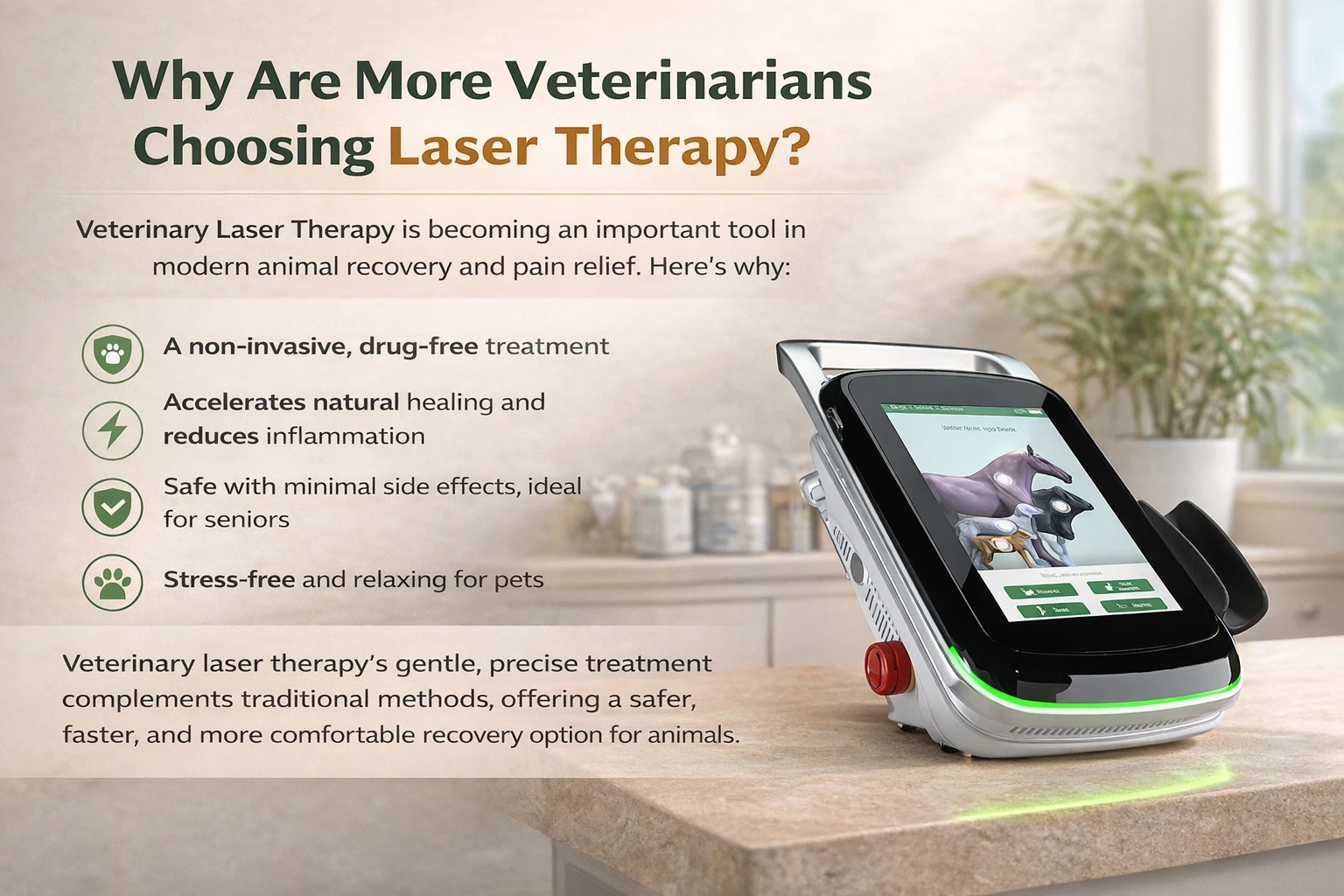
With the advancement of modern veterinary medicine, Veterinary Laser Therapy has become an increasingly important tool in veterinary medical. Compared with traditional veterinary treatment, it is gaining widespread attention from veterinarians and pet owners alike due to its safety, non-invasive nature, and high level of comfort.
What Is Veterinary Laser Therapy?
Veterinary laser therapy is a physical treatment that uses specific wavelengths of laser energy applied to animal tissues. The laser penetrates deep into the tissue, stimulating cellular metabolism and improving blood circulation. This process accelerates tissue repair while effectively reducing inflammation and relieving pain.
As a drug-free, non-invasive therapy with fast recovery, laser therapy is widely used for soft tissue injuries, osteoarthritis, post-operative recovery, and chronic pain management.
How Is It Different from Traditional Treatments?
Treatment Principle
Traditional treatments often rely on medication or surgery and primarily focus on symptom control. Laser therapy works through photobiomodulation, promoting the body’s natural healing process at the cellular level.
Safety
Long-term medication use may cause side effects, while laser therapy does not involve drug metabolism, making it a safer option—especially for senior animals or long-term condition management.
Treatment Experience
Traditional treatments may cause stress or discomfort for animals. In contrast, laser therapy is quiet and gentle, and most animals remain relaxed during treatment.
Treatment Goals
While traditional approaches aim to manage disease, laser therapy focuses on accelerating recovery, shortening healing time, and improving overall quality of life.
Can Laser Therapy Replace Traditional Treatments?
Laser therapy is not intended to completely replace traditional treatments. Instead, it serves as an effective and safe adjunct or complementary therapy. When combined with medication, rehabilitation, or other conventional approaches, it often leads to better clinical outcomes.
Conclusion
Veterinary laser therapy represents a shift toward a more gentle, precise, and animal-centered approach in modern veterinary care. It offers animals a more comfortable recovery experience while providing veterinarians with expanded treatment options.