
How Does Veterinary Laser Therapy Work? A Practical Guide to Photobiomodulation in Veterinary Medicine
Introduction
Veterinary laser therapy is no longer considered a niche rehabilitation technique. Today, it has become part of everyday clinical practice in many veterinary hospitals, supporting everything from post-operative recovery to chronic pain management and mobility rehabilitation.
As veterinary medicine increasingly embraces multimodal care, clinicians are looking for therapies that complement conventional treatment rather than replace it. Laser therapy fits naturally into this approach, working alongside medication, rehabilitation exercises, surgery, and weight management to support better patient outcomes.
For pet owners, treatment is non-invasive and generally well tolerated. For veterinary teams, it provides a practical way to encourage healing without adding significant stress to the patient.
So what actually happens when therapeutic laser light reaches damaged tissue, and why has this technology become such a valuable part of modern veterinary medicine?
Why Do Veterinarians Use Laser Therapy?
To understand its growing role in veterinary medicine, it helps to look beyond the technology itself and focus on its clinical purpose.
Veterinary laser therapy, also known as photobiomodulation therapy (PBMT), uses carefully selected wavelengths of light to stimulate normal cellular activity and support the body's natural healing response.
Rather than replacing medication or surgery, PBMT is most commonly used as a complementary therapy. It is frequently incorporated into rehabilitation programs, orthopedic recovery, chronic pain management, sports medicine, wound care, and post-operative treatment plans.
Its clinical value lies in helping veterinarians manage inflammation, improve patient comfort, and support tissue repair while remaining non-invasive and well tolerated by most animals.
How Does Veterinary Laser Therapy Work?
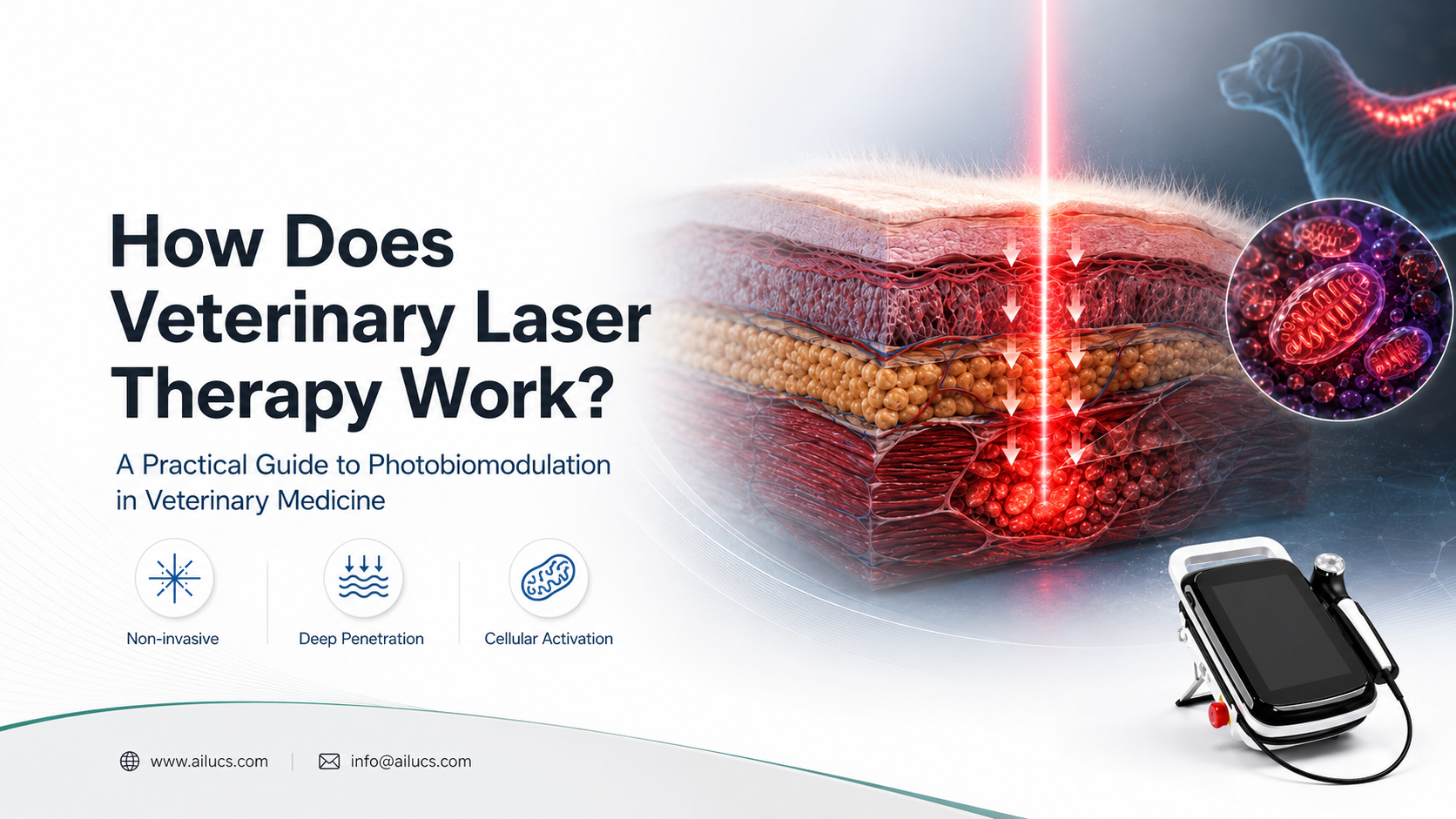
When laser therapy is applied, light energy passes through the skin and reaches the targeted tissue. Different wavelengths penetrate to different depths, allowing clinicians to treat superficial wounds, muscles, tendons, ligaments, or deeper joints according to each patient's needs.
Once absorbed by the mitochondria inside cells, the light supports ATP production, providing additional energy for normal cellular repair. This increased cellular activity may:
Improve local circulation
Reduce inflammation
Relieve discomfort
Enhance tissue repair
Support muscle recovery
Promote post-operative healing
Rather than acting like a traditional painkiller, laser therapy supports the body's own healing processes, making it an effective component of comprehensive veterinary care.
What Happens During Treatment?
Understanding what happens during a treatment session helps explain why laser therapy is easy to integrate into everyday clinical practice.
Before treatment begins, the veterinarian selects parameters based on tissue depth, treatment goals, and the patient's diagnosis. The laser handpiece is then applied over the treatment area for a controlled period, with most sessions lasting between five and twenty minutes.
Most patients tolerate laser therapy well without sedation. Because treatment is quick, non-invasive, and straightforward to incorporate into routine appointments, many clinics include PBMT within rehabilitation programs or post-operative follow-up visits. Protective eyewear is used whenever appropriate.
Common Clinical Applications
Laser therapy can be adapted to many different clinical situations, making it a versatile addition to veterinary care.
Arthritis and Degenerative Joint Disease – Frequently included in multimodal pain management to improve mobility and patient comfort.
Post-Surgical Recovery – Supports normal healing while helping manage inflammation during recovery.
Tendon and Ligament Injuries – Often incorporated into rehabilitation programs designed to restore function following tendon and ligament injuries.Read our guide to Laser Therapy for Tendon Injuries in Dogs.
Wound Healing – May support healthy tissue repair in appropriately selected cases.
Rehabilitation and Mobility Support – Commonly combined with therapeutic exercise and other rehabilitation techniques.
Why Is Laser Therapy Part of a Multimodal Treatment Plan?
These clinical applications also explain why laser therapy is rarely used on its own.
Instead, it is combined with medication, rehabilitation exercises, surgery, nutritional management, controlled exercise, or weight management according to the patient's condition. This multimodal approach allows clinicians to address both the underlying disease and patient comfort while supporting long-term functional recovery.
Why Multi-Wavelength Systems Are Becoming More Popular
Different tissues have different treatment requirements.
Modern veterinary laser systems combine multiple wavelengths so clinicians can treat both superficial and deeper anatomical structures using a single platform. This flexibility improves treatment efficiency while expanding the range of potential clinical applications.
Frequently Asked Questions
Why are multiple treatment sessions sometimes recommended?
Chronic conditions and complex injuries often require repeated treatments because tissue repair is a gradual biological process.
Can laser therapy replace medication?
Generally, no. Laser therapy and medication address different aspects of treatment and are often used together as part of a comprehensive care plan.
When is laser therapy combined with rehabilitation?
It is commonly integrated with physiotherapy, therapeutic exercise, and post-operative rehabilitation to support functional recovery.
Do all patients respond the same way?
No. Treatment response varies depending on the diagnosis, severity of the condition, overall health, and the patient's individualized treatment plan.
Conclusion
Veterinary laser therapy has become an established component of modern veterinary medicine because it complements, rather than replaces, conventional treatment.
When appropriately integrated into individualized treatment plans, it can help veterinarians manage pain, support healing, improve mobility, and enhance patient care across a wide range of clinical conditions. Understanding how laser therapy fits into a broader multimodal strategy allows both clinicians and pet owners to make more informed treatment decisions.