5 Common Conditions Treated with Veterinary Laser Therapy
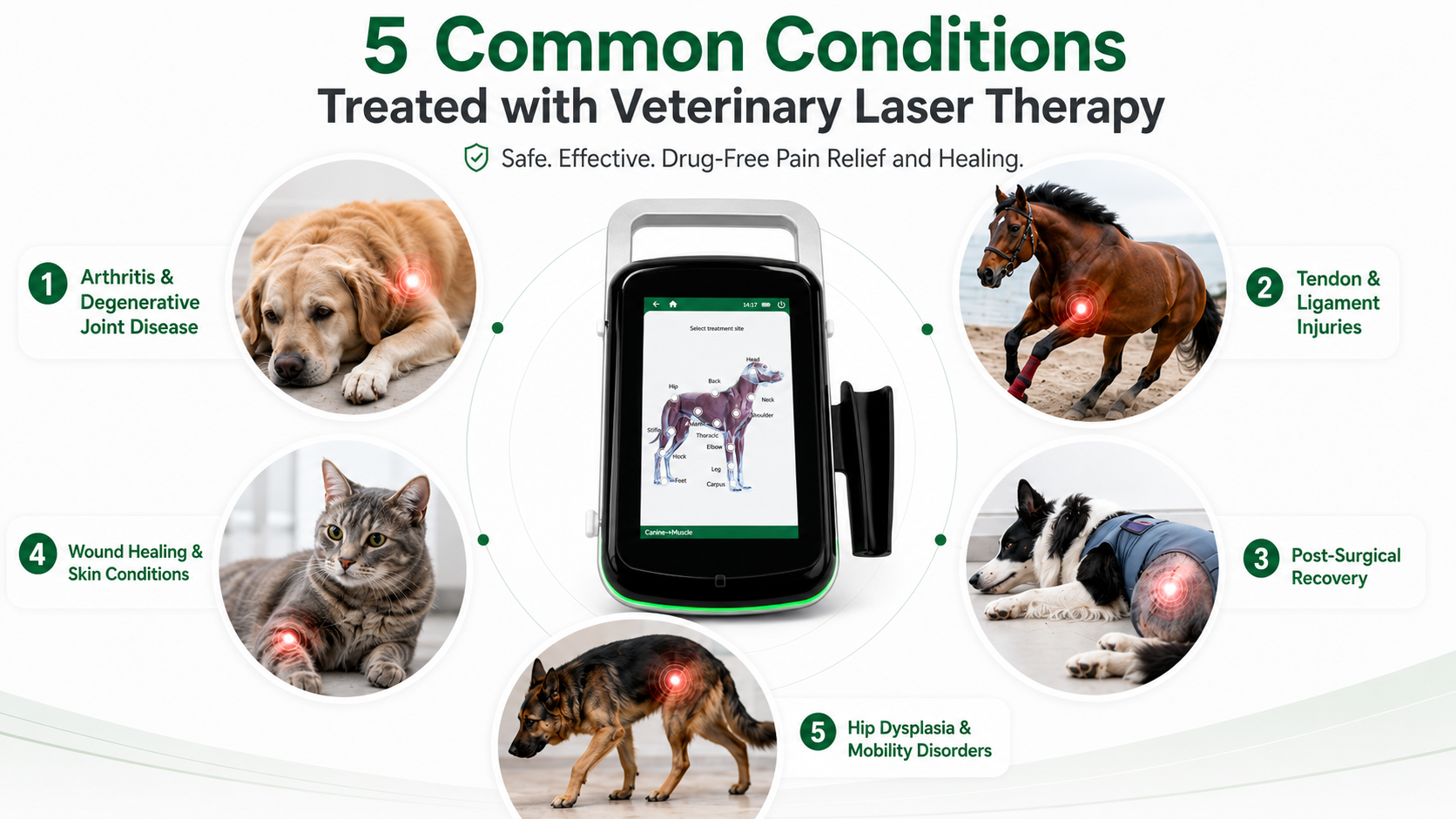
Veterinary laser therapy has become one of the most widely used non-invasive treatment options in modern veterinary medicine. From companion animal clinics to equine rehabilitation centers, veterinarians are increasingly incorporating laser therapy into their treatment protocols to help reduce pain, decrease inflammation, and accelerate healing.
As laser technology continues to evolve, it is now used to support the treatment of orthopedic conditions, soft tissue injuries, post-surgical recovery, and chronic pain management in a wide range of animal species.
In this article, we'll explore five of the most common conditions treated with veterinary laser therapy and explain why more clinics are adopting this technology.
What Conditions Can Veterinary Laser Therapy Treat?
Veterinary laser therapy is commonly used to treat:
Arthritis and degenerative joint disease
Hip dysplasia
Tendon and ligament injuries
Wound healing and skin conditions
Post-surgical recovery
By stimulating cellular activity and improving circulation, laser therapy helps the body heal naturally while providing a comfortable treatment experience for patients.
1. Laser Therapy for Dog Arthritis and Degenerative Joint Disease
Arthritis is one of the most common chronic conditions affecting dogs, particularly senior pets and large breeds.
As joints age, cartilage gradually deteriorates, resulting in inflammation, stiffness, pain, and reduced mobility. Traditional treatment often includes anti-inflammatory medications and supplements, but laser therapy has become an increasingly popular complementary treatment option.
Why Laser Therapy Helps Arthritis Patients
Veterinary laser therapy may help:
Reduce inflammation around affected joints
Improve blood circulation
Reduce pain and discomfort
Improve joint mobility
Support long-term quality of life
Many veterinarians incorporate laser therapy into long-term arthritis management plans because it is non-invasive and well tolerated by patients.
Case Example
A 10-year-old Labrador Retriever diagnosed with osteoarthritis received laser therapy treatments twice per week for four weeks. Following treatment, the dog demonstrated improved mobility, reduced stiffness, and increased willingness to exercise.
2. Laser Therapy for Hip Dysplasia in Dogs
Hip dysplasia is a developmental orthopedic condition commonly seen in large-breed dogs.
The condition causes instability within the hip joint, leading to inflammation, discomfort, muscle compensation, and reduced mobility.
While laser therapy cannot correct the structural abnormality itself, it can significantly improve patient comfort and support rehabilitation programs.
Benefits of Laser Therapy for Hip Dysplasia
Veterinary laser treatment may help:
Reduce inflammation around the hip joint
Improve range of motion
Decrease muscle tension
Support physical rehabilitation
Improve overall mobility
Many rehabilitation specialists combine laser therapy with controlled exercise programs and physiotherapy to achieve the best results.
3. Laser Therapy for Tendon and Ligament Injuries
Tendon and ligament injuries are common in both companion animals and horses. Learn more about laser therapy for tendon injuries in dogs and how photobiomodulation supports soft tissue rehabilitation.
These injuries often require extended recovery periods because tendons and ligaments receive relatively limited blood supply compared to other tissues.
Laser therapy has become a valuable tool in rehabilitation programs because it supports tissue repair while helping manage inflammation and discomfort.
Common Conditions Treated
Cruciate ligament injuries
Achilles tendon injuries
Shoulder injuries
Equine tendon injuries
Sports-related soft tissue injuries
Benefits of Laser Therapy
Laser therapy may help:
Increase local circulation
Reduce swelling
Support collagen production
Accelerate tissue healing
Improve patient comfort during recovery
Equine Applications
Equine laser therapy is frequently used for tendon and suspensory ligament injuries in performance horses.
Many equine veterinarians incorporate laser therapy into rehabilitation programs following competition-related injuries.
4. Veterinary Laser Therapy for Wound Healing and Skin Conditions
One of the most established applications of veterinary laser therapy is wound management. Clinical experience with veterinary laser therapy for wound healing shows how PBMT may support tissue repair and recovery.
Because laser therapy supports circulation and cellular metabolism, it is commonly used to accelerate tissue healing and reduce recovery time.
Common Applications
Surgical incisions
Bite wounds
Open wounds
Hot spots
Dermatitis
Skin trauma
Pressure sores
Why Laser Therapy Supports Wound Healing
Laser therapy may help:
Improve blood flow
Increase oxygen delivery
Stimulate tissue regeneration
Reduce inflammation
Support faster healing
Many veterinarians use laser therapy as part of post-surgical wound management protocols to help improve recovery outcomes.
Case Example
A canine patient recovering from a traumatic skin injury received laser therapy three times weekly. Over the course of treatment, wound contraction improved significantly and healthy granulation tissue developed more rapidly than expected.
5. Laser Therapy After Surgery for Dogs and Cats
Post-surgical recovery is another common indication for veterinary laser therapy.
Whether following orthopedic surgery, dental procedures, or soft tissue operations, laser therapy can help support the body's natural healing processes. For orthopedic procedures such as TPLO, laser therapy after TPLO surgery in dogs is commonly used as part of postoperative rehabilitation.
Common Procedures
TPLO surgery
Fracture repair
Dental surgery
Soft tissue surgery
Tumor removal procedures
Potential Benefits
Laser therapy may help:
Reduce post-operative swelling
Improve circulation
Support tissue repair
Improve patient comfort
Accelerate recovery
Many clinics now include laser therapy as part of their standard post-operative care protocols.
Why More Veterinary Clinics Are Adding Laser Therapy
Laser therapy is not only beneficial for patients but also provides advantages for veterinary practices.
Benefits for Clinics
Expanded treatment options
Increased patient satisfaction
Additional revenue opportunities
Enhanced rehabilitation services
Improved treatment outcomes
Benefits for Veterinarians
Non-invasive treatment option
Easy integration into existing workflows
Suitable for multiple species
Minimal patient stress
Broad range of clinical applications
As client demand for advanced treatment options continues to grow, laser therapy has become an increasingly valuable service offering.
Choosing the Right Veterinary Laser System
When selecting a veterinary laser system, veterinarians should consider several important factors.
Key Considerations
Wavelength options
Power output
Clinical versatility
Treatment protocols
Ease of use
Patient management capabilities
Modern systems such as the Lyra Veterinary Laser combine multiple therapeutic wavelengths, extensive treatment protocols, and integrated patient management tools to help clinics deliver consistent and efficient treatments.
Features commonly sought by veterinarians include:
Multi-wavelength technology
Preset treatment protocols
Species-specific treatment guidance
Patient record management
Rehabilitation workflow support
Frequently Asked Questions
Is veterinary laser therapy safe?
Yes. When performed by trained veterinary professionals using appropriate safety procedures, laser therapy is considered a safe treatment modality.
Does laser therapy hurt?
No. Most animals find laser therapy comfortable and relaxing.
How many laser therapy sessions does a dog need?
The number of sessions depends on the condition being treated. Acute conditions may require only a few treatments, while chronic conditions often benefit from ongoing maintenance therapy.
Can laser therapy help dog arthritis?
Yes. Laser therapy is commonly used to help manage pain and inflammation associated with canine arthritis. Learn more about laser therapy for osteoarthritis and its role in veterinary rehabilitation.
Does laser therapy work for hip dysplasia?
Laser therapy cannot correct hip dysplasia but may help improve comfort, mobility, and rehabilitation outcomes.
Can cats receive laser therapy?
Yes. Laser therapy is frequently used for cats recovering from surgery, wounds, arthritis, and inflammatory conditions.
How long does a treatment session take?
Most treatment sessions take between 5 and 20 minutes, depending on the treatment area and condition.
Can laser therapy be used after surgery?
Absolutely. Post-operative laser therapy is one of the most common clinical applications in veterinary medicine.
Conclusion
Veterinary laser therapy has become an important part of modern animal healthcare. By helping reduce pain, decrease inflammation, improve circulation, and accelerate healing, laser therapy offers veterinarians a versatile treatment option for a wide range of conditions.
From arthritis and hip dysplasia to tendon injuries, wound healing, and post-surgical recovery, laser therapy continues to improve patient outcomes across companion animal and equine medicine.
As technology advances and clinical adoption increases, veterinary laser therapy is expected to play an even greater role in rehabilitation, pain management, and integrative veterinary care.
Looking for a Veterinary Laser Therapy System?
Whether you treat companion animals, equine patients, or both, choosing the right veterinary laser system can help improve treatment efficiency and clinical outcomes.
The Lyra Veterinary Laser combines:
Five therapeutic wavelengths
4000+ preset treatment protocols
Intelligent patient management
3D treatment guidance
Portable clinic-friendly design
to support efficient and consistent laser therapy treatments.
Contact AILUCS to learn more about veterinary laser systems and distributor opportunities.