
Continuous Wave vs. Pulse Mode in Laser Therapy
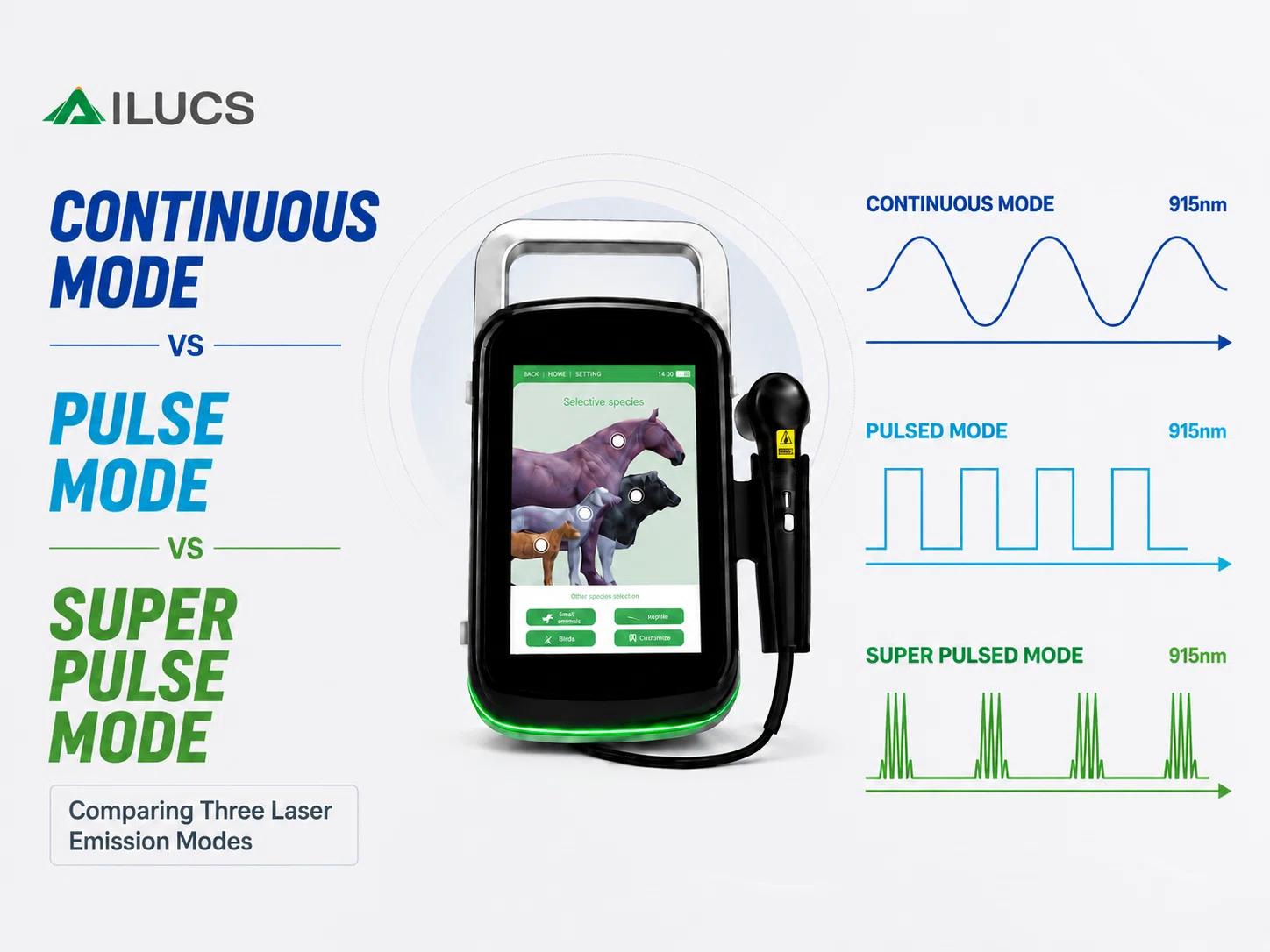
Continuous Wave vs Pulse Mode vs Super Pulse Mode: What's the Difference in Veterinary Rehabilitation?
Introduction
When selecting a veterinary laser therapy system, clinicians often compare Continuous Wave (CW), Pulsed Wave (PW), and Super Pulsed laser therapy. These emission modes do not represent different types of lasers; rather, they determine how laser energy is delivered to biological tissue, influencing treatment efficiency, thermal effects, patient comfort, and overall clinical workflow.
As photobiomodulation (PBM) becomes an increasingly important part of veterinary rehabilitation, understanding these emission modes helps veterinarians choose treatment protocols based on clinical objectives instead of marketing terminology. Modern Class IV laser therapy is widely used to support postoperative recovery, osteoarthritis, tendon and ligament injuries, muscle strains, wound healing, and pain management in both companion animals and horses.
Although Super Pulsed systems often emphasize extremely high peak power, peak power alone does not determine clinical effectiveness. The biological response depends on multiple treatment parameters, including average power, wavelength, exposure time, spot size, and the total energy delivered to the target tissue. This article compares Continuous Wave vs Pulsed Laser Therapy and explains how each mode supports veterinary rehabilitation.
Why Does the Laser Emission Mode Matter?
Different clinical conditions require different therapeutic goals. Acute injuries often involve inflammation, edema, and increased tissue sensitivity, whereas chronic musculoskeletal disorders typically require efficient energy delivery to deeper tissues over multiple treatment sessions.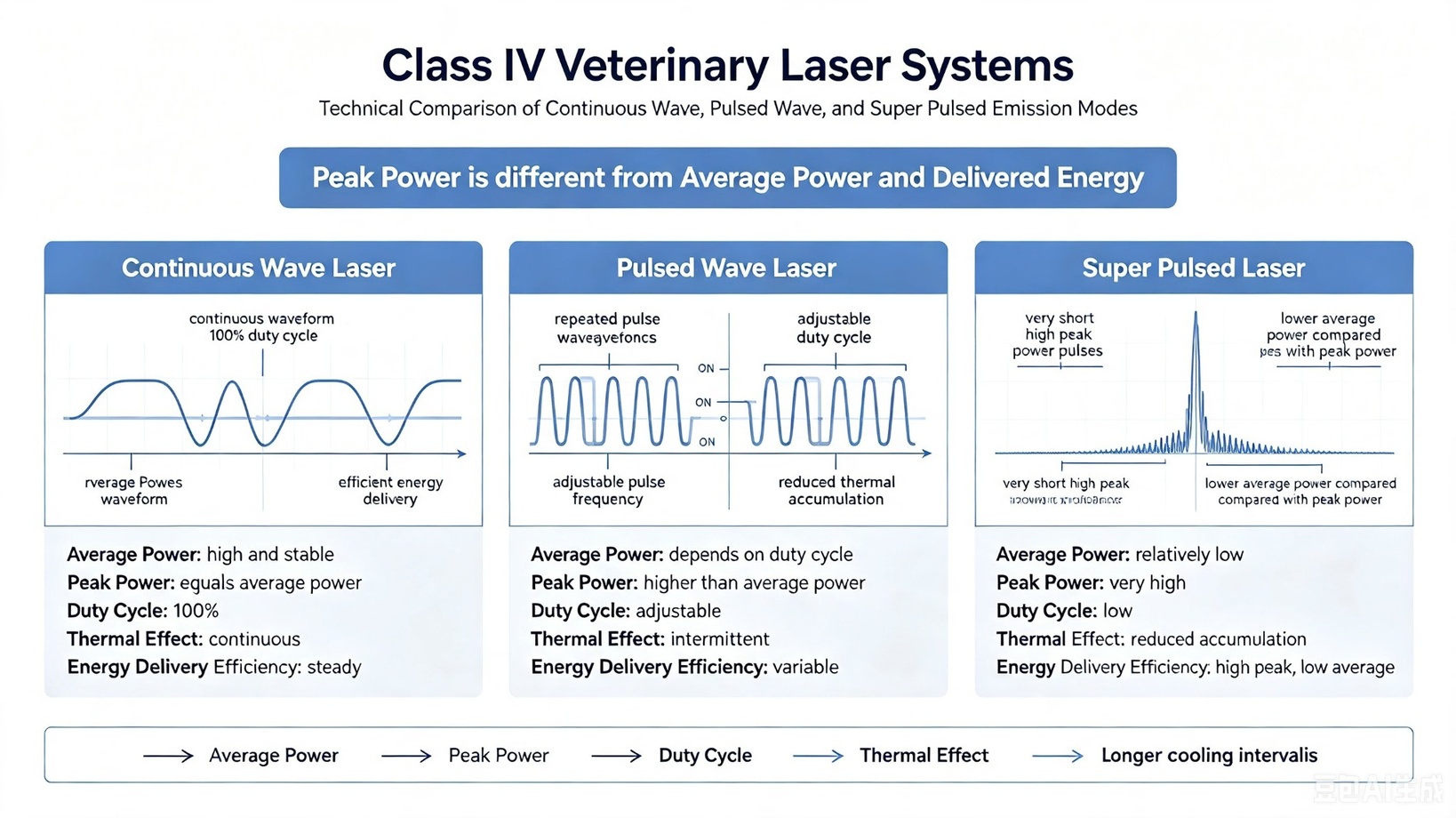
Common indications include osteoarthritis, hip and elbow dysplasia, tendon and ligament injuries, muscle strains, postoperative rehabilitation, chronic inflammatory conditions, peripheral nerve injuries, and wound healing. Successful laser therapy depends not only on wavelength and output power, but also on selecting the emission mode that best matches the patient's condition.
Why Laser Therapy?
Laser therapy is an important adjunct to veterinary rehabilitation because it supports tissue repair while integrating well with multimodal treatment plans. Rather than replacing surgery or medication, photobiomodulation delivers controlled light energy that may stimulate ATP production, improve cellular metabolism, regulate reactive oxygen species, enhance collagen synthesis, improve microcirculation, and support tissue regeneration. Treatment outcomes are influenced by wavelength, emission mode, average power, treatment duration, spot size, and total delivered energy.
Scientific Mechanism
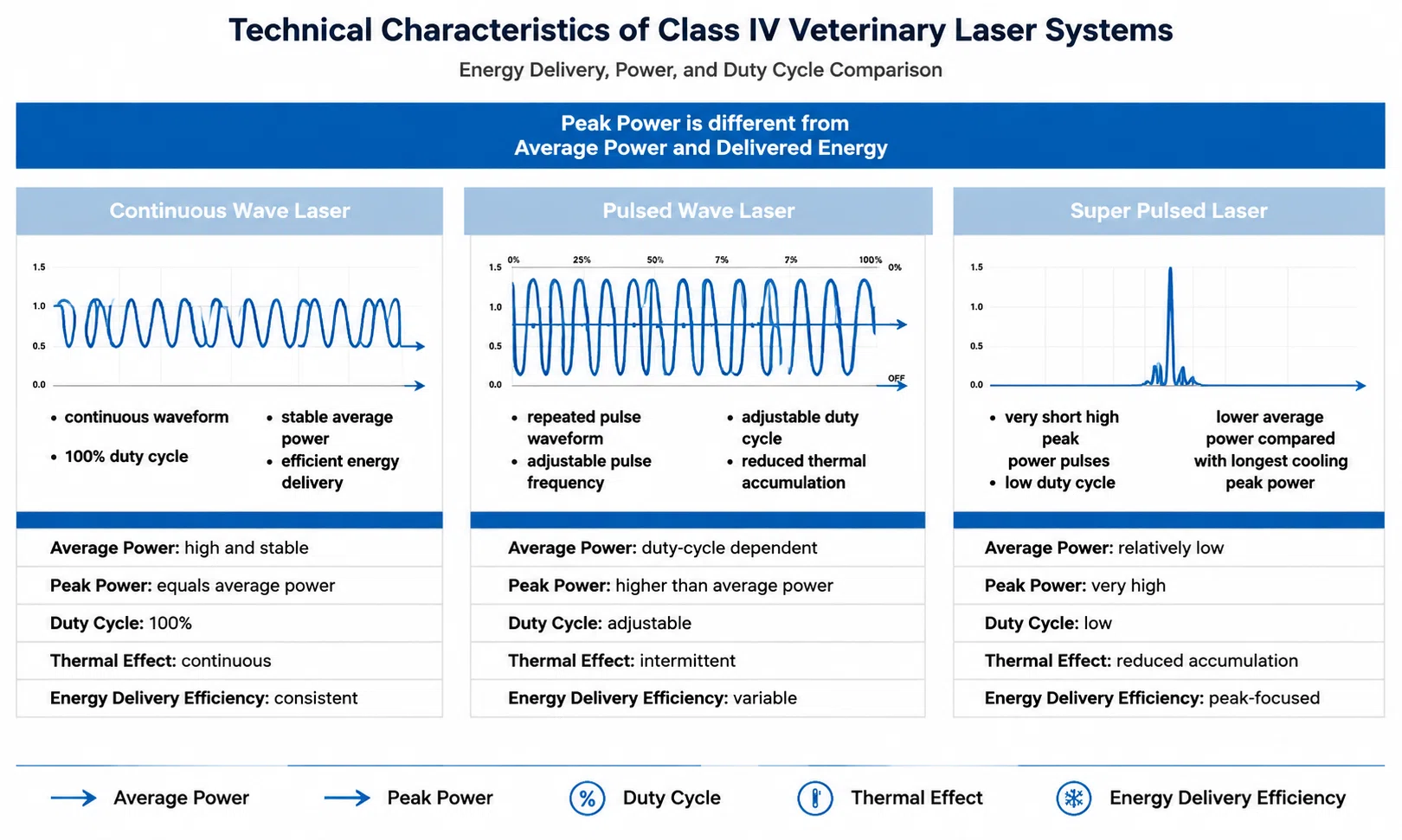
Continuous Wave (CW) emits laser energy continuously, allowing efficient energy delivery and making it suitable for many chronic musculoskeletal conditions. Pulsed Wave (PW) alternates emission with pauses, reducing superficial heat accumulation and improving comfort during acute or sensitive treatments. Super Pulsed systems deliver extremely short pulses with high peak power but relatively low average power. Current evidence suggests that therapeutic outcomes depend primarily on total delivered energy and appropriate dosimetry rather than peak power alone.
Choosing the Right Emission Mode
Treatment selection should be based on diagnosis, tissue depth, treatment goals, and thermal sensitivity. Continuous Wave is commonly used for chronic osteoarthritis and deep rehabilitation. Pulsed Wave is often preferred for acute injuries and early postoperative rehabilitation, while Super Pulsed may be considered when minimizing superficial heat is desirable. No single mode is universally superior.
Clinical Evidence
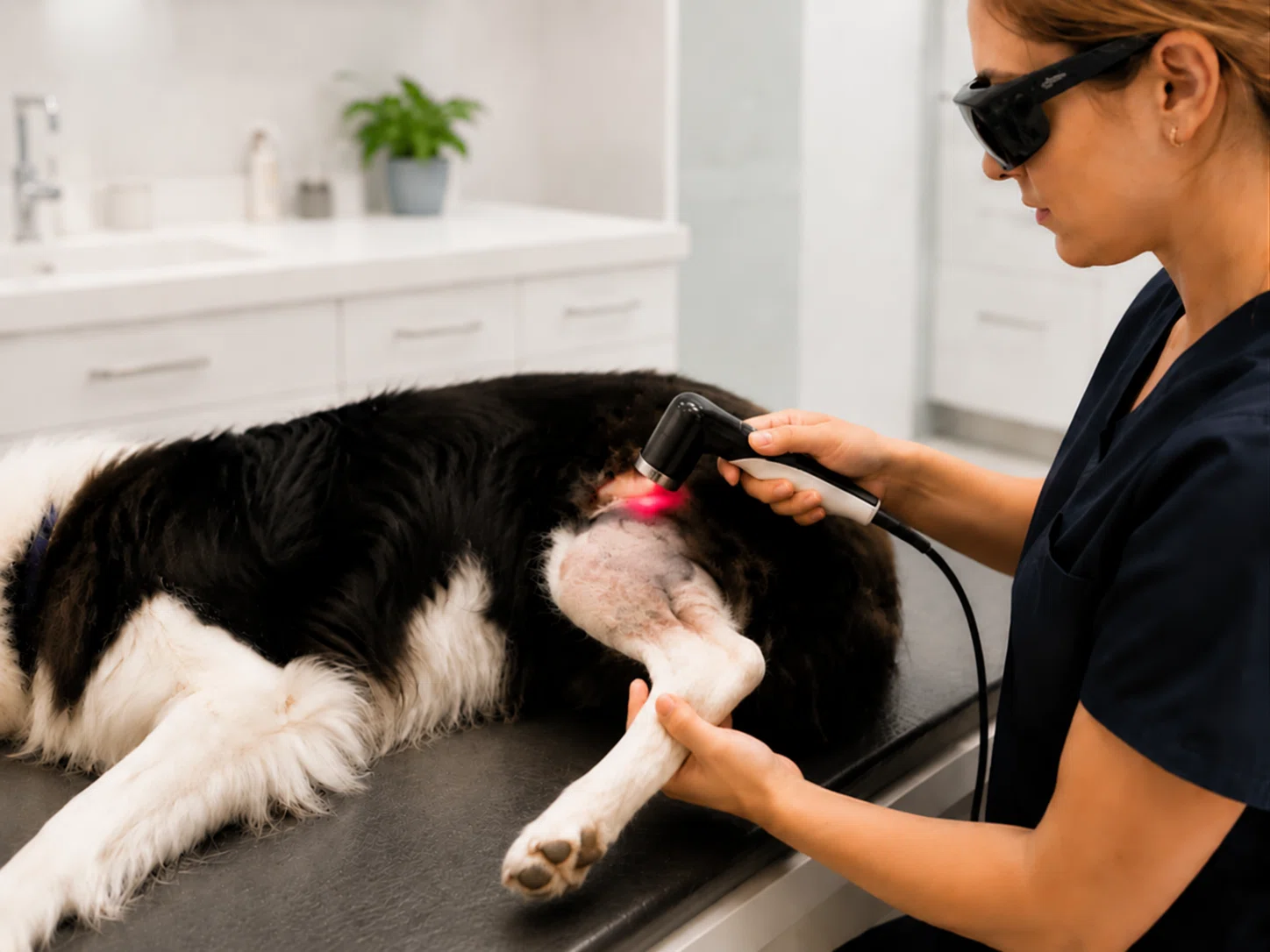
Published research indicates that appropriately delivered laser therapy may support pain modulation, tissue repair, improved microcirculation, collagen synthesis, reduced oxidative stress, and peripheral nerve regeneration. Clinical outcomes depend on wavelength, average power, irradiance, treatment time, spot size, and total delivered energy. Current veterinary evidence is strongest for Continuous Wave therapy, while evidence for Super Pulsed systems remains comparatively limited.
Expected Clinical Outcomes
Laser therapy may help reduce musculoskeletal pain, improve joint mobility, support postoperative recovery, promote soft tissue healing, decrease inflammation and edema, improve patient comfort, and potentially reduce analgesic requirements in selected patients. It should be used as part of a comprehensive rehabilitation program.
FAQs
1. Is Continuous Wave always better than Pulsed Wave?
No. Selection depends on clinical objectives, tissue depth, patient sensitivity, and rehabilitation stage.
2. Does higher peak power always produce better results?
No. Clinical outcomes depend on total therapeutic energy together with wavelength, irradiance, treatment time, and average power.
3. Is Super Pulsed technology supported by strong veterinary evidence?
Current evidence is more limited than that supporting Continuous Wave therapy.
4. Which emission mode is most commonly used?
Most clinicians use multiple modes depending on the patient's condition and overall rehabilitation goals. Different emission modes may be selected throughout different stages of treatment.
Conclusion
Understanding the differences between Continuous Wave, Pulsed Wave, and Super Pulsed emission modes is essential for evidence-based veterinary rehabilitation. No single emission mode is universally superior. Appropriate wavelength selection, average power, irradiance, treatment time, and total energy delivery are all critical to treatment success. Choosing a system that offers multiple emission modes and flexible treatment parameters allows clinicians to tailor therapy safely and effectively for a wide range of patients.