
Can Laser Therapy Help Treat Ear Infections in Dogs and Cats? (Part 2)
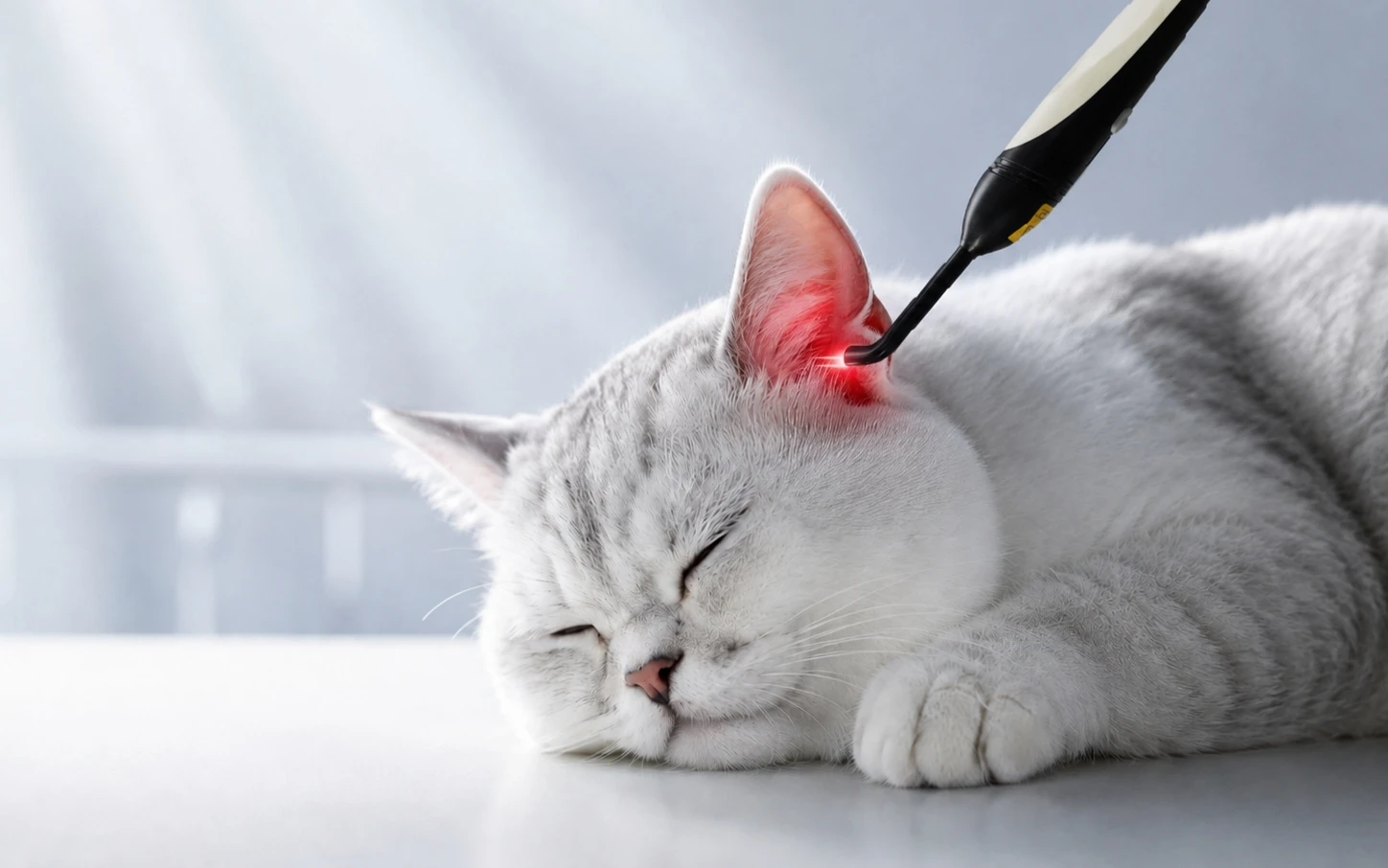
Which Types of Otitis Respond Best to Laser Therapy?
In Part 1, we explored why ear infections in dogs and cats often become recurrent, the differences between canine and feline otitis, and the core mechanisms behind laser therapy.
In this article, we’ll take a closer look at which types of otitis may benefit most from veterinary laser therapy—and which clinical situations still require advanced veterinary intervention.
Yeast Otitis
Yeast-associated otitis, especially cases involving Malassezia, may respond particularly well to supportive laser therapy. Laser treatment may help reduce itching, relieve pain, decrease discharge, and accelerate drying and crust resolution. By improving the ear canal environment, it may also help reduce the conditions that allow yeast overgrowth to recur.
Recurrent Otitis (ROtitis)
Recurrent otitis is one of the most frustrating forms of ear disease in veterinary practice. These cases often involve chronic inflammation, poor response to medication, bacterial biofilm formation, and progressive ear canal thickening.
As an adjunctive therapy, veterinary laser treatment may help improve local tissue conditions and support long-term management, particularly in pets with repeated flare-ups.
Chronic Ear Disease (CED / COtitis)
In chronic ear disease, laser therapy cannot replace treatment of the underlying cause. However, it may provide meaningful support by:
Reducing chronic inflammation
Relieving pain
Improving ear canal patency
Supporting tissue repair and recovery
For many chronic cases, the goal is not only infection control but also restoration of a healthier ear canal environment.
Can Laser Therapy Be Used for Narrowed Ear Canals in Cats?
Yes. One example is feline ceruminous cystomatosis, a condition in which multiple benign cystic lesions develop within the ear canal and gradually obstruct it. Today, more veterinarians are combining video otoscopy with diode laser treatment to ablate or carbonize abnormal tissue.
Compared with more invasive surgical procedures, this approach may offer several advantages:
Less tissue trauma
Better preservation of ear canal structure
Reduced need for total ear canal ablation
Faster postoperative recovery
Recovery time is typically around three to four weeks, depending on the severity of the condition.
Does a Ruptured Eardrum Always Require Surgery?
In most cases, no. Once inflammation and infection are properly controlled, the tympanic membrane can often heal spontaneously within several weeks. However, ototoxic medications should be avoided until healing is complete, as they may cause irreversible neurological or hearing damage. Some chronic cases may eventually develop permanent perforation, but this does not necessarily prevent animals from maintaining a good quality of life.
When Should Owners Seek Veterinary Care Immediately?
Certain symptoms should never be ignored. A veterinary ear examination is strongly recommended if a pet develops:
Coffee-ground ear discharge with strong odor
Persistent head shaking
Head tilt
Severe ear scratching
Hearing loss
Balance problems
Unilateral ear disease
Particularly in unilateral otitis cases, tumors or inflammatory polyps should always be ruled out.
Can Laser Therapy Replace Conventional Ear Treatment?
No. Laser therapy is not designed to replace medication or standard veterinary treatment. Its role is supportive—helping improve the ear canal environment and promote tissue recovery. Successful management of ear disease still depends on several essential steps:
Identifying the underlying cause
Otoscopic examination and cytology
Culture and susceptibility testing when necessary
Proper ear cleaning and infection control
Long-term management of allergies or systemic disease
The real value of laser therapy lies in its ability to help reduce inflammation, relieve pain, improve chronic ear canal conditions, accelerate recovery, and potentially lower recurrence risk.
Conclusion
Laser therapy offers a promising supportive approach for managing canine and feline ear disease. However, regardless of how advanced the technology becomes, successful treatment still depends on timely diagnosis and professional veterinary care. If your pet develops any of the symptoms mentioned above, early veterinary examination and proper otoscopic evaluation may be the most important step for preventing recurrence, reducing discomfort, and protecting long-term hearing health.