
LYRA Veterinary Laser Therapy System: Supporting Orthopedic Rehabilitation and Senior Pet Wellness
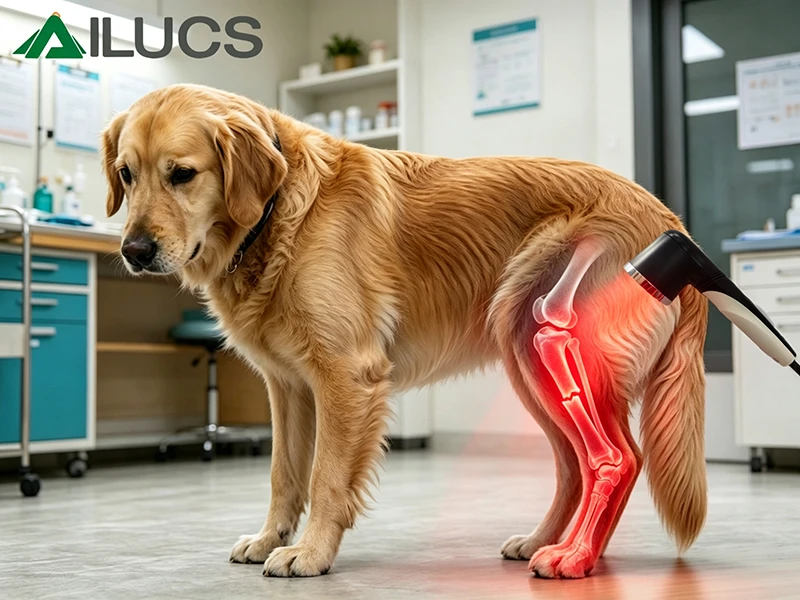
As nutritional standards improve and veterinary medicine advances, pets are living longer and longer. At the same time, age-related health concerns are becoming increasingly common. One often overlooked issue is bone loss, reduced bone density, and slower skeletal recovery.
Many senior dogs, cats, and even horses may experience reduced mobility, difficulty standing up, slower fracture healing, and decreased willingness to exercise. Behind these signs, bone health often plays a critical role.
Beyond conventional treatment methods, more veterinary clinics are now adopting a non-invasive supportive option — veterinary laser therapy.
So, can laser therapy help animals experiencing bone loss or skeletal degeneration?
The answer is: laser therapy plays a valuable role in pain management, rehabilitation support, fracture recovery, and improving mobility.
1. What Is Bone Loss in Animals?
Bone loss generally refers to reduced bone density and weakened bone structure, making bones more vulnerable to injury or fractures.
In human medicine, osteoporosis is a well-recognized diagnosis. In veterinary practice, however, bone loss is more commonly reflected through conditions such as:
Reduced bone mass in aging animals
Fragile bones and higher injury risk
Slower healing after fractures
Bone degeneration after prolonged inactivity
Hormonal changes affecting bone metabolism
Mineral imbalance caused by chronic disease
In other words, pets may not often receive a direct diagnosis of osteoporosis, but bone health decline is a real and growing concern.
2. How Does Laser Therapy Work on Bone Tissue?
The effects of laser therapy are not limited to surface tissues. Through cellular-level stimulation, it may help regulate the balance between bone formation and bone resorption.
2.1 Promoting Bone Formation (Osteogenesis)
Specific laser wavelengths can be absorbed by mitochondria, helping increase ATP production. This may support osteoblast activity, stimulate collagen synthesis, and accelerate bone matrix deposition.
Studies suggest that photobiomodulation (PBM) may promote bone regeneration and improve bone tissue structure.
2.2 Supporting Bone Metabolism Balance
A key issue in bone loss is when bone resorption exceeds bone formation.
Laser therapy may help regulate inflammatory mediators and cellular signaling pathways, which can contribute to reducing excessive bone resorption, improving the bone microenvironment, and supporting remodeling processes.
2.3 Improving Local Microcirculation
Laser therapy may also promote local blood circulation, helping deliver oxygen and nutrients more efficiently while assisting metabolic waste removal. This creates a more favorable environment for tissue recovery and bone healing.
3. Clinical Evidence: Laser Therapy and Bone Healing Potential
In recent years, growing research has focused on the role of laser therapy in bone regeneration and fracture healing.
Animal studies and clinical models suggest PBM may help:
Improve bone mineralization
Accelerate fracture healing
Enhance trabecular bone structure
Increase stability in grafting and dental bone repair
It is important to note that large-scale direct clinical studies on pets with bone loss remain limited. However, evidence supporting laser therapy in bone healing and rehabilitation continues to grow.
References
Bone Regeneration and PBM Review:
https://www.mdpi.com/2076-3417/11/12/5360
Experimental Study on Laser-Assisted Bone Healing:
https://www.ncbi.nlm.nih.gov/pmc/articles/PMC3521873/
4. Common Veterinary Applications of Laser Therapy
Laser therapy is widely used in veterinary clinics for cases such as:
Reduced mobility in senior dogs
Fracture recovery support
Post-operative rehabilitation after TPLO and orthopedic surgery
Pain related to hip conditions
Chronic joint disease with decreased activity
Stiffness and weakness in senior cats
Recovery support for equine sports injuries
Treatment plans should always be determined by a licensed veterinarian.
For clinics looking to expand rehabilitation services, the LYRA Veterinary Laser Therapy System can be applied in orthopedics, pain management, and senior pet wellness programs, helping improve treatment efficiency and client satisfaction.
With stable output, multi-wavelength combinations, and user-friendly operation, LYRA provides a higher-value rehabilitation solution for modern veterinary practices.
5. Questions Pet Owners Can Ask Their Veterinarian
If your pet is showing reduced mobility or bone-related concerns, consider asking your veterinarian:
Is pain affecting my pet’s movement?
Would rehabilitation therapy be beneficial?
Is laser therapy suitable for this condition?
How many treatment sessions are typically needed?
Should laser therapy be combined with other treatment options?
Conclusion
Laser therapy is not a standalone solution for bone loss or skeletal degeneration, but it can be an important part of senior pet bone health management.
By helping reduce discomfort, improve mobility, support post-surgical recovery, and enhance quality of life, laser therapy is gaining increasing recognition among veterinary professionals.
For aging pets, being able to move more comfortably and live more actively is already a meaningful treatment goal.