
How to Select the Right Treatment Head for Veterinary Class IV Laser Therapy
With the rapid advancement of Laser Therapy Technology, especially in Veterinary Laser Therapy Equipment, Class IV laser systems have become a cornerstone in rehabilitation, pain management, and wound care. However, one critical factor is often overlooked:
The choice of treatment head directly determines clinical outcomes.
It affects how light interacts with tissue, how much energy is delivered, and whether the therapeutic dose actually reaches the target area. In this blog, we’ll break down how to select the right treatment head across different clinical scenarios—while integrating best practices for Pet Laser Therapy and modern Medical Laser Equipment.
Understanding How Laser Interacts with Tissue
When using any Laser Therapy Device, light interacts with tissue in three main ways: reflection, absorption, and transmission. The goal is simple:
Minimize reflection
Maximize absorption
Optimize penetration
However, real-world factors like fur, skin pigmentation, or coverings (e.g., bandages) can significantly reduce energy delivery. In some cases, up to 75% of laser power can be lost before reaching the skin.
This is especially critical for lower-power devices. While high-power Laser Therapy Equipment (Class IV) compensates better, energy loss still impacts treatment effectiveness.
Key takeaway: Whenever possible, laser therapy should be applied directly to the skin using the appropriate treatment head.
Contact vs. Non-Contact: Choosing the Right Approach
1. Contact Treatment: Best for Deep Conditions
For musculoskeletal issues such as joint pain, tendon injuries, or chronic inflammation, contact treatment is the gold standard.
Benefits include:
Reduced surface reflection
Improved energy penetration
Compression of superficial tissue for deeper reach
This is particularly effective in Laser Therapy for Joint Pain and chronic conditions in dogs and cats.
Typical applications:
Osteoarthritis
Muscle injuries
Ligament damage
Chronic pain management
2. Non-Contact Treatment: When Touch Is Not Possible
Non-contact methods are essential in specific cases:
Open wounds
Post-surgical incisions
Highly sensitive or painful areas
In these scenarios, maintaining sterility and patient comfort is critical. A well-collimated beam (low divergence) ensures effective energy delivery even without direct contact.
Typical applications:
Surgical recovery
Laser Therapy for Dog and Cat Skin Issues
Infection-prone areas
Spot Size Matters: Matching Treatment Heads to Clinical Needs
One of the most important parameters in Laser Therapy Instruments is spot size, which determines coverage area and energy density.
This is where the design of modern systems like Ailucs Laser Therapy Devices (e.g., LYRA) becomes highly practical in real-world applications.
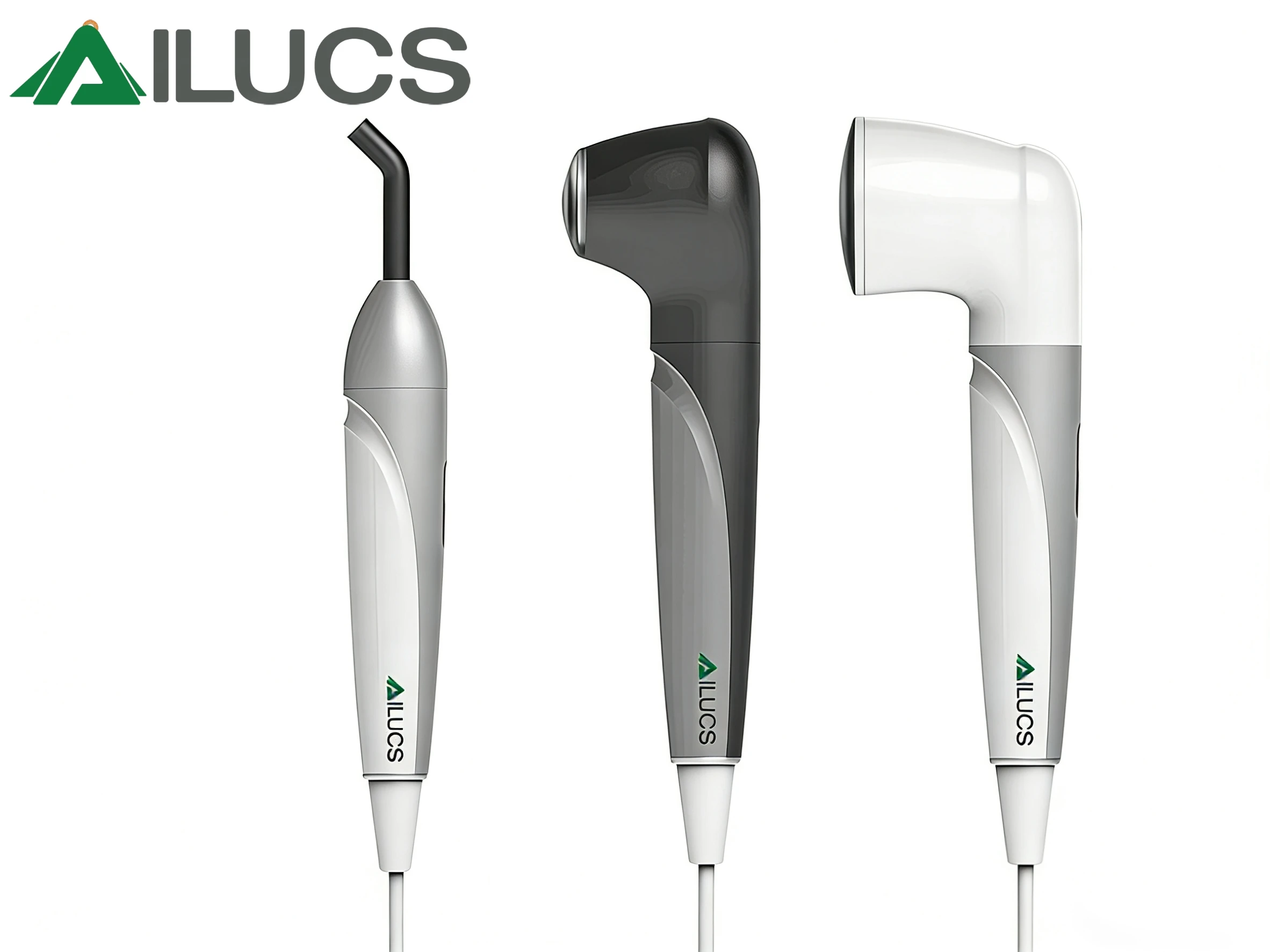
The LYRA Multifunctional Laser Therapy Device offers three specialized treatment heads designed for different clinical needs:
50mm Large Spot Treatment Head
Ideal for large-area treatments such as wounds, inflammation, and post-operative recovery. It improves efficiency by covering more surface area quickly—perfect for Pet Rehabilitation Laser Device Effectiveness in wound care.30mm Standard Treatment Head
The most commonly used option, balancing coverage and energy density. Suitable for the majority of daily treatments, including Laser Therapy for Joint Pain and general rehabilitation.ENT Treatment Head (≤3W)
Designed for sensitive and small areas such as ears, nose, and throat. Power must be limited to ≤3W to ensure safety and comfort. This is particularly useful in delicate Pet Laser Therapy scenarios.
This flexible configuration reflects the evolution of Multifunctional Laser Therapy Device Uses, allowing clinicians to adapt quickly to different treatment requirements.
Beam Divergence: Precision vs. Coverage
Another key factor in Laser Therapy Equipment is beam divergence:
Low divergence (e.g., 3°) → concentrated energy for deep tissue
High divergence (e.g., 13°) → wider coverage but faster energy dispersion
Practical application:
Deep conditions → focused beams
Superficial or large areas → wider beams
Dosage Matters: Aligning Energy with Treatment Goals
No matter how advanced your Medical Laser Equipment is, results depend on delivering the correct dose:
Deep conditions: 8–10 J/cm²
Superficial conditions: 3–4 J/cm²
Using the right treatment head ensures that this dose is delivered effectively:
Large spot (50mm) → uniform coverage for wounds
Standard (30mm) → balanced performance
ENT head → precise, low-dose applications
Incorrect head selection can lead to underdosing—even with high-end Laser Therapy Devices.
Patient Comfort: A Key Decision Factor
In Pet Laser Therapy, patient response plays a crucial role:
Sensitive animals → start with non-contact or low power
Temperature sensitivity → adjust gradually
Anxiety → begin treatment in non-painful areas
For example, the LYRA ENT head allows gentle, low-power treatment for highly sensitive regions, improving compliance and overall treatment success.
Quick Selection Guide
When choosing a treatment head, follow this simple logic:
Can you touch the treatment area?
Yes → Contact (30mm or 50mm)
No → Non-contact
What is the treatment size and depth?
Large/superficial → 50mm head
Medium/general → 30mm head
Small/sensitive → ENT head (≤3W)
Is the patient sensitive?
Yes → Low power + ENT or non-contact
No → Standard protocol
Conclusion
In modern Veterinary Laser Therapy Equipment, the treatment head is not just an attachment—it is a critical determinant of clinical success.
Systems like LYRA and other Ailucs Laser Therapy Devices demonstrate how thoughtful design—combining multiple spot sizes and applications—can standardize treatment quality and improve outcomes.
By understanding light-tissue interaction, selecting the correct treatment head, and delivering the right dose, practitioners can fully unlock the potential of Laser Rehabilitation Devices and achieve consistent, measurable results.