
How High-Power Laser Therapy Transforms Equine Recovery: From Biological Mechanisms to Clinical Outcomes
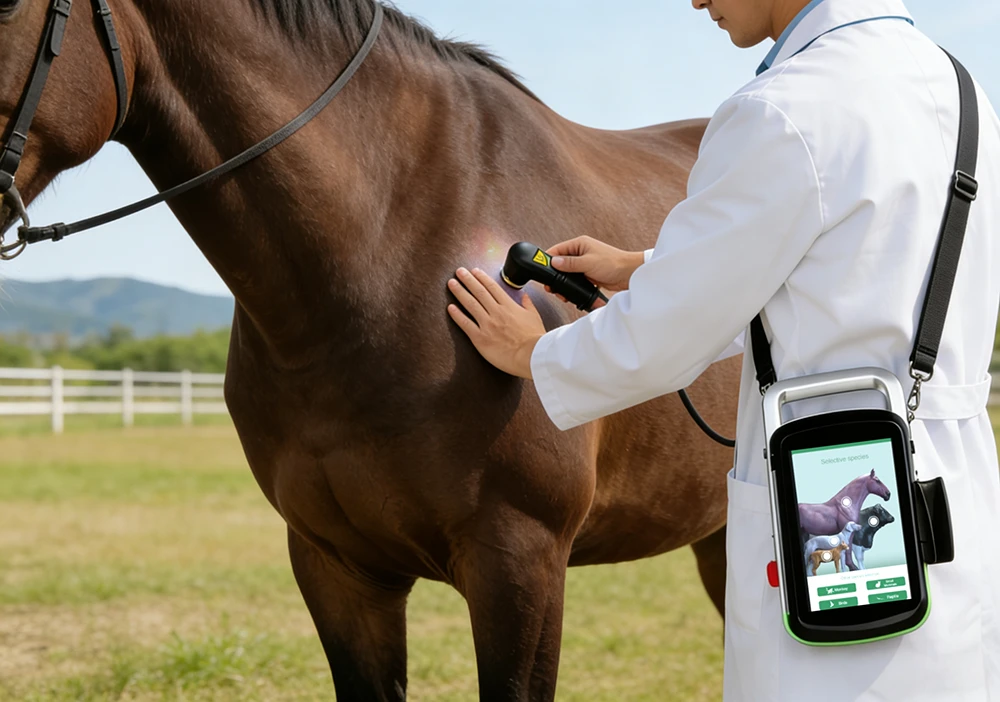
In the previous article, we explored why conventional treatments often fail to meet the demands of deep tissue repair in horses. The key advancement in this field lies in a better understanding of how therapeutic energy can effectively penetrate tissue and influence biological processes. High-power laser therapy has emerged as a solution within this framework, offering the ability to combine deep tissue penetration with meaningful biological stimulation, ultimately improving both recovery speed and tissue quality.
Triple-Wavelength Synergy: Combining Penetration with Biological Effect
Among current technologies, the combination of 810 nm, 980 nm, and 1064 nm wavelengths is widely considered an optimal approach to balance penetration depth and therapeutic efficiency.
The 810 nm wavelength primarily supports photobiomodulation at the cellular level. It is absorbed by mitochondrial enzymes such as cytochrome c oxidase, promoting ATP production and providing the energy required for cellular repair. This directly enhances fibroblast activity, which plays a central role in collagen synthesis and tissue regeneration.
The 980 nm wavelength, on the other hand, is more strongly absorbed by water molecules, generating a controlled thermal effect within the tissue. This helps to increase blood flow, promote vasodilation, and accelerate the clearance of inflammatory mediators, thereby improving the local tissue environment.
The 1064 nm wavelength offers greater penetration capability, allowing energy to reach deeper muscle layers and joint-related structures. When applied with appropriate parameters, it is particularly beneficial for treating large animals such as horses.
Together, these three wavelengths create a synergistic effect—ensuring that laser therapy can not only reach deeper tissues, but also produce targeted biological responses across multiple tissue layers.
How Laser Therapy Works at the Tissue Level
The therapeutic effects of high-power laser are not based on a single mechanism, but rather on a combination of biological responses that support tissue repair.
Cellular Level
Enhances fibroblast proliferation
Stimulates collagen production and remodeling
Collagen fibers formed under laser stimulation are more organized
Leads to improved tensile strength and long-term tissue stability
Vascular Level
Promotes angiogenesis
Improves microcirculation
Increases delivery of oxygen and nutrients to injured tissues
Particularly beneficial for tendons with limited blood supply
Inflammation Control
Reduces expression of pro-inflammatory mediators
Modulates immune cell activity
Helps inflammation resolve more efficiently
Lowers risk of chronic inflammation-related tissue damage
Together, these effects allow laser therapy to move beyond simple symptom relief and actively influence the quality of tissue healing.
Clinical Evidence: Faster Recovery and More Durable Outcomes
A growing body of clinical research supports the effectiveness of high-power laser therapy in equine sports injuries.
In a retrospective study involving 150 sport horses, those treated with laser therapy showed significant improvement in lameness and ultrasound findings within just two weeks. More importantly, long-term follow-up revealed significantly lower re-injury rates compared to conventional treatments.
Another randomized controlled study involving 26 sport horses reported similar findings. The laser-treated group demonstrated superior outcomes in pain relief, inflammation control, and tissue repair quality. Ultrasound evaluations also showed more complete and organized lesion filling.
These findings suggest that high-power laser therapy not only accelerates recovery, but also improves the structural quality of healing—ultimately reducing the risk of future injury.
From Treatment to Daily Performance Management
As its application expands, laser therapy is evolving from a post-injury treatment into a routine performance management tool.
After intense training
Short laser sessions help accelerate metabolic waste removal and reduce muscle fatigue
On rest days
Regular application supports tissue elasticity and improves circulation
Before training
Helps optimize joint condition and reduce the risk of acute injury.
This integration across the training cycle allows laser therapy to become part of a comprehensive equine performance management strategy.
LYRA High-Power Laser: Translating Science into Clinical Efficiency
In clinical practice, the effectiveness of therapy depends not only on the principle, but also on the performance and usability of the device.
The LYRA High-Power Laser Therapy System is designed specifically for the depth and complexity of equine tissues. By combining high output power with triple-wavelength technology, it ensures effective coverage of key structures such as tendons and ligaments.
In addition, its built-in expert treatment protocols enable veterinarians to quickly apply optimized settings for different indications. This improves treatment consistency while significantly enhancing clinical efficiency—especially in high-demand equine centers.
Conclusion
Equine sports medicine is evolving from simply “recovering injuries” to extending performance and longevity.
In this transition, high-power laser therapy is becoming an essential tool due to its ability to directly influence deep tissue repair.
The LYRA system represents not just a device, but a forward-looking approach to equine rehabilitation—deeper, more efficient, and more sustainable.
References
Zielińska, P.; Nicpoń, J.; Kiełbowicz, Z.; Soroko, M.; Dudek, K.; Zaborski, D. Effects of High Intensity Laser Therapy in the Treatment of Tendon and Ligament Injuries in Performance Horses. Animals 2020, 10, 1327. https://doi.org/10.3390/ani10081327