High-Power Laser Therapy for Equine Sports Injuries: Why Traditional Treatments Are No Longer Enough
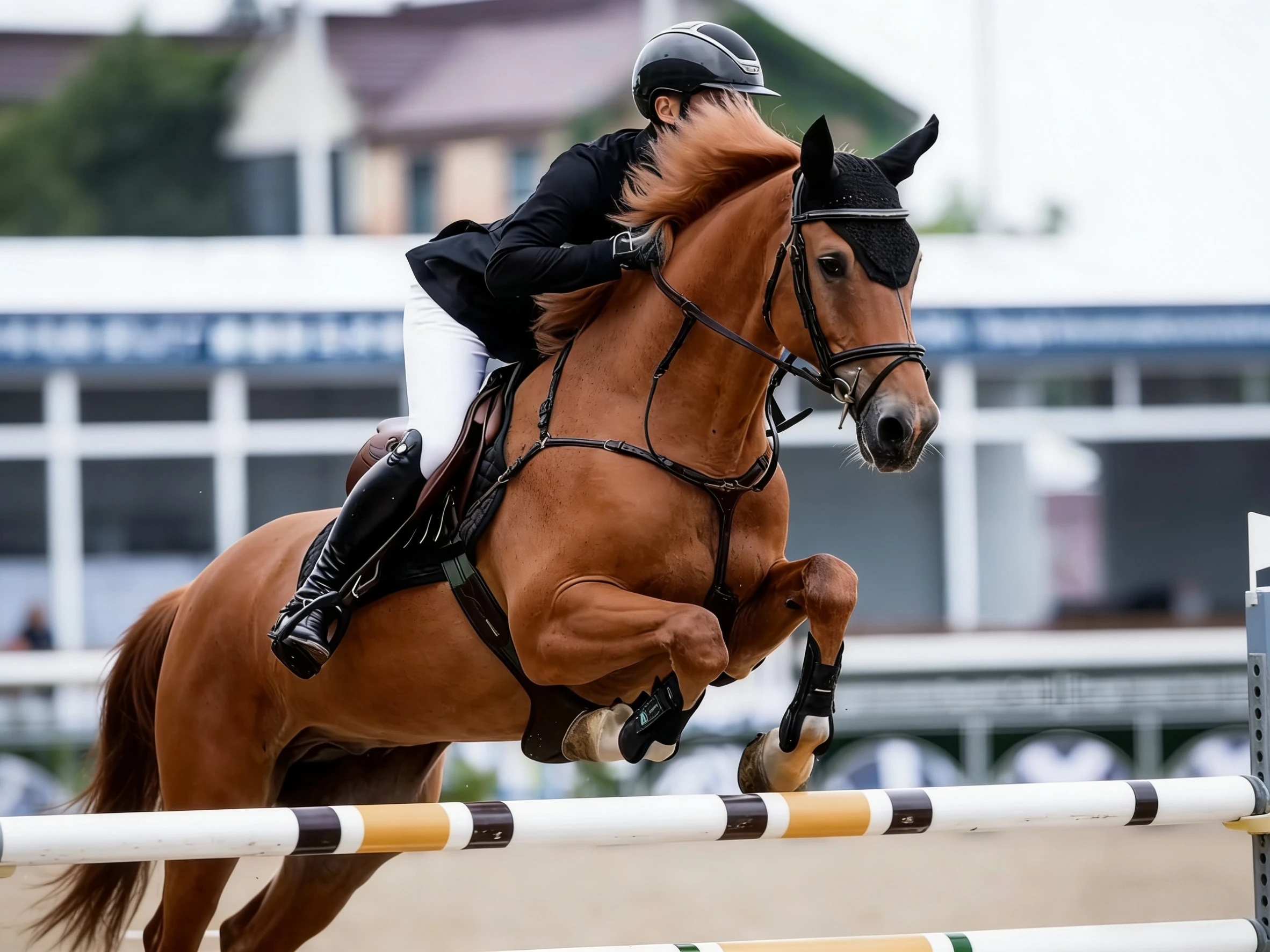
In modern equine sports, horses are no longer simply animals—they are high-value athletes. Whether in dressage, show jumping, or racing, tendon and ligament injuries remain one of the most critical factors affecting performance and, ultimately, career longevity.
Reducing recovery time while minimizing the risk of re-injury has become a central focus for veterinarians and equine professionals alike.
Conventional treatment approaches—including rest, anti-inflammatory medications, and physiotherapy—can provide temporary symptom relief. However, they often fail to address the fundamental issue: the repair of deep tissue structures.
In recent years, High-Power Laser Therapy has emerged as a significant advancement in equine sports medicine. Its value lies not only in relieving symptoms, but more importantly, in supporting true tissue regeneration.
To understand this shift, it is essential to first examine the challenges that limit the effectiveness of traditional treatments.
1. Anatomical Structure Defines Treatment Limitations
To fully understand the role of laser therapy in horses, we must start with anatomy. Compared to humans or small animals, horses have significantly thicker and denser tissues. Adult equine skin typically measures 3–5 mm in thickness, while key load-bearing structures—such as the superficial digital flexor tendon (SDFT) and deep digital flexor tendon (DDFT)—are not only larger but also located much deeper beneath layers of muscle and connective tissue.
This leads to a critical challenge: energy attenuation.
When low-power laser devices (typically under 10W) are applied to the surface, a large portion of the energy is absorbed or scattered within superficial tissues. Only a minimal amount reaches the core injury site.
As a result, treatment often remains superficial—effective for temporary pain relief and inflammation control, but insufficient for true structural repair of damaged collagen fibers.
In contrast, high-power laser systems, with greater energy density and enhanced penetration capability, are able to overcome this physical limitation. They deliver therapeutic energy directly to deeper structures such as tendons, ligaments, and even joint tissues—initiating biological repair processes at the source of injury.
2. Clinical Limitations of Conventional Treatments
Due to these anatomical constraints, many traditional therapies inherently suffer from limited depth of action.
In clinical practice, veterinarians typically combine multiple approaches:
NSAIDs to reduce inflammation, rest to minimize mechanical stress, and physiotherapy to improve circulation. While these methods are valuable—especially during the acute phase—they primarily focus on symptom management rather than structural regeneration.
As one experienced equine rehabilitation veterinarian noted:
“We can eliminate lameness in a short period of time, but that doesn’t mean the horse is ready to return to full training.”
This explains why, in many cases, even when imaging suggests that tissue has “filled in,” the internal structure remains disorganized and mechanically weak. This lack of tensile strength is a major contributor to the high rate of re-injury.
It is also important to recognize that horses have a high tolerance for pain. Clinical signs often lag behind the actual severity of tissue damage. By the time visible lameness appears, the injury may already be advanced.
Therefore, assessing recovery based solely on outward performance or behavior can be misleading. Accurate evaluation requires veterinary diagnosis supported by imaging and clinical findings.
3. Why Deep Tissue Repair Is the Key to Long-Term Recovery
At its core, equine sports injury is not simply a matter of inflammation or pain—it is a problem of collagen disruption and disorganization.
The mechanical strength of tendons and ligaments depends on highly aligned collagen fibers. When this structure is damaged, the body initiates a healing process that includes inflammation, proliferation, and remodeling phases. During this process, fibroblasts produce new collagen; however, without proper stimulation and an optimal biological environment, the newly formed tissue is often irregular, poorly aligned, and mechanically inferior.
This is the fundamental reason why many injuries appear to heal, yet remain vulnerable to re-injury. Effective treatment, therefore, must go beyond symptom control and actively participate in the remodeling phase of tissue repair.
In this context, high-power laser therapy has gained increasing attention because it delivers energy directly to deep tissues. By improving the local microenvironment and stimulating cellular activity, it can influence not just the speed, but the quality of tissue healing.
In other words, the goal of “deep repair” is not simply to make tissue heal faster, but to ensure that the regenerated tissue is structurally and functionally closer to its original state.
This distinction is critical in determining whether a horse can safely return to training and maintain long-term performance without recurring injury.
Conclusion
As equine sports medicine continues to evolve, relying solely on conventional treatment methods is no longer sufficient to meet the demands of high-performance horses. Therapies capable of reaching deeper tissues and actively participating in the healing process are becoming increasingly essential.
Laser therapy, particularly high-power laser therapy, is gaining clinical acceptance as part of this shift—offering new possibilities for improved recovery outcomes and reduced risk of re-injury.