Laser Therapy for Feline Neuritis: A Gentle and Effective Path to Recovery
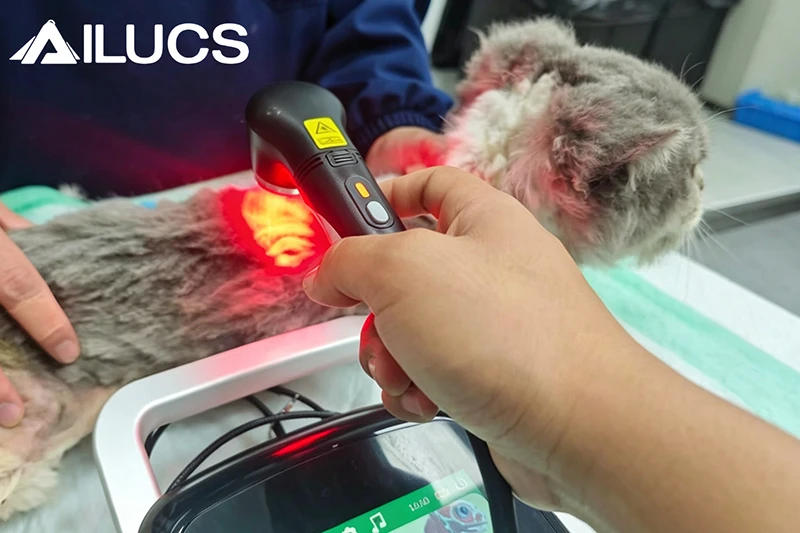
For cats, jumping is not just instinct—it’s an important indicator of overall health. When a once-active cat suddenly refuses to jump onto the sofa, shows hind limb weakness, drags its legs, or reacts painfully to touch, this is often not simple fatigue, but a possible sign of neuritis. In clinical practice, more and more cases like these are being improved through an “invisible light”—veterinary laser therapy is becoming an important supportive tool in the management of neurological conditions.
1. Feline Neuritis: An Overlooked Source of Pain
Feline neuritis is a condition caused by inflammation of the nerve sheath, leading to impaired nerve conduction. It commonly affects areas such as the sciatic nerve or brachial plexus. One of its challenges is that it can be easily overlooked, especially in the early stages. Many pet owners only notice the problem once symptoms become more obvious.
Common signs include:
Sudden limping or dragging of the hind limbs
Strong pain response when the affected area is touched
Reduced activity or reluctance to jump
In severe or prolonged cases, muscle atrophy or abnormal postures (arched back, tucked neck)
Traditional treatment options mainly include medication and surgery, but each has its limitations:
NSAIDs: long-term use may place stress on the liver and kidneys
Steroids: may suppress the immune system
Surgery: involves longer recovery time and potential recurrence
As a result, clinicians are increasingly exploring gentler and more sustainable treatment options.
2. How Laser Therapy Works on Nerves (Core Mechanism)
The foundation of laser therapy lies in Photobiomodulation (PBM). Rather than “removing” the problem, it works by stimulating the body’s natural healing processes at the cellular level.
When specific wavelengths of laser light interact with tissue, a series of biological responses are triggered:
a). Energy Support for Cells
Laser photons are absorbed by mitochondria, promoting ATP production. ATP acts as the “energy currency” of cells, and increased energy availability accelerates cellular repair.
b). Modulation of Inflammation
Laser therapy helps reduce pro-inflammatory cytokines such as TNF-α and IL-6, while improving local blood circulation. This is particularly important in neuritis, where inflammation contributes directly to nerve irritation and compression.
c). Promotion of Nerve Repair
Studies suggest that laser therapy can:
Stimulate nerve growth factor (NGF) expression
Accelerate axonal regeneration
Support remyelination
This means it not only relieves symptoms, but also supports functional nerve recovery.
d). Pain Signal Reduction
Laser therapy can inhibit C-fiber transmission, reducing the perception of pain at its source. As pain decreases, stress and discomfort in the animal are also reduced.
References:
https://www.ncbi.nlm.nih.gov/pmc/articles/PMC5523874/
https://pubmed.ncbi.nlm.nih.gov/26613456/
3. Clinical Recovery: From Dragging to Walking
With a structured treatment protocol, many cases show gradual and observable improvements:
Early stage: reduced pain and sensitivity to touch
Mid stage: improved mobility and attempts to walk
Later stage: better gait and return to normal activity
Typical treatment frequency:
Acute phase (1–2 weeks): daily or every other day
Recovery phase (2–4 weeks): 2–3 times per week
Maintenance phase: adjusted as needed
Recovery speed may vary between individuals, but the overall progression is generally consistent.
4. Common Questions from Pet Owners
Is laser therapy painful?
No. It typically produces only a mild warming sensation, and many cats become relaxed during treatment.
Is shaving required?
Usually not. Laser light can penetrate fur (effectiveness may vary depending on coat thickness and wavelength).
When should it be avoided?
Use caution in the following cases:
Tumor sites
Abdomen during pregnancy
Hyperthyroidism (requires veterinary evaluation)
5. How to Choose the Right Veterinary Laser Device
In clinical use, the device itself plays a key role in treatment outcomes and efficiency.
Key factors to consider include:
Multi-wavelength system: supports different tissue depths and broadens clinical applications
Power and stability: ensures effective and consistent energy delivery
Ease of use: preset protocols help reduce the learning curve
Some newer-generation systems (such as LYRA Laser Therapy System) integrate multi-wavelength combinations with intelligent parameter settings, making laser therapy more standardized and easier to incorporate into daily clinical workflows.
At the same time, it is important to avoid:
Low-power, non-professional devices
Over-reliance on a single modality or exaggerated claims
Conclusion
Laser therapy is not a replacement for all treatments, but it offers a gentler alternative. By simultaneously addressing inflammation, nerve function, and tissue repair, it shifts treatment from simply “managing symptoms” to actively supporting recovery. For many cats, this invisible light is helping them regain their ability to jump—and restoring a better quality of life.