
Laser Therapy for Muscle Strains in Dogs and Horses
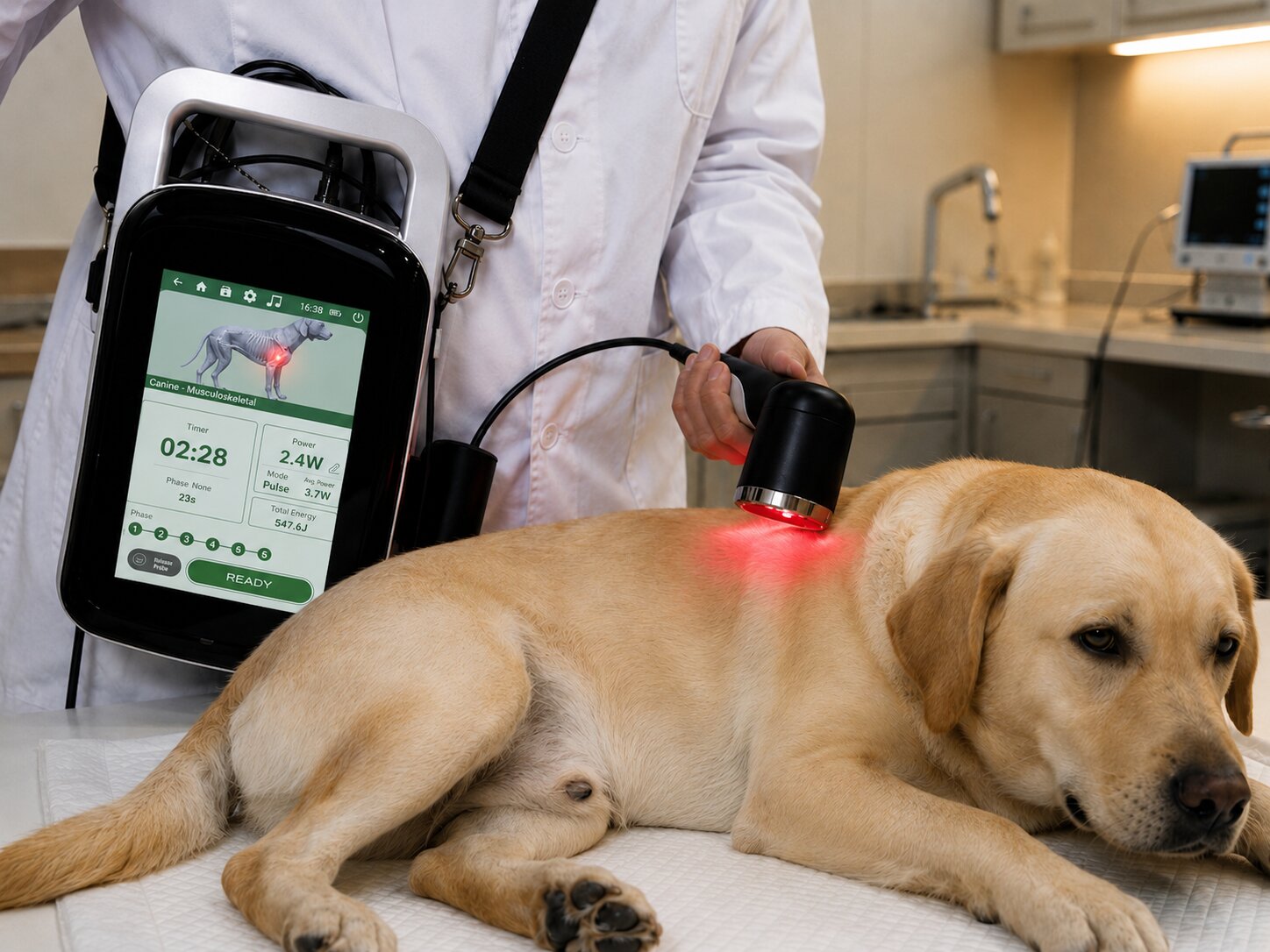
Laser Therapy for Muscle Strains in Dogs and Horses: Can Laser Therapy Help Treat Muscle Strains in Dogs and Horses?
Introduction
A dog that suddenly refuses to jump after an agility session. A working dog that develops hindlimb soreness after repetitive sprint training. A performance horse showing a shortened stride following competition. Although these patients present differently, they often share the same diagnosis: a muscle strain.
Muscle strain is one of the most frequently encountered soft tissue injuries in veterinary practice, particularly in active companion animals and equine athletes. While many cases recover with appropriate rest, delayed diagnosis or inadequate rehabilitation may prolong recovery and increase the likelihood of reinjury.
Today, Class IV laser therapy is widely incorporated into multimodal rehabilitation programs. Rather than replacing conventional treatment, photobiomodulation (PBM) is used alongside rest, controlled exercise, rehabilitation, and appropriate medical management to support tissue repair, improve patient comfort, and facilitate a gradual return to normal function.
Clinical Signs
Clinical presentation varies according to the location, severity, and duration of the injury. Acute muscle strains typically present with pain and localized inflammation, whereas chronic injuries are more often associated with reduced performance, persistent stiffness, and compensatory gait abnormalities.
Common presentations include:
· Lameness or altered gait
· Localized pain during palpation or stretching
· Muscle swelling and erythema
· Increased heat over the injured area
· Reduced range of motion
· Muscle stiffness and guarding
· Decreased athletic or functional performance
· Reluctance to exercise, stand, or walk
· Visible muscle spasms
· Compensatory movement patterns
Diagnosis is primarily based on patient history, orthopedic examination, gait assessment, and careful palpation of the affected musculature. Diagnostic ultrasound is commonly used to evaluate muscle fiber disruption, while MRI may be considered in selected cases involving deep or complex soft tissue injuries.
Why Laser Therapy?
Successful muscle healing depends on a carefully regulated sequence of inflammation, tissue regeneration, and collagen remodeling. The primary objective of rehabilitation is not to eliminate inflammation entirely, but to support normal biological healing while minimizing excessive tissue damage and pain.
For veterinary patients and clinicians, Class IV laser therapy provides key advantages:
· Non-invasive and low-stress for patients
· Drug-free supportive pain management
· Reduced excessive inflammatory response
· Improved local blood circulation and tissue oxygenation
· Accelerated muscle tissue repair and remodeling
· Compatible with therapeutic exercise and rehabilitation plans
For these reasons, Class IV laser therapy has become a commonly incorporated modality within veterinary sports medicine, postoperative rehabilitation, as demonstrated in our postoperative recovery case study, and multimodal musculoskeletal pain management programs.
Laser therapy is most effective when introduced during the early inflammatory stage following injury, although chronic muscle strains may also benefit from appropriately dosed photobiomodulation as part of a comprehensive
rehabilitation program.
Scientific Mechanism
The therapeutic effects of laser therapy are driven by photobiomodulation (PBM), a well-documented cellular process.
The biological mechanisms of PBM are also discussed in our article on laser therapy for chronic kidney disease.
Cellular Energy Production
Enhanced mitochondrial activity supports adenosine triphosphate (ATP) synthesis, providing injured tissue with greater metabolic capacity for repair.
Inflammatory Regulation
PBM can help regulate inflammatory mediators, including pro-inflammatory cytokines such as TNF-α, IL-1β, and IL-6.
Microcirculatory Response
Laser therapy promotes vasodilation and enhances local blood flow, supporting oxygen and nutrient delivery to the injured area.
Collagen Remodeling
Laser irradiation may stimulate fibroblasts, satellite muscle cells, and endothelial cells, contributing to muscle regeneration and organized tissue remodeling.
Analgesic Effects
PBM can reduce peripheral nerve sensitization, inhibit nociceptive signaling, and modulate pain pathways, contributing to clinically meaningful analgesia.
Treatment Parameters
Treatment parameters should always be individualized according to clinical assessment.
Parameter |
Evidence-Based Recommendation |
Laser Type |
Therapy |
Wavelength |
Therapeutic wavelengths between 800–1000 nm, including multi-wavelength systems |
Power Output |
Adjusted for tissue depth, coat thickness and patient tolerance |
Energy Density |
Acute injuries: 3–6 J/cm²Chronic injuries / deep muscle: 8–15 J/cm² |
Treatment Frequency |
Acute: daily for 3–5 sessions, then 2–3 per weekChronic: 2–3 sessions per week |
Session Duration |
5–15 minutes, based on treatment area size |
Application Technique |
Direct contact with slow, continuous scanning movement |
Important note:Eye protection is mandatory for operators, assistants, and patients. Treatment over known neoplasia, the eyes, and open growth plates should follow current veterinary safety guidelines and device manufacturer recommendations.
Clinical Evidence
Experimental and clinical studies support PBM as an adjunctive treatment for musculoskeletal injuries.Clinical applications of PBM have also been reported in feline chronic gingivostomatitis.
Several systematic reviews and controlled studies—including publications by Bjordal et al., Cotler et al., Alves et al., and reports indexed in PubMed—support PBM as a valuable adjunctive treatment for soft tissue healing and pain management.

Expected Results
The timeline below represents a typical progression observed in uncomplicated cases.
After 1–3 sessions
• Reduced pain and muscle guarding
• Improved comfort during movement
After 3–6 sessions
• Reduced inflammation
• Improved range of motion
• Better weight-bearing
Following completion of the rehabilitation program
• Improved muscle strength
• Enhanced tissue remodeling
• Faster return to normal activity or athletic performance
FAQs
Is laser therapy safe for muscle strains?
Yes. When administered by trained veterinary professionals using appropriate parameters, Class IV laser therapy has an excellent safety profile for dogs, horses, cats, and most companion animals.
How many laser sessions are usually required?
Mild acute strains often improve within 3–5 sessions. Moderate or chronic injuries typically require 6–10 sessions or more, depending on clinical response and tissue healing progress.
Can laser therapy replace medication?
Laser therapy is an adjunctive supportive treatment, not a replacement for indicated medications. Many patients benefit most from a multimodal plan combining laser therapy, appropriate pharmaceuticals, therapeutic exercise, and veterinary care.
Are there contraindications?
Laser therapy should not be applied directly over:
· Known or suspected neoplasia
· The eyes
· Open infected wounds (in some protocols)
· Reproductive organs in pregnant animals
· Epiphyseal growth plates in animals under 12 months old
Always follow current veterinary guidelines and device labeling.
Can laser therapy help prevent recurrent muscle injuries?
Laser therapy primarily supports tissue healing and rehabilitation. When combined with progressive conditioning, controlled exercise, and appropriate rehabilitation planning, it may contribute to reducing the risk of reinjury.
Can laser therapy be used together with rehabilitation exercises?
Yes. In clinical practice, laser therapy is frequently incorporated alongside therapeutic exercise, hydrotherapy, manual therapy, and appropriate medical management as part of a comprehensive rehabilitation program.
Can laser therapy be started immediately after a muscle strain?
Yes. In many cases, laser therapy may be initiated during the acute inflammatory phase following veterinary assessment. Early intervention may help reduce pain and support tissue healing.
Does the hair coat need to be clipped?
Not always. Coat clipping may improve light transmission in animals with dense or dark hair coats, particularly when treating deeper tissues.

Conclusion
Muscle strain remains one of the most common causes of pain and reduced athletic performance in both companion animals and horses. Successful rehabilitation requires accurate diagnosis, appropriate activity modification, and a structured treatment plan tailored to the individual patient.
Current evidence supports Class IV laser therapy as a valuable adjunct within multimodal rehabilitation programs. When applied using appropriate clinical protocols, photobiomodulation can contribute to pain management, support soft tissue healing, and assist patients in returning to normal function more comfortably and efficiently. Although further veterinary research will continue to refine treatment recommendations, existing evidence supports its safe integration into modern rehabilitation practice.
Learn More About AILUCS Veterinary Laser Therapy
AILUCS develops advanced, reliable Class IV veterinary laser therapy systems designed for small animal practice, equine medicine, mobile veterinary care, and rehabilitation clinics.
Contact AILUCS today to learn how our Class IV veterinary laser therapy systems can support muscle strain rehabilitation, soft tissue healing, and evidence-based veterinary care in your practice.