Is Veterinary Laser Therapy Safe for Dogs and Cats?
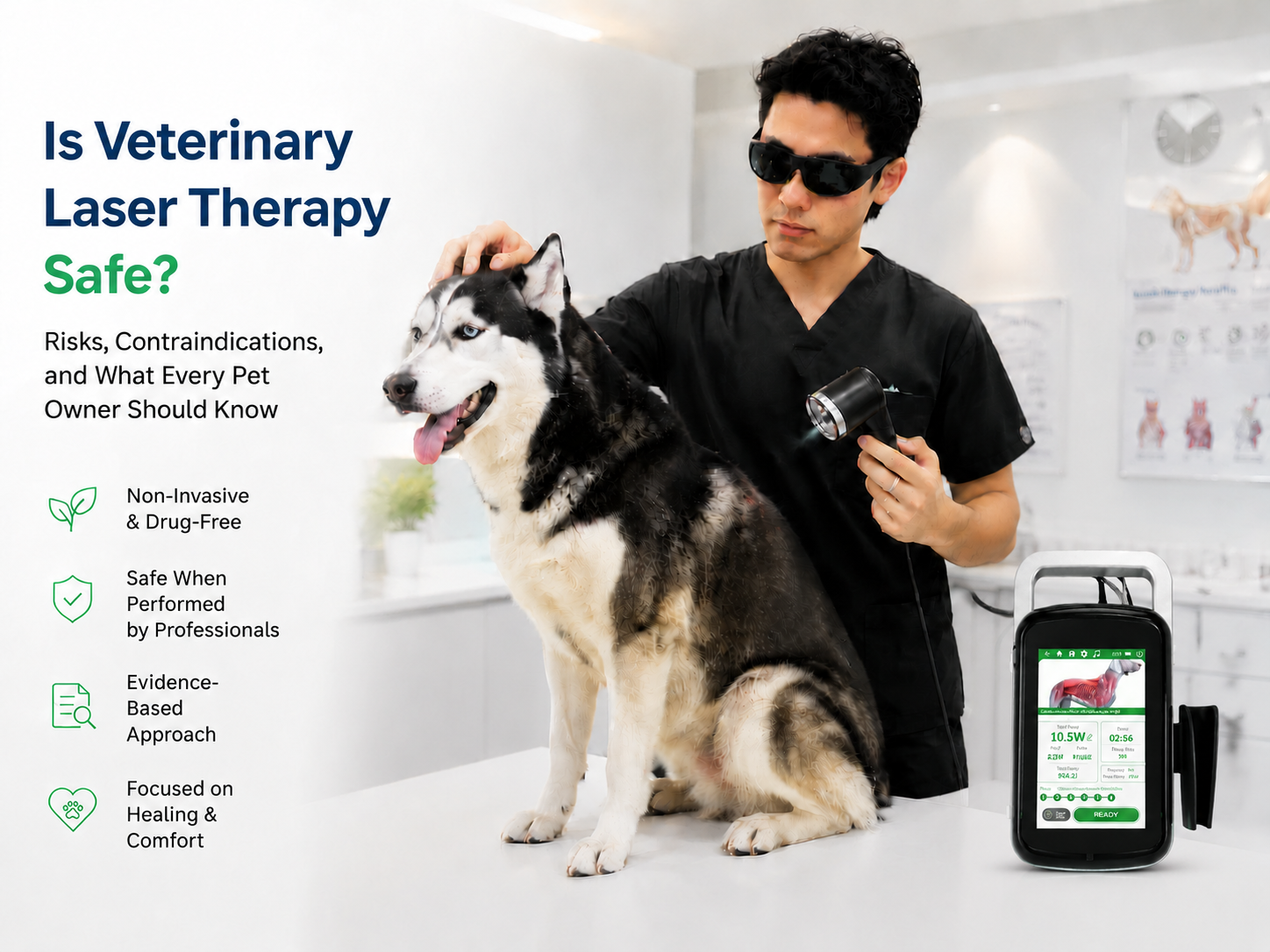
Is Veterinary Laser Therapy Safe? Risks, Contraindications, and What Every Pet Owner Should Know
Introduction
Veterinary laser therapy has become an increasingly common treatment option for managing pain, reducing inflammation, and supporting tissue healing in dogs, cats, and other companion animals. Class IV therapeutic lasers are widely used in veterinary medicine for conditions such as osteoarthritis, soft tissue injuries, postoperative recovery, and chronic musculoskeletal disorders.
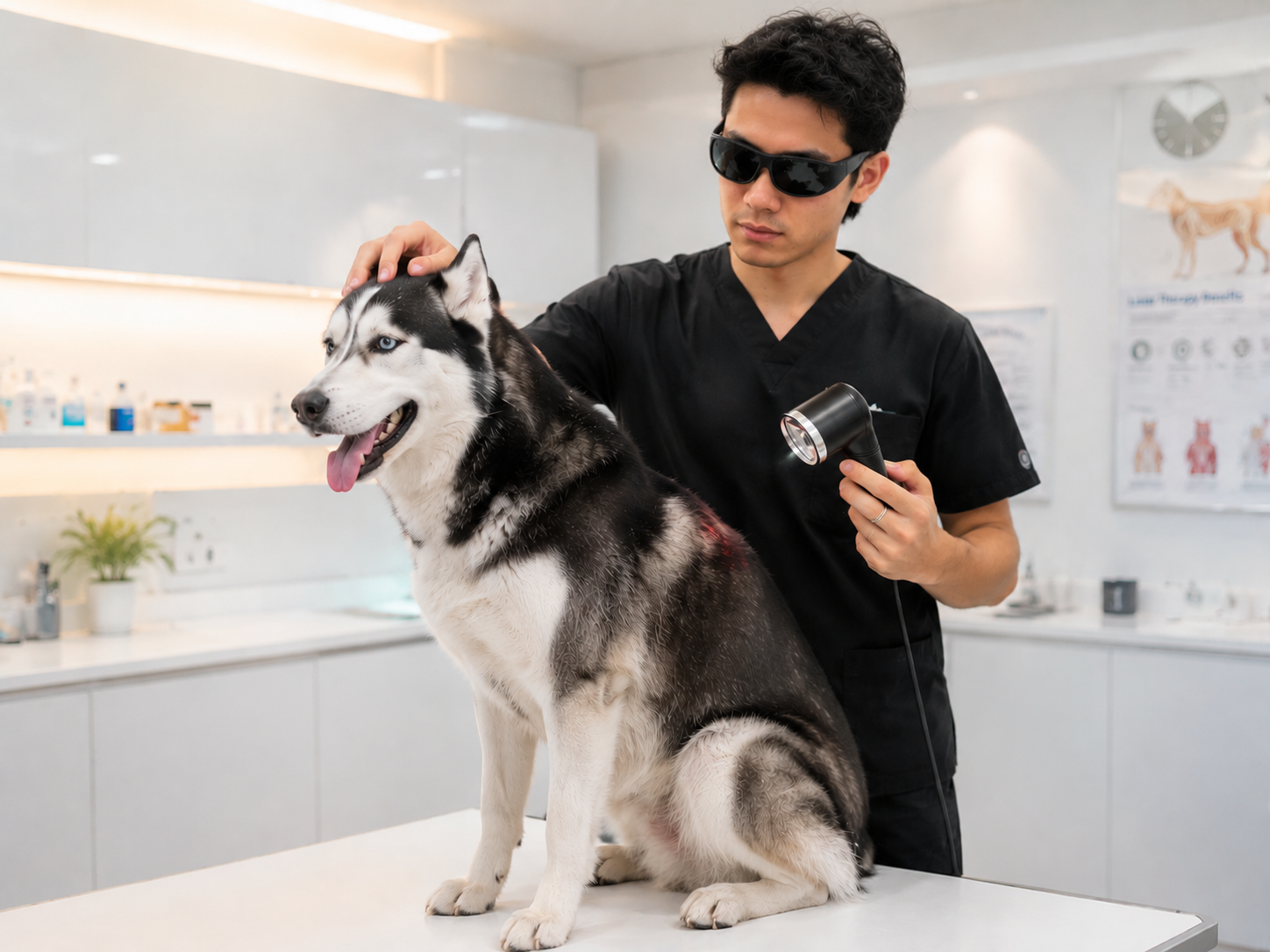
As more pet owners learn about laser therapy, many have questions about its safety:
• Can laser therapy burn my pet?
• Is laser therapy safe if my pet has cancer?
• Can laser treatment damage my pet’s eyes?
• Are there situations where laser therapy should not be used?
These concerns are understandable. Like any medical treatment, veterinary laser therapy should be performed by trained professionals using appropriate equipment and evidence-based protocols.
Current evidence indicates that Class IV veterinary laser therapy has an excellent safety profile when used correctly. However, understanding potential risks, contraindications, and safety considerations helps veterinarians and pet owners make informed decisions.
Risks, Contraindications, and Safety Considerations
How Safe Is Laser Therapy for Dogs and Cats?
Veterinary laser therapy is generally considered safe for dogs and cats when performed by trained veterinary professionals using appropriate treatment parameters.
Class IV laser therapy is commonly used in companion animals to support pain management, reduce inflammation, and promote tissue healing. Dogs and cats receiving laser therapy typically tolerate treatment well because the procedure is non-invasive and does not involve surgery, injections, or systemic medication.
The safety of laser therapy depends on several factors, including the animal’s condition, treatment area, wavelength selection, power settings, dosage, and the veterinarian’s clinical judgment. Proper assessment before treatment helps ensure that laser therapy is used appropriately for each patient.
For most pets, laser therapy sessions are comfortable and stress-free. Many animals remain relaxed during treatment and may experience a mild warming sensation as therapeutic light energy interacts with tissues.
However, laser therapy is not suitable for every situation. Veterinarians should carefully evaluate patients with certain conditions, including suspected tumors, pregnancy, photosensitizing medications, or other medical considerations before starting treatment.
Veterinary laser therapy is generally well tolerated, but proper patient evaluation is essential before treatment. Veterinarians should assess each animal’s health condition and consider factors that may affect treatment safety.
Important considerations include:
• Known or suspected tumors
• Pregnancy status
• Active bleeding disorders
• Photosensitizing medications
• Metal implants
• Pacemakers or implanted electronic devices
• Juvenile animals with open growth plates
• History of seizure disorders
After treatment, most pets experience no significant adverse effects. Some animals may show mild temporary warmth, relaxation, or increased activity, which are considered normal responses.
Rare temporary reactions may include mild skin redness, slight discomfort, or short-term worsening of pain within the first 24–48 hours. These effects typically resolve without additional intervention.
How Veterinarians Ensure Laser Therapy Safety
The safety of veterinary laser therapy depends largely on proper treatment planning and clinical judgment.
Veterinarians select treatment parameters based on:
• The animal’s condition
• Treatment location
• Tissue depth
• Treatment goals
• Patient response
Factors such as laser power, wavelength, and dosage, and treatment duration must be carefully adjusted to achieve therapeutic benefits while minimizing potential risks.
When appropriate parameters are selected and safety guidelines are followed, laser therapy can provide a controlled and predictable treatment experience.
Why Laser Therapy?
One reason veterinary laser therapy has gained popularity is its favorable safety profile compared with some long-term pain management approaches.
Unlike systemic medications, photobiomodulation does not rely on metabolism through the liver or kidneys and does not typically create drug interactions. Serious adverse events are considered uncommon when appropriate treatment protocols are followed.
Potential benefits include:
• Non-invasive treatment
• Drug-free pain management support
• Minimal systemic side effects
• Repeatable treatment sessions
• Compatibility with rehabilitation programs
• Support for tissue repair and recovery
Laser therapy should complement—not replace—proper diagnosis, surgery, medication when needed, or rehabilitation plans.
Scientific Mechanism
Veterinary laser therapy works through photobiomodulation (PBM), a biological process in which light energy influences cellular activity.
During treatment, photons are absorbed by cellular structures, particularly mitochondrial chromophores such as cytochrome c oxidase. This process may increase ATP production and support cellular metabolism.
These biological effects may contribute to:
• Enhanced tissue repair
• Reduced inflammatory responses
• Improved microcirculation
• Increased collagen production
• Pain modulation
• Accelerated wound healing
Laser therapy should not be applied directly over known or suspected malignant tumors. Current evidence does not indicate that laser therapy causes cancer, but direct irradiation of tumor tissue remains contraindicated because of limited clinical data.
Clinical Evidence
Published research and clinical experience support the safety of veterinary laser therapy when appropriate treatment protocols are used.
Organizations such as the American Animal Hospital Association (AAHA) recognize laser therapy as part of multimodal pain management approaches, while the World Association for Laser Therapy (WALT) provides safety recommendations for photobiomodulation practice.
Decades of clinical use and research have reported very few significant complications when proper patient selection, treatment parameters, and safety precautions are followed.
Safety depends on:
• Correct patient assessment
• Appropriate treatment parameters
• Following contraindications
• Proper eye protection
• Professional clinical judgment
Expected Results
When appropriate candidates are selected, most pets tolerate laser therapy well.
Typical responses may include:
Immediately after treatment:
• Comfortable, stress-free procedure
• Mild warming sensation
• Relaxed behavior
Within the first few days:
• Reduced pain
• Improved mobility
• Decreased inflammation
Throughout the treatment course:
• Better tissue healing
• Improved quality of life
• Reduced dependence on pain medication in selected patients
FAQs
Is Laser Therapy Painful for Pets?
No. Veterinary laser therapy is typically a comfortable and non-invasive procedure. Most dogs and cats remain relaxed during treatment and may experience a mild warming sensation as therapeutic light energy interacts with tissues.
Is Class IV laser therapy safe for dogs and cats?
Yes. When performed by trained veterinary professionals using appropriate treatment parameters, Class IV laser therapy is generally considered a safe adjunctive treatment.
Can laser therapy cause cancer?
Current evidence does not show that laser therapy causes cancer. However, direct treatment over known or suspected tumors is contraindicated.
Why do pets and veterinarians wear protective goggles during laser therapy?
Therapeutic laser light can potentially damage the retina if viewed directly. Veterinary staff and animal patients should use wavelength-appropriate protective eyewear during treatment.
Can pregnant animals receive laser therapy?
Pregnancy is considered a relative contraindication. Treatment over the abdomen and pelvic region should generally be avoided unless specifically recommended by a veterinarian.
Can laser therapy be combined with medications?
Yes. Veterinary laser therapy is commonly integrated into multimodal treatment plans alongside medications,rehabilitation after surgery, and other supportive therapies.
Conclusion
Veterinary laser therapy has established an excellent safety record through decades of clinical use. When performed by trained professionals using evidence-based protocols, it provides a non-invasive option to support pain management, reduce inflammation, and promote tissue healing.
Safety depends on proper patient evaluation, correct treatment parameters, eye protection, and adherence to established clinical guidelines.
References
• American Animal Hospital Association (AAHA) pain management guidelines
• World Association for Laser Therapy (WALT) safety recommendations
• Peer-reviewed photobiomodulation research and veterinary clinical studies
Learn More About AILUCS Veterinary Laser Therapy Systems
AILUCS develops advanced Class IV veterinary laser systems designed to support safe, evidence-based photobiomodulation for companion animals.
With intelligent treatment protocols, precise energy delivery, and safety-focused design, AILUCS helps veterinary professionals provide effective laser therapy across a wide range of clinical applications.
Contact AILUCS to learn more about veterinary laser solutions and how they can support safer, more efficient patient care.