Why 1064nm Veterinary Laser Therapy Matters in Equine Rehabilitation
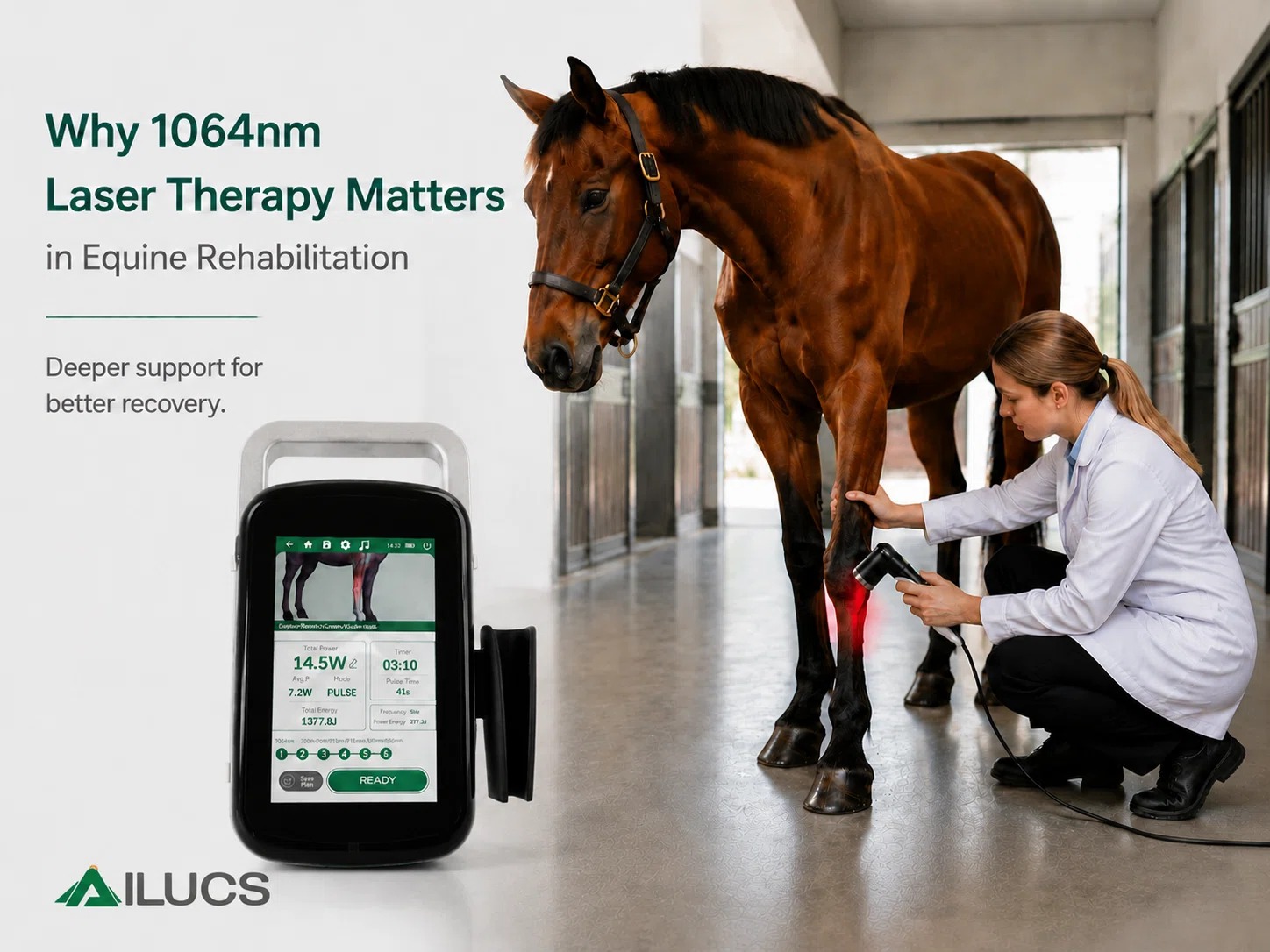
Why 1064nm Veterinary Laser Therapy Matters in Equine Rehabilitation
Introduction
Equine rehabilitation involves complex musculoskeletal conditions affecting tendons, ligaments, muscles, and joints. Due to larger body structures and deeper anatomical targets, horses require treatment strategies based on tissue characteristics and rehabilitation goals.
Photobiomodulation, commonly known as veterinary laser therapy, uses specific wavelengths of light to interact with biological tissues and support recovery processes. However, different wavelengths interact with tissues differently.
Among therapeutic wavelengths, 1064nm laser therapy for equine rehabilitation has gained attention for its near-infrared characteristics and potential applications involving deeper anatomical targets. Combined with wavelengths such as 810nm, 915nm, and 980nm, multi-wavelength systems provide greater flexibility for individualized rehabilitation protocols.
Understanding wavelength selection helps veterinary professionals evaluate laser systems based on clinical objectives rather than a single specification.
Clinical Applications in Equine Rehabilitation
Equine rehabilitation commonly involves tendon injuries, ligament strain, muscle discomfort, joint limitations, and recovery after orthopedic procedures. Treatment planning should consider tissue location, clinical condition, treatment goals, and patient response.
Therefore, veterinarians typically evaluate:
Target tissue location
Clinical condition
Treatment objectives
Patient response
rather than selecting a laser parameter based on one factor alone.
Why Laser Therapy and Wavelength Selection Matter
Veterinary laser therapy works through photobiomodulation, where specific wavelengths of light interact with biological tissues.
Different wavelengths have different absorption and scattering characteristics, influencing light distribution, cellular interaction, tissue depth, and treatment parameters.
For equine rehabilitation, wavelength selection is important because treatment targets may range from superficial tissues to deeper musculoskeletal structures. A multi-wavelength approach allows veterinarians to select appropriate wavelengths according to clinical requirements.
Scientific Mechanism of 1064nm Veterinary Laser Therapy
1064nm belongs to the near-infrared wavelength range commonly used in therapeutic laser applications. Compared with shorter wavelengths, 1064nm demonstrates different absorption and scattering characteristics within biological tissues, which may support approaches involving deeper anatomical targets.
At the cellular level, photobiomodulation is associated with light absorption by mitochondrial components, including cytochrome c oxidase. This interaction may influence cellular energy metabolism, ATP production, circulation-related responses, and inflammatory pathway regulation.
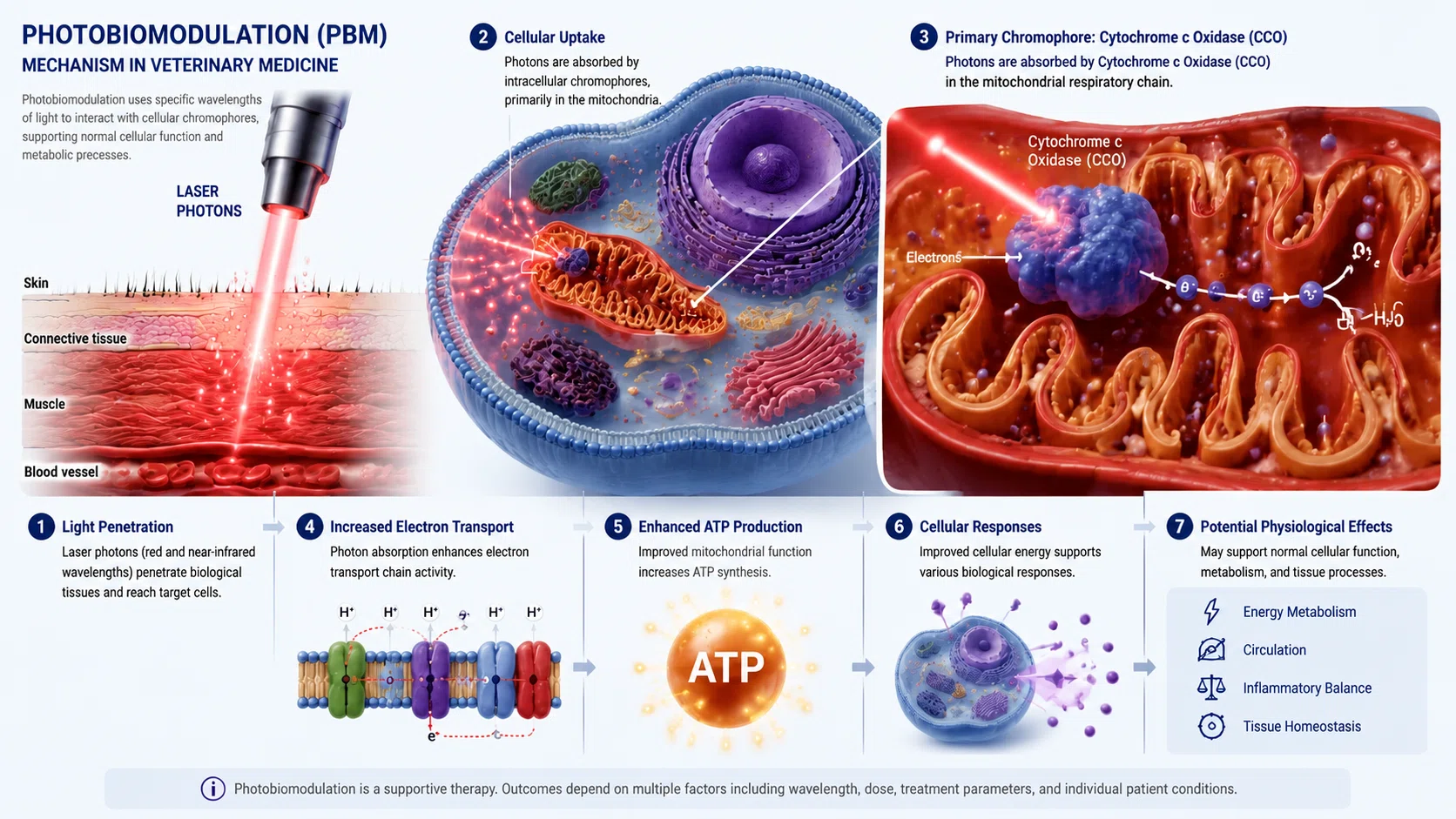
Therefore, the role of 1064nm in equine rehabilitation should be considered as part of a complete treatment strategy rather than an independent factor determining therapeutic success.
Treatment Applications of 1064nm in Equine Rehabilitation
Supporting Tendon and Ligament Rehabilitation
Tendon and ligament injuries are common concerns in performance horses, affecting structures such as the superficial digital flexor tendon (SDFT), suspensory ligament, and connective tissues. Recovery involves inflammatory regulation, cellular repair, collagen remodeling, and progressive return to activity.
Because these structures involve different tissue depths, wavelength selection may be considered during rehabilitation planning.
1064nm may support treatment approaches involving deeper musculoskeletal structures, while other wavelengths may complement surrounding tissue applications.
Veterinary laser therapy is typically used alongside controlled exercise, monitoring, and progressive rehabilitation rather than as a replacement for comprehensive care.
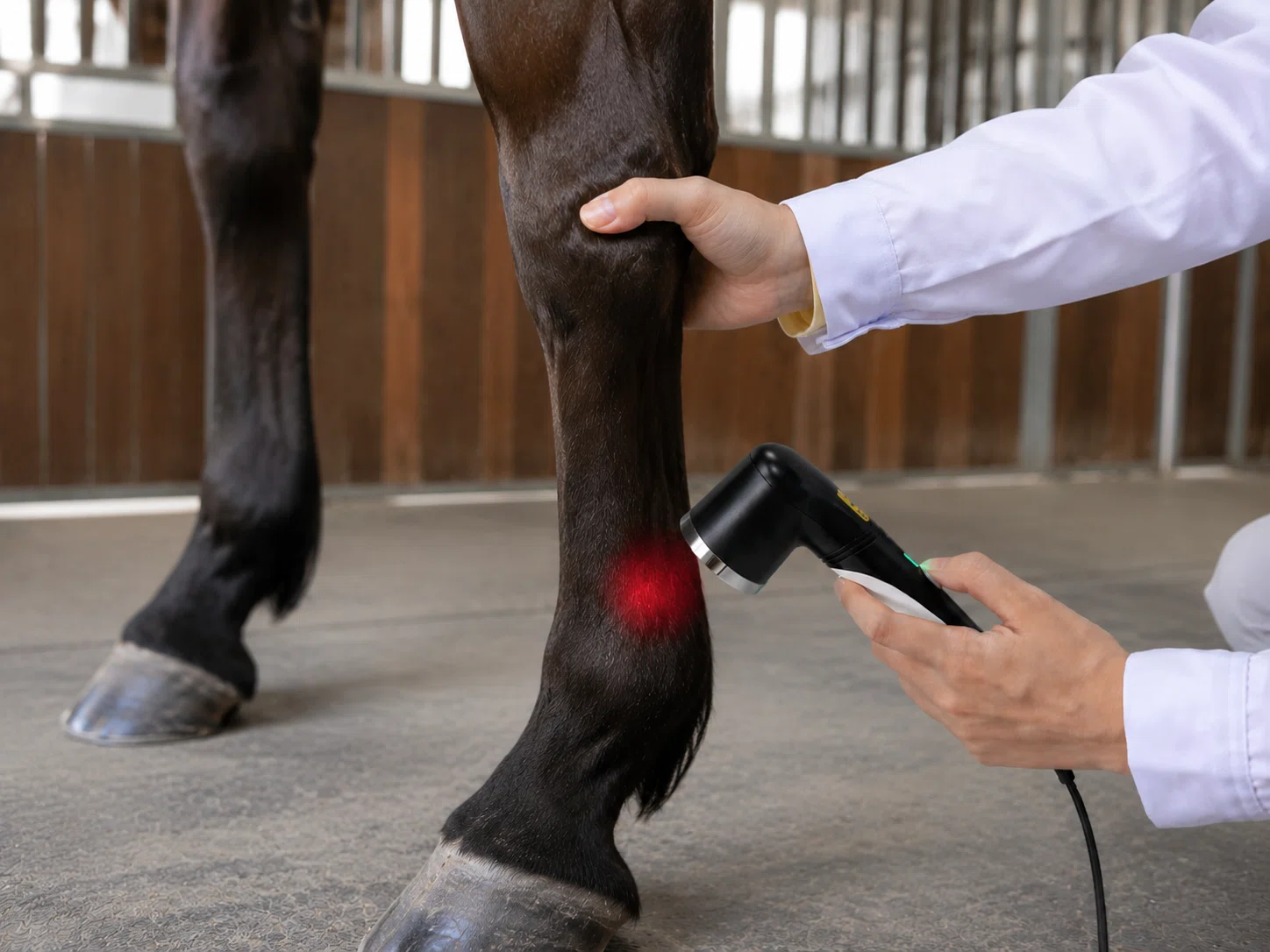
Supporting Soft Tissue and Muscle Rehabilitation
Muscle strains and soft tissue injuries can affect equine mobility and athletic performance.
Photobiomodulation may support rehabilitation through mechanisms such as:
Supporting cellular metabolism
Improving local circulation
Modulating inflammatory responses
Supporting tissue recovery processes
Because soft tissue injuries can involve different anatomical structures, treatment planning should consider the location and severity of the condition.
The combination of appropriate wavelength selection, dosage, and rehabilitation management is essential when applying veterinary laser therapy.
How Multi-Wavelength Veterinary Laser Systems Support Equine Therapy
Equine rehabilitation may involve multiple tissue layers, including:
Skin
Fascia
Muscle
Tendons
Ligaments
Joint structures
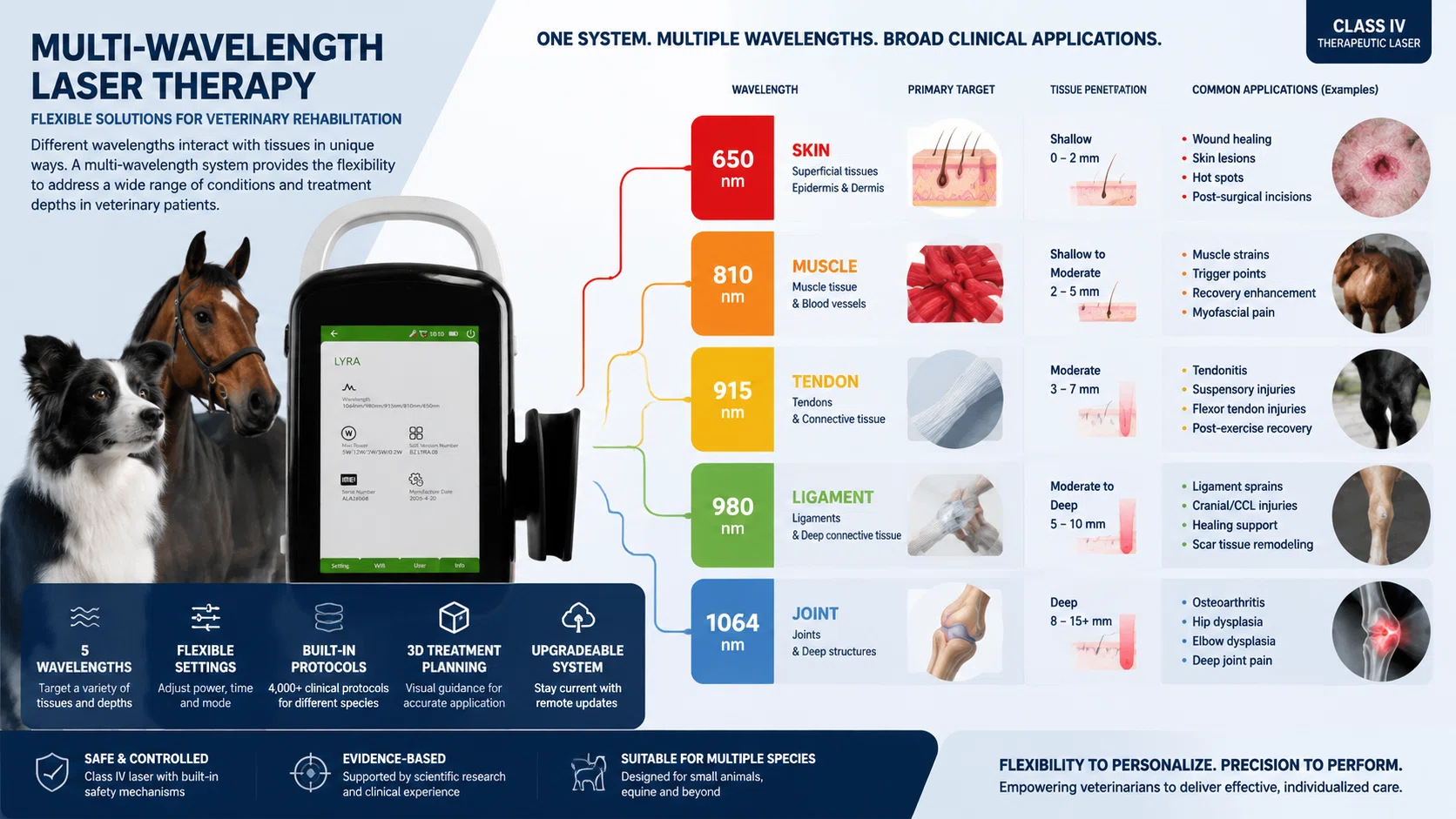
A multi-wavelength veterinary laser system allows clinicians to select different wavelengths according to specific clinical objectives.
For example:
| Clinical Application | Wavelength Consideration |
| Superficial tissue applications | Shorter wavelengths may support surface-level treatment goals |
| Muscle rehabilitation | Near-infrared wavelengths such as 810nm may support deeper soft tissue applications |
| Tendon and joint-related applications | 1064nm may be considered when deeper anatomical targets are involved |
| omprehensive rehabilitation | Multiple wavelengths provide greater treatment flexibility |
Why Multi-Wavelength Systems Provide More Flexibility
A multi-wavelength approach provides flexibility rather than a guarantee of superior outcomes. Different rehabilitation cases may involve multiple tissue structures, requiring flexible wavelength selection based on clinical objectives. Therefore, a multi-wavelength system allows veterinarians to adjust treatment strategies according to clinical requirements.
AILUCS LYRA Veterinary Laser integrates five therapeutic wavelengths:
650nm
810nm
915nm
980nm
1064nm
This combination is designed to support different veterinary rehabilitation applications, including musculoskeletal conditions and equine therapy.
Understanding Laser Emission Modes
Laser systems may use different emission modes, including Continuous Wave (CW), Pulsed, and Super Pulsed modes, to control how energy is delivered during treatment.
The selection of emission mode should be based on treatment goals, wavelength, dosage, treatment area, and patient condition rather than one technical feature alone.
For a detailed comparison of Continuous Wave and Pulsed laser therapy, please see our guide: Continuous Wave vs Pulsed Laser Therapy.
Treatment Parameters for 1064nm Veterinary Laser Therapy
Selecting 1064nm for equine rehabilitation should be based on clinical objectives rather than wavelength alone.
Important treatment parameters include:
Wavelength Selection
Different wavelengths interact with tissues in different ways. A 1064nm wavelength may be considered when clinicians require near-infrared light characteristics for specific rehabilitation applications.
However, wavelength selection should always be combined with appropriate dosage and treatment planning.
Energy Dose
Therapeutic outcomes are influenced by:
Energy density
Irradiance
Total delivered energy
Treatment duration
Treatment frequency
Higher energy output does not automatically indicate better clinical results.
The appropriate dose depends on:
Patient condition
Target tissue
Treatment area
Rehabilitation stage
Clinical Evidence
Research on photobiomodulation continues to investigate how wavelength, dosage, and treatment techniques influence biological responses.
Studies evaluating light transmission through tissues suggest that wavelength characteristics can influence photon distribution and tissue interaction, with effects varying depending on wavelength and application conditions.
Research involving 1064nm photobiomodulation has explored its potential veterinary applications. However, further clinical research is needed to establish standardized protocols for different conditions.
For equine rehabilitation, veterinarians should consider evidence together with:
Clinical experience
Patient response
Treatment parameters
Rehabilitation objectives
rather than evaluating wavelength as an isolated factor.
Expected Results
When incorporated into a comprehensive rehabilitation program, 1064nm veterinary laser therapy may support:
Pain management strategies
Mobility improvement
Rehabilitation progression
Patient comfort
Expected outcomes depend on injury type, severity, treatment protocol, and individual patient response.
Veterinary laser therapy should be considered a complementary rehabilitation technology and should not replace necessary diagnosis, surgery, medication, or controlled rehabilitation planning.
FAQs
1. Why is 1064nm used in veterinary laser therapy?
1064nm is a near-infrared wavelength with different optical characteristics from shorter wavelengths and may be considered for specific rehabilitation applications based on tissue characteristics and treatment objectives.
2. Is 1064nm always better than other laser wavelengths?
No.
The effectiveness of veterinary laser therapy depends on multiple factors, including wavelength, dosage, treatment parameters, and clinical application.
A multi-wavelength approach provides flexibility rather than guaranteeing superior outcomes.
3. What should veterinarians consider when choosing an equine laser system?
Important factors include:
Available wavelengths
Adjustable treatment parameters
Emission modes
Clinical workflow
Evidence-supported protocols
Conclusion
1064nm veterinary laser therapy represents one option within modern equine rehabilitation technology.
Because equine rehabilitation involves complex musculoskeletal conditions, wavelength selection plays an important role in developing individualized photobiomodulation strategies.
The value of a 1064nm wavelength is not simply related to having a longer wavelength, but to how it fits into a complete treatment approach involving appropriate dosage, emission mode, and clinical decision-making.
Multi-wavelength veterinary laser systems provide clinicians with greater flexibility by allowing treatment parameters to be adapted according to different rehabilitation requirements.