
Veterinary Laser Therapy After Soft Tissue Surgery: Supporting Recovery and Wound Healing
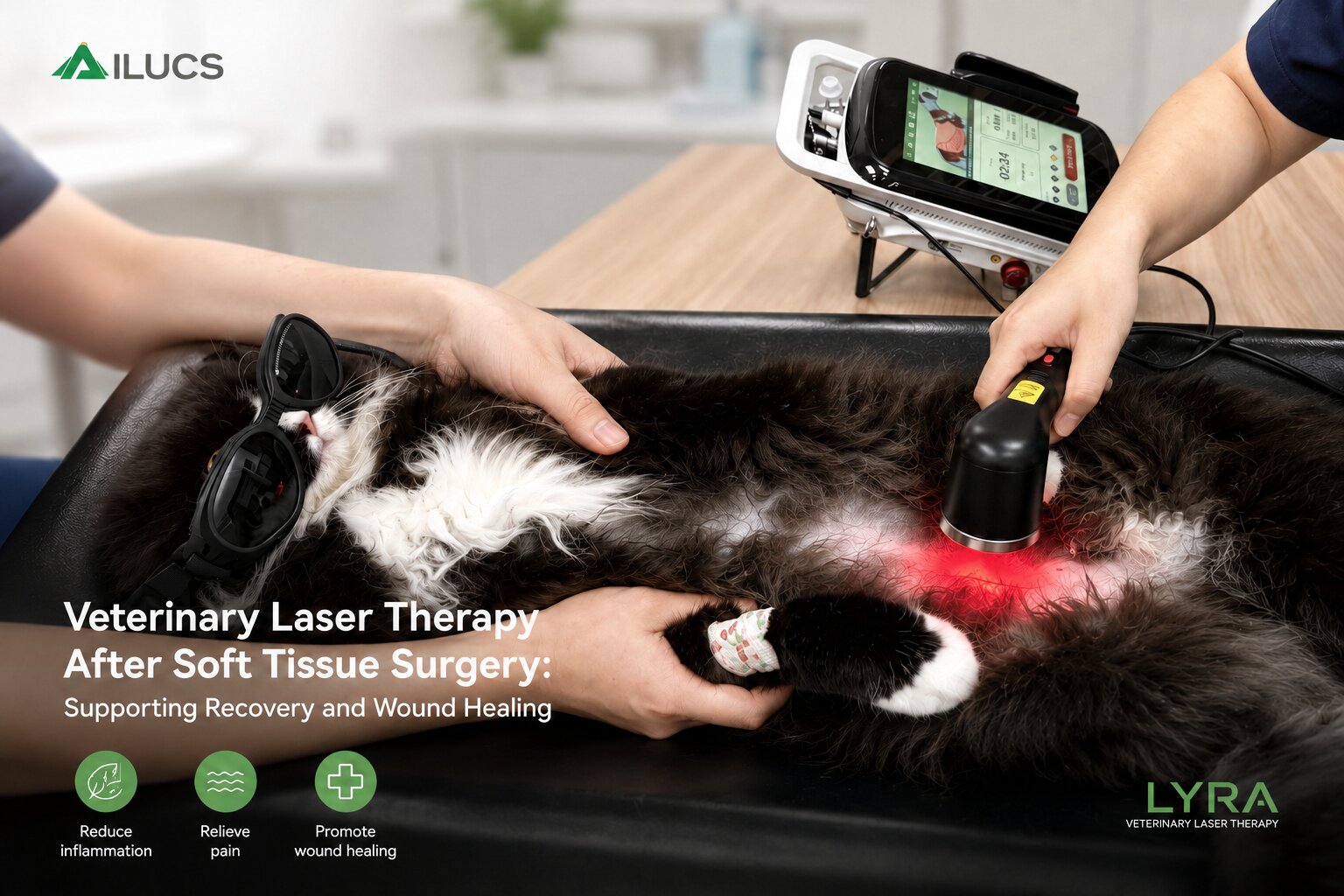
Veterinary Laser Therapy After Soft Tissue Surgery: Supporting Recovery and Wound Healing
Meta Description: Learn how photobiomodulation (PBM), also known as low-level laser therapy (LLLT), supports recovery after veterinary soft tissue surgery by reducing pain and inflammation while promoting wound healing.
Introduction
Veterinary soft tissue surgery is routinely performed to treat conditions such as tumors, traumatic injuries, abscesses, wounds, and reproductive disorders. While surgery addresses the underlying condition, many animal patients experience postoperative pain, inflammation, swelling, and delayed wound healing during recovery. These challenges can affect patient comfort, delay rehabilitation, and increase the level of postoperative care required.
To support recovery, veterinarians are increasingly incorporating photobiomodulation (PBM), also known as low-level laser therapy (LLLT), into comprehensive rehabilitation plans. As a non-invasive adjunctive therapy, PBM may help regulate inflammation, promote tissue repair, improve local circulation, and reduce postoperative discomfort when used alongside standard veterinary care.If you're new to photobiomodulation, you can first learn how veterinary laser therapy works before exploring its postoperative applications.
This article explores the potential benefits of laser therapy after veterin·ary soft tissue surgery, explains the biological mechanisms behind photobiomodulation, and reviews its clinical applications in postoperative rehabilitation.
Common Postoperative Challenges
Following soft tissue surgery, animal patients may experience:
· Pain and tenderness around the incision
· Localized swelling and edema
· Redness and inflammation
· Reduced mobility due to discomfort
· Delayed wound closure
· Bruising around the surgical site
· Scar tissue formation during healing
The severity of these signs varies depending on the surgical procedure, tissue trauma, species, age, and overall health of the patient. Appropriate postoperative management is essential to minimize complications and support normal healing.
Benefits of Laser Therapy After Surgery
Photobiomodulation (PBM) is a non-invasive adjunctive therapy that complements standard postoperative care following veterinary soft tissue surgery. When incorporated into a comprehensive rehabilitation plan, PBM may help improve patient comfort, support tissue repair, and, in appropriate cases, reduce the need for pain medications as determined by the attending veterinarian. Its potential clinical benefits include:
·Helping relieve postoperative pain and discomfort
·Supporting regulation of the inflammatory response
·Promoting wound healing and epithelial regeneration
·Improving local blood circulation and tissue oxygenation
·Stimulating fibroblast activity and collagen synthesis to support tissue repair
·Helping maintain soft tissue flexibility during healing
·Supporting an earlier return to normal movement and function
Similar rehabilitation principles are commonly applied following TPLO surgery in dogs.
Unlike high-power surgical lasers used for cutting or ablation, PBM delivers low-energy, non-thermal light that stimulates normal biological processes without causing thermal damage to surrounding tissues. When performed by trained veterinary professionals using appropriate treatment parameters, it can be safely integrated into postoperative rehabilitation alongside routine wound management, pain control, and other standard veterinary treatments.
How Photobiomodulation Works
The therapeutic effects of PBM are based on biological responses that occur when specific wavelengths of light are absorbed by cells.
Enhanced Cellular Energy Production
Light energy is absorbed by mitochondria, increasing cellular energy production (ATP). Higher cellular energy supports normal tissue repair, protein synthesis, and cell proliferation.
Regulation of Inflammation
PBM helps regulate the inflammatory process by supporting a balanced biological response. This may contribute to reduced swelling, redness, and postoperative discomfort.
Improved Microcirculation
Laser therapy can promote local circulation and lymphatic drainage, improving oxygen and nutrient delivery while facilitating removal of metabolic by-products from injured tissues.Improved circulation also plays an important role in supporting recovery from muscle strains and soft tissue injuries.
Support for Tissue Remodeling
PBM stimulates fibroblast activity and collagen synthesis, both of which play important roles in wound healing and tissue remodeling. Proper collagen organization may contribute to improved tissue strength and flexibility during recovery.
Multi-Wavelength Laser Therapy
Different laser wavelengths penetrate tissue to different depths and may be selected according to the treatment area and clinical objective.
Modern veterinary laser therapy systems may combine multiple therapeutic wavelengths within a single platform, allowing veterinarians to address both superficial and deeper tissues during postoperative rehabilitation.
Clinical Applications
Laser therapy is commonly incorporated into veterinary rehabilitation for a wide range of conditions, including recovery following various soft tissue surgical procedures:
· Tumor removal.
· Wound repair and reconstruction
· Abscess surgery
· Bite wound management
· Spay and neuter procedures
· Trauma-related soft tissue injuries
In addition to postoperative care, PBM is also used in veterinary medicine to support chronic wound management, tendon and ligament rehabilitation, and musculoskeletal recovery.
Although much of the published research on photobiomodulation originates from human medicine, veterinary studies and clinical experience have reported similar therapeutic benefits in appropriately selected animal patients. As with any adjunctive therapy, treatment should be integrated with routine postoperative care rather than used as a replacement for standard surgical management.
Laser Therapy After Veterinary Soft Tissue Surgery:

Frequently Asked Questions
Is laser therapy safe after veterinary soft tissue surgery?
When performed by trained veterinary professionals using appropriate treatment parameters, photobiomodulation is generally considered a safe, non-invasive adjunctive therapy with a low risk of adverse effects. Understanding how veterinary laser therapy works can help clinicians better evaluate its biological effects during recovery.
When should treatment begin?
For uncomplicated procedures, laser therapy is commonly started 24–48 hours after surgery. The exact timing should be determined by the veterinarian based on the patient's condition and surgical site.
Can laser therapy reduce postoperative pain?
PBM may help reduce postoperative discomfort by supporting normal inflammatory regulation, improving local circulation, and influencing peripheral nerve activity. Similar principles are also applied in veterinary laser therapy for pain management and rehabilitation.
How many treatment sessions are needed?
Treatment frequency varies according to the procedure and recovery progress. Many rehabilitation plans involve several sessions during the first one to two weeks, with adjustments made according to the patient's clinical response.
Key Takeaways
Veterinary laser therapy is a non-invasive adjunctive treatment.
PBM may support tissue repair and wound healing with veterinary laser therapy
Early postoperative rehabilitation may improve patient comfort.
Treatment should always be performed under veterinary supervision.
-
Multi-wavelength laser systems allow individualized treatment protocols.
Conclusion
Photobiomodulation (PBM/LLLT) is a valuable adjunctive therapy for postoperative recovery following veterinary soft tissue surgery. By supporting normal cellular activity, regulating inflammation, improving local circulation, and promoting tissue repair, laser therapy can enhance postoperative rehabilitation and patient comfort when integrated into a comprehensive treatment plan.
As veterinary laser technology continues to evolve, multi-wavelength laser therapy systems provide clinicians with greater flexibility by allowing treatment parameters to be adapted according to tissue depth, surgical procedure, and different stages of healing. For example, the AILUCS LYRA Veterinary Laser Therapy System integrates 650 nm, 810 nm, 915 nm, 980 nm, and 1064 nm wavelengths within a single platform, supporting individualized treatment protocols for postoperative rehabilitation, wound healing, and soft tissue recovery. Treatment should always be performed by trained veterinary professionals based on each patient's clinical condition.
Clinicians interested in expanding their understanding of photobiomodulation can explore additional clinical applications of veterinary laser therapy across different species and rehabilitation protocols in our guide: How Does Veterinary Laser Therapy Work?
References
· Hamblin MR. Mechanisms and applications of photobiomodulation. PubMed.
· AAHA/AAFP Pain Management Guidelines for Dogs and Cats.
· World Association for Laser Therapy (WALT).
· WSAVA Global Pain Council Guidelines.
· Cotler HB, et al. The use of low-level laser therapy in tissue repair and pain control. PubMed.