
Why Do Tendon Injuries Keep Coming Back in Dogs? How Laser Therapy Supports a Safer Recovery
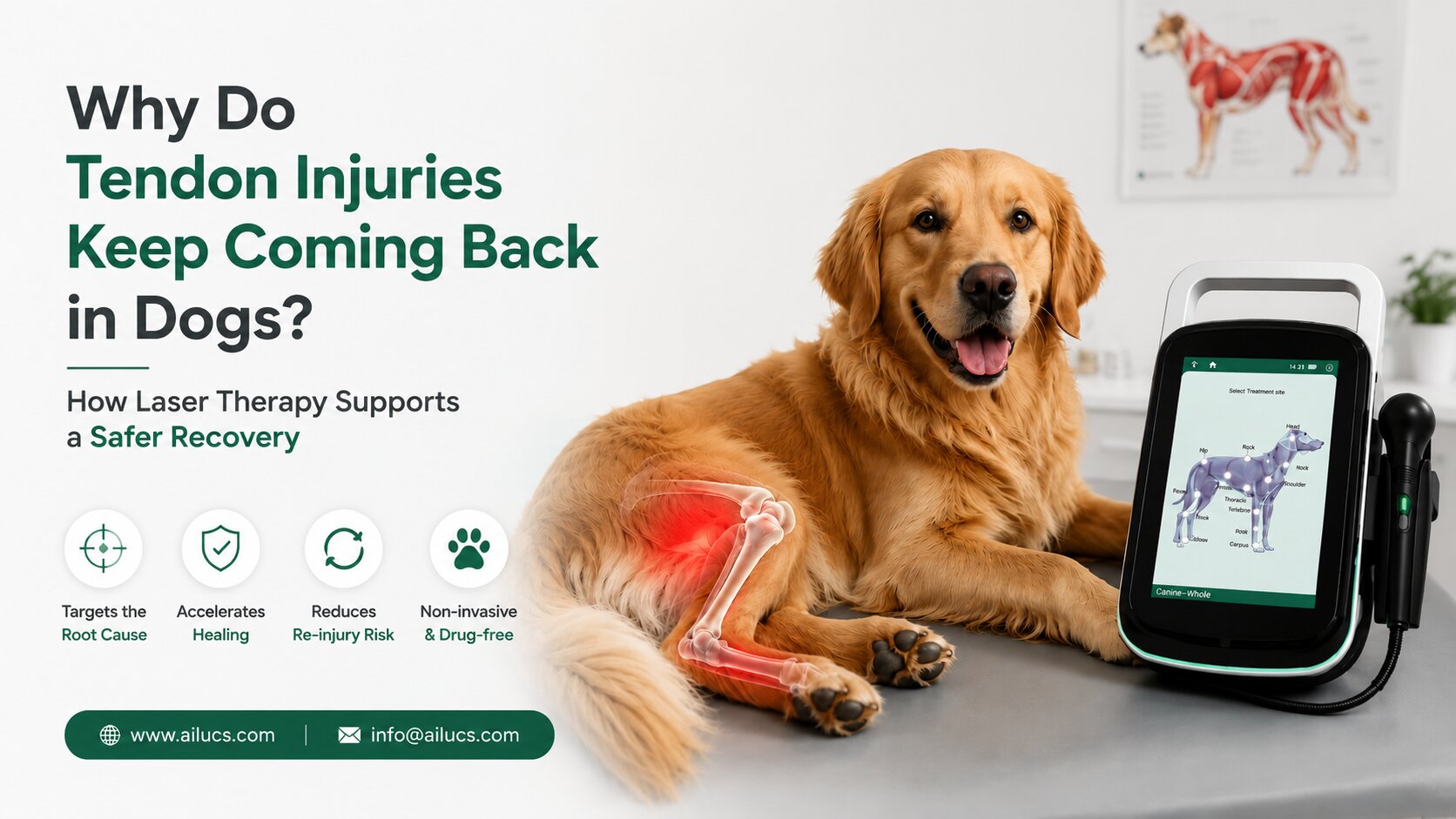
Why Do Tendon Injuries Keep Coming Back in Dogs? How Laser Therapy Supports a Safer Recovery
Introduction
A dog seems to recover after a few days of rest, only to start limping again after chasing a ball. Another hesitates before jumping into the car, even though the pain appeared to be gone just a week earlier.
These situations are common in dogs with tendon injuries and often leave owners wondering:
"If my dog looks better, why has the lameness returned?"
The answer is that pain often improves before the tendon has fully healed.
Unlike muscles, tendons have a limited blood supply and require much longer to recover. While discomfort may decrease within days or weeks, the healing tendon is still rebuilding its collagen fibers and may not yet tolerate normal activity. Returning to exercise too soon can overload the tissue and lead to reinjury.
For this reason, veterinary rehabilitation focuses on more than simply relieving pain. A successful recovery usually combines an accurate diagnosis, controlled exercise, progressive rehabilitation, regular reassessment, and photobiomodulation therapy (PBMT), also known as veterinary laser therapy. Rather than replacing conventional treatment, laser therapy is used to support tissue healing and improve patient comfort throughout the rehabilitation process.
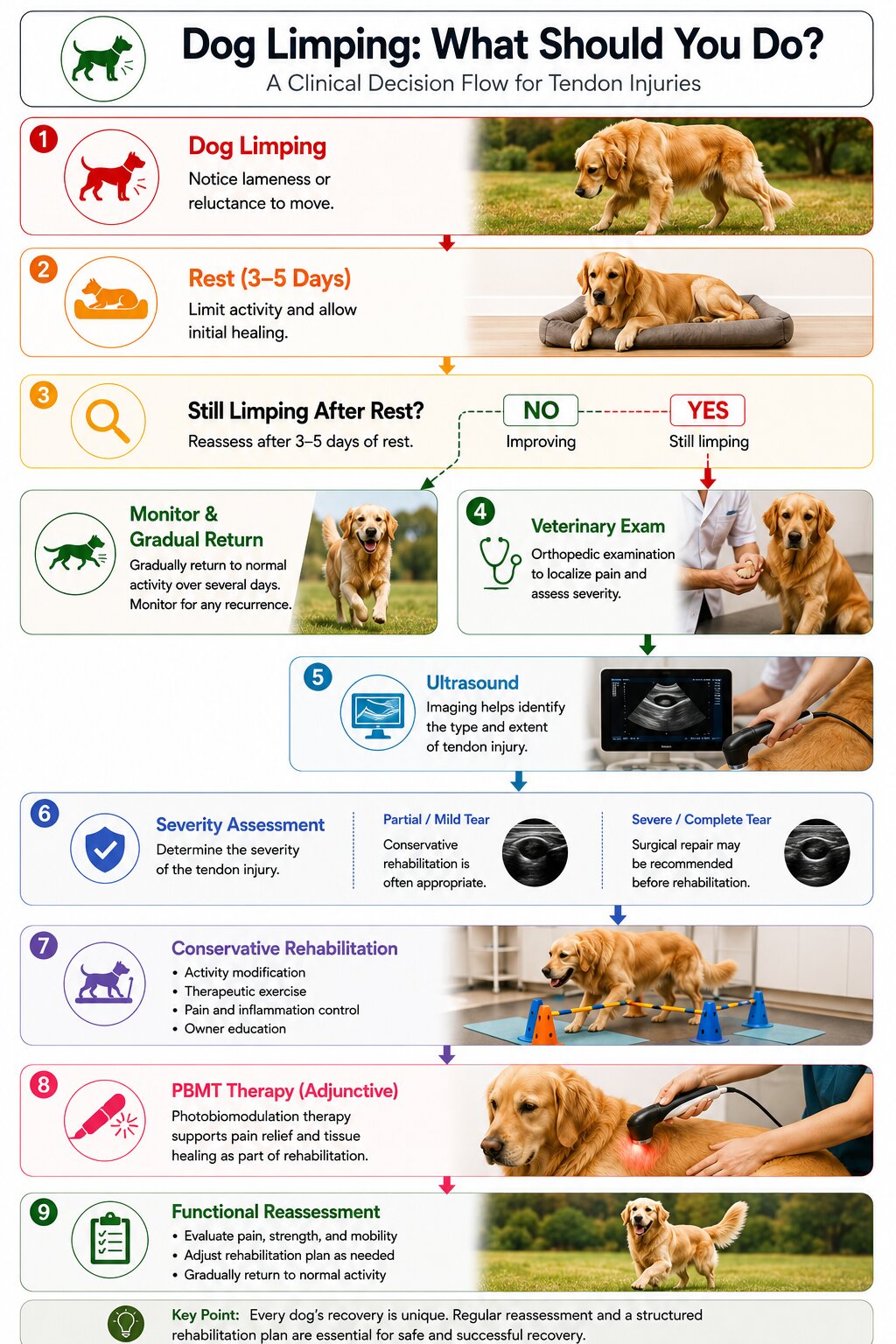
A Clinical Case: Recovery Takes More Than Rest
A six-year-old Labrador Retriever was referred for rehabilitation after three weeks of intermittent right forelimb lameness. Orthopedic examination identified pain around the supraspinatus tendon, and musculoskeletal ultrasound confirmed chronic supraspinatus tendinopathy without a complete tendon rupture.
Because surgery was not necessary, the dog followed a conservative rehabilitation program that included temporary activity restriction, progressive therapeutic exercise, and Class IV laser therapy (PBMT) two to three times per week during the early stages of recovery.
The goal was not simply to relieve pain. Rest protected the injured tendon, rehabilitation exercises gradually restored function, and laser therapy supported tissue healing throughout the recovery process.
Choosing the Right Treatment
Clinical Finding → Recommended Approach
• Mild tendon injury without rupture → Conservative rehabilitation
• Persistent lameness after rest → Diagnostic imaging and reassessment
• Complete tendon rupture → Surgical consultation
• Functional improvement → Gradual progression of rehabilitation
One important lesson from cases like this is that reduced pain does not always mean the tendon has fully healed. Dogs often become more comfortable before the tendon regains enough strength for unrestricted activity.
Why Tendon Injuries Take Longer to Heal
One of the biggest misconceptions about tendon injuries is that less pain does not always mean complete healing.
Many dogs begin walking more comfortably within days or weeks after an injury, but the tendon is often still rebuilding. Unlike muscles, tendons have a limited blood supply, so oxygen and nutrients reach the injured tissue more slowly. As a result,tendon healing takes longer and newly formed collagen fibers remain weak during the early stages of recovery.
If a dog returns to normal activity too soon, these immature fibers can be overloaded, increasing the risk of reinjury.
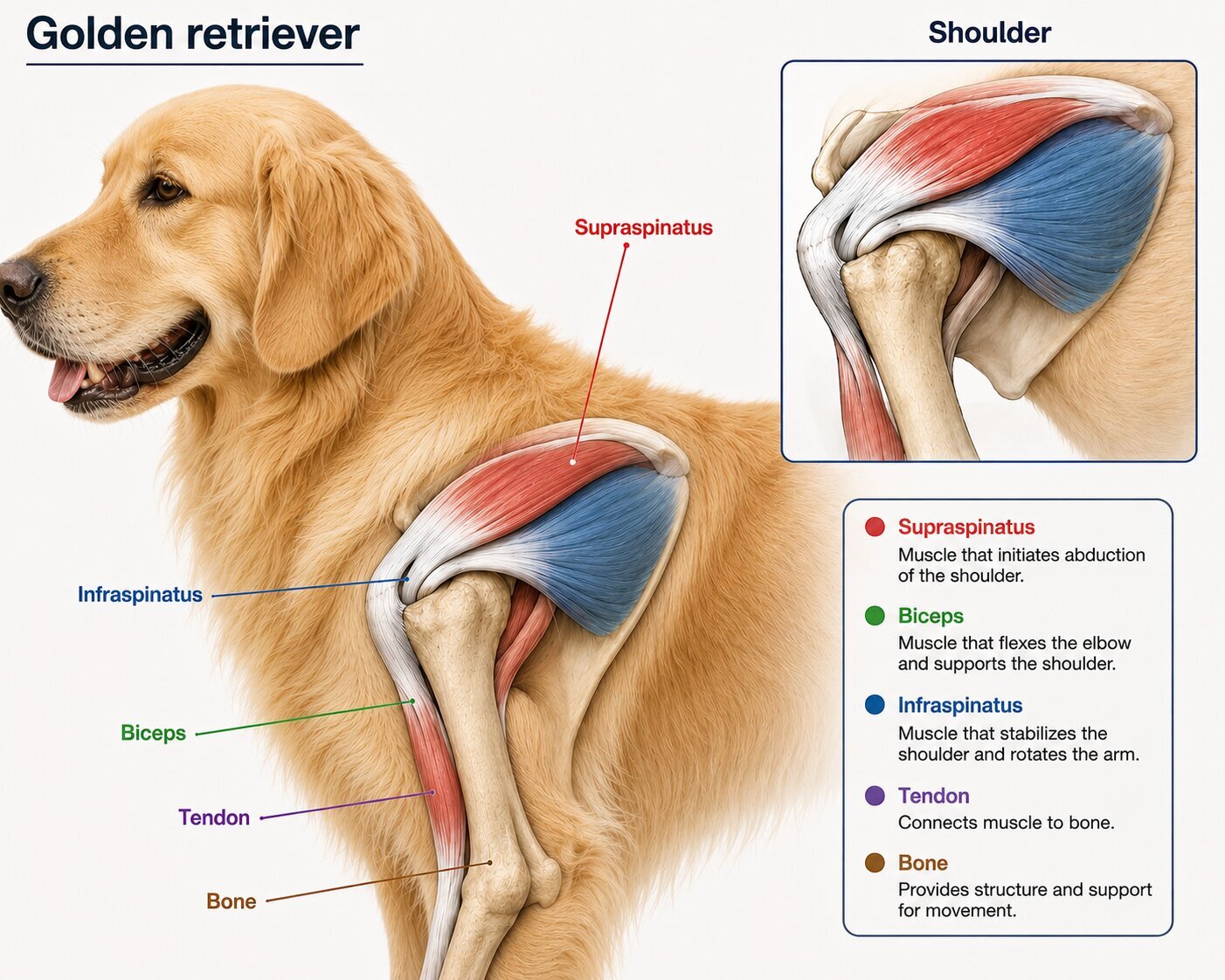
The Three Stages of Tendon Healing
• Inflammation: The body removes damaged tissue and begins the healing process.
• Repair: New collagen fibers reconnect the injured tendon, but it remains mechanically weak.
• Remodeling: Collagen fibers gradually become stronger and better organized through controlled rehabilitation.
Because healing continues long after pain begins to improve, veterinarians rely on functional assessment—not comfort alone—to decide when activity can safely increase.
Signs Your Dog May Need More Rehabilitation
• Lameness returning after exercise
• Hesitation before jumping or climbing stairs
• Reduced enthusiasm for running or playing
• Mild stiffness after longer walks
• Repeated flare-ups after temporary improvement
How Laser Therapy Supports Tendon Healing
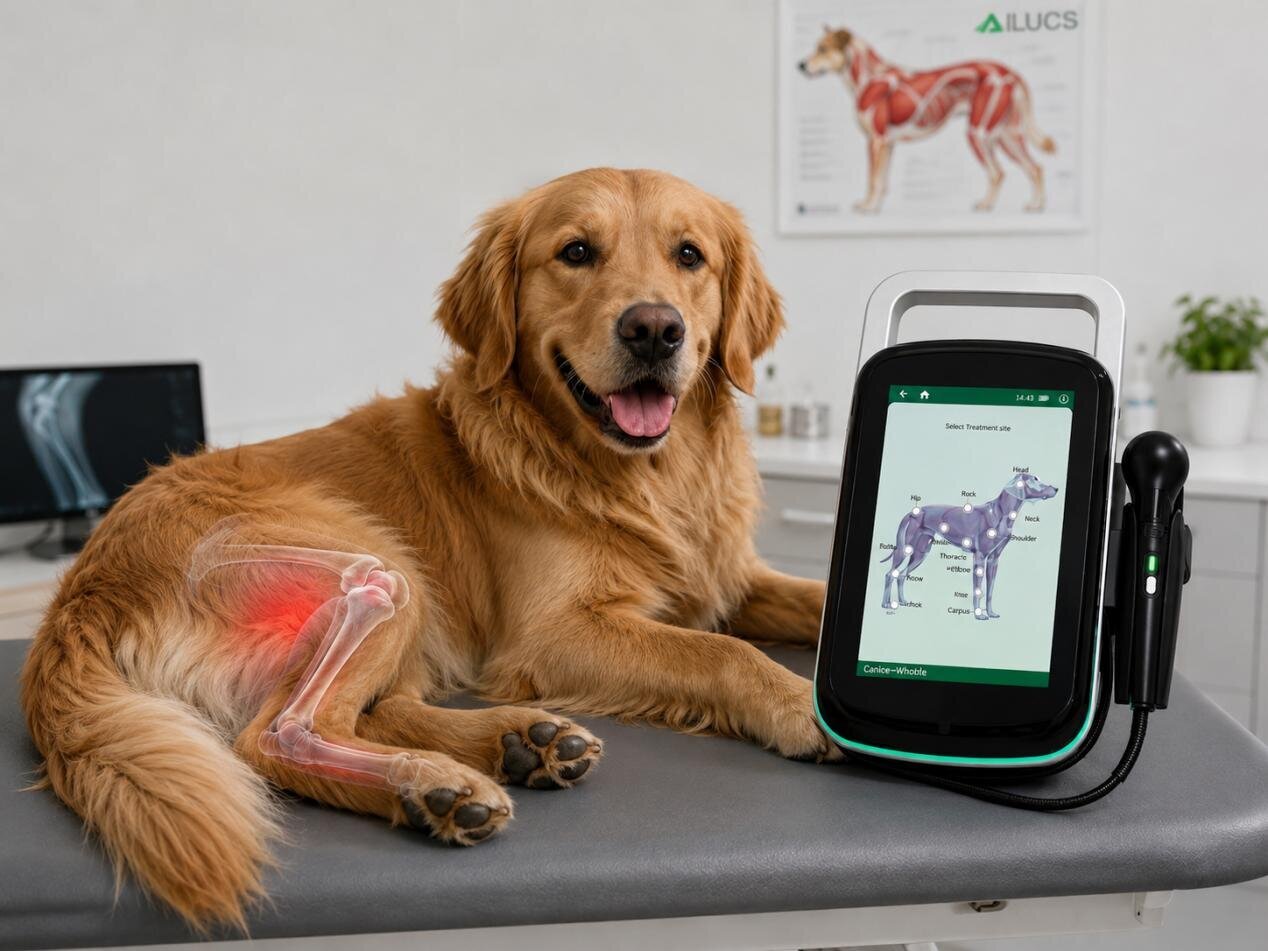
Photobiomodulation therapy (PBMT), commonly known as veterinary laser therapy, is often used as part of a comprehensive rehabilitation program for tendon injuries. It supports the body's natural healing process and helps dogs participate more comfortably in rehabilitation.
At the cellular level, therapeutic laser light is absorbed by the mitochondria, where it may increase adenosine triphosphate (ATP) production.
Research suggests PBMT may help:
• Stimulate fibroblast activity
• Support collagen production and organization
• Improve cellular metabolism
• Promote normal tissue healing
• Enhance local circulation and tissue oxygenation
PBMT may also help regulate inflammation and support collagen remodeling when combined with progressive rehabilitation exercises.
Laser Therapy Works Best as Part of Rehabilitation
Successful rehabilitation usually combines:
• Activity modification
• Progressive therapeutic exercise
• Weight management when appropriate
• Regular veterinary reassessment
• Owner compliance throughout recovery
Laser therapy supports these interventions—it does not replace them.
When Is Laser Therapy Used During Rehabilitation?
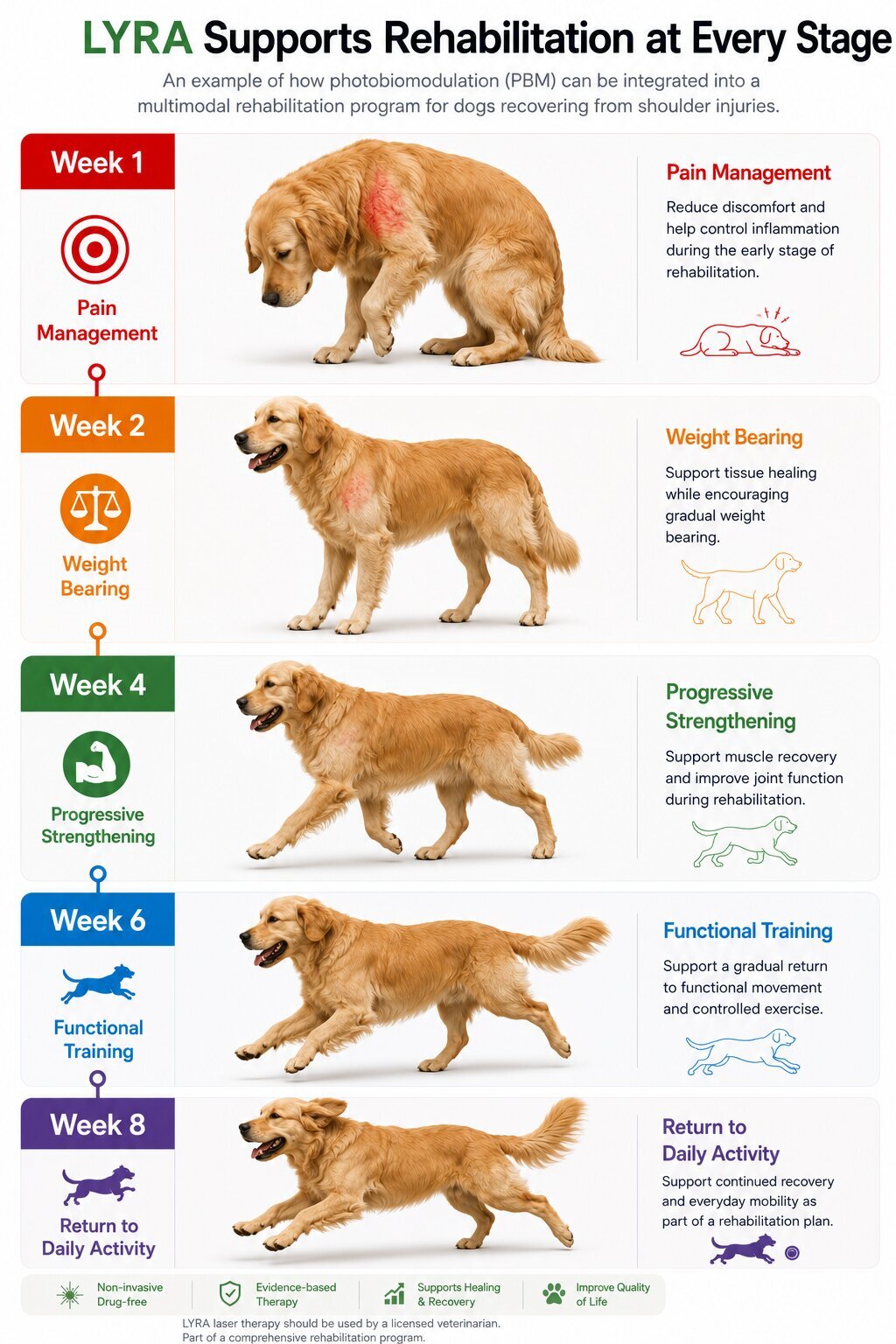
Sporting and working dogs, postoperative patients, and dogs with chronic tendinopathy may all benefit from PBMT as part of an individualized rehabilitation program. Recovery plans should always be adjusted according to clinical progress rather than a fixed timeline.
What Does Recovery Usually Look Like?
Veterinarians monitor:
• Comfort during and after exercise
• Weight-bearing ability
• Joint mobility
• Gait quality
• Tolerance to increasing activity
Frequently Asked Questions
Can laser therapy heal a tendon injury by itself?
No. PBMT is an adjunctive treatment and should be combined with rehabilitation and appropriate veterinary care.
How many sessions are needed?
There is no fixed schedule. Treatment depends on injury severity, overall health, and clinical response.
 When can my dog return to normal activity?
Only after veterinary assessment confirms the tendon can safely tolerate increasing activity.
Conclusion
Tendon injuries often continue healing long after a dog's pain begins to improve. Successful recovery depends on accurate diagnosis, controlled rehabilitation, progressive loading, and regular reassessment.
As part of a comprehensive long-term rehabilitation program, PBMT can support tissue repair, improve patient comfort, and help reduce the risk of reinjury.