
Animal Studies on How Class IV Laser Therapy Accelerates Deep Tissue Healing and Repair
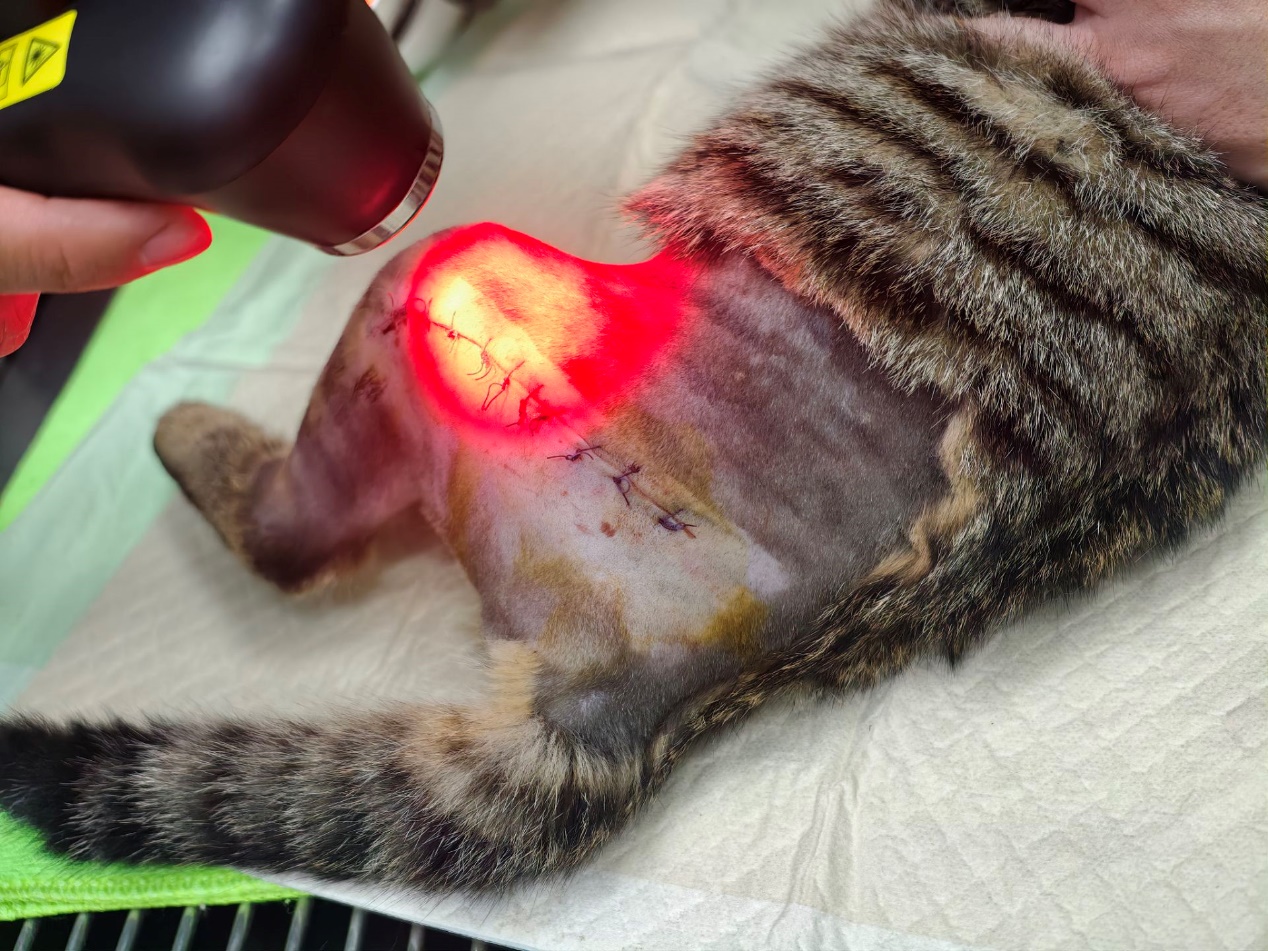
In veterinary practice, complex wound healing and deep-seated inflammation have long been clinical treatment challenges. In recent years, the application of Class IV laser therapy has offered new solutions to these issues. Its efficacy is not just anecdotal but supported by rigorous scientific experiments. This article explores an animal study published on PubMed Central to analyze the mechanisms of Class IV laser therapy in promoting deep tissue healing and demonstrate the clinical translational value of Ailucs laser therapy technology.
Clinical Case Analysis
Background
The clinical experiment included 25 dogs and 24 cats as research subjects. All animals had undergone soft tissue or orthopedic surgeries for various reasons, presenting with varying degrees of inflammatory reactions and delayed wound healing post-operation. The study aimed to evaluate the efficacy of Class IV laser therapy in promoting post-operative wound healing.
Treatment Method
All animals received Class IV laser therapy immediately after surgery. The treatment adopted an advanced Class IV diode laser system, which emits a combination of wavelengths (660nm, 808nm, 915nm) in both continuous wave (CW) and pulsed modes for precise irradiation. The treatment area was scientifically defined based on wound size, and corresponding energy doses were adjusted to ensure accurate and effective application to the target area.
Overview of Treatment Parameters
Wavelength Combination: 660nm, 808nm, 915nm – achieving deep tissue penetration and direct cellular stimulation.
Mode Selection: Flexible switching between Continuous Wave (CW) and Pulsed modes to meet the needs of different treatment phases.
Energy Dose: Individually adjusted based on wound area to ensure treatment precision and safety.
Frequency Settings: 1kHz (promote epithelialization), 2kHz (stimulate fibroblasts), 10kHz (infection control), 25kHz (antibacterial effects).
Therapeutic Effects
Significant reduction in skin thickness
Marked improvement in skin color
Rapid resolution of hematoma and fluid accumulation
Moderate increase in regional temperature
Significant enhancement of skin elasticity
Conclusion
This study provides preliminary evidence that Class IV laser therapy can accelerate post-operative wound healing in dogs and cats. The involved mechanisms include better inflammatory control, tissue remodeling promotion, and angiogenesis enhancement.
Related Literature
Beyond this experiment, the clinical application of Class IV laser therapy in veterinary medicine is increasingly widespread:
Lopes, A., Azevedo, P., & Carreira, L. M. provided objective, quantifiable evidence that Class IV laser therapy accelerates post-operative wound healing in dogs and cats.
Gomes, L. C., Leite, N. C., de Souza, A. N., et al. confirmed that Class IV laser therapy effectively alleviates clinical symptoms of canine osteoarthritis, with effects comparable to the commonly used non-steroidal anti-inflammatory drug meloxicam.
Draenert, A. M., & Mueller, R. S. demonstrated that adjunctive Class IV laser therapy after auricular hematoma aspiration is more effective than aspiration alone in preventing recurrence and accelerating recovery.
These studies collectively validate the efficacy of Class IV laser therapy in veterinary clinical practice.
References
Lopes, A., Azevedo, P., & Carreira, L. M. The Effect of a Class IV Therapeutic LASER on Post-Surgical Wound Healing Processes in Canis familiaris and Felis catus: A Preliminary Study.
Gomes, L. C., Leite, N. C., de Souza, A. N., et al. Effects of Class IV Laser Therapy on Canine Osteoarthritis: A Randomized Controlled Trial.
Draenert, A. M., & Mueller, R. S. Management of Canine Aural Hematomas Using a Laser: A Randomized Clinical Trial.