Can Laser Therapy Replace Medication and Physical Therapy? Combined Effects and Clinical Advantages Explained
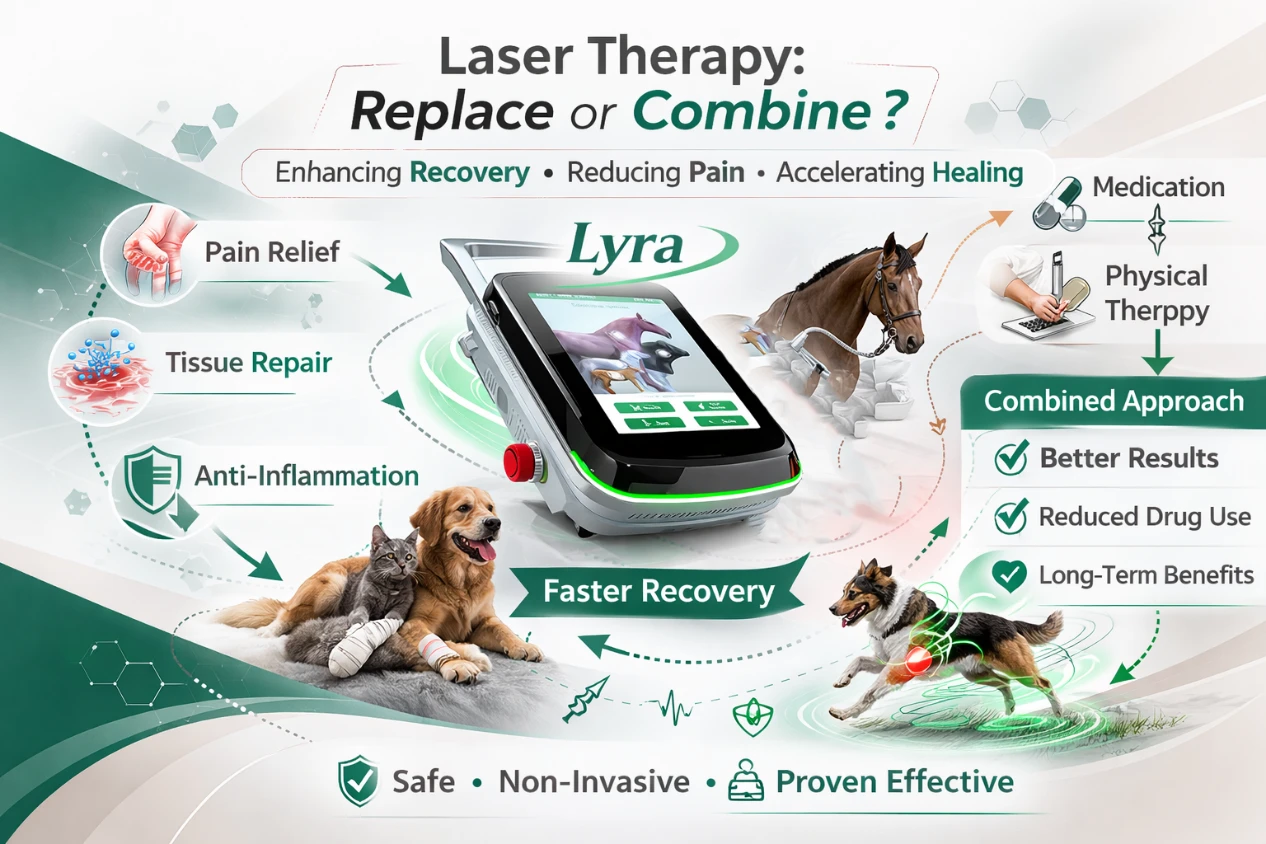
Can laser therapy replace medication or physical therapy? This article analyzes the combined clinical effects, advantages, and substitution potential of laser therapy to help clinics design more effective treatment strategies.
As laser technology becomes increasingly common in clinical medicine and veterinary rehabilitation, many professionals ask the same question: Can laser therapy replace traditional medication or physical therapy, or does it work best in combination?
With the rise of Class IV laser therapy, its role in treating soft tissue injuries, arthritis, post-operative recovery, and chronic pain has expanded significantly. However, understanding where it fits within a treatment protocol is essential.
I. How Laser Therapy Works
Laser therapy is based on photobiomodulation. Specific wavelengths penetrate tissue and stimulate mitochondrial activity, increasing ATP production and enhancing cellular repair. At the same time, laser therapy improves local circulation and modulates inflammation.
Unlike simple heat therapy, modern Class IV lasers are designed for deeper penetration and controlled energy delivery. Because the mechanism focuses on tissue repair and biological regulation, laser therapy naturally complements other treatment methods rather than replacing them outright.
II. Laser Therapy and Medication: A Complementary Approach
In acute injuries or inflammatory conditions, medications provide rapid symptom control. Anti-inflammatory drugs and analgesics reduce pain and swelling quickly. Laser therapy, meanwhile, supports tissue healing and recovery.
When combined, medication manages early-stage symptoms while laser therapy accelerates structural repair. This approach can shorten recovery time and, in some chronic cases, reduce long-term reliance on pain medication. However, laser therapy cannot replace antibiotics or systemic drug therapy in cases of infection or severe systemic disease.
III. Laser Therapy and Physical Rehabilitation
Physical therapy focuses on restoring movement and function through modalities such as ultrasound, electrical stimulation, and therapeutic exercise. Laser therapy is often applied before rehabilitation sessions to reduce pain and inflammation, allowing more effective training.
In veterinary post-operative recovery or sports injury recovery, this combined strategy improves tolerance to exercise and supports long-term functional outcomes. Rather than replacing rehabilitation, laser therapy enhances its effectiveness within a structured recovery plan.
IV. Does Laser Therapy Have Substitutive Potential?
Laser therapy can partially replace certain medications in mild inflammatory conditions or chronic pain management, especially when reducing drug dependency is a priority. In these cases, it may serve as a primary modality.
However, it cannot replace antibiotics, emergency care, or surgical intervention. Its substitution potential is situational and stage-dependent, not universal.
Conclusion
veterinary Laser therapy is not a complete alternative to medication or physical therapy. Instead, it is a powerful integrative tool within a multimodal treatment system. In chronic and mild cases, it may reduce medication reliance; in complex cases, it functions as an important adjunct.
The future of treatment lies not in choosing one method over another, but in designing intelligent combinations that maximize recovery and clinical outcomes.