
Class 3B vs Veterinary Class IV Lasers: A Scientific Guide to Veterinary Laser Therapy Selection
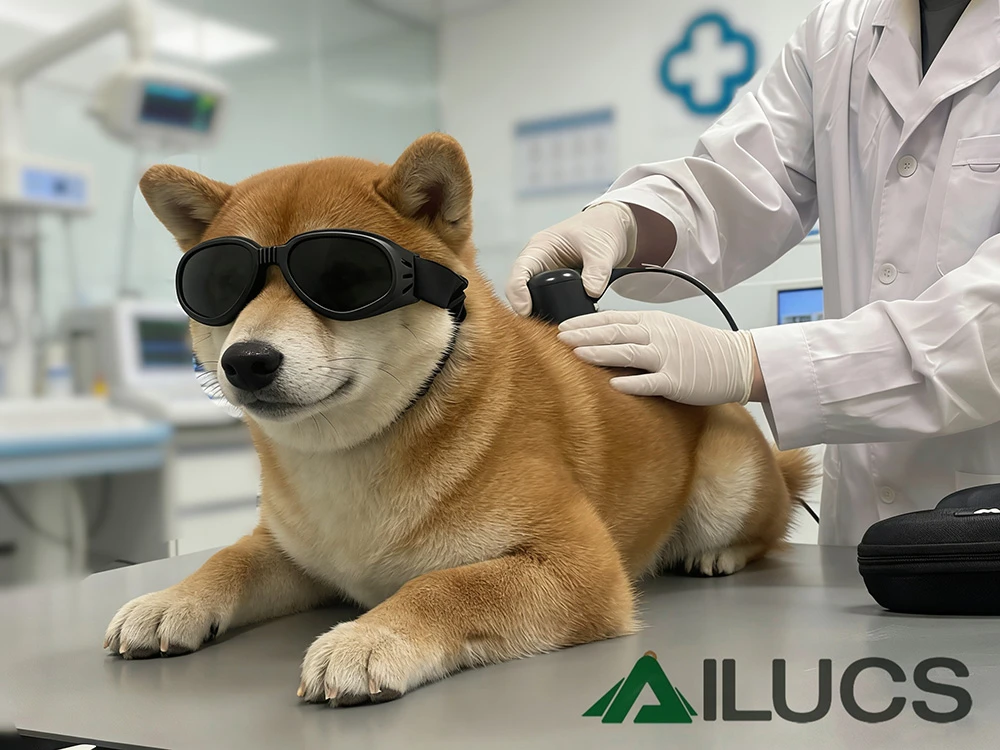
In veterinary rehabilitation and physical therapy, laser therapy has become a well-established and highly valued non-invasive treatment modality. Based on output power and biological effects, therapeutic lasers are classified into different safety classes. Among them, Class 3B lasers and Class IV lasers are the two most widely used systems in veterinary clinical practice. Understanding the differences between Class 3B and Class IV lasers in terms of power output, mechanism of action, and clinical indications helps veterinary clinics make informed equipment choices and develop more precise and efficient treatment protocols.
1.Definition of Class 3B and Veterinary class 4 laser
Class 3B Laser
Class 3B lasers typically operate within an output power range of 0.005 to 0.5 watts (5–500 mW). They are considered low-power therapeutic lasers and can be applied directly to biological tissue within a relatively safe margin, without causing noticeable thermal damage. Class 3B lasers are primarily effective for treating superficial tissues and localized conditions.
Veterinary Class IV Laser
Class IV lasers deliver output power above 0.5 watts (500 mW), with common clinical systems ranging from several watts to tens of watts. For example, the LYRA Class IV laser therapy device provides a maximum output of 25.5 W, enabling significantly deeper tissue penetration and higher energy density. This higher power makes Class IV lasers suitable for deep-seated pathologies and large treatment areas.
2.Mechanism of Action
The fundamental mechanism behind laser therapy is Photobiomodulation (PBM). Specific wavelengths of red and near-infrared light (approximately 635–980 nm) penetrate the skin and soft tissues and are absorbed by cellular mitochondria. This process stimulates the production of adenosine triphosphate (ATP), enhancing cellular metabolism and tissue repair.
The primary biological effects of PBM include:
Reduction of inflammation
Pain relief
Acceleration of tissue healing
Improvement of local blood circulation
Mechanism of Class 3B Lasers
Due to their low output power, Class 3B lasers do not generate significant thermal effects. Their therapeutic benefits rely almost entirely on photobiomodulation, which supports cellular metabolism, modulates inflammation, and improves microcirculation. As a result, Class 3B lasers are well suited for soft tissue healing and superficial pain relief.
Mechanism of Veterinary Class IV Lasers
With substantially higher output power, Class IV lasers achieve greater penetration into deep tissues. In addition to photobiomodulation, they can produce controlled and mild thermal effects as well as photochemical interactions. These combined effects allow laser energy to reach deep muscles, joints, tendons, ligaments, and large soft tissue structures, promoting blood flow, enhancing metabolic activity, and accelerating tissue repair and functional recovery. The higher energy density of Class IV lasers leads to more consistent and pronounced biological effects in deep anatomical structures.
3.Clinical Applications of Class 3B and Class IV Lasers
Typical Applications of Class 3B Lasers
Class 3B lasers are best suited for superficial, localized, and small-area treatments, including:
Superficial soft tissue inflammation
Enhancement of superficial wound healing
Mild pain management
Trigger point therapy
Small, shallow lesions
Due to limited penetration depth and power, their effectiveness is reduced in deep muscle, joint, or large tissue conditions.
Typical Applications of Class IV Lasers
Because of their high power and deep penetration, Class IV lasers are widely used across both clinical and research settings.
Clinical and Research Fields
Surgical procedures: soft tissue cutting, coagulation, and endovenous laser applications
Dermatology and wound management: skin ulcers, post-surgical wounds, chronic wounds, and inflammatory skin conditions
Rehabilitation and pain management: post-operative recovery, chronic pain control, and functional restoration
Sports medicine and performance recovery: acceleration of soft tissue repair after sports injuries
Veterinary practice: laser therapy and rehabilitation for small animals and large animals (such as horses)
Education and research: cellular and molecular studies, low-light microsurgical applications, and academic laboratory use
Key Clinical Indications
In daily clinical practice, Veterinary Class IV lasers are particularly effective for conditions requiring deep energy delivery, including:
Chronic deep-tissue pain (e.g., osteoarthritis and degenerative joint disease)
Deep muscle, tendon, and ligament injuries
Deep soft tissue inflammation and trauma
Large or high-volume treatment areas (e.g., equine muscles and joints)
Neuropathic pain and deep neural modulation
Post-operative rehabilitation and long-term pain and function management
The LYRA Class IV laser therapy device can deliver sufficient energy to deep tissues in a shorter treatment time, significantly improving overall clinical efficiency. However, strict adherence to laser safety protocols and the use of protective eyewear are essential during operation.
4.Conclusion
In summary, the key differences between Class 3B and Class IV laser therapy devices lie in output power, tissue penetration depth, and overall clinical capability.
Class 3B lasers are ideal for superficial tissues, mild inflammation, and localized conditions, offering high safety and minimal thermal effects, making them suitable for basic rehabilitation and adjunctive pain relief.
Class IV lasers, with their higher energy output and deeper penetration, can effectively target muscles, joints, tendons, and ligaments, making them particularly valuable for chronic pain management, deep tissue injuries, and large-area treatments. As a result, Class IV laser devices have become an essential tool in modern veterinary rehabilitation and comprehensive pain management.
When selecting a veterinary laser therapy equipment, veterinary clinics should consider disease depth, treatment objectives, efficiency requirements, and clinical workflow, ensuring the chosen laser class aligns with their specific clinical positioning and therapeutic goals.