Class IV Laser Therapy for Feline Limb Wounds: MIMI’s Case
Introduction
In small animal clinical practice, accidental skin injuries are relatively common in feline patients. If not properly managed, such wounds may lead to increased inflammation, delayed healing, or secondary infection. Beyond routine wound cleaning and basic care, identifying effective methods to promote tissue repair and shorten recovery time remains a key focus in veterinary medicine.
In recent years, Class IV Laser Therapy, as a non-invasive physical treatment modality, has been widely adopted in veterinary rehabilitation. It has demonstrated favorable outcomes in wound healing and inflammation control. This article presents the application of Lyra Veterinary Therapy Laser in the treatment of a feline limb wound.
Case Overview
MIMI is a domestic cat that sustained an accidental skin injury to the hind limb during routine activity, resulting in a localized open wound. At initial presentation, the wound exhibited visible skin disruption accompanied by mild redness and inflammatory response in the surrounding tissues. No surgical intervention or suturing was performed.
In addition to standard wound cleaning and basic care, Lyra Class IV laser therapy was introduced as an adjunctive treatment to support tissue repair and improve the local inflammatory condition.
Treatment Device and Parameter Selection
The device used in this case was the Lyra Veterinary Therapy Laser, which features a multi-wavelength output designed to deliver effective energy to tissues at varying depths.
The primary wavelengths applied included:
650 nm (Red Light): Primarily targeting superficial tissues, this wavelength helps improve local microcirculation and supports epidermal cell metabolism and regeneration.
810 nm / 980 nm (Near-Infrared Spectrum): With greater tissue penetration, these wavelengths act on deeper soft tissues, assisting in inflammation reduction and promoting fibroblast activity and collagen production.
Power Settings: During treatment, moderate Class IV laser power was applied to ensure both safety and patient comfort, while delivering sufficient and stable energy density to the affected area to achieve effective photobiomodulation.
Therapeutic Mechanisms and Expected Effects
Through photobiomodulation, Lyra Class IV laser therapy produces multiple biological effects within the treatment area, including:
Improved local blood circulation and tissue oxygenation
Reduction of inflammatory response and localized edema
Enhanced mitochondrial ATP production and cellular metabolic activity
Accelerated granulation tissue formation and epidermal repair
Reduced pain sensitivity and improved patient comfort
Treatment Procedure
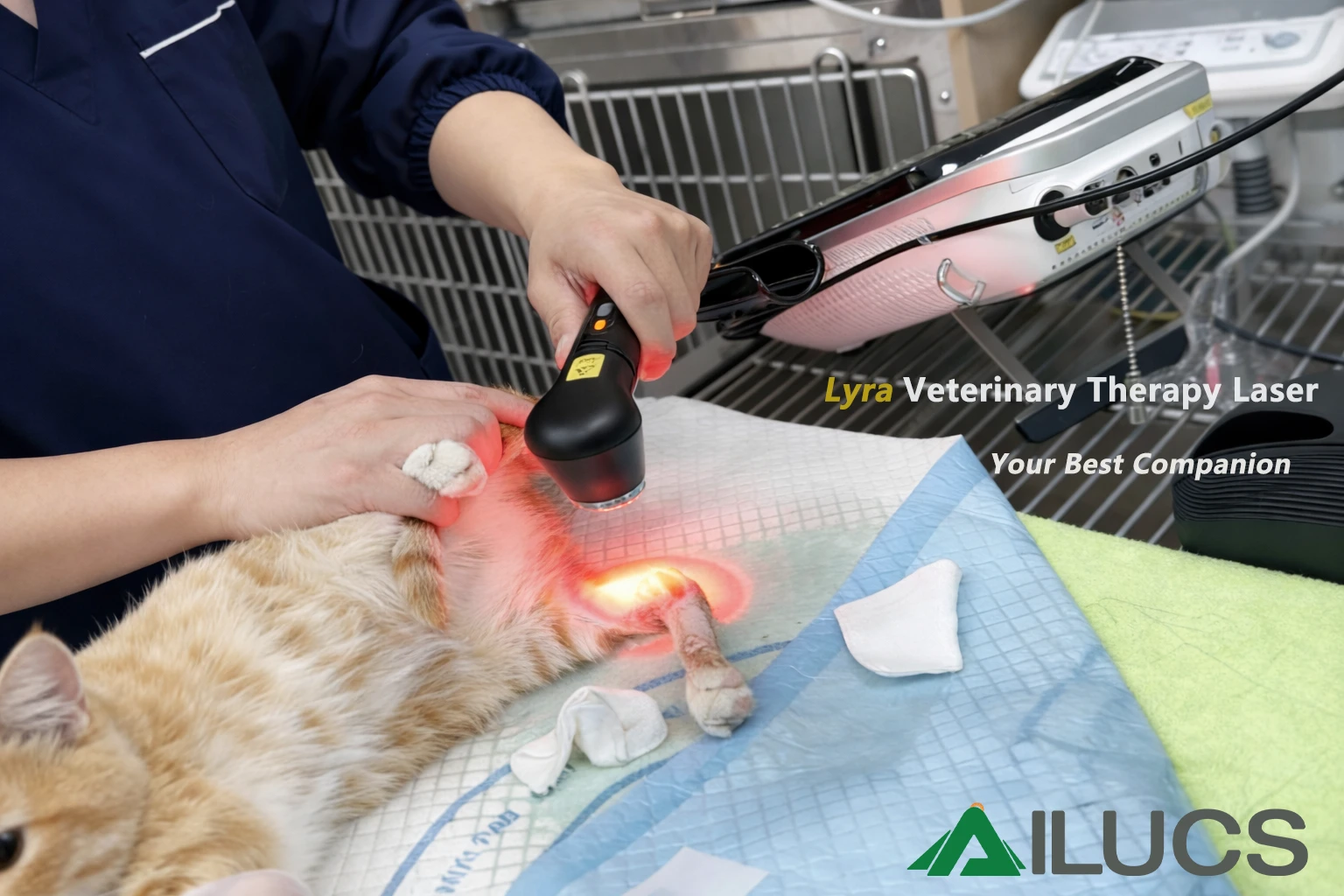
Prior to each session, MIMI’s wound was routinely assessed and cleaned. The Lyra laser treatment handpiece was then applied to the wound and surrounding tissues, ensuring uniform energy coverage across the target area.
The procedure was fully non-invasive, with short treatment durations and controlled operation. Throughout the sessions, MIMI remained calm, exhibiting no signs of discomfort or stress. No sedation or analgesic medication was required.
Evaluation of Treatment Outcomes
Following multiple sessions of laser-assisted therapy, MIMI’s limb wound showed progressive improvement:
Significant reduction in redness around the wound
Decreased exudate and a more stable wound environment
Healthy granulation tissue development with clear healing progression
Accelerated epithelial regeneration and gradual reduction in wound size
Gradual restoration of normal limb function
Overall, the recovery process was smooth, and wound healing quality was assessed as favorable.
Conclusion
This case demonstrates that Lyra Veterinary Therapy Laser, when used as an adjunct to standard wound care for feline limb injuries, can safely and effectively promote tissue repair, reduce inflammation, and enhance the overall treatment experience. As a non-invasive therapy, Class IV laser treatment represents a valuable addition to modern veterinary wound management strategies.