
The Necessity for Veterinary Clinics to Equip Laser Therapy Devices
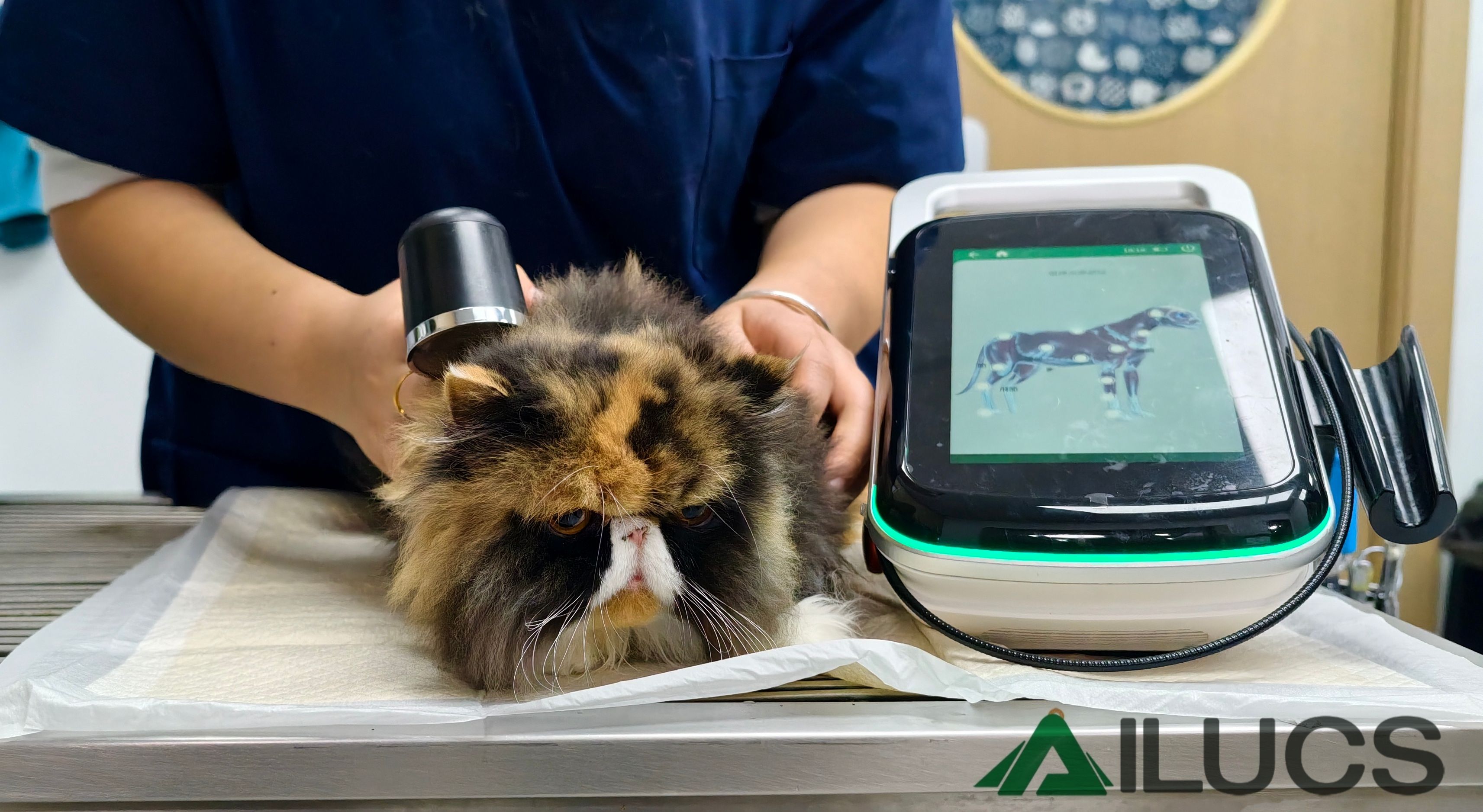
As the global pet healthcare market continues to grow rapidly, pet laser therapy has emerged as one of the most important segments in modern veterinary medicine. According to Frost & Sullivan, the global pet medical market exceeded USD 50 billion in 2023, with physical therapy equipment accounting for approximately 12%. Among these, laser therapy devices have become a core category.
The Ailucs Lyra Laser Therapy Device was developed specifically to meet this rising demand. As a professional-grade semiconductor laser therapy system, Lyra combines strong clinical performance, flexible software features, and comprehensive safety protection to help veterinary hospitals enhance treatment outcomes, operational efficiency, and overall competitiveness.
I. Clinical Benefits — Faster, Safer, and More Comfortable Treatment & Recovery
Semiconductor laser therapy works through Photobiomodulation (PBM), acting on mitochondrial function to increase ATP production, suppress inflammatory cytokines, and accelerate tissue regeneration. Built on this mechanism, the Ailucs Lyra Pet Laser Therapy Equipment offers several clinical advantages:
Multi-wavelength output for both superficial and deep lesions
Lyra supports wavelength combinations covering the essential 650–1064 nm range. This allows veterinarians to tailor parameters for skin lesions, muscle injuries, joint disorders, and deep-tissue conditions.
Multiple emission modes (CW / Pulse / ISP)
The ISP mode reduces the loss of laser energy absorbed by superficial tissues, enabling more effective penetration into deep structures such as tendons, ligaments, and joints.
High peak power for fast energy delivery
Lyra delivers up to 25W maximum power, providing sufficient therapeutic energy in shorter sessions and improving compliance for both pets and practitioners.
Wide range of clinical applications
Lyra can treat conditions such as:
Arthritis & joint pain
Intervertebral disc disease (IVDD)
Post-operative inflammation and wound healing
Pyoderma and fungal infections
Gingivitis & periodontal disease
Lick granulomas
Chronic pain and edema
Non-invasive and low-risk
Compared to surgery or long-term medication, Veterinary Laser Therapy Equipment offers effective pain relief and tissue repair without thermal damage or drug-related side effects. It is especially suitable for senior pets or those at higher surgical risk.
Clinical data shows that laser therapy can shorten post-operative recovery time by up to 30% and reduce the need for painkillers and anti-inflammatory medications—minimizing risk while improving comfort.
II. Operational Efficiency & Cost Recovery — Boosting Revenue While Reducing Long-Term Costs
Choosing Lyra is not only a medical decision—it is also a strategic investment for veterinary clinics.
Lightweight and portable design
Weighing only 2.9 kg and equipped with a 5800mAh battery, Lyra is ideal for multi-room use and mobile services, increasing clinic flexibility and treatment coverage.
Easy to use — 4000+ presets & Android system
With thousands of built-in veterinary treatment protocols (dogs, cats, horses, exotics), Lyra minimizes training time and increases the frequency of therapy sessions.
High-margin therapy service
Laser Therapy can be charged individually or as a treatment package (8–10 sessions), significantly improving customer retention and average revenue per visit.
Low maintenance cost
Unlike CO₂ lasers, semiconductor lasers require no consumables. Their long diode lifespan reduces operational costs while maintaining consistent performance.
Fast return on investment
Based on average therapy pricing (USD 30–80 per session), most clinics recover the cost of a Lyra device within 1–2 years, depending on service volume and local pricing.
III. Competitive Advantage & Branding — Stand Out in a Growing Market
As pet healthcare demand increases, clinics compete through technology, service quality, and specialization. Laser therapy helps build a modern, high-value clinical image.
Professional differentiation
Promoting services such as “Laser Rehabilitation Center” or “Advanced Post-Operative Laser Care” strengthens the clinic's professional profile and attracts high-value clients.
Expanded treatment capabilities
Laser technology provides solutions for chronic or recurring cases where traditional treatments have limited success (e.g., chronic otitis, recurrent dermatitis).
Higher pet owner satisfaction
Faster healing, less pain, and better mobility encourage repeat visits and word-of-mouth referrals—contributing to long-term clinic revenue.
IV. Key Considerations When Choosing a Veterinary Laser Therapy Device
Veterinary clinics should evaluate the following factors before purchasing:
Clinical match: Do the wavelengths and power levels meet the needs of orthopedic, dermatological, and post-operative cases?
Ease of use: Does the device support presets, patient records, and multi-user management?
Safety compliance: Are there safety features such as emergency stop, interlock systems, IEC/EN-compliant protective eyewear, and temperature control?
After-sales support: Availability of clinical training, maintenance, updates, and parts supply.
V. Conclusion — Why Ailucs Lyra Is the Ideal Choice for Modern Veterinary Clinics
In the era of refined pet healthcare and rising consumer expectations, laser therapy is no longer optional — it is essential.
With its multi-wavelength output, high power, intelligent system, lightweight design, and comprehensive safety features, the Ailucs Lyra Laser Therapy Device is becoming a cornerstone in advanced veterinary rehabilitation and pain management.
Lyra — Better Healing, Better Practice, Better Care.