
Veterinary Laser Therapy for Post-Surgical Recovery
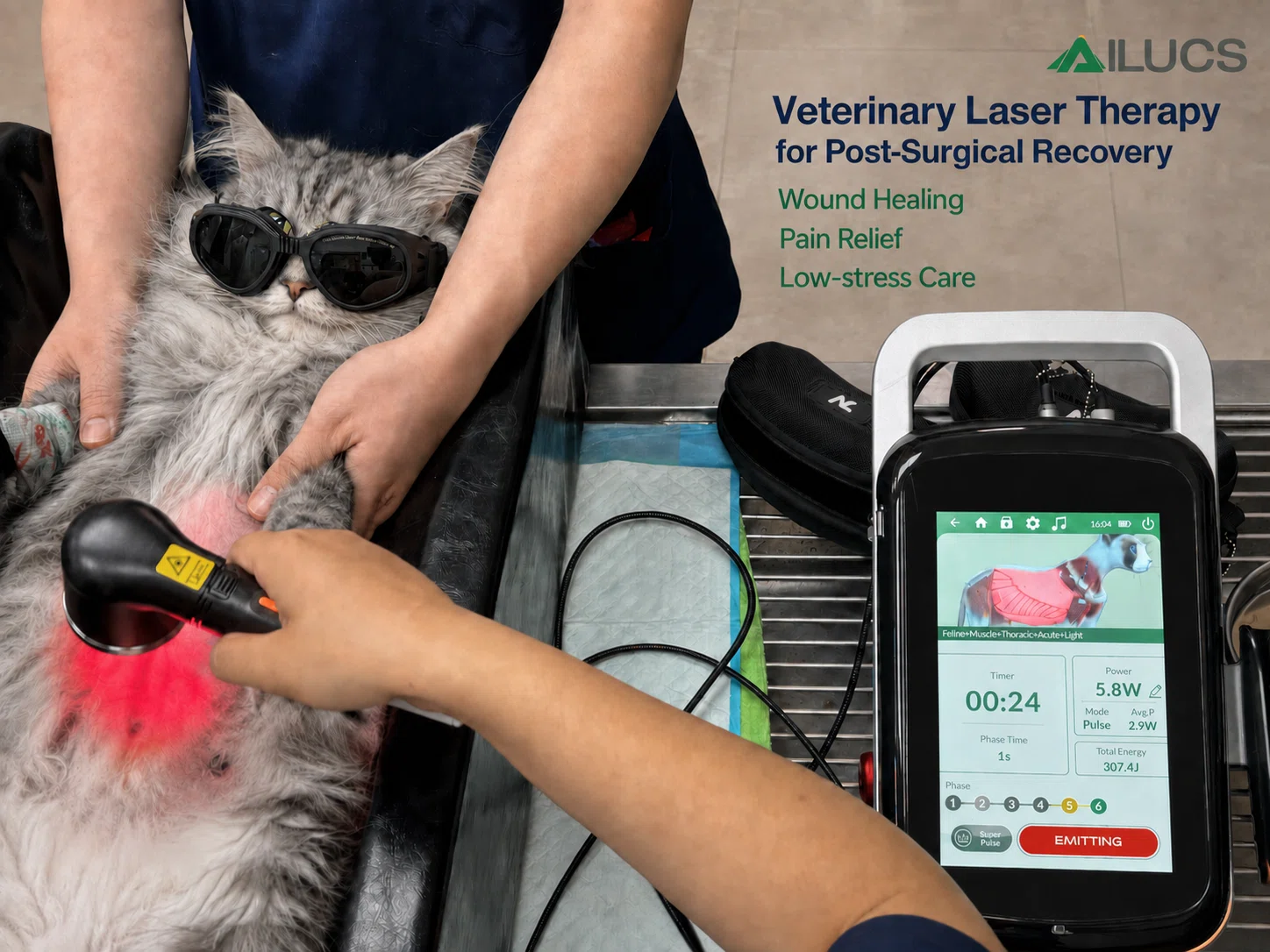
Introduction: Supporting Recovery After Veterinary Surgery
Successful surgery is only the beginning of an animal’s recovery process. After procedures such as orthopedic surgery, soft tissue repair, wound closure, or spinal intervention, the body requires time and support to restore normal function.
During the postoperative period, veterinarians often focus on controlling inflammation, managing pain, protecting surgical sites, and gradually restoring mobility. However, even with appropriate surgical techniques and rehabilitation plans, some patients may experience delayed wound healing, prolonged inflammation, reduced activity, or discomfort during recovery.
Veterinary laser therapy, also known as photobiomodulation therapy (PBMT), has become an increasingly adopted complementary approach in veterinary rehabilitation. By delivering controlled light energy into targeted tissues, therapeutic lasers can support cellular activity, regulate inflammatory responses, and promote natural healing mechanisms.
Modern veterinary laser systems, such as LYRA Veterinary Laser Therapy, combine multi-wavelength technology with intelligent treatment guidance to help veterinary professionals provide consistent and efficient postoperative care.
Why Post-Surgical Recovery Requires Additional Support
After surgery, the body enters a complex healing process involving inflammation, tissue repair, and remodeling.
A controlled inflammatory response is essential because it initiates tissue repair. However, excessive or prolonged inflammation may contribute to:
Postoperative pain and discomfort
Tissue swelling and edema
Delayed wound healing
Reduced range of motion
Slower rehabilitation progress
These challenges are particularly common in veterinary patients undergoing:
Cranial cruciate ligament (CCL) repair
Fracture fixation surgery
Joint stabilization procedures
Hip surgery
Soft tissue reconstruction
Spinal surgery
For example, dogs recovering from orthopedic procedures often require a carefully managed rehabilitation plan to restore mobility while protecting healing tissues. Supporting the biological recovery process can help improve the overall postoperative experience.
This is where veterinary laser therapy can provide additional value.
How Veterinary Laser Therapy Supports Post-Surgical Healing
Veterinary laser therapy works through photobiomodulation, a process where specific wavelengths of light interact with cells to stimulate biological responses.
When therapeutic laser energy reaches damaged tissues, it can influence mitochondrial activity and support ATP production, providing cells with additional energy required for repair processes.
Research has shown that photobiomodulation therapy may influence several important biological pathways related to:
Cellular metabolism
Microcirculation
Inflammatory regulation
Tissue regeneration
By supporting these mechanisms, veterinary laser therapy can become an effective component of comprehensive postoperative rehabilitation
1. Supporting Surgical Wound Healing
One of the most common applications of veterinary laser therapy after surgery is supporting wound healing.
The wound healing process requires coordinated activity between multiple biological systems, including:
Fibroblast activation
Collagen synthesis
New blood vessel formation
Tissue remodeling
Photobiomodulation therapy may support these processes by improving local circulation and stimulating cellular activity around injured tissues.
For veterinary patients recovering from surgical incisions, laser therapy may help support:
Faster tissue recovery
Improved wound condition
Reduced local inflammation
Better patient comfort during healing
Clinical studies investigating therapeutic laser applications in veterinary patients have reported positive effects on wound healing indicators, including improvements in tissue recovery and reduced postoperative inflammatory changes.
For this reason, veterinary laser therapy is increasingly considered a valuable supportive tool alongside traditional wound management protocols.
2. Managing Postoperative Inflammation and Edema
Inflammation is a necessary part of healing, but excessive inflammatory responses can negatively affect recovery.
After surgery, localized inflammation may lead to:
Swelling around the surgical site
Increased sensitivity
Reduced movement
Delayed rehabilitation
Veterinary laser therapy helps support the body’s natural inflammatory regulation processes.
Potential benefits include:
Supporting microcirculation
Improved local circulation helps deliver oxygen and nutrients needed for tissue repair.
Supporting lymphatic function
Laser therapy may assist the body’s natural fluid balance mechanisms, helping reduce postoperative swelling.
Improving tissue recovery conditions
By supporting cellular activity, laser therapy creates a more favorable environment for tissue repair.
These effects are particularly beneficial during the early stages of postoperative recovery when inflammation management is critical.
3. Supporting Postoperative Pain Management
Pain management is a critical component of successful surgical recovery. When animals experience discomfort after surgery, they may reduce movement and avoid normal activities, which can negatively affect rehabilitation progress.
Reduced mobility may contribute to:
Muscle weakness
Joint stiffness
Reduced flexibility
Delayed functional recovery
Veterinary laser therapy provides a non-invasive approach that can be integrated into comprehensive pain management strategies.
Through photobiomodulation, therapeutic laser energy may help support tissue recovery and reduce discomfort associated with postoperative inflammation.
This makes veterinary laser therapy particularly useful for patients recovering from:
Orthopedic surgery
Joint procedures
Soft tissue repair
Spinal surgery
Traumatic injuries requiring surgical intervention
Rather than replacing conventional pain management, laser therapy works as a complementary approach that supports the body’s natural recovery process.
4. Supporting Orthopedic Surgery Rehabilitation
Orthopedic surgery is one of the most common areas where veterinary laser therapy is applied.
Procedures such as:
Cranial cruciate ligament (CCL) repair
Fracture repair
Hip surgery
Joint reconstruction
Intervertebral disc disease (IVDD) treatment
often require structured rehabilitation to help animals regain strength, mobility, and normal function.
During orthopedic recovery, the main challenges include:
Managing postoperative inflammation
Protecting healing tissues
Maintaining muscle condition
Gradually restoring movement
Veterinary laser therapy can support rehabilitation programs by helping create better conditions for tissue recovery and allowing patients to participate more comfortably in controlled exercise programs.
For example, dogs recovering from orthopedic procedures may benefit from combining:
Physical rehabilitation
Controlled exercise
Weight management
Veterinary laser therapy
This integrated approach helps veterinarians address both the surgical site and the overall functional recovery of the patient.
Why Multi-Wavelength Technology Matters in Post-Surgical Recovery
Different tissues absorb and respond to different wavelengths of therapeutic light. The depth of light penetration plays an important role in selecting appropriate treatment parameters.
Superficial conditions, such as:
Surgical incisions
Skin injuries
Surface tissue inflammation
may require different wavelengths compared with deeper conditions involving:
Muscles
Tendons
Ligaments
Joints
Advanced veterinary laser systems utilize multiple wavelengths to support treatment across different tissue depths.
Multi-Wavelength Veterinary Laser Therapy with LYRA
The LYRA Veterinary Laser Therapy System is designed around a multi-wavelength approach, allowing veterinary professionals to address a wide range of postoperative recovery needs.
Its wavelength options support applications from superficial tissue recovery to deeper musculoskeletal rehabilitation.
Key clinical advantages include:
Multi-Wavelength Synergistic Output
Multiple wavelengths allow veterinarians to select appropriate treatment approaches according to:
Tissue depth
Condition type
Recovery stage
Clinical objectives
This flexibility is particularly valuable when treating complex postoperative cases involving both superficial wounds and deeper tissue recovery.
Frequently Asked Questions About Veterinary Laser Therapy After Surgery
How soon after surgery can veterinary laser therapy be used?
The timing of laser therapy depends on the surgical procedure, patient condition, and veterinarian’s assessment.
In many cases, veterinary laser therapy may be incorporated during the early postoperative period to support inflammation management and tissue recovery. Treatment timing and parameters should always be determined by a qualified veterinary professional.
Is laser therapy safe for dogs and cats after surgery?
When performed using appropriate parameters and veterinary guidance, laser therapy is generally considered a safe, non-invasive supportive therapy.
Veterinarians evaluate factors such as:
Surgical location
Tissue condition
Patient health status
Recovery stage
before selecting treatment settings.
Can laser therapy replace rehabilitation after surgery?
No. Veterinary laser therapy is not a replacement for rehabilitation, surgery, or medical management.
Instead, it works as a complementary therapy that can support rehabilitation programs by helping manage inflammation, improving comfort, and supporting tissue recovery.
What conditions can benefit from veterinary laser therapy after surgery?
Postoperative laser therapy may be used as part of recovery programs for:
Orthopedic surgery recovery
Soft tissue repair
Wound healing support
Joint rehabilitation
-
Spinal surgery recovery
Conclusion: Supporting Better Recovery Through Veterinary Laser Therapy
The success of veterinary surgery depends not only on the procedure itself but also on how effectively the patient recovers afterward.
Veterinary laser therapy provides a non-invasive and science-based approach to supporting postoperative recovery by helping:
Promote wound healing
Regulate inflammatory responses
Improve patient comfort
Support rehabilitation progress
With advances in multi-wavelength technology, intelligent treatment guidance, and clinical workflow optimization, systems such as LYRA Veterinary Laser Therapy enable veterinary professionals to integrate photobiomodulation therapy into everyday postoperative care.
As veterinary medicine continues to move toward more comprehensive rehabilitation strategies, laser therapy will remain an important tool for helping animals recover with greater comfort and improved quality of life.