
How to Choose the Right Wavelength for Laser Therapy: A Practical Guide
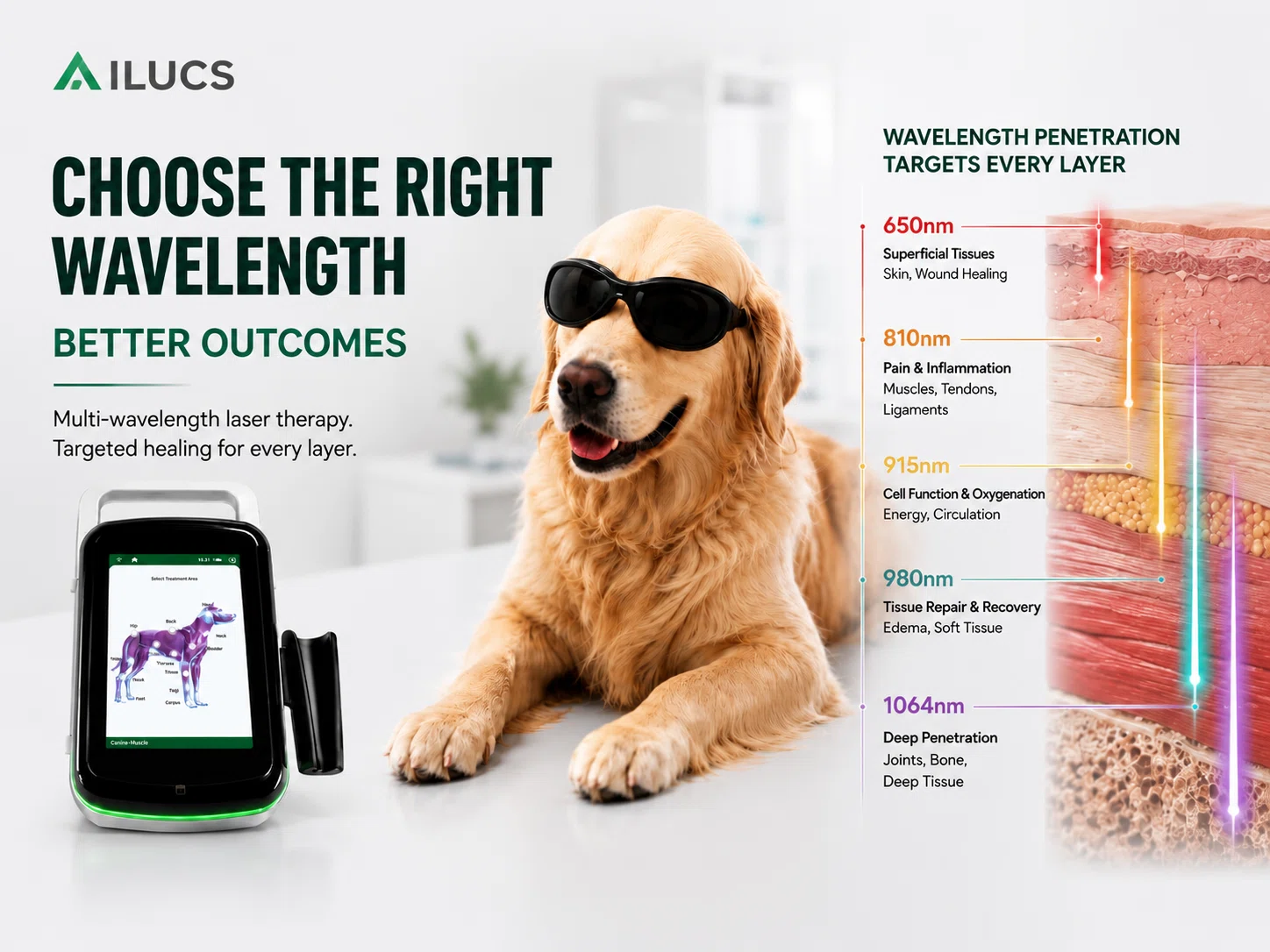
How to Choose the Right Laser Therapy Wavelength
A Practical Guide to 650nm, 810nm, 915nm, 980nm, and 1064nm
Introduction
Laser therapy is now widely used to support rehabilitation, pain management, wound healing, and postoperative recovery. As more therapeutic laser systems become available, selecting the most appropriate wavelength has become an important part of clinical decision-making.
Each wavelength interacts differently with biological tissues because water, hemoglobin, melanin, and intracellular chromophores absorb light differently. These optical properties influence how energy is distributed within tissue and the biological response that follows.
For this reason, choosing a wavelength is not simply about achieving greater penetration. The most effective treatment is achieved when the optical characteristics of the wavelength match the target tissue and the intended therapeutic objective.
This article compares the clinical characteristics of 650nm, 810nm, 915nm, 980nm, and 1064nm, explains where each wavelength performs best, and discusses why multi-wavelength therapy has become an important approach in modern rehabilitation.
Why Wavelength Selection Matters
Treatment success depends on more than wavelength alone, but wavelength remains one of the key factors influencing clinical outcomes.
Consider: target tissue depth, tissue optical properties, treatment objective, energy density (J/cm²), power output, treatment duration, and pulse mode.
Selecting an appropriate wavelength improves treatment precision and supports individualized treatment planning.
Understanding How Light Interacts with Tissue
Photobiomodulation (PBM) begins when light energy is absorbed by intracellular chromophores, initiating biological responses that may support ATP production, cellular metabolism, microcirculation, collagen synthesis, inflammatory regulation, and tissue healing.
Because tissues absorb light differently, each wavelength produces distinct biological effects.
A Practical Decision-Making Framework
1. Identify the target tissue.
2. Estimate treatment depth.
3. Define the therapeutic goal.
4. Select the wavelength that best matches tissue characteristics and biological objectives.
This workflow supports evidence-based clinical decision-making.
650nm – Ideal for Superficial Tissue Repair
650nm is well suited for superficial tissues where precise energy deposition is more important than deep penetration.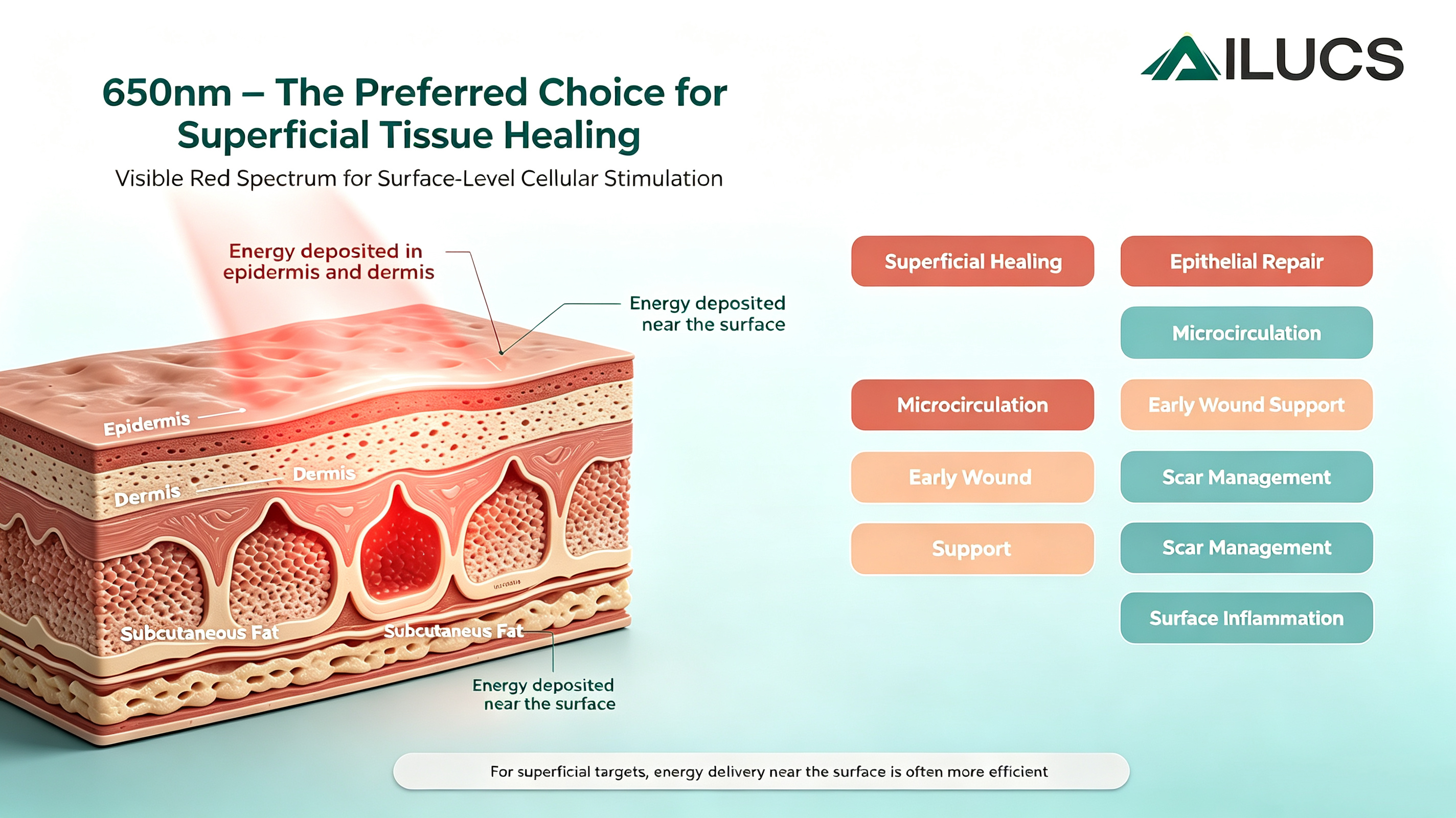 Primary Clinical Advantages: Strong superficial tissue interaction; supports epithelial repair; promotes local microcirculation; suitable for early-stage wound healing.
Common Clinical Applications: Surgical incisions, superficial wounds, skin lesions, scar management, oral soft tissue conditions, surface inflammation.
Clinical Considerations: Particularly effective for superficial conditions.
810nm – A Proven Wavelength for Photobiomodulation
810nm is extensively studied and supports mitochondrial activity through cytochrome c oxidase.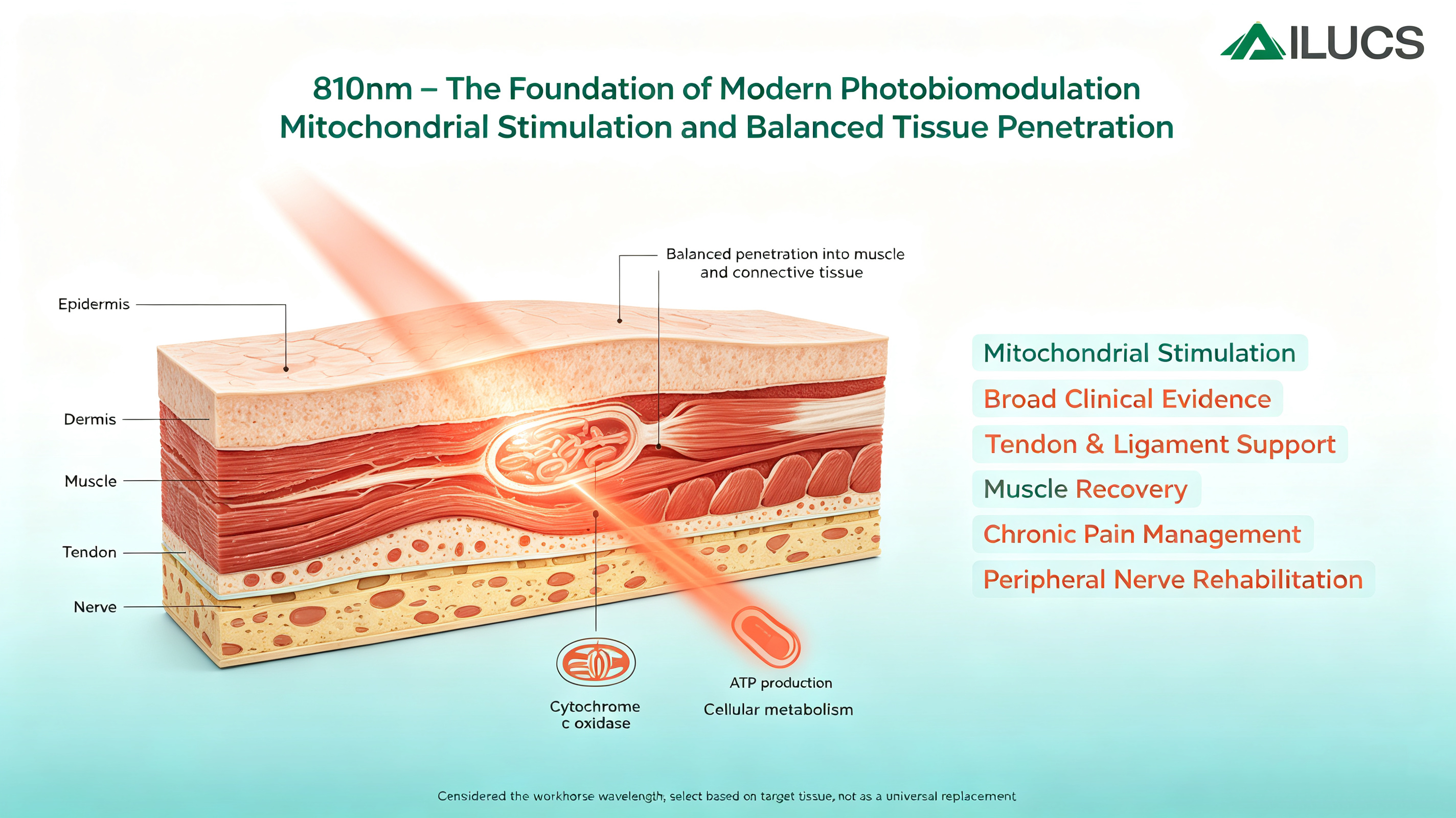 Primary Clinical Advantages: Balanced penetration; supports cellular activity.
Common Clinical Applications: Tendon injuries, ligament disorders, osteoarthritis, muscle strains, peripheral nerve rehabilitation, chronic pain.
Clinical Considerations: Match treatment objectives rather than using one wavelength for every case.
915nm – Delivering Energy to Deeper Musculoskeletal Tissue
915nm provides efficient energy delivery to deeper muscles, tendons, ligaments, and joints.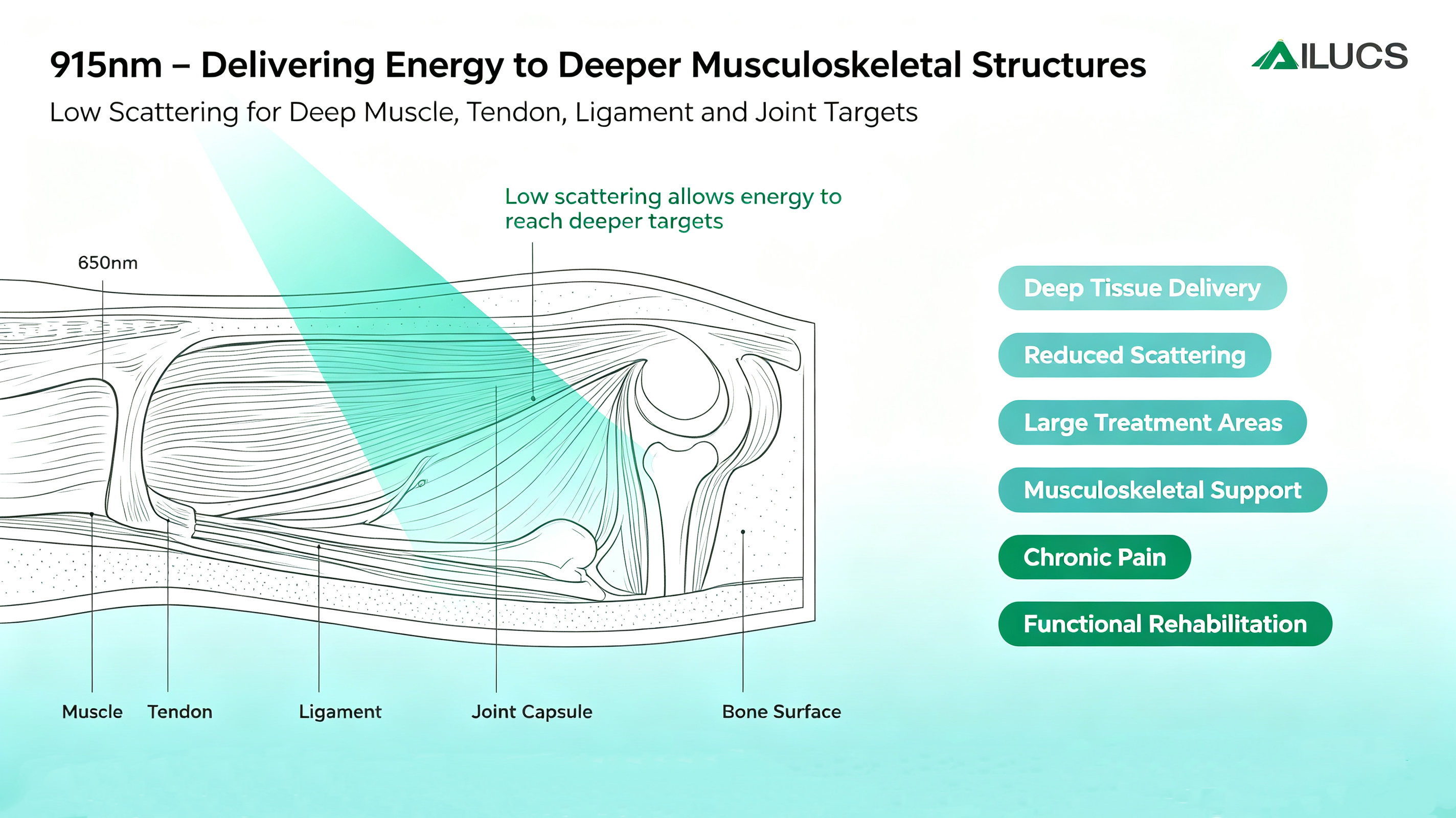 Primary Clinical Advantages: Reduced scattering; suitable for large treatment areas.
Common Clinical Applications: Deep muscle injuries, hip disorders, tendinopathies, ligament rehabilitation, chronic musculoskeletal pain, functional rehabilitation.
Clinical Considerations: Dosage and protocol remain essential.
980nm – Supporting Inflammation Control and Local Circulation
980nm interacts strongly with water and hemoglobin, making it useful for inflammation and edema management.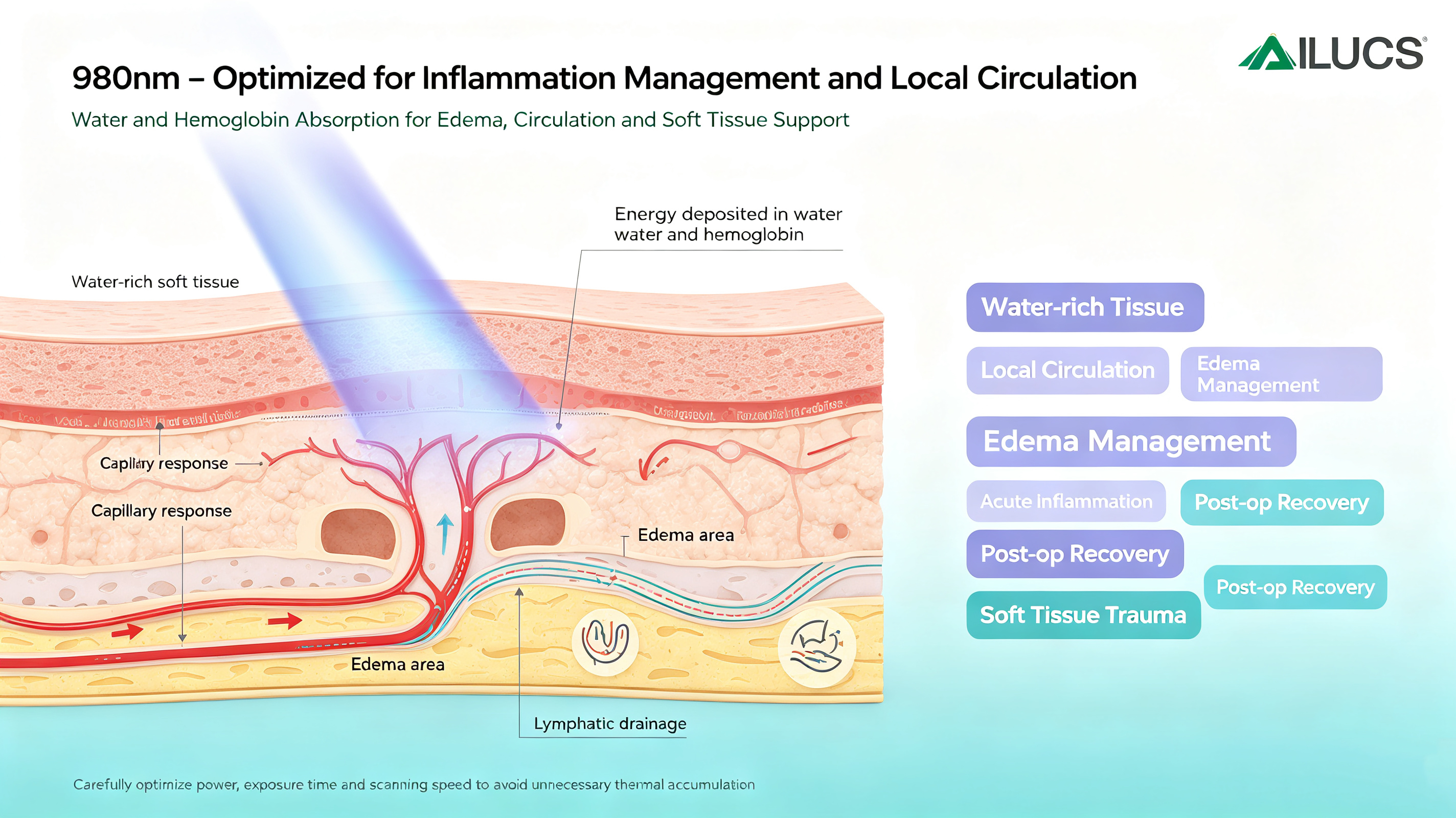 Primary Clinical Advantages: Supports circulation; may reduce edema.
Common Clinical Applications: Acute soft tissue injuries, local inflammation, edema, muscle soreness, soft tissue trauma.
Clinical Considerations: Optimize treatment parameters.
1064nm – An Effective Choice for Deep Orthopedic Rehabilitation
1064nm reaches deep musculoskeletal structures efficiently and is widely used in orthopedic rehabilitation.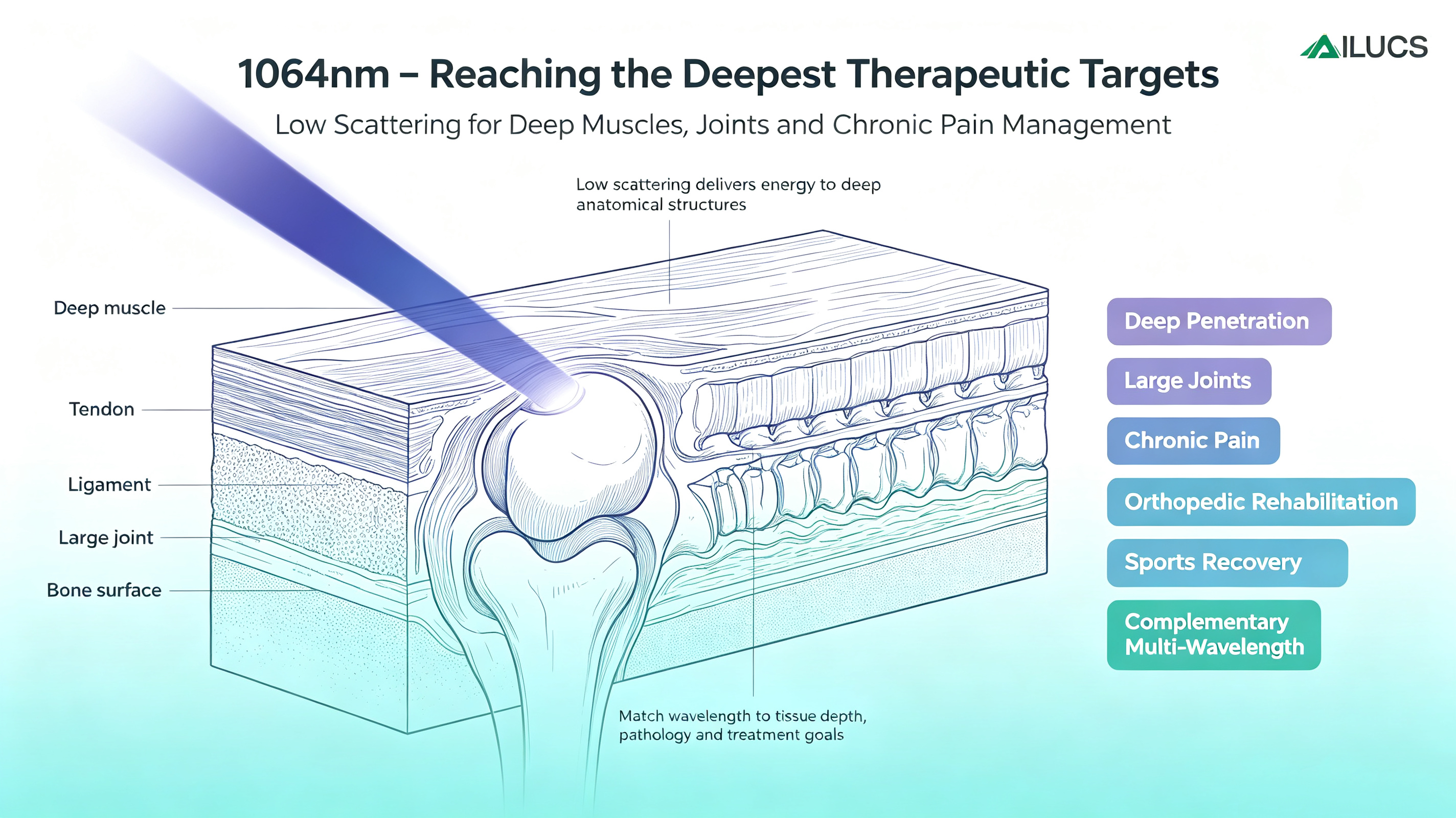 Primary Clinical Advantages: Excellent deep penetration.
Common Clinical Applications: Hip dysplasia, osteoarthritis, deep muscle injuries, spine-related disorders, chronic joint pain, sports rehabilitation.
Clinical Considerations: Match parameters to tissue depth.
Comparing the Five Therapeutic Wavelengths
| Wavelength |
Interaction | Penetration | Applications |
| 650nm | Superficial | Superficial | Wounds |
| 810nm | PBM | Moderate | Tendon/Pain |
| 915nm | Deep MSK | Deep | Rehab |
| 980nm | Water/Hb | Moderate-Deep | Inflammation |
| 1064nm | Orthopedic | Deepest | OA |
Conclusion
Selecting the right wavelength requires matching tissue depth, pathology, and treatment goals rather than pursuing maximum penetration alone.
Why Multi-Wavelength Systems Are Becoming More Common
Many rehabilitation cases involve multiple tissue layers. Multi-wavelength systems provide greater flexibility by allowing clinicians to combine wavelengths according to clinical needs.
The LYRA Veterinary Laser Therapy System integrates 650nm, 810nm, 915nm, 980nm, and 1064nm into one platform.
Frequently Asked Questions
Which wavelength penetrates the deepest?
1064nm generally provides the greatest tissue penetration.
Is 810nm better than 980nm?
It depends on the treatment objective.
Why combine multiple wavelengths?
Different tissues respond differently to light.
Can one wavelength treat every condition?
No.
Does deeper penetration always produce better results?
No, appropriate energy delivery is more important.
References
· Hamblin MR.
· Karu TI.
· Anders JJ.
· Bjordal JM.
· WALT Clinical Guidelines.
· Enwemeka CS.
· Huang YY.
· Chung H.
· Jenkins PA.
· Cotler HB.
· Lanzafame RJ.
· de Freitas LF.