Class IV Laser Assisted Recovery of a Postoperative Feline Incision: Dabai’s Case
Background
In small animal surgery, postoperative incision recovery plays a critical role in overall rehabilitation, directly affecting patient comfort, mobility, and healing outcomes. Even with standardized surgical techniques and appropriate postoperative care, localized inflammation, swelling, and delayed tissue repair remain common clinical challenges. As a result, laser therapy modalities are increasingly being incorporated into postoperative management to optimize the healing environment.
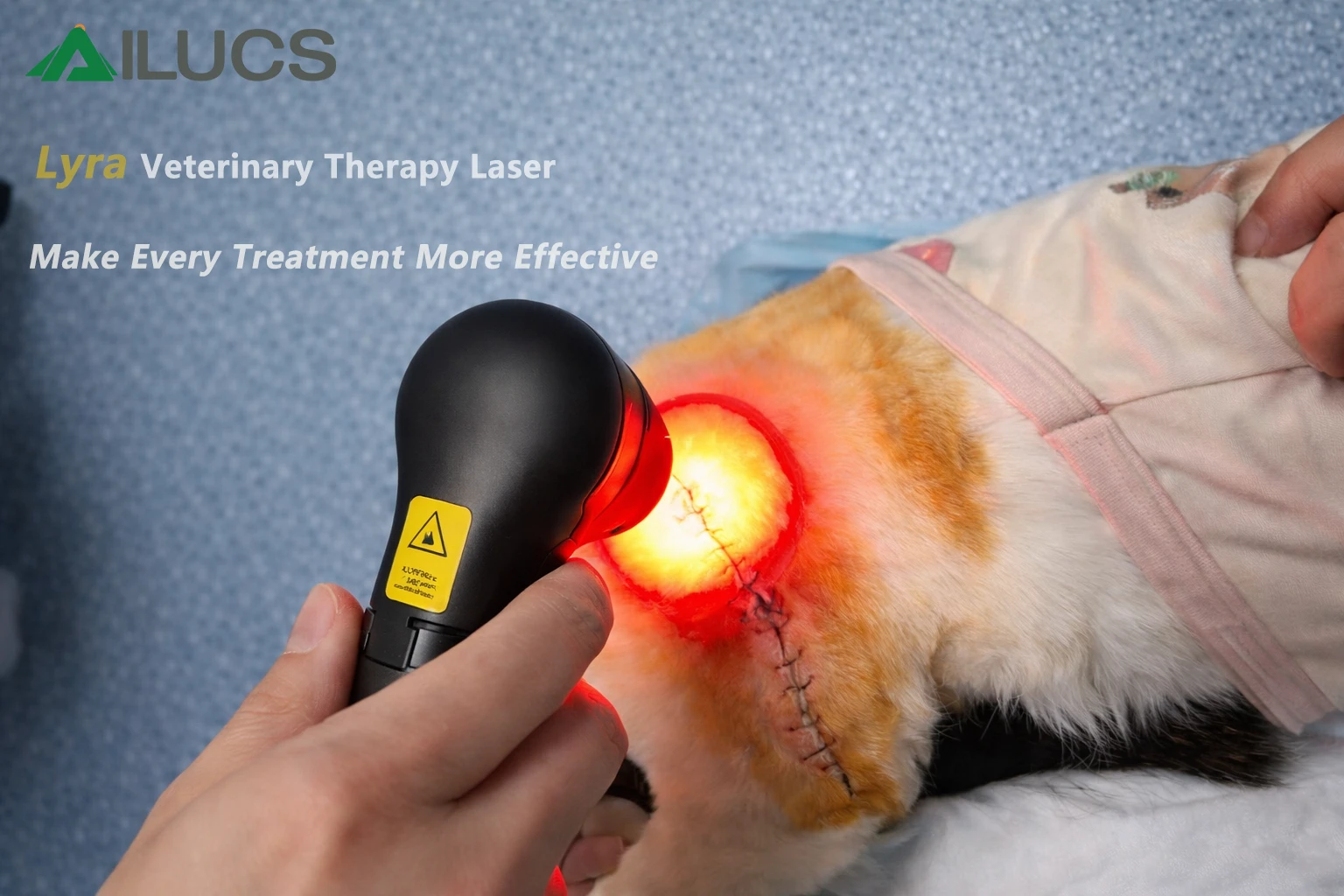
This case report documents the application of the Lyra Veterinary Therapy Laser in supporting the recovery of a postoperative sutured incision in a cat named Dabai.
Case Description
Dabai underwent surgical treatment for a hind limb condition, and the postoperative incision was closed using standard suturing techniques. During the early postoperative period, the incision remained structurally stable; however, mild postoperative tissue reactions were observed, including localized redness and a sensation of tissue tension.
In addition to routine postoperative care, the clinical team introduced Lyra Class IV laser therapy to assist in controlling inflammation and to create a more favorable biological environment for incision healing.
Laser Treatment Protocol
This treatment utilized the Lyra Veterinary Therapy Laser with a multi-wavelength output configuration, with parameters selected based on the tissue characteristics of the postoperative incision.
The primary wavelengths applied included:
650 nm – Targeting superficial tissue layers, this wavelength helps improve local microcirculation and supports epidermal cellular metabolism, contributing to superficial incision healing.
810 nm – Offering effective tissue penetration, this wavelength acts on mid-depth soft tissues, aiding in the reduction of postoperative inflammation and enhancement of cellular metabolic activity.
915 nm – Providing a balanced profile between tissue absorption and penetration, this wavelength delivers sufficient energy to the tissues surrounding the incision, stimulating fibroblast activity and collagen synthesis to support incision stability.
1064 nm – With strong deep-tissue penetration, this wavelength targets deeper soft tissue structures, further improving local blood circulation and helping reduce postoperative tissue tension.
Treatment Procedure
Prior to each laser session, the postoperative incision was evaluated to ensure intact sutures, cleanliness, and the absence of abnormal exudate. The Lyra laser treatment handpiece was then applied to the incision area and surrounding tissues to ensure uniform energy delivery.
The procedure was entirely non-invasive, with controlled treatment duration and stable output. Dabai remained calm throughout the sessions, showing no signs of discomfort or stress.
Observed Rehabilitation Outcomes
Following multiple sessions of laser-assisted therapy, the postoperative recovery process demonstrated favorable progression:
Gradual reduction of redness around the incision
Improved stability of local tissue and reduced tension
Incision area remained clean and dry, with no abnormal discharge
Clear and steady progression of tissue repair
Gradual improvement in limb use and mobility
Overall, the postoperative recovery was smooth, and incision healing quality was assessed as satisfactory.
Clinical Insights and Conclusion
This case demonstrates that Lyra Veterinary Therapy Laser, when integrated into postoperative incision management for feline patients, can serve as an effective adjunctive therapy without adding physical burden to the animal. Its non-invasive nature, multi-wavelength configuration, and high-power output allow seamless integration into routine postoperative care protocols.
As veterinary rehabilitation continues to evolve, Class IV laser therapy shows promising potential in postoperative recovery and surgical wound management across a range of clinical scenarios.