How Class IV Laser Therapy Helps Treat Internal Inflammation in Animals
Internal inflammation is a common challenge in veterinary medicine. Conditions such as cystitis, pancreatitis, pneumonia, enteritis, and feline asthma can significantly affect an animal’s comfort, recovery time, and quality of life.
While conventional treatments such as medication and supportive care remain essential, Class IV laser therapy is emerging as a valuable complementary modality in veterinary practice. By promoting cellular repair and reducing inflammatory responses, laser therapy can help support the recovery process in animals suffering from internal inflammatory conditions.
This article explores the principle of Class IV veterinary laser therapy works and how it may assist in the management of several internal inflammatory diseases in animals.
Why Laser Therapy Can Help with Internal Inflammation
Inflammation plays a central role in many diseases affecting internal organs. Persistent inflammation may lead to tissue damage, pain, and delayed recovery.
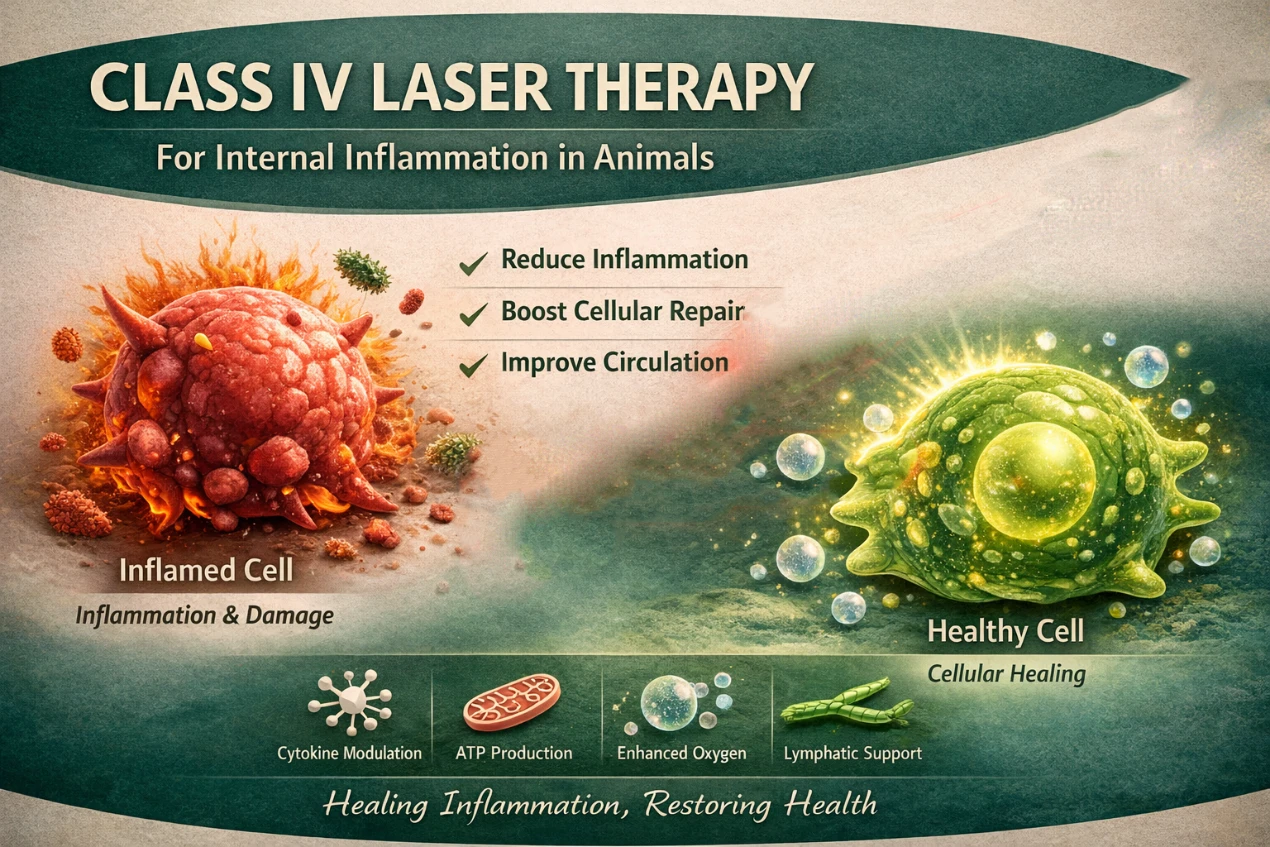
Research in photobiomodulation therapy suggests that laser energy can influence inflammatory pathways by:
Modulating cytokine activity
Increasing mitochondrial ATP production
Improving oxygen delivery to tissues
Supporting lymphatic drainage
These mechanisms may help reduce the intensity of inflammatory responses and support the body’s natural healing processes.
In veterinary practice, Class IV laser therapy is typically used as a supportive treatment alongside standard medical care, rather than a replacement for primary therapies.
Applications of Class IV Laser Therapy for Internal Inflammatory Conditions
1. Cystitis in Dogs and Cats
Cystitis, or inflammation of the urinary bladder, is a common condition in companion animals, particularly cats. Clinical signs may include:
Frequent urination
Pain during urination
Blood in the urine
Behavioral changes
Laser therapy applied to the lower abdominal region may help:
Reduce local inflammation
Improve circulation to bladder tissues
Support faster recovery when combined with medication and dietary management
For animals experiencing chronic or recurrent cystitis, laser therapy may be integrated into a broader treatment plan.
2. Pancreatitis
Pancreatitis is an inflammatory condition of the pancreas that can cause significant pain and systemic complications in dogs and cats.
Veterinary treatment typically includes:
Fluid therapy
Pain management
Nutritional support
Monitoring of systemic health
Class IV laser therapy may be applied over the pancreatic region to help:
Reduce inflammatory activity
Improve local microcirculation
Support tissue recovery
Although more clinical research is ongoing, many veterinary rehabilitation specialists are exploring laser therapy as part of multimodal management for pancreatitis.
3. Pneumonia and Respiratory Inflammation
Respiratory conditions such as pneumonia involve inflammation of lung tissues and airways, which can impair breathing and oxygen exchange.
Laser therapy applied to the thoracic region may help by:
Supporting microcirculation in lung tissues
Reducing inflammatory responses
Promoting tissue oxygenation
When used alongside antibiotics, oxygen therapy, and other medical treatments, therapeutic laser therapy may contribute to improved recovery support.
4. Enteritis and Gastrointestinal Inflammation
Enteritis, or inflammation of the intestines, can occur due to infection, dietary intolerance, or systemic disease.
Common symptoms include:
Vomiting
Diarrhea
Abdominal discomfort
Dehydration
Laser therapy applied to the abdominal region may help support:
Reduced inflammatory activity in intestinal tissues
Improved blood flow to digestive organs
Enhanced cellular repair mechanisms
In veterinary rehabilitation settings, this approach is sometimes used as part of supportive care for gastrointestinal inflammation.
5. Feline Asthma
Feline asthma is a chronic inflammatory disease affecting the airways of cats. It can lead to symptoms such as:
Coughing
Wheezing
Difficulty breathing
Traditional treatments typically include corticosteroids and bronchodilators.
Laser therapy may be applied to the thoracic area to help:
Reduce airway inflammation
Improve respiratory muscle comfort
Support overall respiratory function
Although it does not replace standard medical treatment, laser therapy may provide additional supportive benefits for cats with chronic airway inflammation.
The Future of Laser Therapy for Internal Veterinary Medicine
As research into photobiomodulation therapy in veterinary medicine continues to grow, more clinicians are exploring how laser therapy can support treatments beyond musculoskeletal conditions.
Advances in Class IV veterinary laser systems are improving energy delivery, treatment precision, and ease of use, making this technology more accessible to veterinary clinics worldwide.
While further clinical studies are still needed to establish standardized protocols for internal inflammatory diseases, early clinical experience suggests that laser therapy may play an increasingly important role in supportive veterinary care.
Conclusion
Internal inflammatory diseases such as cystitis, pancreatitis, pneumonia, enteritis, and feline asthma can significantly impact animal health. Alongside conventional veterinary treatments, Class IV laser therapy offers a promising supportive modality.
By helping reduce inflammation, improving circulation, and promoting cellular repair, veterinary laser therapy may contribute to improved recovery and patient comfort.
As awareness of photobiomodulation in veterinary medicine continues to grow, more clinics are adopting laser therapy as part of a comprehensive approach to animal health and rehabilitation.