
A New Trend in Pet Eye Care: How Laser Therapy Improves Outcomes and Recovery
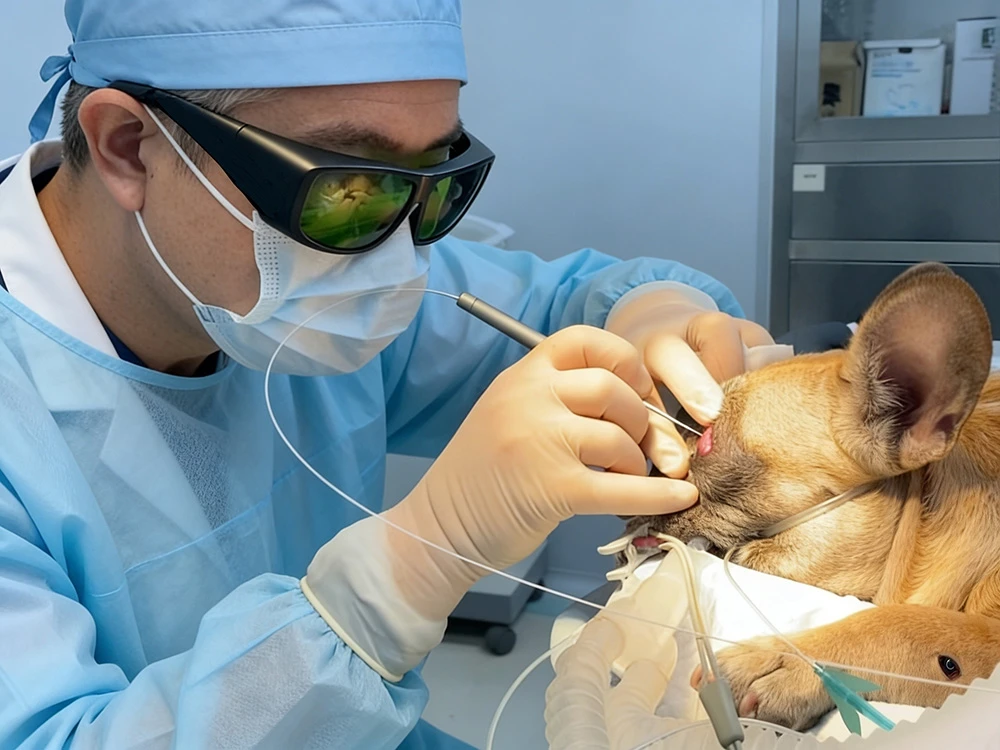
1. The Evolution and Challenges of Veterinary Ophthalmology
As veterinary care continues to advance, the demand for diagnosing and treating ophthalmic conditions in small animals is steadily increasing. Common diseases include corneal ulcers, keratitis (infectious or immune-mediated), distichiasis, corneal tumors, pigmentary keratitis, as well as conjunctival and eyelid disorders.
Among these, corneal ulcers are one of the most frequently encountered conditions and carry a significant risk of vision loss. They can result from infection, trauma, or tear film abnormalities, and in severe cases may lead to corneal perforation or blindness.
Conventional treatment approaches—such as medication (antibiotics and anti-inflammatories), surgery, and supportive care—remain essential. However, in chronic or complex cases, recovery can be slow and recurrence rates remain a concern.
In recent years, laser therapy has emerged as a non-invasive or minimally invasive option, offering improved comfort, fewer complications, and more consistent recovery outcomes in veterinary ophthalmology.
2. How Laser Therapy Works in Ophthalmology
Laser applications in veterinary ophthalmology are generally based on two key mechanisms.
The first is photobiomodulation (PBM). Low-level laser energy interacts with cells to enhance ATP production, improve microcirculation, and regulate inflammation, thereby supporting tissue repair and healing.
The second is high-power laser application in surgery. In surgical settings, lasers enable precise tissue cutting with simultaneous coagulation, helping reduce bleeding, minimize tissue trauma, and improve procedural control.
Modern multi-functional systems, such as the LYRA laser platform, integrate both therapeutic and surgical capabilities, allowing veterinarians to address different stages of ophthalmic care with a single device.
3. Applications in Common Ophthalmic Conditions
Corneal Ulcers and Keratitis
Corneal ulcers are among the most common ophthalmic conditions in clinical practice. Healing depends on epithelial regeneration, inflammation control, and stromal repair.
Laser therapy can support this process by promoting epithelial cell migration, improving local circulation, and reducing inflammation.
In related fields, light-based techniques such as riboflavin + UV-A crosslinking have also demonstrated positive clinical outcomes.
Distichiasis
Distichiasis is a common eyelid disorder in dogs, where abnormal eyelashes irritate the cornea and may lead to chronic inflammation or ulcers.
Laser treatment allows for precise targeting of abnormal follicles, reducing recurrence while minimizing damage to surrounding tissues.
Corneal Tumors and Proliferative Lesions
In cases of corneal tumors or proliferative lesions, laser technology enables minimally invasive removal with simultaneous hemostasis, reducing intraoperative bleeding and postoperative inflammation.
Clinical use in dogs and cats has shown encouraging results in managing such conditions.
Postoperative Recovery and Inflammation Management
Following ophthalmic procedures—such as corneal repair or eyelid surgery—laser therapy can be used as an adjunct treatment to reduce inflammation, relieve pain, and accelerate tissue healing.
Photobiomodulation has been shown to support tissue regeneration and improve overall recovery quality and patient comfort.
4. Advantages of Laser Therapy in Veterinary Ophthalmology
Why is laser therapy particularly suitable for veterinary ophthalmology? Compared to traditional surgical instruments, it acts like a highly precise “light scalpel,” offering multiple advantages:
Non-invasive or minimally invasive: Reduces tissue damage
High precision: Allows controlled and targeted treatment
Anti-inflammatory and analgesic effects: Improves patient comfort
Promotes healing: Accelerates recovery time
Lower risk of complications: Such as infection and scar formation
These advantages make veterinary laser systems an increasingly valuable adjunct tool in the management of complex ophthalmic conditions.
5. Clinical Considerations
Although laser therapy shows strong potential in veterinary ophthalmology, the following considerations are essential in clinical practice to ensure both safety and effectiveness:
Select the appropriate laser modality based on the condition (surgical vs. photobiomodulation, PBM)
Carefully control dosage and treatment parameters (due to the “therapeutic window” effect)
Combine with conventional treatments (medication and/or surgery)
Ensure procedures are performed by trained veterinary professionals
6. Conclusion
Veterinary laser technology is gradually reshaping the way ophthalmic diseases are treated in veterinary medicine. From corneal repair to precision surgical procedures, it not only improves treatment efficiency but also enhances patient comfort and recovery outcomes.
In the past, severe ocular conditions often required lens removal or even enucleation. Today, the goal of veterinary ophthalmology is evolving—from simply treating disease to preserving and restoring vision whenever possible. This shift means animals can not only survive, but also regain their ability to see and interact with the world.
Looking ahead, as clinical evidence continues to grow and treatment parameters become more standardized, laser therapy is expected to evolve from a supportive tool into a more established modality in veterinary ophthalmology.
Integrated systems like LYRA reflect this trend—offering veterinarians a flexible, efficient solution that supports both precision treatment and long-term recovery.