
How Class IV Laser Therapy Accelerated Cat Wound Healing: A Clinical Case Study
1. Introduction: Why Veterinary Laser Therapy Is Used for Feline Wound Management?
Wound management is a common challenge in feline practice, particularly when soft tissue injuries involve inflammation, delayed healing, or increased risk of infection. In recent years, veterinary laser therapy has gained growing attention as a non-invasive adjunctive treatment that may help support tissue repair, improve local circulation, and reduce inflammation in cats.
Class IV laser therapy, also known as photobiomodulation (PBM), is increasingly incorporated into veterinary rehabilitation and wound care protocols because of its potential biological effects on tissue healing and pain modulation.
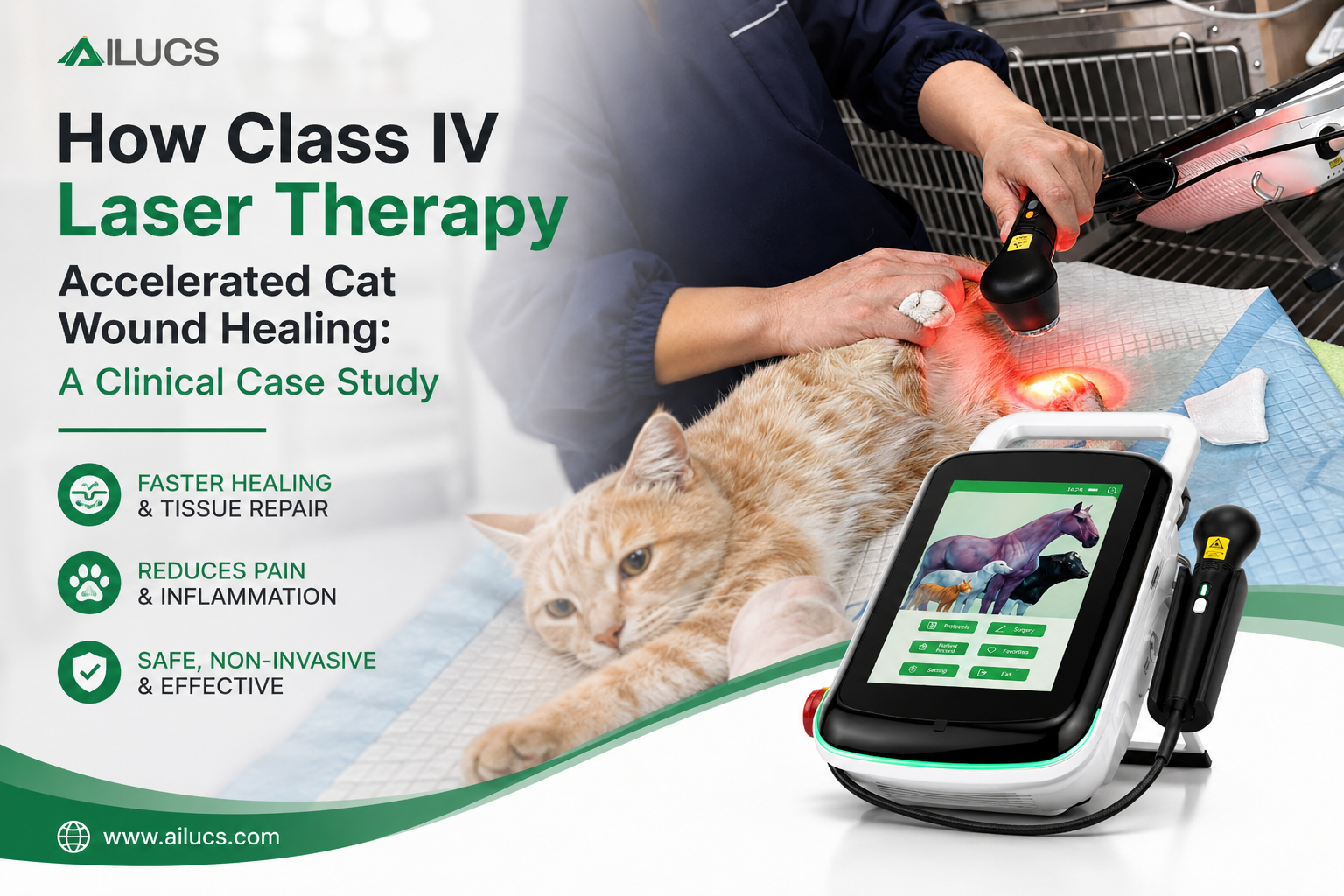
This clinical case study demonstrates the application of the LYRA Veterinary Therapy Laser in the management of a feline hind limb wound and documents the healing progression observed during treatment.
2.Case Overview: Feline Hind Limb Wound Treatment
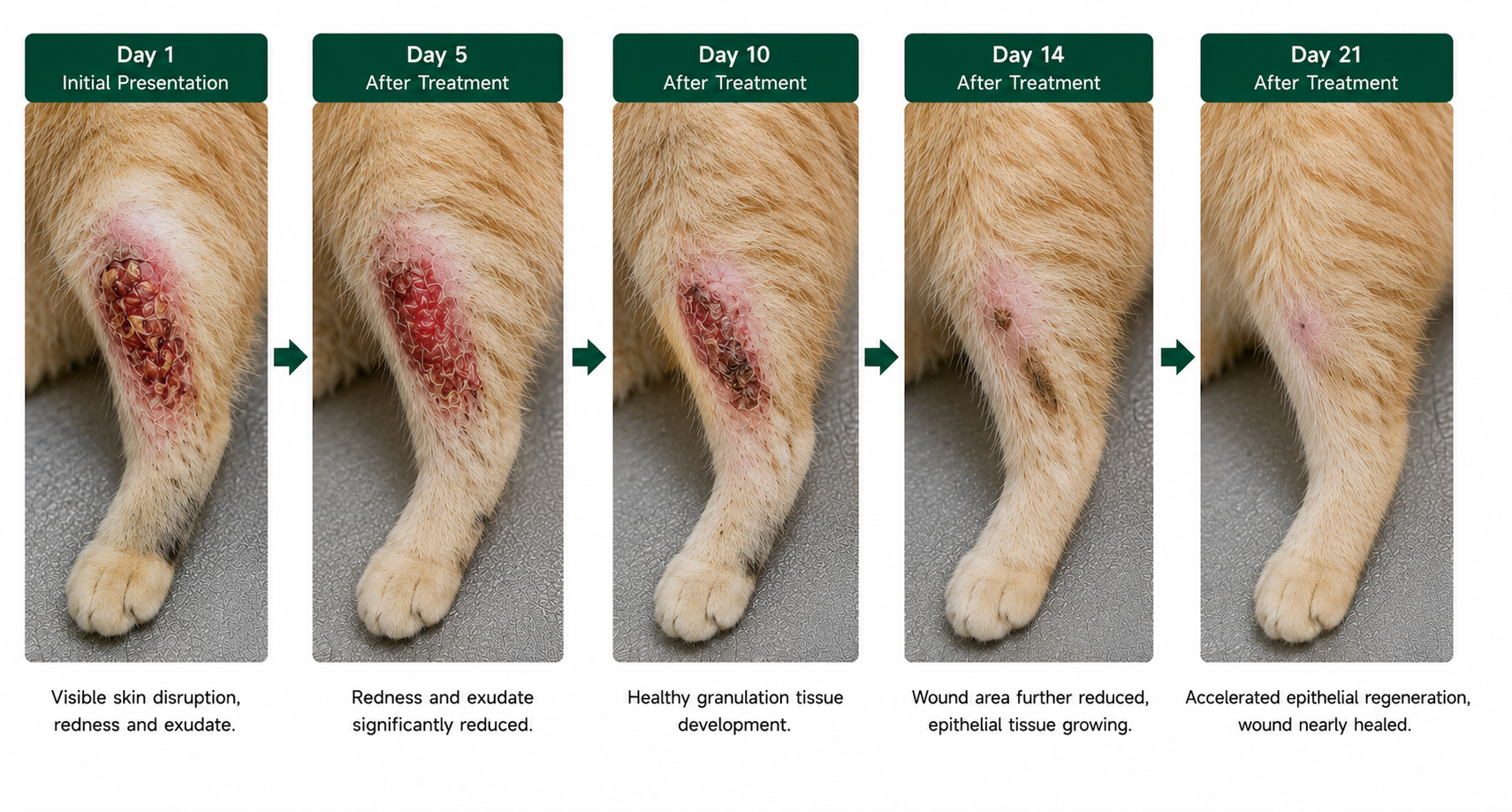
MIMI, a domestic short-haired cat, presented with an accidental soft tissue injury affecting the hind limb. During the initial clinical examination, the wound exhibited visible skin disruption, localized inflammation, redness, and exudate.
To support tissue repair and improve the local healing environment, the LYRA Class IV Veterinary Therapy Laser was introduced as an adjunctive treatment alongside routine wound cleaning and standard veterinary care.
The patient tolerated treatment well throughout the recovery period and remained calm during all laser therapy sessions without the need for sedation.
3.LYRA Veterinary Therapy Laser Treatment Parameters
Treatment was performed using the LYRA Veterinary Therapy Laser, a multi-wavelength Class IV laser therapy system designed for veterinary photobiomodulation applications.
Wavelength Configuration
①650 nm Red Light
Supports superficial tissue stimulation, microcirculation improvement, and epidermal regeneration.
②810 nm Near-Infrared Light
Assists deeper tissue penetration and supports inflammation modulation.
③980 nm Near-Infrared Light
Contributes to improved local circulation and enhanced tissue response during the healing process.
Treatment Protocol
Treatment frequency: 2–3 sessions per week
Session duration: Approximately 5–8 minutes
Treatment approach: Non-invasive scanning technique covering both the wound and surrounding tissues
Energy delivery: Moderate Class IV laser output optimized for patient comfort and tissue safety
Protective protocols and controlled operation were maintained throughout all treatment sessions.
4.Therapeutic Mechanisms of Veterinary Laser Therapy
Photobiomodulation therapy may produce several beneficial biological effects that support feline wound healing and tissue recovery, including:
Improved local blood circulation and tissue oxygenation
Reduction of inflammatory response and localized edema
Enhanced mitochondrial ATP production and cellular metabolism
Promotion of granulation tissue formation and epidermal repair
Improved patient comfort and reduced pain sensitivity
These mechanisms have contributed to the increasing use of veterinary laser therapy in rehabilitation and wound management protocols.
5.Clinical Treatment Procedure
Prior to each treatment session, the wound area was routinely evaluated and cleaned according to standard veterinary wound management procedures.
The LYRA laser handpiece was applied over the wound surface and adjacent tissues using controlled movement to ensure consistent energy distribution across the treatment region.
Each session was completed within a short treatment duration, and no adverse reactions were observed during therapy.
7.Clinical Discussion
Veterinary laser therapy has become increasingly integrated into companion animal rehabilitation because photobiomodulation may influence several biological pathways involved in tissue repair.
Experimental and clinical studies have suggested that laser irradiation may help stimulate fibroblast proliferation, collagen synthesis, angiogenesis, and mitochondrial ATP production, all of which may contribute to improved wound healing outcomes.
Although individual clinical responses can vary depending on wound severity, tissue condition, and treatment parameters, Class IV laser therapy is commonly used as a supportive modality alongside conventional wound management rather than as a replacement for standard veterinary care.
This case highlights the potential role of veterinary laser therapy as part of a comprehensive feline wound management strategy.
8.Conclusion
This clinical case demonstrates that the LYRA Class IV Veterinary Therapy Laser can be safely incorporated into feline wound management protocols as a non-invasive adjunctive therapy.
Through photobiomodulation, laser therapy may support tissue repair, reduce inflammation, and improve overall wound healing progression in feline patients.
As veterinary rehabilitation technologies continue to advance, Class IV laser therapy is becoming an increasingly valuable tool in modern veterinary wound care and companion animal rehabilitation.
9.Frequently Asked Questions
Is laser therapy safe for cats?
Yes. When performed by trained veterinarians using appropriate parameters, Class IV laser therapy is considered a safe and non-invasive treatment option.
How many laser sessions does a cat wound need?
The treatment frequency depends on wound size, depth, and healing stage. Acute wounds often benefit from multiple sessions during the first one to two weeks.
Does laser therapy replace wound cleaning?
No. Laser therapy is designed to complement standard wound management, including cleaning, infection control, and routine veterinary care.
Can laser therapy reduce inflammation?
Photobiomodulation has been reported to improve local circulation and cellular metabolism, which may help reduce inflammation and support tissue repair.
10. References
[1]Hamblin MR. Mechanisms and applications of the anti-inflammatory effects of photobiomodulation. AIMS Biophysics. 2017.
[2]Wardlaw JL et al. The effects of laser therapy on wound healing in veterinary medicine. Veterinary Surgery. 2019.
[3]Marchegiani A et al. Photobiomodulation therapy in companion animals: a review. Animals. 2023.
American Veterinary Medical Association (AVMA)
World Small Animal Veterinary Association (WSAVA)
PubMed – Veterinary Photobiomodulation Research
American Animal Hospital Association (AAHA)
NCBI – Photobiomodulation and Wound Healing Studies