
Can Veterinary Laser Therapy Help Dogs and Cats with Chronic Kidney Disease (CKD)?
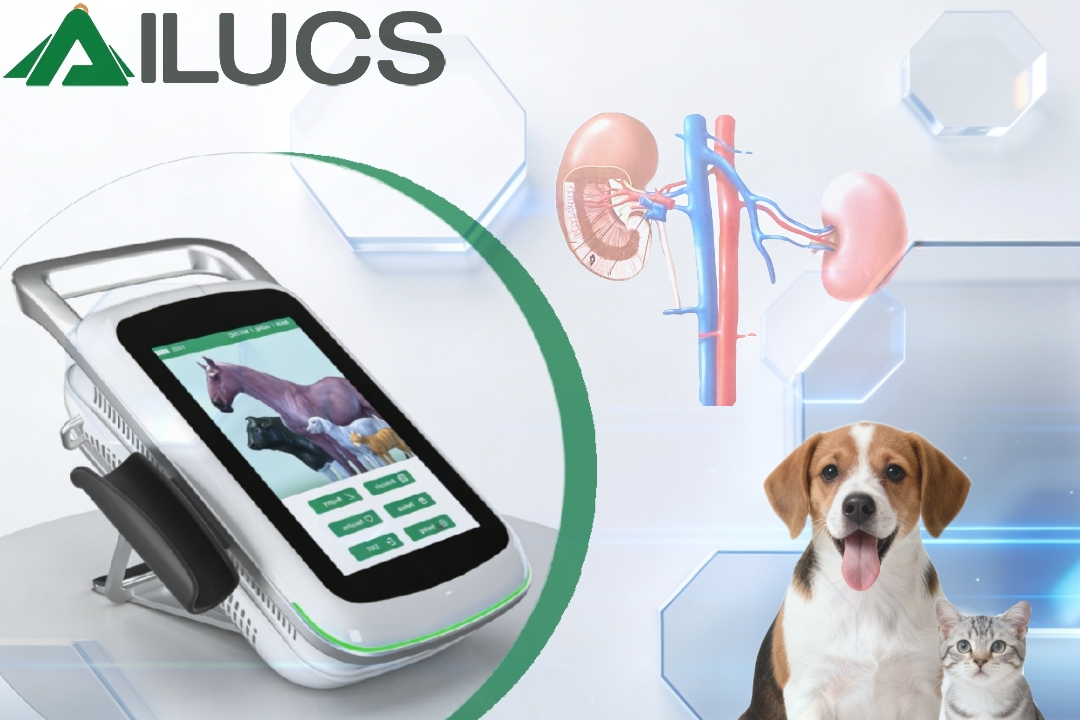
Chronic Kidney Disease (CKD) is one of the most common chronic conditions affecting aging dogs and cats. It is characterized by progressive inflammation, nephron loss, and renal fibrosis, which gradually impair kidney function. Although CKD cannot be cured, early diagnosis and long-term management can help slow disease progression and improve a pet's quality of life.
Many veterinarians are now exploring laser therapy for dogs and cats with chronic kidney disease (CKD) as a non-invasive supportive treatment. Also known as photobiomodulation (PBM) or veterinary laser therapy, this approach may help reduce inflammation, improve cellular metabolism, and support tissue repair. While laser therapy is not a cure for CKD, growing experimental evidence suggests it may complement conventional dog kidney disease treatment and cat CKD management when incorporated into an individualized veterinary care plan.
Common Causes of Chronic Kidney Disease in Pets
Chronic kidney disease in dogs and cats usually develops gradually due to multiple contributing factors rather than a single cause.
· Age-related degeneration: As pets age, the number of functional nephrons naturally declines, glomerular filtration decreases, and renal fibrosis gradually develops.
· Chronic kidney inflammation: Long-term glomerulonephritis, tubulointerstitial nephritis, and recurrent urinary tract infections progressively damage kidney tissue.
· Metabolic disorders: Diabetes mellitus and hypertension can contribute to chronic kidney damage through persistent inflammation and altered renal blood flow.
· Congenital and genetic disorders: Certain breeds are predisposed to inherited kidney diseases.
· Drug or toxin exposure: Some medications and toxins can cause irreversible kidney injury.
These factors often work together, ultimately leading to progressive and irreversible kidney damage.
Clinical Signs and Pathological Features
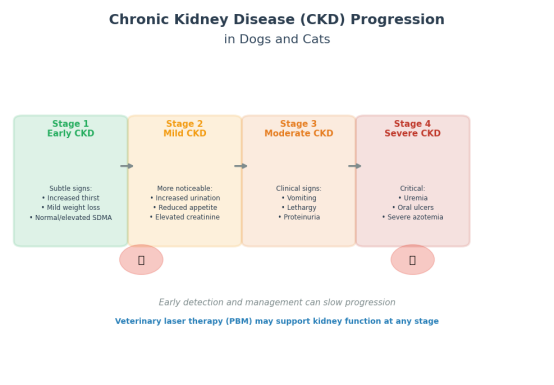
Early-stage CKD often presents with subtle clinical signs, including increased thirst and urination, reduced appetite, weight loss, and lethargy. As the disease progresses, pets may develop vomiting, oral ulcers, halitosis, poor coat quality, and other signs associated with uremia.
Laboratory testing commonly reveals elevated serum creatinine, increased blood urea nitrogen (BUN), decreased urine specific gravity, and proteinuria. Diagnostic imaging may show reduced kidney size or structural abnormalities.
Pathologically, CKD is characterized by glomerulosclerosis, tubular atrophy, interstitial fibrosis, persistent inflammation, mitochondrial dysfunction, and oxidative stress. These cellular changes are closely related to the mechanisms involved in oxidative stress and mitochondrial dysfunction regulation through photobiomodulation therapy.
What Is Photobiomodulation (PBM) Laser Therapy?
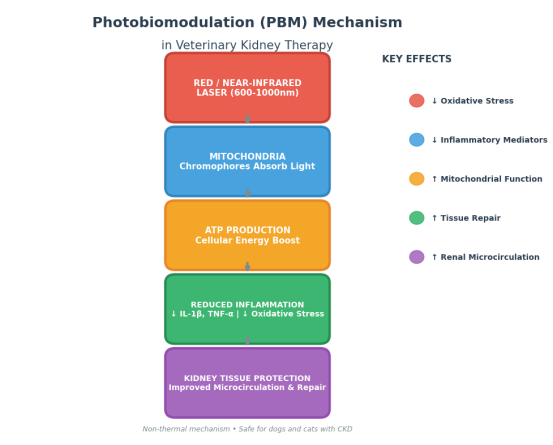
Photobiomodulation (PBM), also known as low-level laser therapy, uses red or near-infrared light (typically 600–1000 nm) to stimulate cellular activity through non-thermal mechanisms. This technology is the foundation of modern veterinary laser therapy applications. In veterinary medicine, PBM is delivered using professional veterinary laser therapy systems.
Laser energy is absorbed by mitochondrial chromophores, stimulating ATP production, regulating inflammatory responses, improving microcirculation, and supporting tissue repair.
How PBM May Support Kidney Health
Current experimental studies suggest that veterinary laser therapy may benefit kidney disease through several biological mechanisms.
· Enhancing mitochondrial function and ATP production
· Reducing oxidative stress and reactive oxygen species (ROS)
· Modulating chronic inflammation
· Improving renal microcirculation
· Limiting fibrosis and supporting tissue repair
· Regulating neuro-immune pathways associated with chronic kidney disease
These mechanisms have led researchers to investigate whether laser therapy can help kidney disease in dogs and whether laser therapy for cats with kidney disease may become a valuable supportive option alongside standard medical treatment. Although current findings are encouraging, most published evidence comes from laboratory and animal studies, and additional clinical research in companion animals is still needed.
Clinical Value of Lyra Veterinary Laser Therapy Equipment
Effective photobiomodulation depends on accurate treatment parameters and consistent energy delivery. The Lyra Four-Level Veterinary Laser Therapy Equipment is designed specifically for veterinary applications, providing multiple wavelength options and stable energy output to support individualized treatment protocols.
Veterinary professionals can integrate PBM into comprehensive dog kidney disease treatment or cat CKD management plans as a non-invasive adjunct to conventional therapies, based on each patient's clinical condition.
Conclusion
Veterinary photobiomodulation (PBM) laser therapy is receiving increasing attention as a supportive treatment for chronic kidney disease in companion animals. By improving cellular metabolism, reducing inflammation, and supporting tissue repair, PBM may complement conventional kidney disease treatment for dogs and cats.
Although current evidence remains largely preclinical, ongoing research continues to explore the role of laser therapy for dogs with kidney disease, laser therapy for cats with CKD, and other veterinary applications. With appropriate clinical evaluation and individualized treatment protocols, veterinary laser therapy systems such as Lyra may help veterinarians provide more comprehensive long-term kidney care.