
Multi-Wavelength Laser Therapy in Veterinary Rehabilitation
Learn how multi-wavelength laser therapy supports veterinary rehabilitation by improving treatment flexibility, tissue targeting, and photobiomodulation strategies.
Read article
Learn how multi-wavelength laser therapy supports veterinary rehabilitation by improving treatment flexibility, tissue targeting, and photobiomodulation strategies.
Read article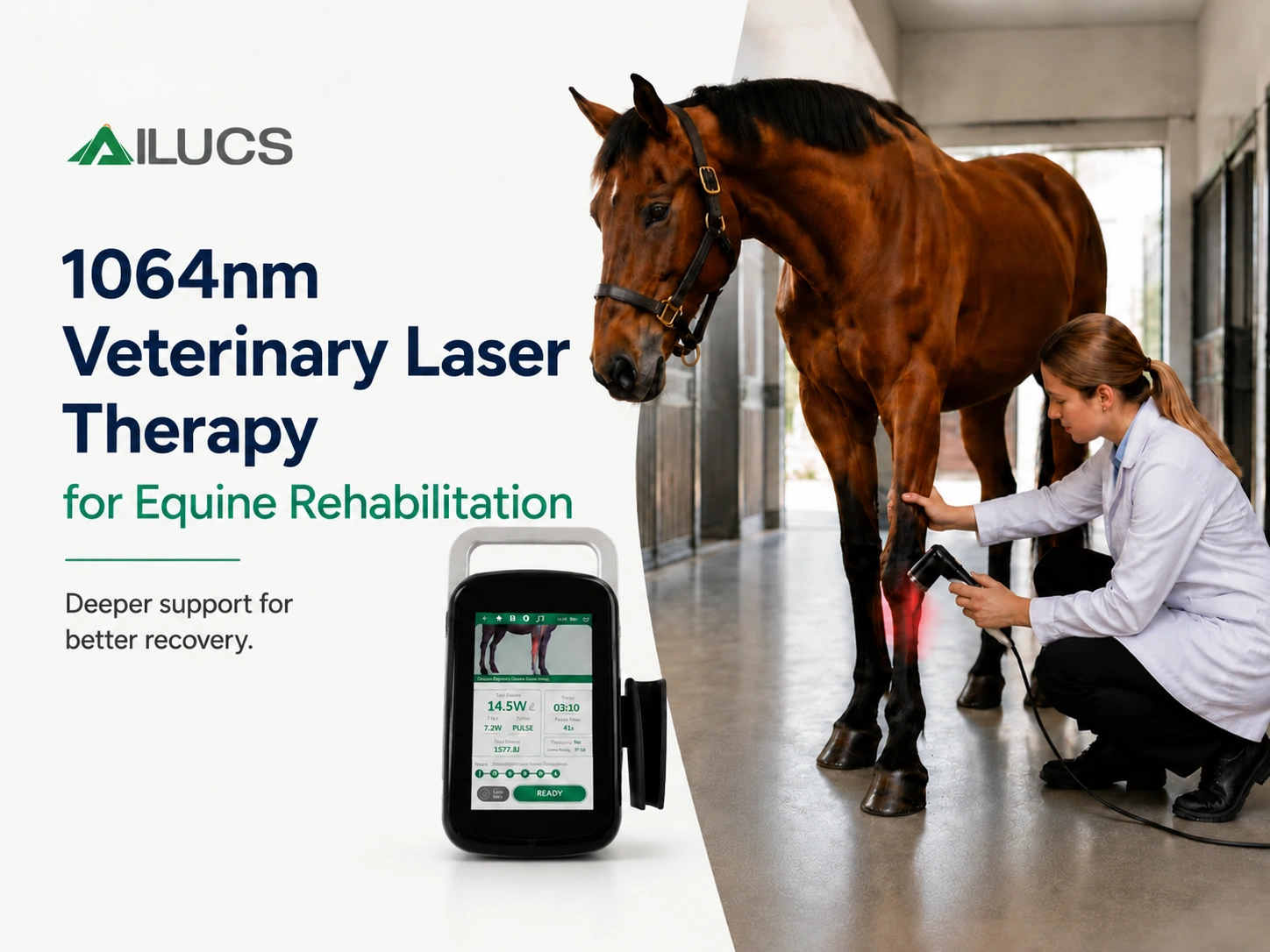
Explore 1064nm laser therapy for equine rehabilitation, including evidence, dosing considerations, coat effects, safety, and its role in veterinary care.
Read article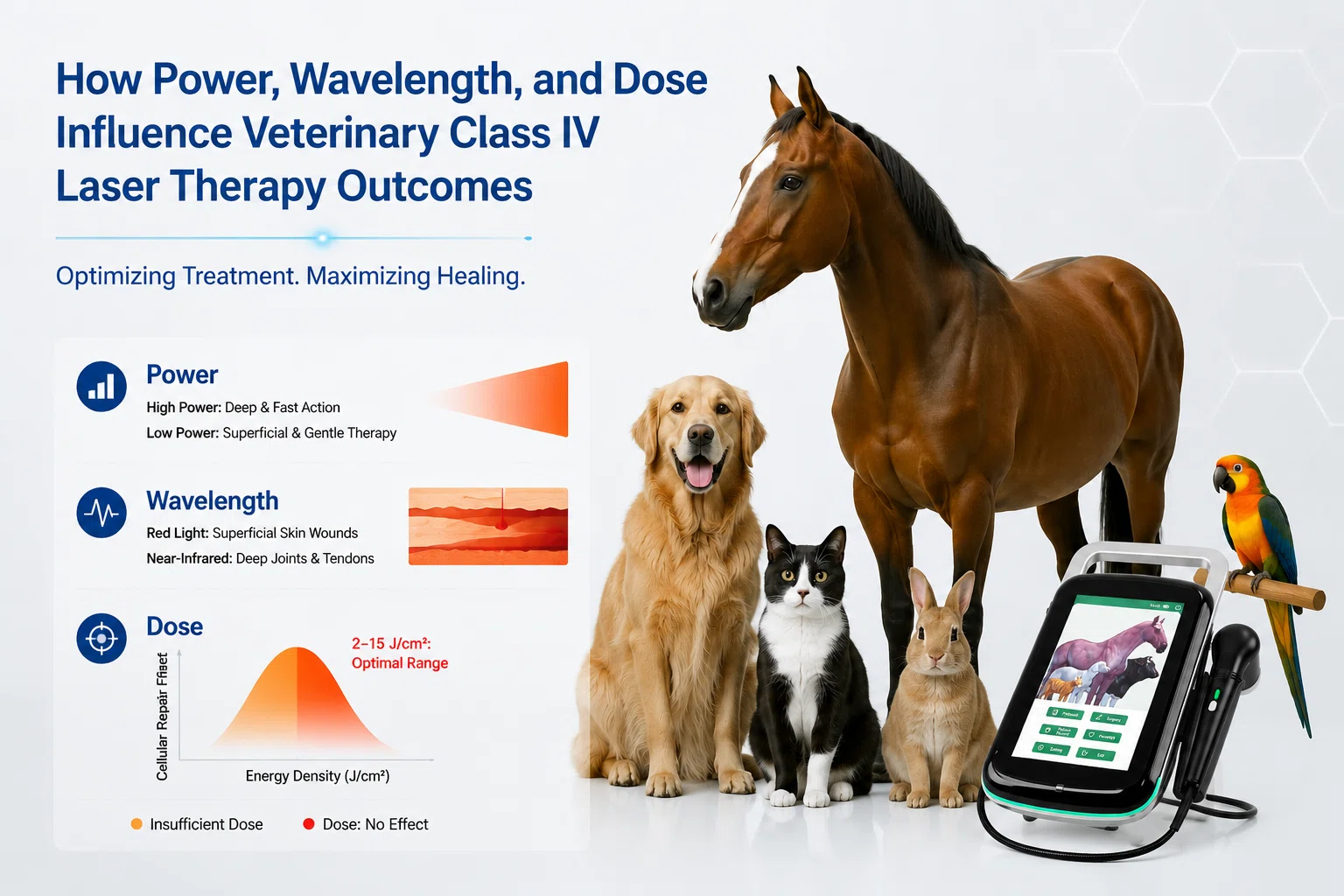
Learn how power, wavelength, and dose work together in Class IV veterinary laser therapy. Discover how treatment parameters influence tissue penetration, photobiomodulation, and clinical decision-making in companion animals and horses.
Read article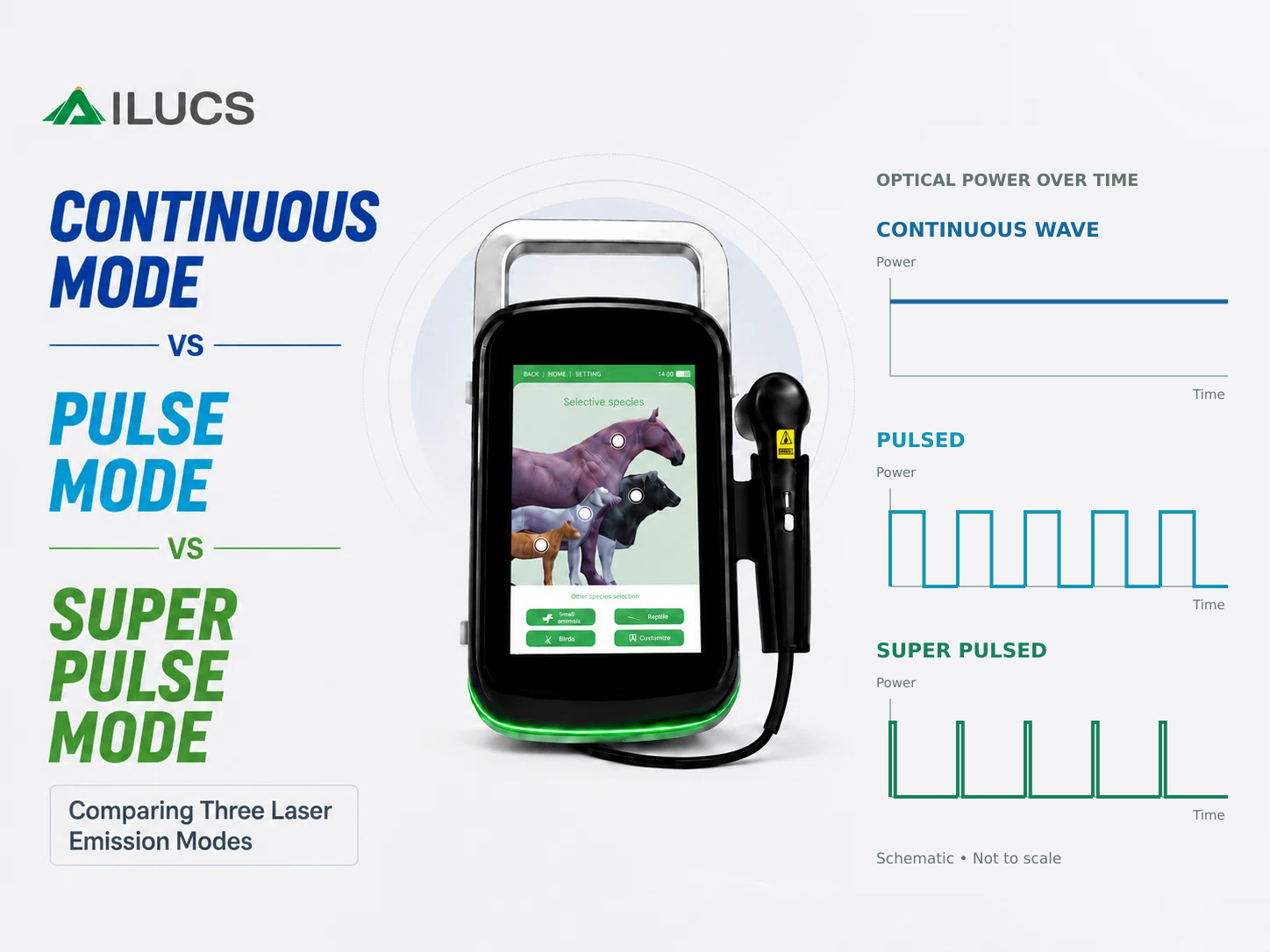
Compare continuous wave, pulsed and super pulsed laser therapy for veterinary rehabilitation, including average power, duty cycle, energy delivery and heat.
Read article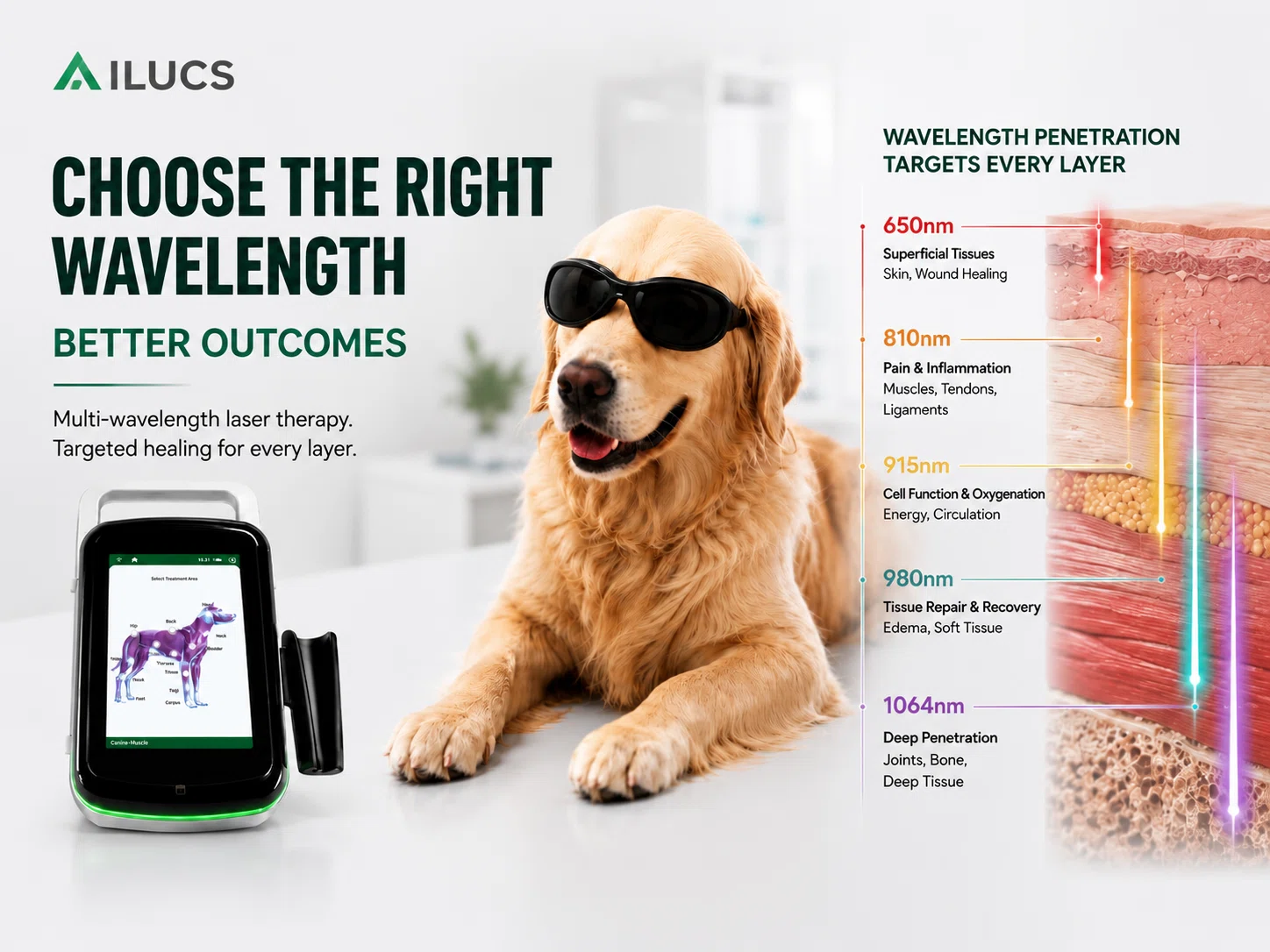
Learn how to choose veterinary laser therapy wavelengths based on target tissue, treatment depth, clinical goals, dose, and patient factors.
Read article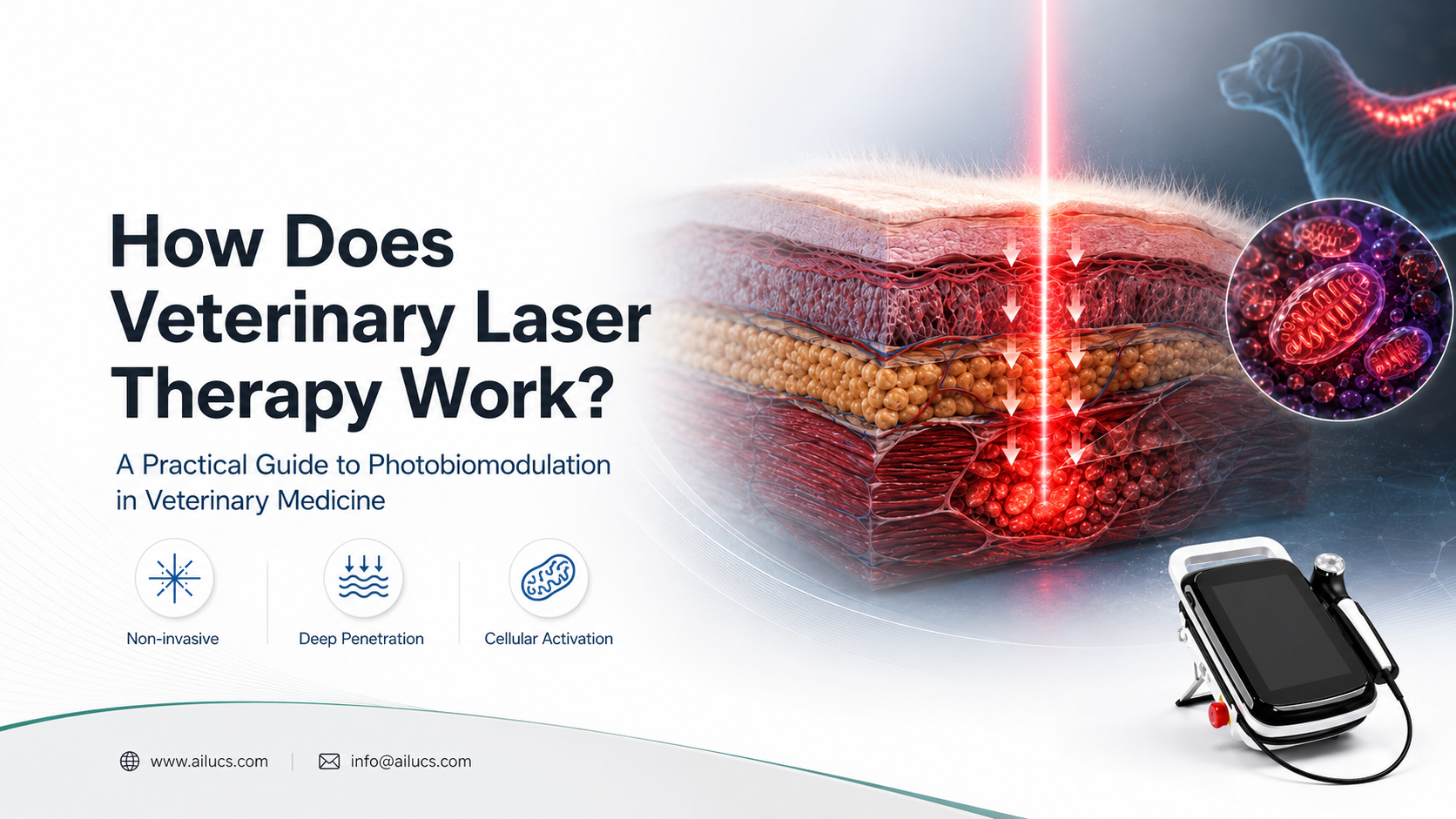
Discover how veterinary laser therapy (PBMT) works to reduce pet pain, inflammation, and speed up healing. Learn its role in multimodal care and post-surgical recovery.
Read article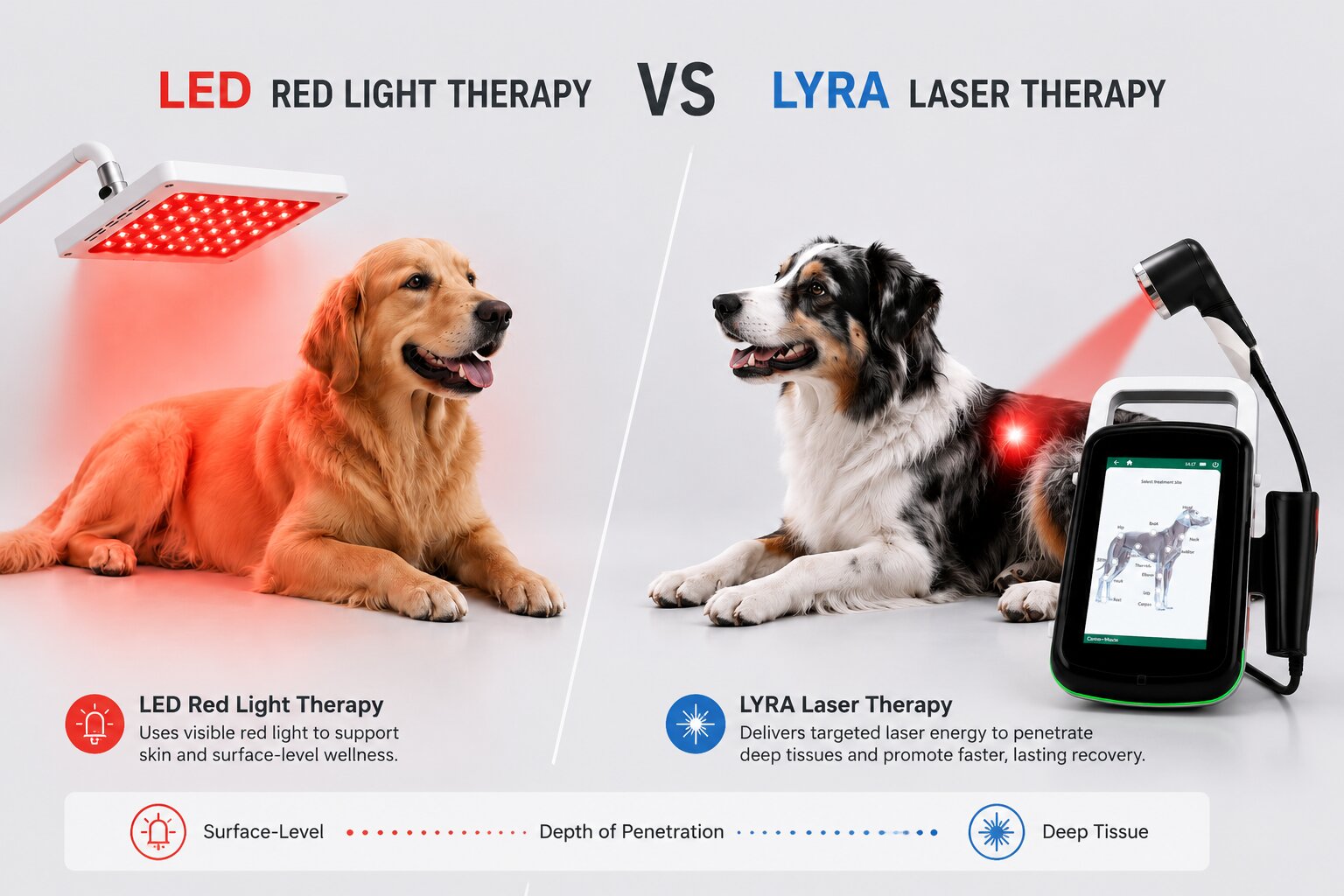
Discover the key differences between LED and laser therapy for pets. Learn which photobiomodulation treatment best suits your pet's recovery needs.
Read article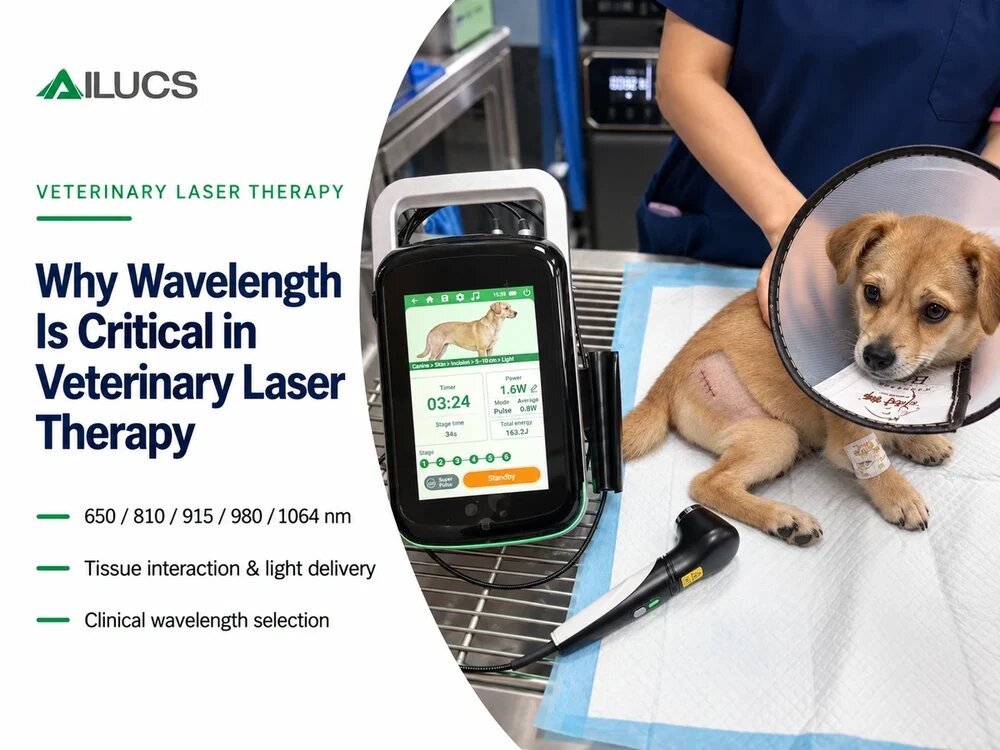
Explore how 650, 810, 915, 980 and 1064 nm wavelengths interact differently with tissue in veterinary laser therapy, and how coat, pigmentation, treatment parameters and application technique can influence light delivery.
Read article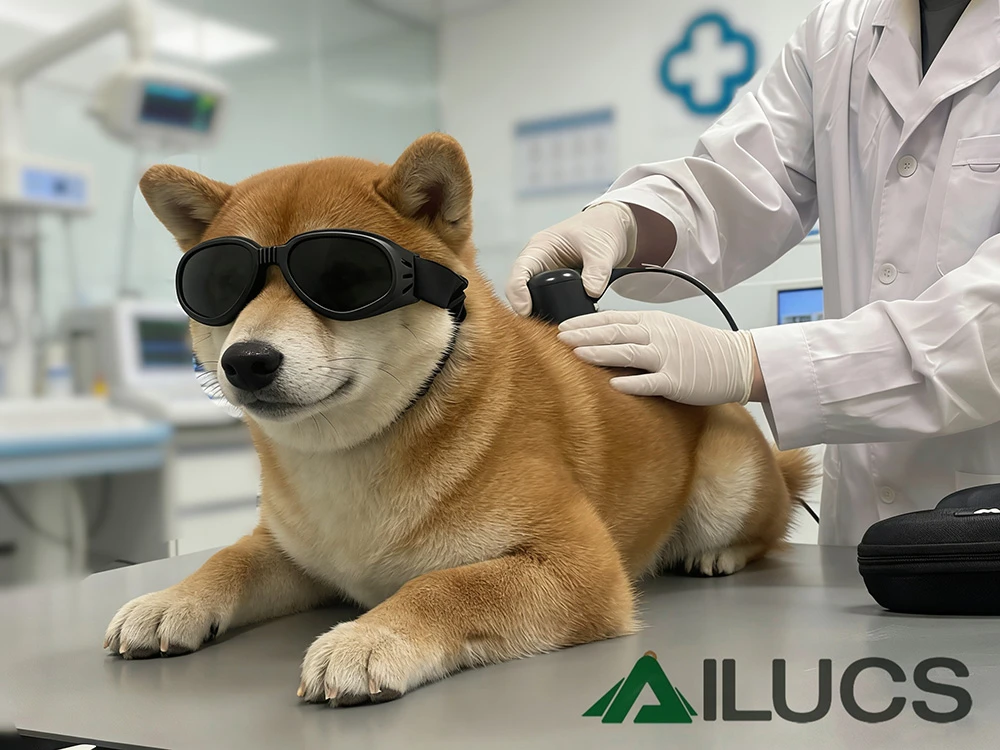
This scientific guide clarifies the core differences between Class 3B and Veterinary Class IV lasers for veterinary laser therapy, covering their power output definitions, photobiomodulation-based mechanisms of action and distinct clinical applications.
Read article