
How to Choose the Right Wavelength for Veterinary Laser Therapy
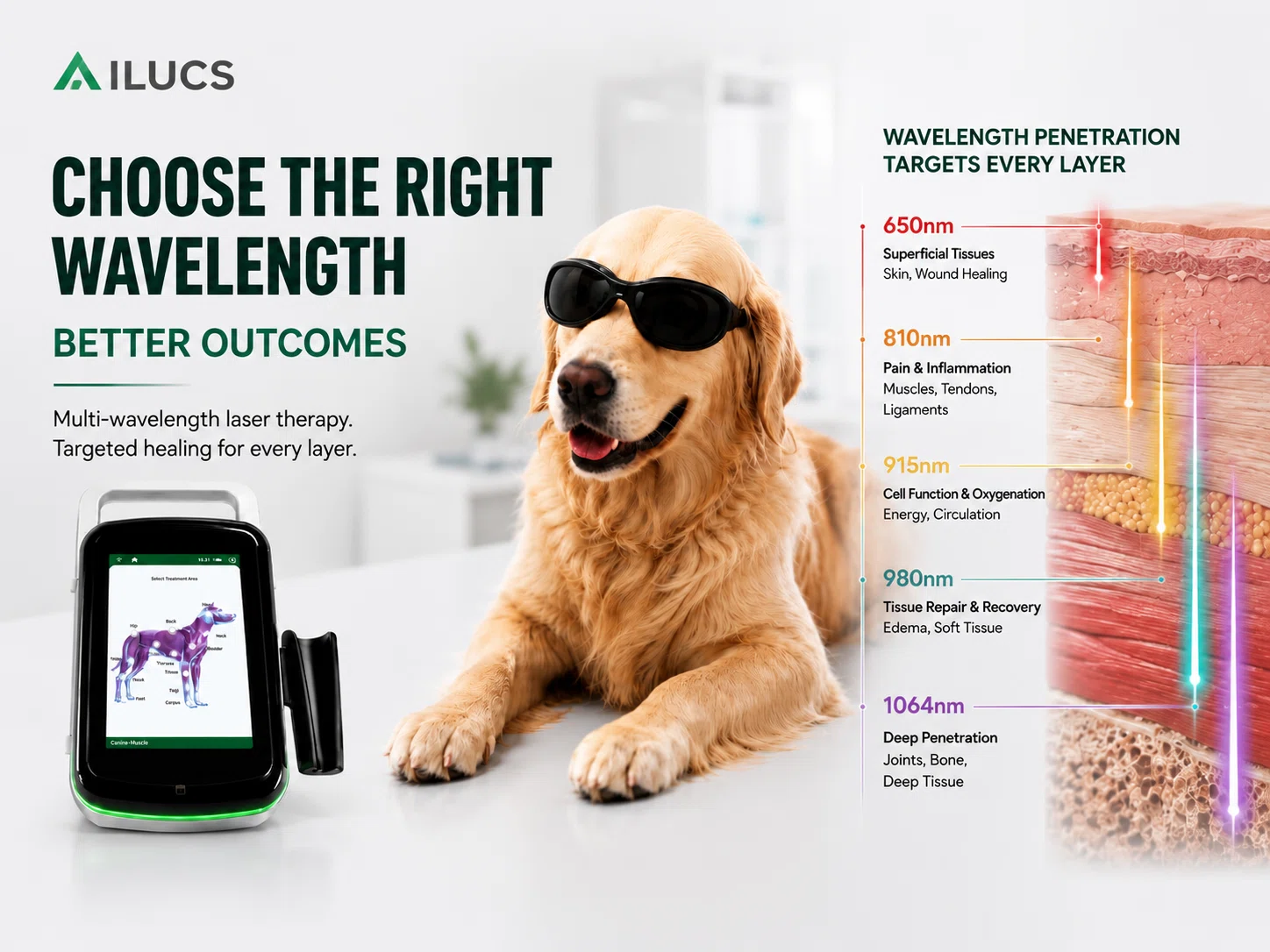
Choosing the right veterinary laser therapy wavelength starts with the target tissue, approximate treatment depth, clinical objective, and patient, rather than simply selecting the highest available wavelength. Wavelength affects how laser energy interacts with tissue, while dose, power, treatment area, treatment time, and application technique also influence the treatment delivered.
For veterinary professionals using photobiomodulation (PBM), the important question is not simply which wavelength is “best.” The choice depends on the tissue being treated, the clinical objective, and the treatment parameters used with it.
Key Factors in Veterinary Laser Wavelength Selection
Laser wavelength influences how light interacts with biological tissue. Water, hemoglobin, melanin, and other tissue components affect absorption and transmission, so different wavelengths can be considered for different treatment targets.
A practical wavelength selection starts with four questions:
What tissue is being treated?
How deep is the target?
What is the clinical objective?
What dose and delivery parameters will be used?
A superficial wound, a muscle injury, and a deeper musculoskeletal condition can require different treatment approaches even when they occur in the same animal.
Wavelength is best considered as part of the overall treatment protocol rather than as an isolated specification.
How Does Tissue Depth Influence Wavelength Selection?
Treatment depth is one of the main considerations when selecting a wavelength. In practice, wavelength selection should be matched with the target tissue and clinical objective rather than based on wavelength alone.
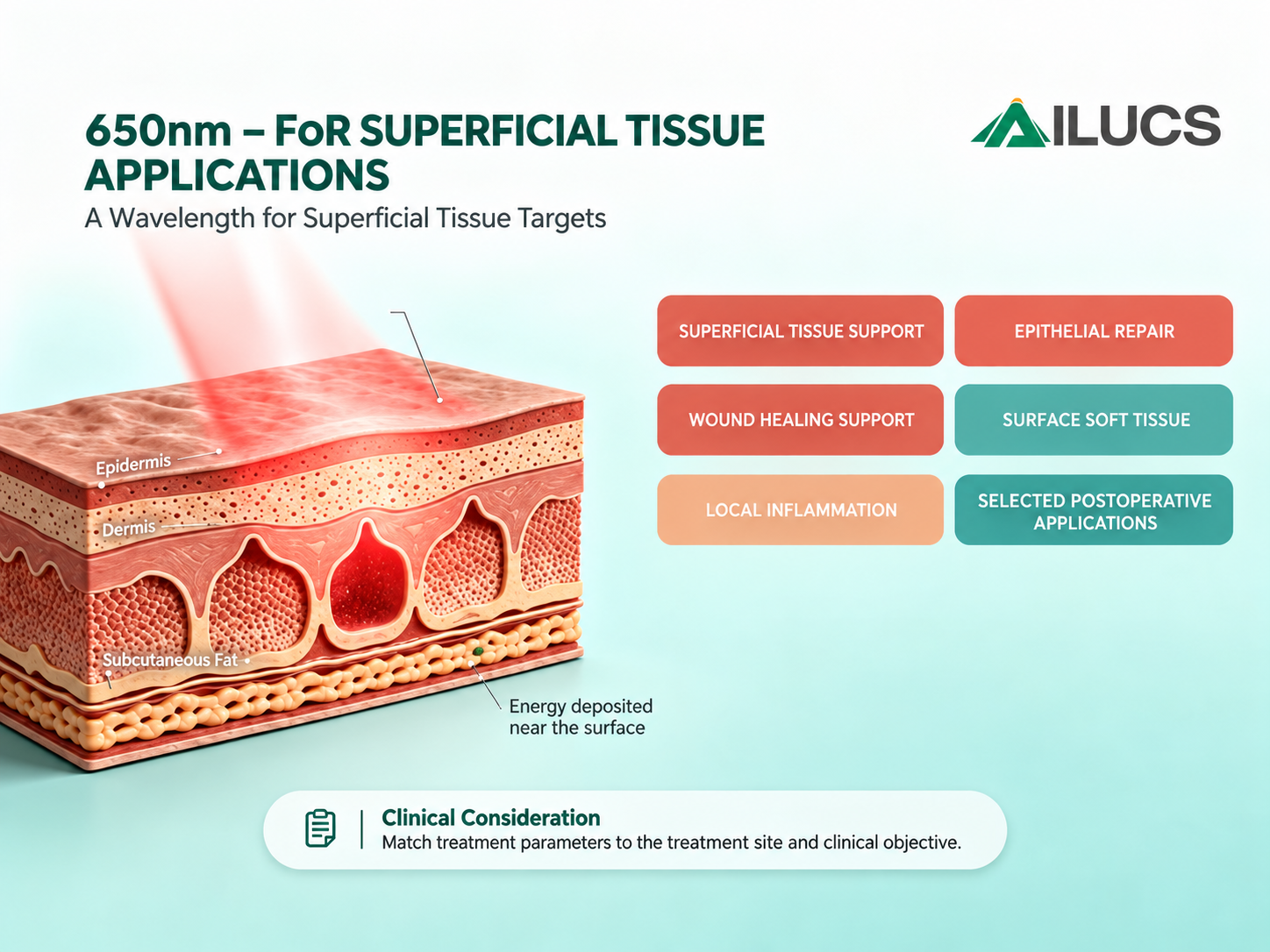
650 nm: Superficial Tissue Applications
650 nm may be considered for superficial tissue targets, including superficial wounds and surface soft tissue applications.
It can be relevant when the treatment target is relatively close to the surface, including selected postoperative incision applications and localized superficial inflammation.
810–980 nm: Musculoskeletal and Soft Tissue Applications
Near-infrared wavelengths from 810 to 980 nm are commonly considered for muscle, tendon, ligament, joint-associated soft tissue, and other musculoskeletal applications.
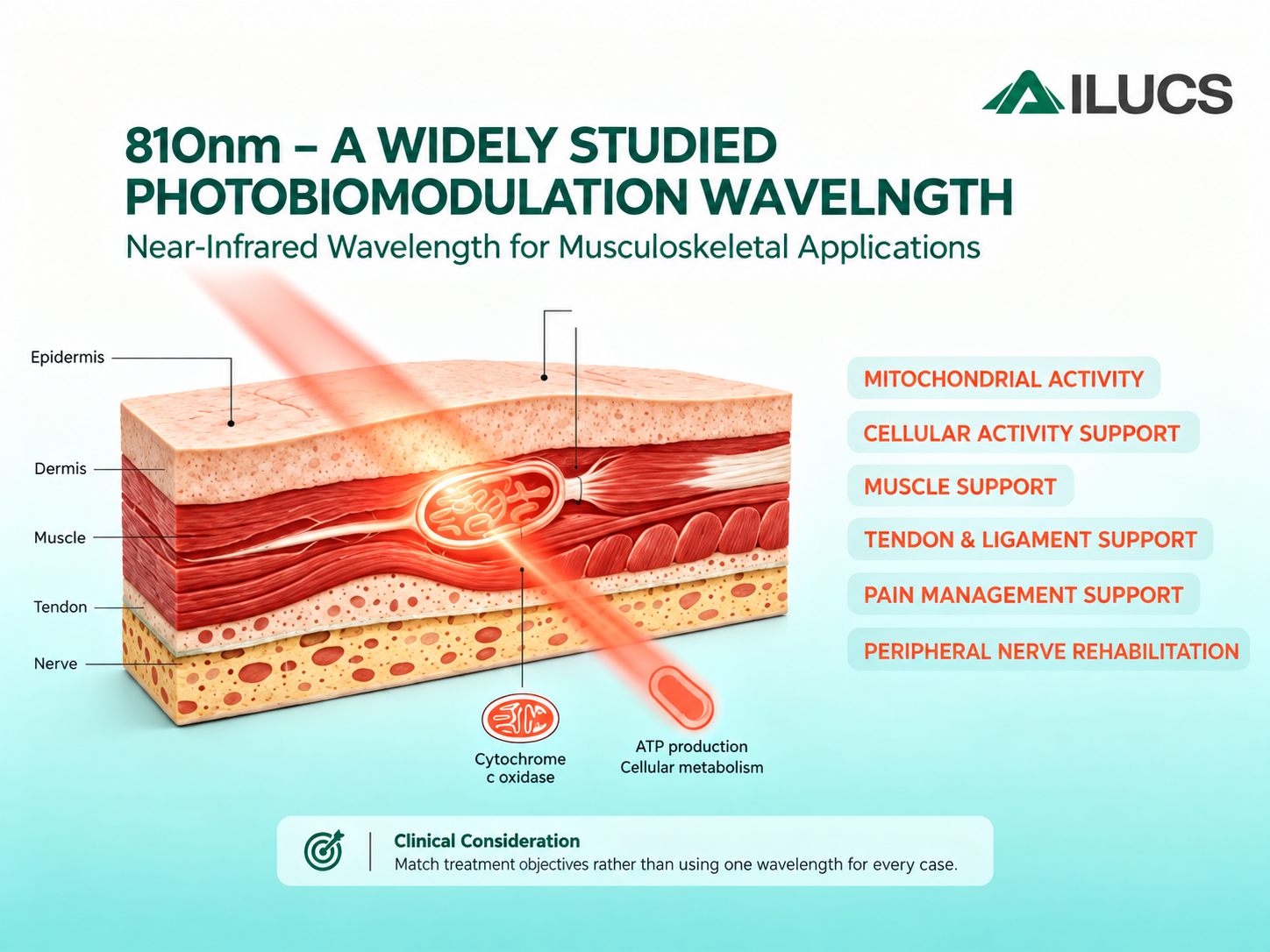
810 nm is a widely studied photobiomodulation wavelength and may be considered for muscle, tendon, ligament, pain management, and rehabilitation applications.
915 nm may be considered for musculoskeletal applications involving deeper soft tissue and larger treatment areas.
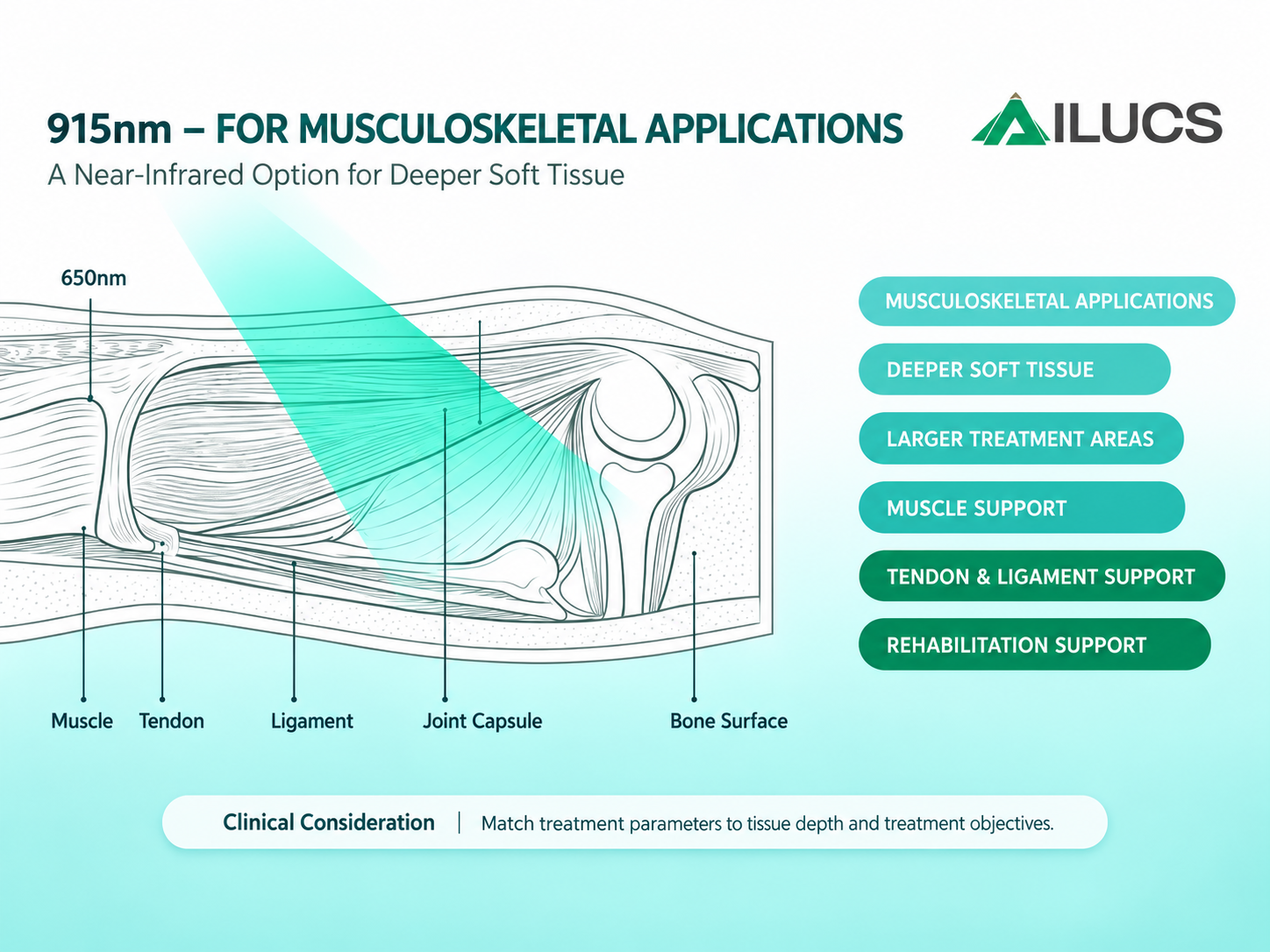
915 nm may be considered for musculoskeletal applications involving deeper soft tissue and larger treatment areas.
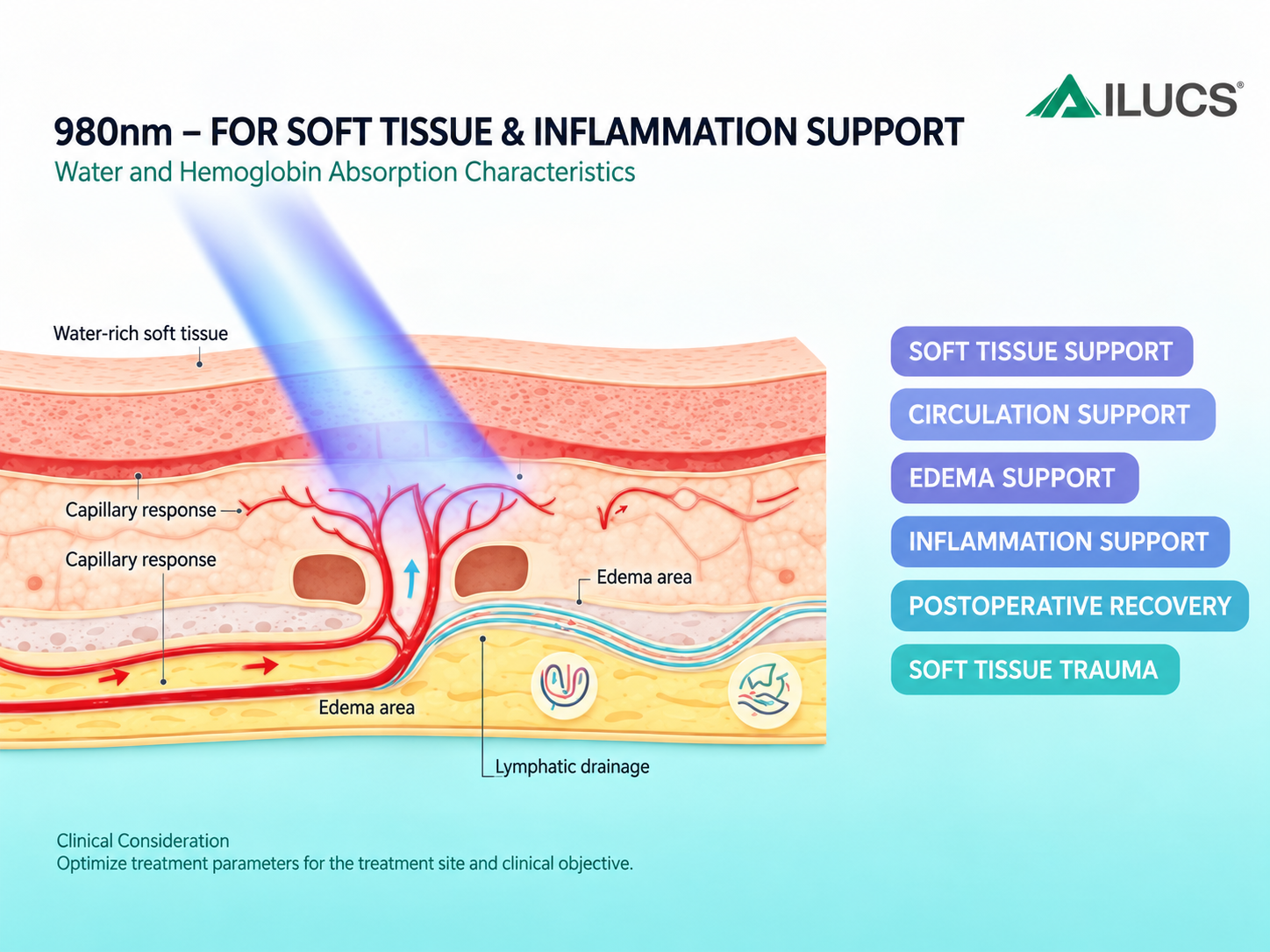
980 nm may be considered for soft tissue and inflammation-related applications. Its interaction with water and hemoglobin is relevant when considering treatment parameters and tissue response.
A randomized, blind, placebo-controlled trial in dogs with elbow osteoarthritis used a 980 nm continuous-wave laser at 10–20 J/cm². Treatment was performed twice weekly for three weeks, followed by weekly treatment for another three weeks. The study reported improvements in lameness and pain, along with reduced NSAID use.
These parameters should not be considered a universal protocol for canine osteoarthritis; they represent the treatment conditions used in this controlled study.
1064 nm: Deeper Musculoskeletal Applications
1064 nm may be considered when deeper musculoskeletal structures or larger treatment areas are involved.
This can be relevant when treating larger dogs, equine patients, or anatomical regions where tissue thickness and treatment area require additional planning.

Wavelength selection should still be considered together with dose, power, treatment area, treatment time, and application technique. A longer wavelength should not be selected simply because it appears to offer greater penetration.
The Relationship Between Wavelength and Dose
Wavelength alone does not determine the clinical effect of therapeutic laser therapy. Other important variables include:
Energy density (J/cm²)
Irradiance (W/cm²)
Output power
Total delivered energy
Treatment duration
Treatment area
Emission mode
Contact or non-contact technique
Two treatments using the same wavelength can deliver very different amounts of energy if power, treatment area, duration, or technique changes.
The basic relationships are:
Energy (J) = Power (W) × Time (s)
Dose (J/cm²) = Energy (J) ÷ Treatment Area (cm²)
A wavelength therefore cannot replace appropriate dose selection.
Veterinary research also shows substantial variation between treatment protocols. A systematic review of veterinary laser therapy found differences in wavelength, laser class, dose, treatment frequency, treatment duration, and reported outcomes across published studies.
Animal and Patient Factors in Wavelength Selection
The same wavelength may be used across species, but treatment parameters should not automatically be transferred from one patient to another.
| Animal Type | Key Treatment Considerations | Why They Matter |
| Dogs | Body size, tissue depth, treatment location, coat and skin pigmentation, diagnosis, treatment area, patient tolerance | A study involving healthy dogs found that laser power, wavelength, coat color, and shaving affected photon transmission. Coat pigmentation and shaving can influence how much light reaches the treatment surface. |
| Cats | Treatment location, coat characteristics, patient tolerance, diagnosis, available clinical evidence | A protocol developed for dogs should not automatically be transferred to cats simply because the clinical condition appears similar. |
| Horses and Large Animals | Tissue thickness, treatment area, anatomical size, treatment objective | A deep muscular target in a performance horse presents different treatment considerations from a superficial wound in a small companion animal. |
Multi-wavelength systems can provide additional options when clinicians need to account for different tissue depths and treatment objectives.
AILUCS REX is designed for equine and large-animal practice, while LYRA is designed for multi-species veterinary use. These wavelength options provide greater flexibility in treatment planning.
A Practical Wavelength Selection Framework
1. Identify the Target Tissue
First determine whether the primary target is:
Skin or superficial soft tissue
Muscle
Tendon or ligament
Joint-associated tissue
Deeper musculoskeletal tissue
A larger treatment area
Start with the anatomy rather than the laser specification.
2. Estimate the Treatment Depth
Consider the location of the intended target relative to the treatment surface.
A superficial incision and a deep muscular injury may require different treatment considerations.
Wavelength alone does not determine how much energy reaches the target. Tissue composition, power, irradiance, treatment area, and technique also influence energy delivery.
3. Define the Clinical Objective
The treatment objective may include:
Pain management
Support for tissue repair
Inflammation or edema management
Rehabilitation and mobility support
Wound healing
The clinical objective helps determine the overall treatment strategy.
4. Select Dose and Delivery Parameters
After identifying the target and objective, consider:
Wavelength
Power
Energy density
Irradiance
Treatment area
Treatment duration
Emission mode
Application technique
The final parameters should be individualized according to the patient, treatment site, clinical objective, and device instructions.
5. Monitor Patient Response
Treatment should be adjusted according to patient tolerance and clinical response.
Higher power does not automatically mean better treatment. Increasing energy delivery without considering tissue response may cause unnecessary thermal discomfort.
The goal is controlled and appropriate energy delivery rather than maximum output.
The Role of Multi-Wavelength Systems
A multi-wavelength laser therapy system does not automatically provide better clinical outcomes simply because it contains more wavelengths.
Its main potential advantage is treatment flexibility.
A clinical case may involve more than one tissue layer. For example:
A wound may involve superficial skin and underlying soft tissue.
An orthopedic condition may involve a joint together with surrounding muscles and connective tissues.
An equine rehabilitation case may involve a relatively large and deep treatment area.
Having multiple wavelength options allows clinicians to account for these differences when developing a treatment protocol.
AILUCS LYRA currently combines 650, 810, 915, 980, and 1064 nm within one Class IV veterinary laser platform. The system is designed for multi-species veterinary applications and provides different wavelength options for different tissue and clinical considerations.
For a deeper explanation of the scientific and clinical rationale for multiple wavelength options, see Multi-Wavelength Laser Therapy in Veterinary Rehabilitation.
Multiple wavelengths provide additional treatment choices, but they do not replace clinical judgment or appropriate dosing.
Frequently Asked Questions
Does a higher wavelength always penetrate deeper?
Wavelength influences tissue interaction and transmission characteristics, while actual energy delivery also depends on tissue composition, power, dose, treatment area, and application technique.
Is wavelength more important than dose?
Neither should be considered independently. Appropriate treatment requires a suitable combination of wavelength, dose, irradiance, treatment duration, treatment area, and clinical technique.
Is 1064 nm always better for deeper tissue?
1064 nm may be considered when deeper anatomical structures are involved, but wavelength selection should be based on the treatment target and overall treatment parameters.
Can the same wavelength be used for different animal species?
Yes, but treatment parameters should not automatically be transferred between species. Body size, tissue depth, coat characteristics, diagnosis, treatment location, and patient tolerance can all influence treatment planning.
Does an animal's coat affect laser treatment?
It can. Research in dogs has shown that coat pigmentation and shaving can affect photon transmission. Treatment-area preparation should therefore be considered according to the patient, treatment site, and device instructions.
How many laser treatments are needed?
There is no universal number of sessions. Treatment frequency and duration depend on the condition, treatment objective, clinical response, and overall treatment or rehabilitation plan.
Conclusion
Choosing the right veterinary laser therapy wavelength is not about selecting the highest available wavelength or assuming that one wavelength is universally superior.
A practical approach is to start with the target tissue, approximate treatment depth, clinical objective, and patient characteristics, then determine the appropriate dose and delivery parameters.
Current veterinary research supports the potential value of photobiomodulation in selected applications, but published protocols vary considerably between conditions and patient populations.
For veterinary professionals, wavelength selection is one part of a broader treatment-planning process. Considering wavelength together with dose, application technique, safety precautions, and the clinical objective can help clinicians select parameters appropriate for the individual patient.
References
1. Bunch J. Photobiomodulation (Therapeutic Lasers): An Update and Review of Current Literature. Veterinary Clinics of North America: Small Animal Practice. 2023;53(4):783–799. doi:10.1016/j.cvsm.2023.02.010.
2. Millis DL, Bergh A. A Systematic Literature Review of Complementary and Alternative Veterinary Medicine: Laser Therapy. Animals. 2023;13(4):667. doi:10.3390/ani13040667.
3. Hochman-Elam LN, Heidel RE, Shmalberg JW. Effects of laser power, wavelength, coat length, and coat color on tissue penetration using photobiomodulation in healthy dogs. Canadian Journal of Veterinary Research. 2020;84(2):131–137.
4. Looney AL, Huntingford JL, Blaeser LL, Mann S. A randomized blind placebo-controlled trial investigating the effects of photobiomodulation therapy (PBMT) on canine elbow osteoarthritis. Canadian Veterinary Journal. 2018;59(9):959–966.