
1064nm Veterinary Laser Therapy for Equine Rehabilitation
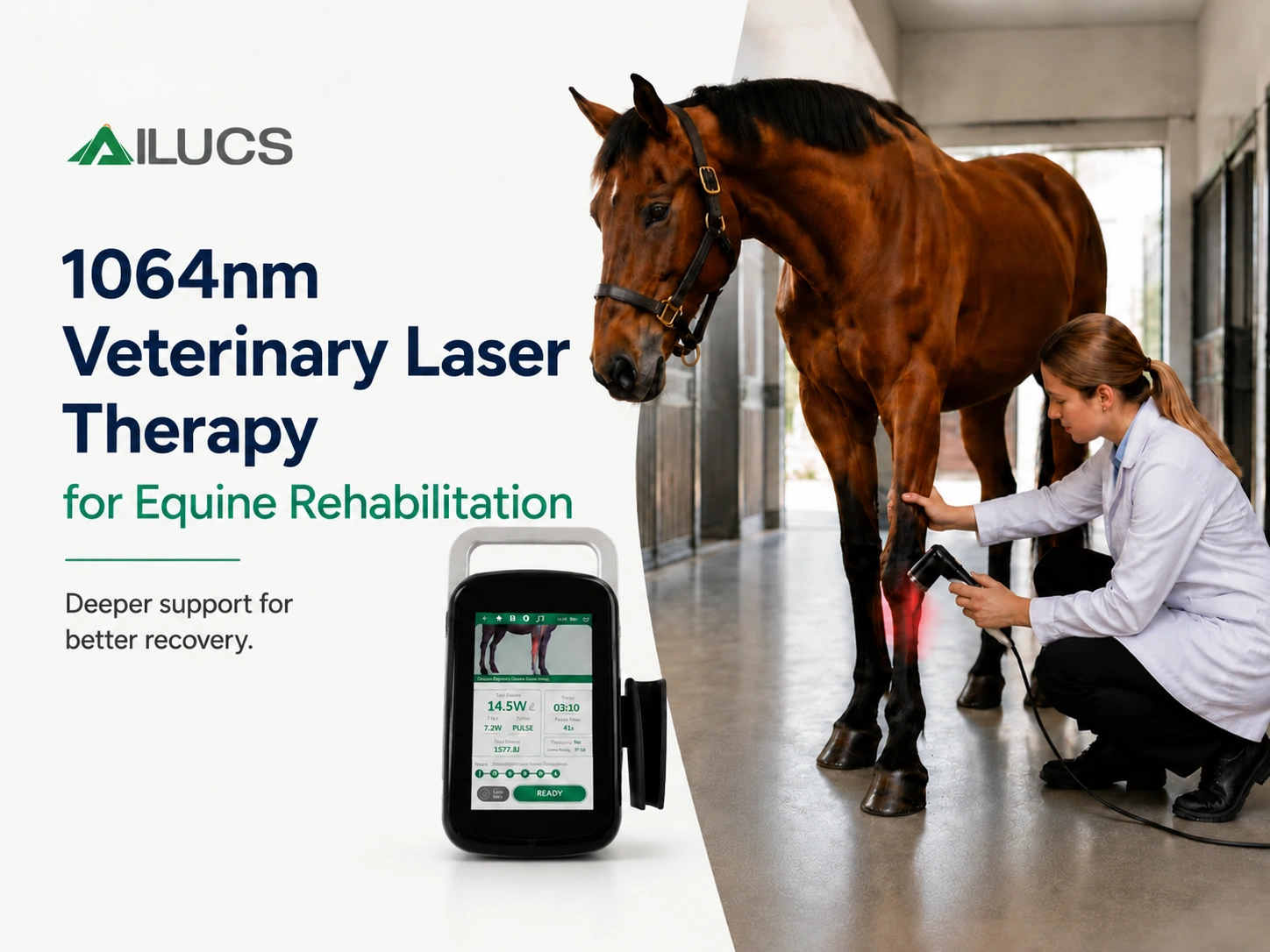
Equine rehabilitation often involves injuries affecting tendons, ligaments, muscles, joints, and surrounding soft tissues. Laser therapy may be considered as an adjunct to veterinary care, but selecting a system requires more than comparing wavelengths or maximum power.
1064nm is a near-infrared wavelength used in photobiomodulation and high-intensity laser therapy. It is of interest for musculoskeletal applications because of its tissue interaction characteristics. However, a longer wavelength does not guarantee a clinically effective dose at a deep target or better recovery. This article explains its potential role, the limits of the evidence, and the treatment factors that matter in horses.
Why Wavelength Matters in Equine Laser Therapy
When light enters tissue, some energy is absorbed, some is scattered, and some is transmitted. These interactions vary with wavelength and tissue composition. Hair, pigmentation, tissue thickness, and the treatment technique also affect delivery.
Equine rehabilitation targets range from skin and superficial tendons to larger muscle groups and structures around joints. Their location matters: a horse's overall size does not mean that every injury lies deep beneath the skin.
Appropriate wavelength selection therefore starts with the diagnosis and anatomical target. It should be considered together with irradiance, total energy, treatment area, emission mode, and patient response.
What Is 1064nm Veterinary Laser Therapy
1064nm describes the wavelength of the light, not a complete treatment protocol. Devices using this wavelength can differ in output, pulse characteristics, applicators, and how energy is distributed across the treatment area.
A 2021 systematic review examined clinical studies of high-powered 1064nm photobiomodulation for conditions including knee and spinal disorders. Its included clinical evidence concerns human patients; it does not establish effectiveness or dosing for equine tendon, ligament, or joint conditions.
A separate laboratory study compared 905nm and 1064nm light passing through porcine skin and bovine muscle outside the body. Transmission was higher at 1064nm under the tested conditions, but the differences were relatively small and diminished as tissue thickness increased. This was not a trial of recovery in injured horses.
These findings support studying wavelength-dependent tissue interactions. They do not justify a universal penetration depth, a claim that all deep tissues receive an effective dose, or a promise that 1064nm is clinically superior.
Potential Applications in Equine Rehabilitation
Tendon and Ligament Rehabilitation
Tendon and ligament injuries can require lengthy rehabilitation and careful monitoring. Structures such as the superficial digital flexor tendon and suspensory ligament differ in anatomy, injury pattern, and loading requirements.
Laser therapy may be incorporated as a complementary modality when the treating veterinarian considers it appropriate. Assessment, imaging where indicated, controlled exercise, and progressive loading remain central to the rehabilitation plan.
Treatment goals should be explicit, such as supporting comfort during rehabilitation or monitoring local tissue response. A reduction in discomfort does not by itself demonstrate restored tendon strength or readiness to return to sport.
Muscle and Soft Tissue Rehabilitation
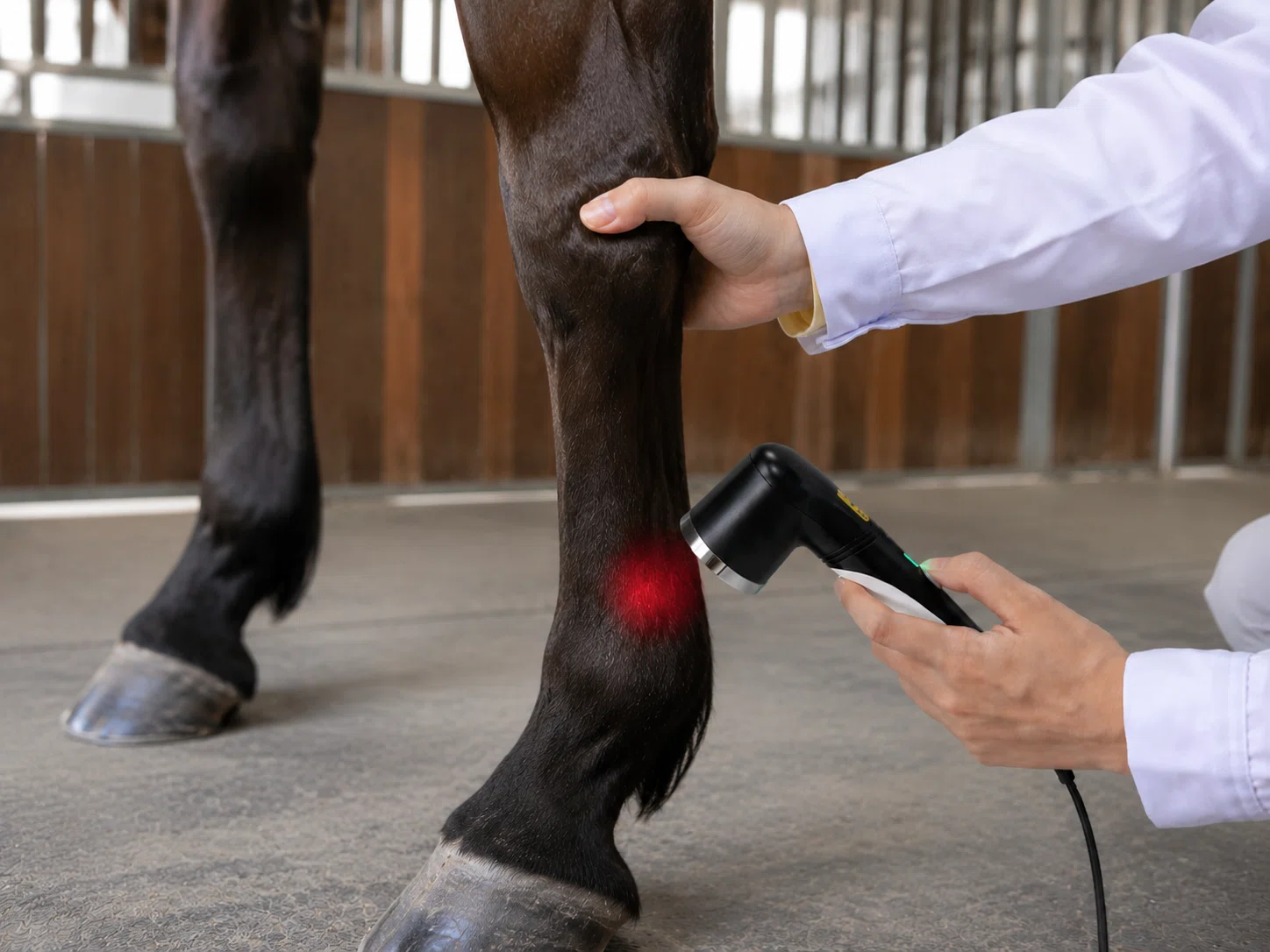
Muscle soreness and strain can affect movement and exercise tolerance. Photobiomodulation research has explored cellular responses relevant to tissue recovery, but laboratory responses should not be equated with guaranteed functional improvement in a horse.
For muscle and soft-tissue applications, clinicians should identify the affected region, assess possible contributing causes, and define how improvement will be monitored. Reassessment can include comfort on examination, movement quality, and tolerance of the prescribed exercise program.
Joint and Periarticular Rehabilitation
Rehabilitation may involve the fetlock, hock, stifle, or surrounding soft tissues. The target might be a superficial periarticular structure rather than the entire joint.
Laser therapy should not be described as proven to regenerate equine cartilage or reverse degenerative joint disease on the basis of the references discussed here. Its possible role is as an adjunct within a diagnosis-led plan, with realistic goals and regular reassessment.
Comparing 1064nm with Other Wavelengths
Red and near-infrared wavelengths interact differently with tissue, but assigning each wavelength a fixed organ, disease, or treatment depth is an oversimplification. Surface characteristics and treatment settings can change the amount of light reaching a target.
For example, the 905nm-versus-1064nm laboratory comparison cannot be used to rank every 810nm, 915nm, 980nm, and 1064nm system. It also cannot establish that a multi-wavelength device produces better clinical outcomes than a single-wavelength device.
The useful comparison is whether a system can deliver and document an appropriate treatment for the intended clinical application. Relevant specifications include wavelength configuration, average output, applicator area, emission characteristics, and the available treatment controls.
Multi Wavelength Systems and LYRA
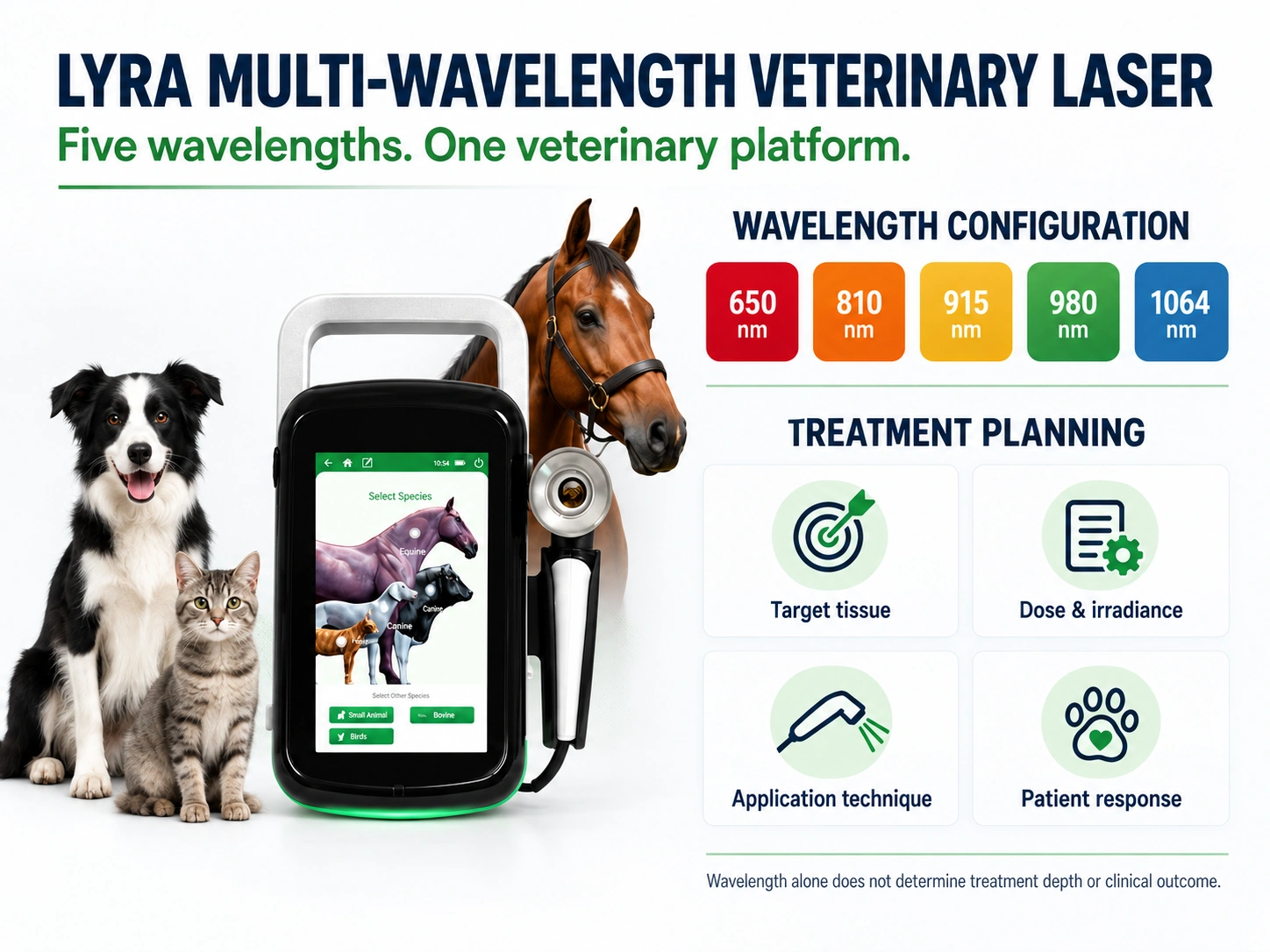
A multi-wavelength system combines more than one wavelength within a treatment platform. This can offer practical flexibility, but the way wavelengths are delivered and controlled depends on the particular device and configuration.
The five-wavelength veterinary configuration presented for the AILUCS LYRA Veterinary Laser includes 650nm, 810nm, 915nm, 980nm, and 1064nm. These specifications describe that veterinary configuration; they should not be assumed to apply to every LYRA model.
Treatment settings should follow the instructions for the actual device and applicator. Having multiple wavelengths does not by itself mean that each wavelength is independently selectable, nor does it establish that every wavelength is needed for every treatment.
How Photobiomodulation May Work
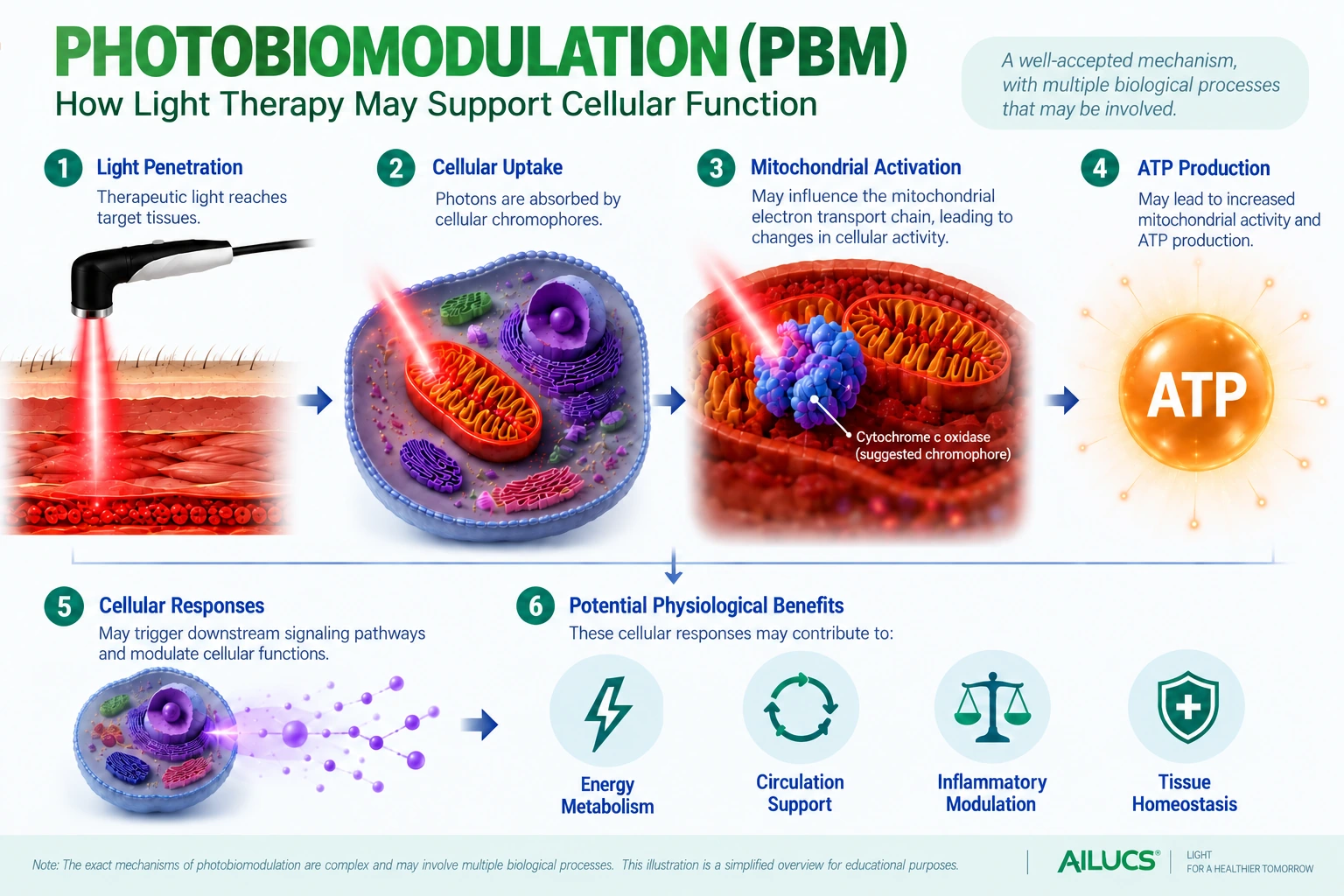
Photobiomodulation research examines how light influences biological activity. Proposed pathways include changes in cellular energy metabolism and signaling associated with inflammatory and recovery processes. The relevant responses depend on wavelength and exposure conditions.
Cytochrome c oxidase is discussed in broader photobiomodulation research, but it is too simplistic to present one mitochondrial pathway as a fully established explanation for all 1064nm effects in horses. Biological mechanisms and clinical benefit are different questions.
An in vitro study by Peat and colleagues examined equine bone marrow-derived mesenchymal stem cell viability and cytokine expression after high-intensity laser exposure. Cell-culture findings help investigate biological responses; they do not demonstrate faster tendon healing or improved return-to-sport outcomes in live horses.
Selecting Treatment Parameters
There is no single protocol in the evidence reviewed here that can be recommended for every horse or every 1064nm device. Parameter selection should account for the diagnosis, injury stage, anatomical target, treatment field, coat and skin characteristics, and response to previous sessions.
The relationship between power, wavelength, and dose is especially important. Power, measured in watts, is the rate of energy delivery. Energy, measured in joules, is the amount delivered over time. For constant average power:
Energy (J) = average power (W) × exposure time (s).
For pulsed delivery, this calculation uses average power, not peak power. Irradiance describes power per unit area, while energy density describes energy per unit area. When scanning, the applicator spot and the full treatment field are different areas; a field-average value does not show the dose received by every tissue location.
Higher power can deliver a specified energy more quickly, but it can also change heating and the demands on technique. Surface energy delivery should not be reported as if it were a measured dose inside a deep tendon or joint.
Continuous Wave and Pulsed Modes
Continuous wave delivery emits light continuously during exposure. Pulsed delivery varies output over time. The clinical relevance depends on average power, pulse duration, frequency, duty cycle, wavelength, and application technique.
Terms such as pulsed and super pulsed are not sufficient to compare devices or predict treatment outcomes. A high peak-power specification does not state the average energy delivered. For an explanation of these distinctions, see continuous wave vs pulsed laser therapy.
Record the selected mode together with the other treatment parameters so that follow-up sessions can be reviewed consistently. Device-specific settings should not be copied from another laser solely because both systems include 1064nm.
Coat Condition and Treatment Safety
Hair and pigmentation affect light delivery and surface heating. These are practical considerations in horses, particularly when treating through an unclipped coat or over a large field.
A study involving 20 healthy racehorses compared clipped and non-clipped treatment areas. The investigators used a system with 808nm and 980nm sources. The non-clipped group showed a greater increase in surface temperature, while the clipped group showed a greater increase in vein diameter. These were short-term physiological observations, not proof of improved injury healing or evidence specific to 1064nm.
The practical implication is to assess coat and skin conditions and monitor thermal response. Clipping decisions and application technique should follow the veterinarian's assessment and device instructions. A coat-study protocol should not be transferred directly to another wavelength or device.
Eye protection appropriate to the emitted wavelengths is essential for people in the treatment area, and the horse's eyes must also be protected. Control the treatment area and beam direction, monitor patient tolerance, and pause to reassess if unexpected heat or distress occurs. Laser treatment should be performed by trained personnel following the device's safety instructions.
Integrating Laser Therapy with Active Rehabilitation
Laser therapy should fit into a broader rehabilitation program rather than determine it. Depending on the diagnosis and recovery stage, that program may include rest, controlled exercise, progressive loading, mobility work, or other veterinary treatments.
Set measurable goals before treatment and review them over time. Useful observations can include lameness assessment, comfort, local swelling, exercise tolerance, and imaging findings when clinically indicated. Decisions about workload should reflect tissue recovery and veterinary reassessment, not just short-term symptom relief.
If improvement is absent or the horse deteriorates, reassess the diagnosis, treatment parameters, and rehabilitation plan. Increasing laser power or adding sessions automatically is not an appropriate substitute for reassessment.
What the Research Can and Cannot Tell Us
The cited literature addresses different questions: human clinical outcomes with 1064nm, laboratory light transmission, equine cell responses, and short-term coat-related physiological effects. These sources provide context, but none is a clinical trial validating the five-wavelength LYRA configuration for equine rehabilitation.
The studies should therefore be interpreted according to their population, device, wavelength, and outcome measures. They do not establish a universal equine treatment schedule or prove that 1064nm alone accelerates return to sport.
For clinical decisions, combine the available evidence with veterinary assessment, device instructions, documented treatment parameters, and the individual horse's response.
Frequently Asked Questions
Is 1064nm laser therapy suitable for horses
It may be considered as an adjunct within an equine rehabilitation plan. Suitability depends on the diagnosis, treatment target, device, safety requirements, and veterinary assessment.
Is 1064nm better than 810nm or 980nm
The references discussed here do not establish a universal clinical ranking. Different wavelengths and devices must be assessed alongside dose, technique, and the condition being treated.
Can it be used during tendon rehabilitation
It may be incorporated into a veterinarian-led program, but it does not replace diagnosis, controlled loading, or monitoring of tendon recovery. Symptom improvement alone is not a return-to-sport criterion.
How deeply does 1064nm light penetrate
There is no single depth that applies to every patient and treatment. Detectable light transmission is also different from delivering a biologically effective dose at depth. Tissue composition, surface conditions, and delivery parameters all matter.
How many sessions does a horse need
A fixed number cannot be recommended from the cited evidence. Treatment frequency and duration should be individualized, documented, and reassessed against clinical progress.
Does higher power mean better treatment
No. Average power influences how quickly energy is delivered, but appropriate dosing, coverage, heat control, and patient response determine whether the treatment is suitable.
Conclusion
1064nm veterinary laser therapy is one option to consider within equine rehabilitation. Its optical characteristics make it relevant to discussions of musculoskeletal treatment, but wavelength alone cannot establish therapeutic depth, clinical superiority, or recovery time.
For veterinarians evaluating a laser system, the priorities are an appropriate device configuration, transparent treatment parameters, safe application, and integration with a structured rehabilitation plan. The most useful measure is the horse's documented progress toward realistic clinical goals.
For the wider clinical context beyond wavelength selection, read our guide to equine rehabilitation and adjunctive high-intensity laser therapy.
References
[1] Penberthy WT, Vorwaller CE. Utilization of the 1064 nm Wavelength in Photobiomodulation: A Systematic Review and Meta-Analysis. Journal of Lasers in Medical Sciences. 2021;12:e86. DOI: 10.34172/jlms.2021.86.
[2] Kaub L, Schmitz C. Comparison of the Penetration Depth of 905 nm and 1064 nm Laser Light in Surface Layers of Biological Tissue Ex Vivo. Biomedicines. 2023;11(5):1355. DOI: 10.3390/biomedicines11051355.
[3] Peat FJ, Colbath AC, Bentsen LM, Goodrich LR, King MR. In Vitro Effects of High-Intensity Laser Photobiomodulation on Equine Bone Marrow-Derived Mesenchymal Stem Cell Viability and Cytokine Expression. Photomedicine and Laser Surgery. 2018;36(2):83–91. DOI: 10.1089/pho.2017.4344.
[4] Zielińska P, Soroko-Dubrovina M, Śniegucka K, Dudek K, Čebulj-Kadunc N. Effects of High-Intensity Laser Therapy (HILT) on Skin Surface Temperature and Vein Diameter in Healthy Racehorses with Clipped and Non-Clipped Coat. Animals. 2023;13(2):216. DOI: 10.3390/ani13020216.