
The Role of Laser Therapy in Canine IVDD Rehabilitation
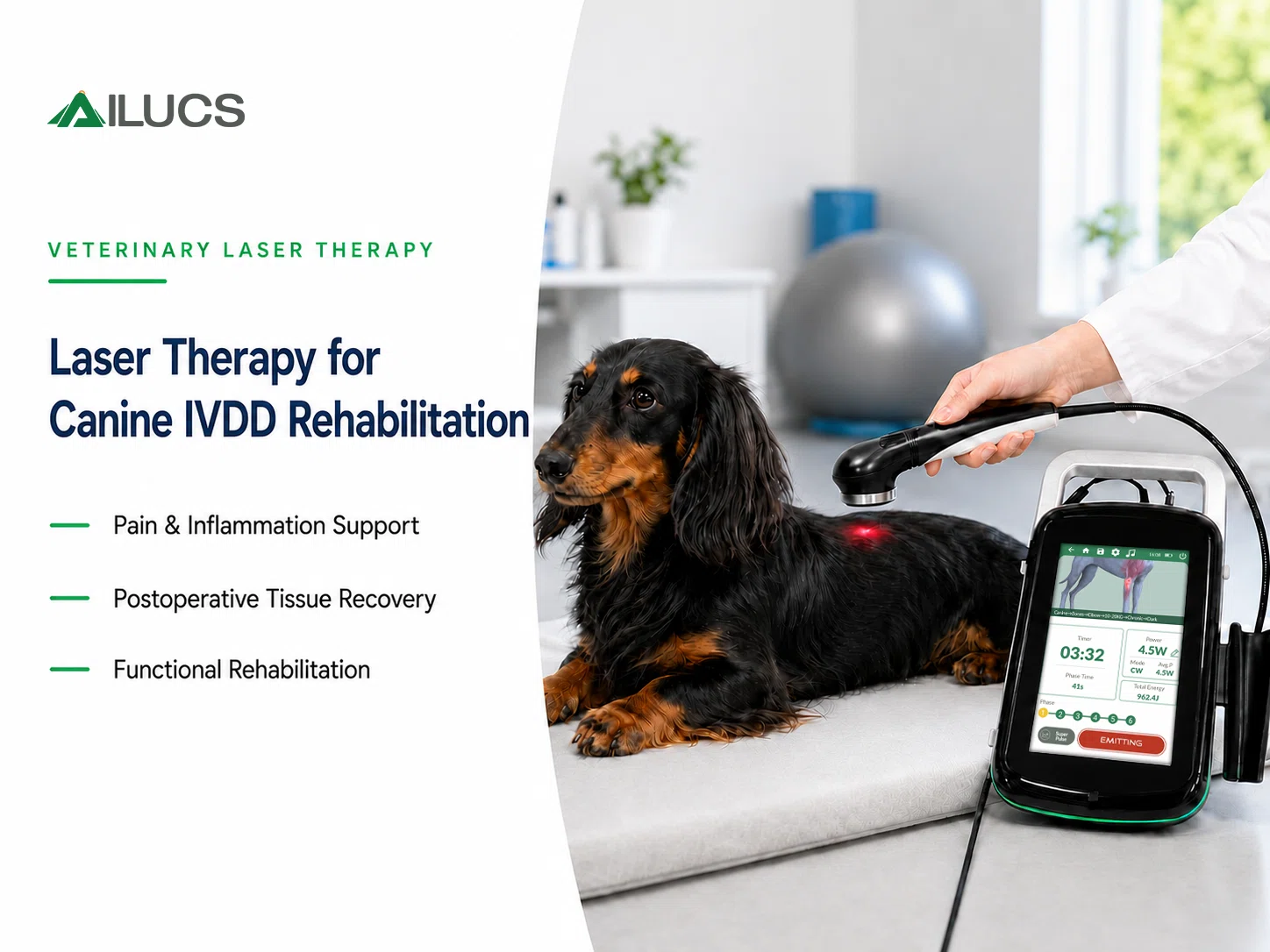
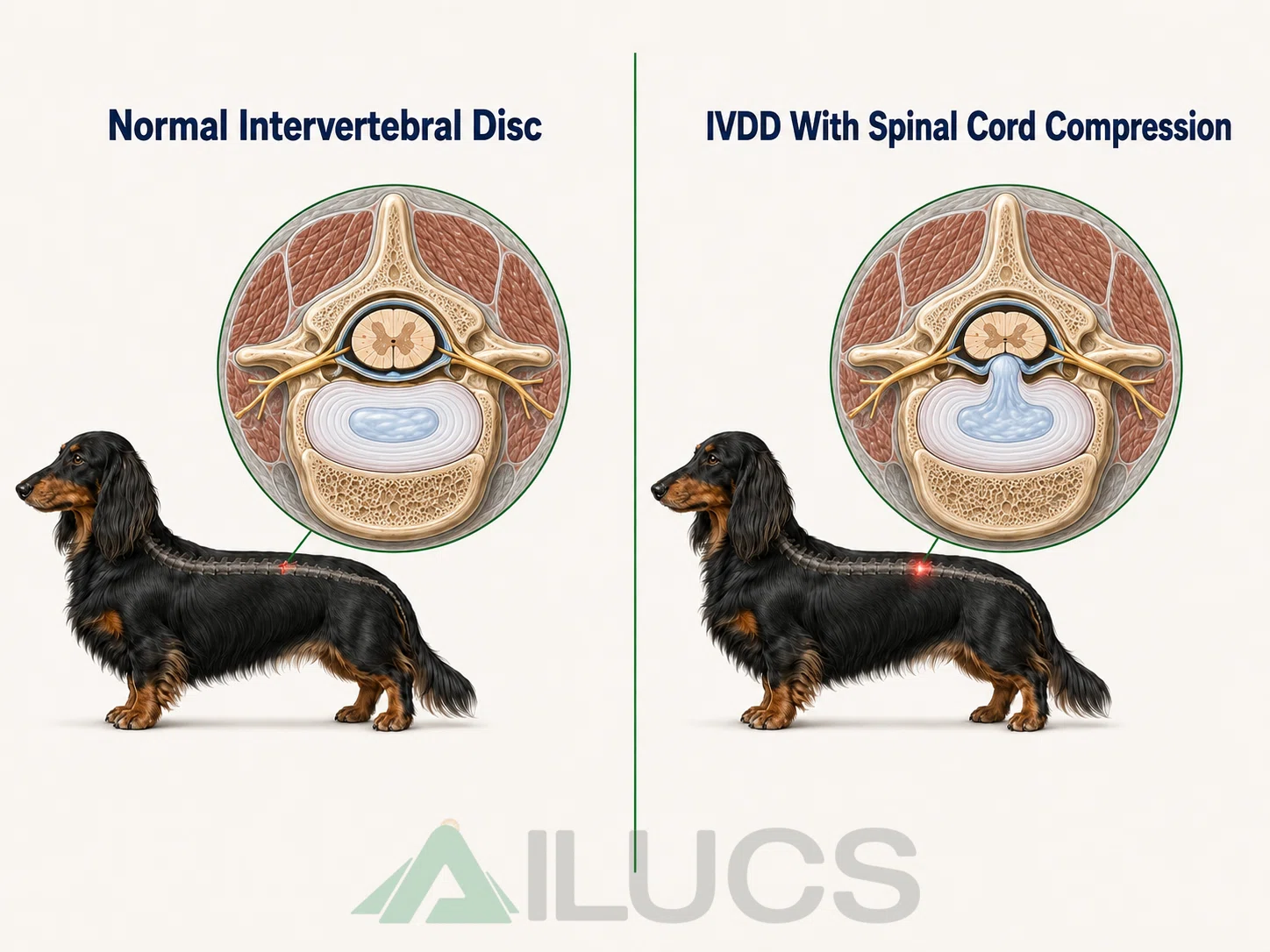
Canine intervertebral disc disease (IVDD) is a common neurological and spinal condition in dogs, particularly in chondrodystrophic breeds such as Dachshunds, Corgis, and Beagles.
IVDD can cause back pain, gait abnormalities, weakness, proprioceptive deficits, paralysis, and, in severe cases, urinary or fecal dysfunction. Depending on the severity and neurological status of the patient, treatment may include medical management, activity restriction, surgery, and structured rehabilitation. The 2022 ACVIM consensus statement provides evidence-based recommendations for the diagnosis and management of acute canine thoracolumbar intervertebral disc extrusion.
Most of the clinical evidence discussed in this article relates to thoracolumbar IVDD, particularly dogs undergoing postoperative rehabilitation following hemilaminectomy.
For dogs recovering from IVDD, rehabilitation is an important part of the overall treatment process.
Veterinary laser therapy uses photobiomodulation (PBM) and may be incorporated as an adjunctive modality to support pain management, inflammatory modulation, tissue recovery, and rehabilitation.
However, laser therapy should not be considered a replacement for appropriate medical or surgical treatment.
Can Laser Therapy Help Dogs With IVDD?
Within a veterinarian-directed IVDD rehabilitation plan, laser therapy is used primarily as a supportive modality for pain management, inflammatory modulation, and tissue recovery.
Photobiomodulation has been investigated for its effects on cellular metabolism, inflammatory signaling, oxidative stress, and local tissue physiology.
However, laser therapy cannot remove herniated disc material or mechanically decompress the spinal cord.
When significant spinal cord compression or neurological deterioration is present, appropriate veterinary assessment and, when indicated, surgical treatment remain essential.
Clinical research specifically evaluating photobiomodulation in canine IVDD is still developing, and results have not been completely consistent.
1. Understanding Canine IVDD Rehabilitation
IVDD rehabilitation involves more than simply reducing pain.
Depending on the patient's neurological status and treatment approach, rehabilitation may address:
· Pain management
· Inflammatory modulation
· Muscle preservation
· Proprioception
· Balance
· Joint mobility
· Muscle strength
· Gait retraining
· Functional mobility
· Quality of life
A rehabilitation program may combine medication, controlled activity, therapeutic exercise, hydrotherapy, neuromuscular stimulation, nursing care, and adjunctive modalities such as laser therapy.
2. Potential Benefits of Laser Therapy for Canine IVDD
2.1 Supporting Inflammatory Modulation and Tissue Recovery
Photobiomodulation interacts with cellular processes involved in metabolism, inflammatory responses, oxidative stress, and tissue recovery.
In canine IVDD rehabilitation, laser therapy may therefore be used to support:
· Local inflammatory modulation
· Tissue recovery
· Local microcirculation
· Reduction of discomfort
These potential effects may be relevant during rehabilitation, when the objective is to support a favorable environment for tissue recovery.
It is important, however, to distinguish biological support from mechanical treatment. Laser therapy does not decompress the spinal cord or remove herniated disc material.
2.2 Supporting Pain Management
Pain can significantly affect a dog's ability and willingness to participate in rehabilitation.
A painful patient may be reluctant to stand, walk, or perform therapeutic exercises.
Photobiomodulation has been investigated as an adjunctive approach to pain management and may help improve patient comfort and tolerance of rehabilitation.
The goal is not to replace prescribed analgesic or anti-inflammatory medication, but to incorporate laser therapy into a multimodal pain-management strategy when clinically appropriate.
2.3 Supporting Neurological Recovery
The potential effects of photobiomodulation on neural tissue are an important area of ongoing research.
Studies have investigated whether PBM may influence:
· Cellular energy metabolism
· Oxidative stress
· Inflammatory responses
· Local tissue physiology
· Neural tissue recovery
Research involving spinal cord injury has contributed to broader investigation into the potential role of photobiomodulation in neurological rehabilitation.
However, clinical evidence specifically involving canine IVDD remains limited.
A 2017 study by Bennaim et al. evaluating dogs after hemilaminectomy found no significant differences in several early postoperative recovery outcomes between photobiomodulation, physical rehabilitation, and control groups.
A 2020 study by Bruno et al. reported improved neurological status in selected dogs receiving laser therapy following surgery, although the difference in time to regain independent ambulation was not statistically significant.
Therefore, laser therapy should currently be considered supportive rather than curative in the context of neurological recovery.
2.4 Supporting Postoperative Soft-Tissue Healing
Dogs recovering from IVDD surgery may experience postoperative discomfort, muscle loss, reduced mobility, and altered movement patterns.
Photobiomodulation has also been investigated as a supportive modality for postoperative tissue healing.
A 2019 study by Wardlaw et al. involving Dachshunds following thoracolumbar hemilaminectomy evaluated laser therapy for surgical incision healing and reported potential benefits in cosmetic wound healing.
This suggests that postoperative soft-tissue recovery may represent another potential application of laser therapy within a broader IVDD rehabilitation program.
These findings relate primarily to postoperative incision healing and should not be interpreted as evidence of spinal cord regeneration or neurological recovery.
3. What Does the Research Say About Laser Therapy for IVDD?
Current clinical evidence for laser therapy in canine IVDD remains limited and inconclusive.
Some studies have reported potential benefits in postoperative recovery, while other controlled studies have not demonstrated significant differences in major functional outcomes.
An earlier study by Draper et al. (2012) reported a shorter time to ambulation in dogs receiving low-level laser therapy following hemilaminectomy.
However, subsequent research has produced more mixed results.
For this reason, the most appropriate clinical position is:
Laser therapy can be considered an adjunctive modality within canine IVDD rehabilitation, but it should not be presented as a standalone treatment or a guaranteed method of neurological recovery.
This distinction is particularly important when veterinary professionals discuss treatment expectations with pet owners.
4. Where Does Laser Therapy Fit Into an IVDD Rehabilitation Plan?
A comprehensive canine IVDD rehabilitation program may include:
| Rehabilitation Component | Primary Goal |
| Medical management | Pain and inflammation control |
| Laser therapy / PBM | Support pain management and tissue recovery |
| Therapeutic exercise | Strength and motor control |
| Hydrotherapy | Controlled movement and gait training |
| NMES / electrical stimulation | Muscle activation |
| Nursing care | Prevention of secondary complications |
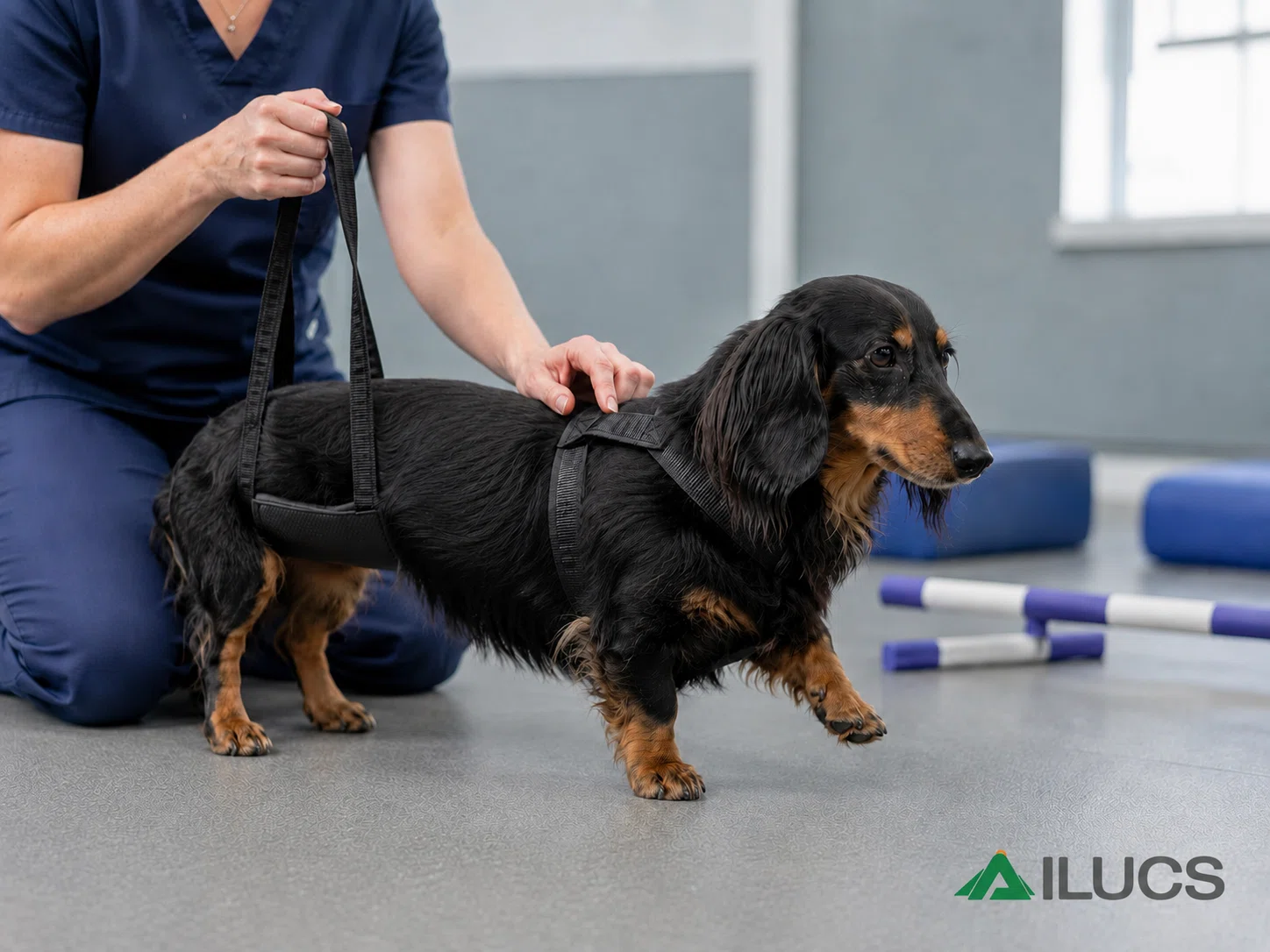
A practical rehabilitation workflow may include:
Neurological Assessment -> Medical or Surgical Management -> Pain Management -> Individualized Rehabilitation, Including Laser Therapy When Appropriate -> Functional Progress Assessment
The actual sequence should be individualized according to the patient's neurological status, pain level, surgical history, and rehabilitation goals.
5. How Should Laser Therapy Be Applied in Canine IVDD Rehabilitation?
Wavelength and Tissue Depth
Different laser wavelengths have different optical characteristics and tissue interactions.
When selecting a wavelength for IVDD rehabilitation, clinicians should consider:
· Treatment depth
· Target tissue
· Clinical objective
· Patient characteristics
Near-infrared wavelengths are commonly considered when deeper tissues are being targeted.
Power, Energy, and Dose
Treatment effectiveness depends on the relationship between power, wavelength, energy, and dose, not output power alone.
Important parameters include:
· Output power
· Total energy
· Energy density
· Treatment time
· Treatment area
· Emission mode
Higher power does not automatically mean better treatment.
Parameters should be selected according to the treatment target, clinical objective, and individual patient.
Treatment Frequency
There is currently no universally accepted laser therapy schedule for every dog with IVDD.
Treatment frequency may depend on:
· Disease stage
· Neurological status
· Pain level
· Surgical history
· Rehabilitation goals
· Individual response
Laser therapy should therefore generally be approached as a course of treatment, with progress evaluated through neurological examination and functional outcomes.
Safety and clinical oversight: Laser therapy should be administered by trained veterinary professionals using appropriate eye protection, device-specific safety procedures, and parameters selected for the individual patient.
6. Why Consider Multi-Wavelength Laser Therapy?
IVDD rehabilitation may involve different treatment areas, tissue depths, and clinical objectives.
A multi-wavelength laser system can provide veterinary professionals with greater flexibility when developing individualized treatment strategies.
The value of multiple wavelengths lies not simply in having more options, but in allowing clinicians to adapt parameter combinations to different patients, tissue depths, clinical stages, and treatment goals.
Multi-wavelength flexibility does not automatically guarantee better clinical outcomes. Treatment results still depend on appropriate dose selection, application technique, patient condition, and the overall rehabilitation plan.
For veterinary practices seeking a flexible multi-wavelength platform, the AILUCS LYRA Veterinary Laser combines multiple wavelength options, veterinary treatment guidance, 4,000+ built-in protocol presets, and patient management functions to support individualized rehabilitation workflows.
7. When Can Laser Therapy Be Used?
Conservative IVDD Management
For selected dogs managed conservatively, laser therapy may be incorporated alongside medication, controlled activity, and rehabilitation to support comfort and recovery.
Any worsening neurological signs should prompt veterinary reassessment.
Postoperative Rehabilitation
After IVDD surgery, laser therapy may be incorporated into a rehabilitation program alongside pain management, therapeutic exercise, gait training, and other appropriate modalities.
Clinical evidence remains mixed, so laser therapy should be regarded as an adjunctive treatment rather than a guaranteed method of accelerating neurological recovery.
Chronic IVDD and Residual Neurological Deficits
Dogs with persistent neurological deficits may require longer-term rehabilitation focused on gait training, strengthening, balance, proprioception, and mobility.
Laser therapy may be considered when pain, soft-tissue discomfort, or other treatable rehabilitation-related issues remain part of the clinical picture.
Long-Term Management
There is currently insufficient evidence to conclude that routine laser therapy prevents IVDD recurrence.
Long-term management should instead focus on appropriate body weight, controlled exercise, environmental management, rehabilitation, and regular veterinary assessment.
8. Conclusion
Canine IVDD recovery is a complex process that may require medical management, surgery, rehabilitation, and long-term monitoring.
Veterinary laser therapy uses photobiomodulation and may provide an additional tool for supporting pain management, inflammatory modulation, tissue recovery, and rehabilitation.
It does not replace surgery when surgery is indicated, and it does not replace physical rehabilitation.
Instead, its potential value lies in becoming part of a comprehensive and individualized IVDD rehabilitation strategy.
The ultimate goal is not simply to complete a certain number of laser therapy sessions.
It is to help the patient achieve:
· Better comfort
· Improved mobility
· Better functional recovery
· Greater participation in rehabilitation
· Improved quality of life
Frequently Asked Questions
Can laser therapy help dogs with IVDD?
Laser therapy may support pain management, inflammatory modulation, and tissue recovery as part of a comprehensive rehabilitation program. Evidence for improved neurological recovery remains limited and mixed.
Is laser therapy useful after IVDD surgery?
It may be incorporated into postoperative rehabilitation, but current evidence does not establish laser therapy as a guaranteed method of accelerating neurological recovery.
What wavelength is best for canine IVDD?
There is no single wavelength that is universally best. Selection should consider tissue depth, treatment target, clinical objective, and patient characteristics.
How often should a dog with IVDD receive laser therapy?
There is no universal treatment schedule. Frequency should be individualized according to disease stage, neurological status, treatment goals, and patient response.
Can laser therapy replace IVDD surgery?
No. Laser therapy cannot mechanically decompress the spinal cord or remove herniated disc material. Dogs with significant or worsening neurological deficits require appropriate veterinary assessment.
Can laser therapy prevent IVDD recurrence?
There is currently insufficient evidence to conclude that laser therapy prevents IVDD recurrence.
References
1. Olby NJ, Moore SA, Brisson B, et al. ACVIM consensus statement on diagnosis and management of acute canine thoracolumbar intervertebral disc extrusion. J Vet Intern Med. 2022;36(5):1570-1596.
2. Draper WE, Schubert TA, Clemmons RM, Miles SA. Low-level laser therapy reduces time to ambulation in dogs after hemilaminectomy: a preliminary study. J Small Anim Pract. 2012;53(8):465-469.
3. Bennaim M, Porato M, Jarleton A, et al. Preliminary evaluation of the effects of photobiomodulation therapy and physical rehabilitation on early postoperative recovery of dogs undergoing hemilaminectomy for treatment of thoracolumbar intervertebral disk disease. Am J Vet Res. 2017;78(2):195-206.
4. Bruno E, Canal S, Antonucci M, et al. Perilesional photobiomodulation therapy and physical rehabilitation in post-operative recovery of dogs surgically treated for thoracolumbar disk extrusion. BMC Vet Res. 2020;16:120.
5. Wardlaw JL, Gazzola KM, Wagoner A, et al. Laser Therapy for Incision Healing in 9 Dogs. Front Vet Sci. 2019;5:349.