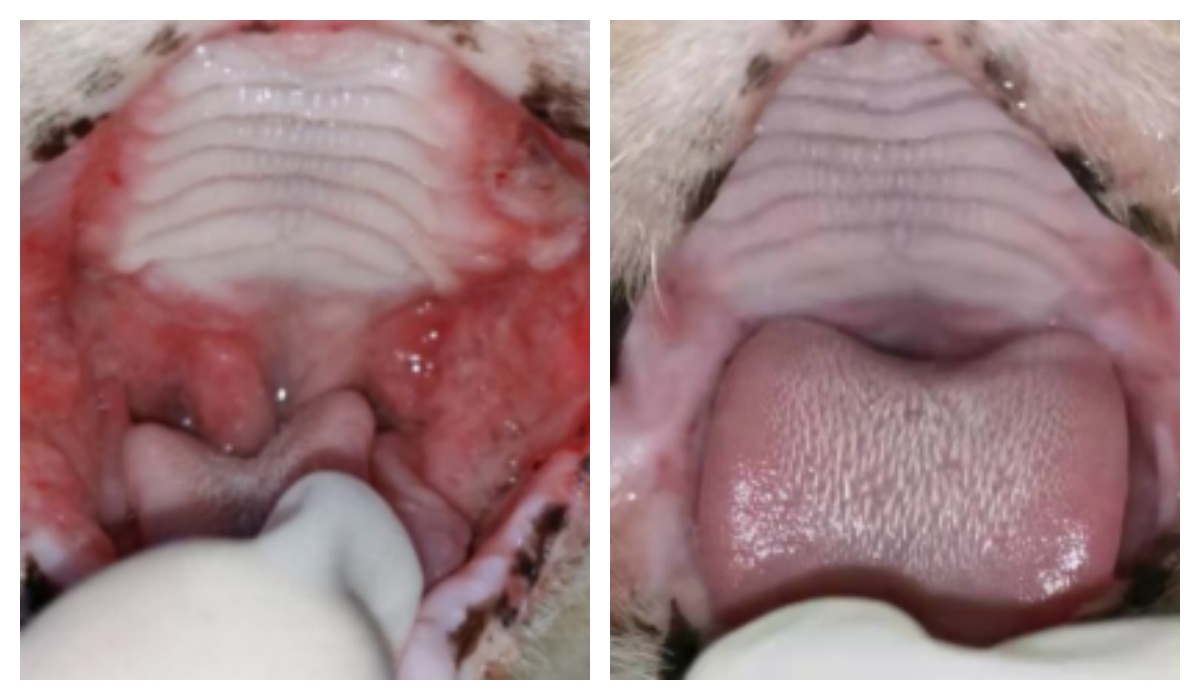
Cat with feline chronic gingivostomatitis before and after veterinary laser therapy
Introduction
Feline Chronic Gingivostomatitis (FCGS) is a severe, immune-mediated inflammatory condition affecting the oral cavity of cats. The disease commonly involves the gingiva, palatoglossal folds, caudal oral cavity, and pharyngeal tissues, often resulting in chronic pain, drooling, difficulty eating, and weight loss.
Current evidence suggests that FCGS is associated with an abnormal immune response to chronic oral antigenic stimulation. Contributing factors may include dental disease, retained tooth roots, viral infections, and immune dysregulation.
Management often requires a multimodal approach involving dental treatment, extraction of diseased teeth or retained roots, medical management, and adjunctive therapies such as veterinary laser therapy.
This case report describes the treatment of a young cat diagnosed with severe FCGS and the clinical response observed following veterinary laser therapy. The case also demonstrates how laser therapy for feline stomatitis may be incorporated into a comprehensive treatment plan for chronic oral disease.
Why FCGS Is Challenging to Treat
FCGS is widely regarded as one of the most challenging inflammatory diseases encountered in feline medicine. Unlike simple gingivitis, the disease often involves an exaggerated immune response that can persist even after the original trigger has been removed.
Affected cats frequently experience chronic pain, difficulty eating, weight loss, and reduced quality of life. In many cases, treatment requires a combination of dental procedures, medical management, pain control, and long-term monitoring.
Because the condition is multifactorial, successful management often depends on a multimodal treatment strategy tailored to the individual patient.
Patient Information
Item |
Details |
Name |
Momo |
Species |
Cat |
Age |
3 Years |
Sex |
Neutered Male |
Weight |
2.6 kg |
Primary Complaint |
Refusal to eat dry food |
Clinical Presentation |
Severe oral inflammation affecting the entire oral cavity |
Clinical Findings
Upon presentation, oral examination revealed:
· Severe bilateral inflammation of the palatoglossal folds
· Diffuse erythema throughout the caudal oral cavity
· Marked soft tissue swelling
· Pain during oral examination
· Reduced willingness to chew dry food
The severity of the lesions was consistent with advanced feline chronic gingivostomatitis.
Diagnosis
Based on clinical examination and oral findings, Momo was diagnosed with:
Feline Chronic Gingivostomatitis (FCGS)
Retained root fragments were identified and considered a contributing factor to the persistent inflammatory response.
The diagnosis and treatment plan were developed according to current veterinary dental guidelines and clinical findings.
Figure 1. Before and After Veterinary Laser Therapy for Feline Chronic Gingivostomatitis (FCGS)
Figure 1. Clinical appearance of feline chronic gingivostomatitis before and after 21 days of veterinary laser therapy treatment. The pre-treatment image demonstrates severe inflammation, erythema, and swelling affecting the caudal oral cavity and palatoglossal folds. The post-treatment image shows visibly improved mucosal appearance and reduced inflammation.
Clinical Response Observed
Comparison of the pre-treatment and post-treatment photographs demonstrated several visible improvements.
Observed changes included:
· Reduced erythema throughout the caudal oral cavity
· Decreased soft tissue swelling
· Improved mucosal appearance
· Better tissue definition around the palatoglossal folds
· Increased willingness to eat dry food as reported by the owner
While FCGS remains a chronic condition requiring ongoing management, the clinical photographs suggest meaningful improvement following treatment.
Initial Treatment Approach
Initial management included:
· Pain relief medication
· Antibiotic therapy
· Three sessions of laser therapy
Despite these interventions, significant inflammatory tissue remained.
Because retained root fragments were suspected to contribute to ongoing inflammation, surgical removal of the remaining roots was performed.
Laser therapy was then continued as part of the post-operative recovery plan.
Why Laser Therapy Was Selected
Veterinary laser therapy was incorporated into the treatment plan to support several clinical objectives:
· Reduce oral discomfort
· Help manage inflammation
· Support local blood circulation
· Promote tissue healing
· Improve patient comfort during recovery
Photobiomodulation therapy in veterinary dentistry has been increasingly utilized because oral tissues are highly vascular and often respond favorably to controlled light energy.
For cats affected by FCGS, improving comfort and reducing inflammation may help restore normal eating behavior and overall quality of life.
These benefits are similar to those reported in several conditions commonly treated with veterinary laser therapy and modern veterinary dental laser applications.
Laser Treatment Protocol
Device
A Class IV veterinary laser system was used during treatment.
The laser platform shown in this case was configured according to the patient’s clinical condition and treatment objectives.
Treatment Parameters
Parameter |
Setting |
Average Power |
3.6 W |
Treatment Tip |
Dedicated Intraoral Tip |
Treatment Mode |
Non-contact |
Treatment Duration |
60–90 sec per lesion site |
Treatment Procedure
Because swelling and pain were present, a cooling treatment was applied before laser therapy.
Treatment was performed in non-contact mode and focused on:
· Caudal oral cavity
· Gingival tissues
· Palatoglossal folds
· Areas showing active inflammation
Figure 2. FCGS Treatment Progression and Veterinary Laser Therapy Outcomes Figure 2. Clinical case summary illustrating patient presentation, key clinical findings, treatment progression, laser therapy protocol, and observed outcomes throughout the management of feline chronic gingivostomatitis (FCGS).
Figure Notes
Clinical photographs obtained during follow-up evaluations.
Visible differences in photographic angle, positioning, and oral tissue exposure may occur between visits.
Key Clinical Observations
· Visible reduction in oral inflammation observed at Day 21
· Return of dry food intake documented on Day 14
Discussion
FCGS remains one of the most challenging inflammatory diseases encountered in feline medicine.
In many patients, treatment focuses on long-term cat oral inflammation treatment strategies designed to improve comfort, eating behavior, and quality of life.
Even after extraction procedures, residual inflammation may persist and require ongoing management.
In this case, laser therapy was incorporated as an adjunctive treatment alongside surgical and medical intervention.
Potential mechanisms of benefit may include:
· Modulation of inflammatory mediators
· Enhanced microcirculation
· Improved cellular metabolism
· Support of tissue repair processes
Although laser therapy is not considered a standalone cure for FCGS, it may provide valuable support for pain management and post-operative recovery when incorporated into a comprehensive treatment plan.
Additional evidence supporting the clinical applications of laser therapy continues to emerge across veterinary medicine.
Modern Class IV veterinary laser systems are increasingly incorporated into rehabilitation, pain management, and veterinary dentistry protocols because of their ability to deliver therapeutic energy to both superficial and deeper tissues.
Key Clinical Takeaways
✔ Visible reduction in oral inflammation
✔ Improved patient comfort
✔ Return of dry food intake
✔ Well tolerated by the patient
✔ Easily integrated into a multimodal treatment strategy
Conclusion
This case demonstrates how veterinary laser therapy can be incorporated into the management of feline chronic gingivostomatitis as part of a comprehensive treatment protocol.
Following removal of retained root fragments and continued laser therapy, Momo showed visible improvement in oral tissue condition, reduced inflammation, and improved comfort during eating.
This case also illustrates the potential role of laser treatment for cat gingivitis and chronic inflammatory oral conditions when incorporated into a multimodal treatment approach.
While additional studies are needed to further evaluate long-term outcomes, this case supports the growing role of photobiomodulation therapy in veterinary dentistry and oral rehabilitation.
Clinics interested in integrating laser therapy into daily practice can learn more about the LYRA Veterinary Laser Therapy System.
References
1. American Association of Feline Practitioners (AAFP). Feline Chronic Gingivostomatitis Resources.
2. World Small Animal Veterinary Association (WSAVA). Global Dental Guidelines.
3. de Freitas LF, Hamblin MR. Photobiomodulation Therapy in Veterinary Medicine. Frontiers in Veterinary Science.
4. Journal of the American Veterinary Medical Association (JAVMA). Therapeutic Laser Applications in Veterinary Medicine.