
1064 nm in Veterinary Laser Therapy: Optical Properties and Deep-Tissue Energy Delivery
Introduction
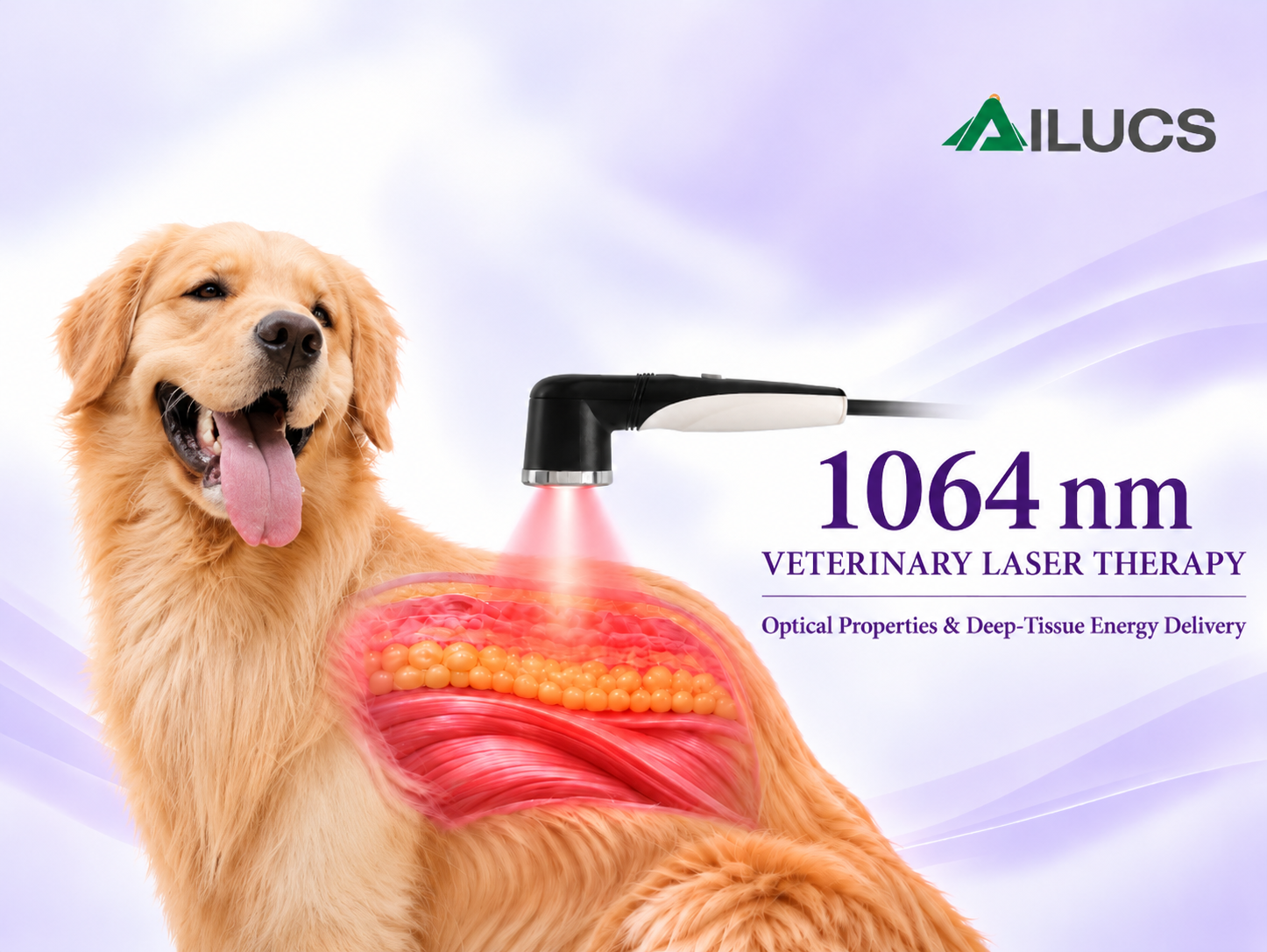
Why does 1064 nm deserve a place in modern veterinary laser therapy systems?
When treating a large dog, the target tissue may lie beneath several layers of skin, connective tissue, and muscle. Delivering laser energy to these structures requires more than simply increasing power. Wavelength selection also plays an important role.
Among commonly used near-infrared wavelengths, 1064 nm wavelength has attracted attention for its distinct optical characteristics. Compared with shorter wavelengths, it generally experiences lower melanin absorption and has a lower scattering coefficient in certain biological tissue models. These properties may support light transmission through pigmented tissue and the delivery of energy toward deeper anatomical structures.
For veterinary professionals, these characteristics are particularly relevant when considering patients with different coat pigmentation, body sizes, and tissue thicknesses.
However, the value of 1064 nm is not simply that it is a longer wavelength. Its importance lies in how its absorption and scattering characteristics differ from those of other therapeutic wavelengths, providing an additional option for treatment planning.
Optical Advantages of the 1064 nm Wavelength
The optical behavior of laser light in biological tissue is mainly influenced by absorption, scattering, and reflection. The relative contribution of these processes changes with wavelength.
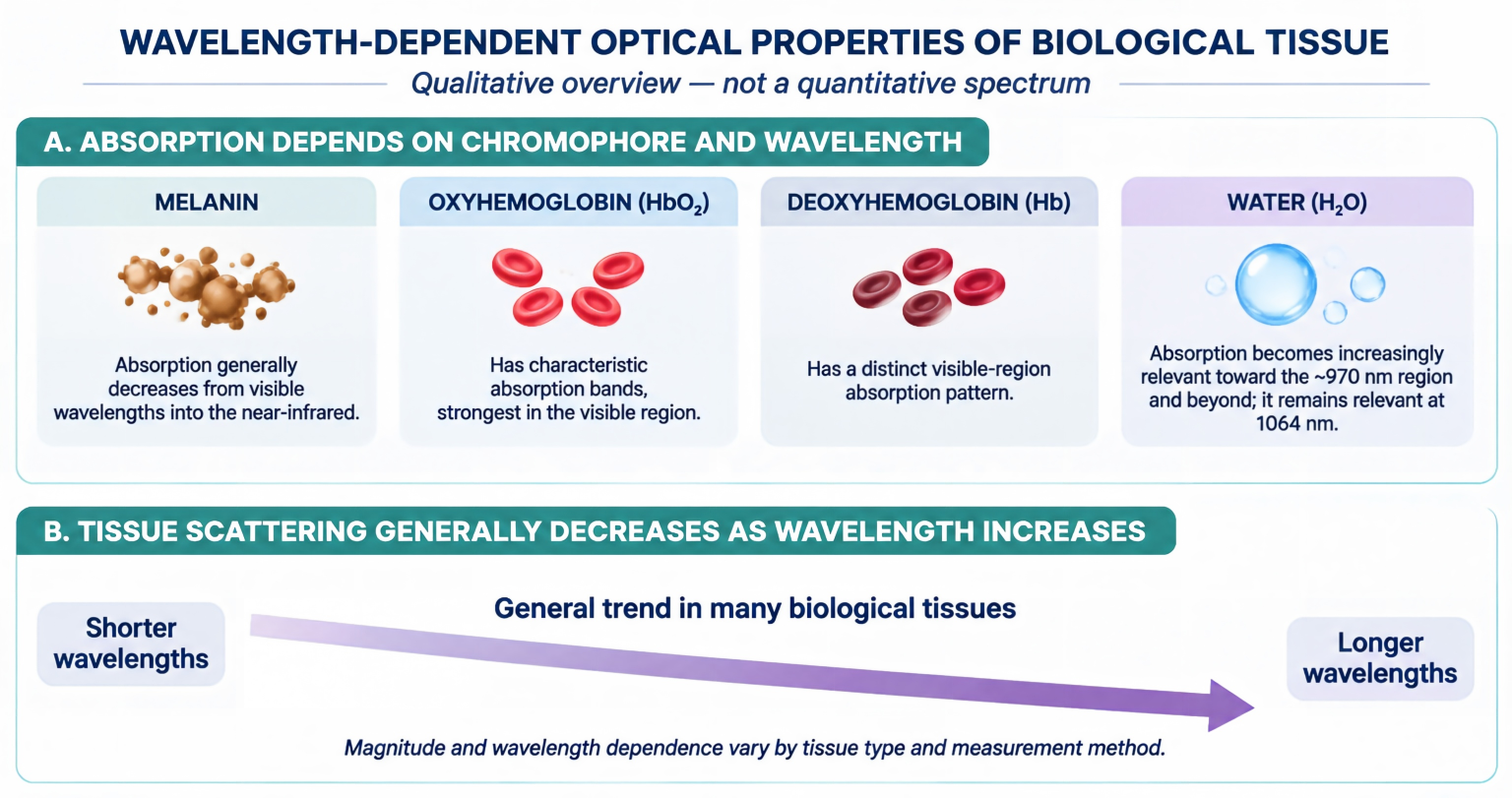
Conceptual summary based on published tissue-optics literature (Penberthy & Vorwaller, 2021; Hochman-Elam et al., 2020)
Lower Melanin Absorption
Melanin is one of the primary chromophores in skin. It absorbs light energy and can contribute to surface heating during laser application.
Melanin absorption generally decreases as wavelength increases across much of the visible-to-near-infrared spectrum. At 1064 nm, absorption by eumelanin is substantially lower than at commonly used shorter wavelengths such as 810 nm.
This difference is important because less energy absorbed by surface melanin may leave a greater proportion of incident light available for transmission into underlying tissue.
Lower Scattering Characteristics
Scattering occurs when photons change direction as they encounter different structures within biological tissue.
Repeated scattering can redirect light away from its original path and influence how energy spreads throughout the tissue.
Research comparing commonly used photobiomodulation wavelengths has reported a lower scattering-related coefficient for 1064 nm than for 810 nm. In one tissue-mimicking experiment, 1064 nm also produced a higher relative detectable energy level at a depth of 6.2 mm than the tested 810 nm and combined 810/970 nm conditions.
These findings suggest that the optical characteristics of 1064 nm may favor deeper light transmission under certain experimental conditions.
Importantly, tissue-mimicking experiments do not establish the exact penetration depth or therapeutic dose achievable in living dogs or cats.
Different Water Absorption Characteristics
Water is another important biological chromophore. Its absorption influences how much optical energy is deposited within tissue and how much heat may be generated.
One important distinction is that 1064 nm does not have the lowest water absorption among commonly used near-infrared photobiomodulation wavelengths. Wavelengths around 810–830 nm generally have lower water absorption.
This creates an important optical trade-off.
While 1064 nm offers relatively low melanin absorption and different scattering characteristics, water absorption must still be considered when determining appropriate treatment parameters.
How Do These Optical Advantages Matter in Veterinary Tissue?
The optical characteristics of 1064 nm become more meaningful when considered alongside the anatomical differences between veterinary patients.
Coat pigmentation, tissue thickness, and the composition of underlying structures all influence how much laser energy can be transmitted through a treatment area.
Darker Skin and Coat Pigmentation
Melanin absorption is an important consideration in veterinary laser therapy.
A study involving 47 healthy dogs found that laser transmission was significantly influenced by coat color, wavelength, laser power, and shaving. Transmission was lower in darker and unshaved treatment areas.
The study compared 810/980 nm and 904 nm laser systems rather than directly evaluating 1064 nm.
Nevertheless, its findings demonstrate why pigmentation matters when considering energy delivery in veterinary patients.
Because 1064 nm has relatively low absorption by melanin, it may offer an additional wavelength option when treating areas with greater pigmentation.
Tissue Thickness and Anatomical Differences
The distance between the skin surface and the intended treatment target can vary considerably between anatomical locations and individual animals.
A study involving 20 dogs investigated laser beam attenuation across different tissues. Researchers found that attenuation varied by anatomical location and was associated with tissue thickness and melanin content.
Each additional millimeter of tissue thickness was associated with an 11.6% increase in laser beam attenuation, while each unit increase in melanin index was associated with a 3.3% increase.
These findings highlight why the same laser settings may not deliver the same amount of energy through different body regions.
For larger dogs, where substantial muscle mass may lie between the skin surface and the intended target, wavelength selection becomes one of several factors worth considering.
The relatively low melanin absorption and different scattering characteristics of 1064 nm may be useful when evaluating these treatment conditions.
The Role of Water and Tissue Composition
Biological tissues contain different proportions of water, blood vessels, pigments, and structural components.
Each contributes differently to optical absorption and scattering.
At 1064 nm, water absorption remains relevant, even though it is lower than at some longer infrared wavelengths.
This means clinicians should consider both the potential advantages of reduced melanin absorption and the possibility of energy deposition and heat generation within tissue.
What Does 1064 nm Mean for Clinical Energy Delivery?
The optical advantages of 1064 nm provide a useful starting point, but they do not independently determine the energy delivered to a target tissue.
Clinical energy delivery depends on the interaction between wavelength, power, irradiance, treatment area, and application technique.
Several parameters require particular attention:
Power (W): The rate at which the laser emits energy.
Irradiance (W/cm²): The power delivered per unit area.
Energy (J): The total energy delivered during treatment.
Energy density (J/cm²): The energy delivered relative to the treatment area.
Emission mode: Whether the laser operates continuously or in pulses.
For 1064 nm, these parameters are especially important because reduced melanin absorption does not eliminate energy absorption by other tissue components.
Balancing Energy Delivery and Thermal Effects
Deep tissue laser therapy requires more than selecting a wavelength associated with favorable optical characteristics. Appropriate dosage and energy distribution are equally important.
Photobiomodulation aims to produce biological responses without deliberately damaging tissue.
However, therapeutic laser application can still generate heat depending on the amount of absorbed energy, power density, and treatment technique.
At 1064 nm, water absorption and other tissue interactions remain relevant. A longer wavelength does not remove the need for appropriate thermal management.
The speed at which the handpiece moves, spot size, exposure time, and treatment area all influence how energy is distributed.
For example, moving the handpiece continuously across a larger treatment area distributes energy differently from maintaining it over a small localized region.
Veterinary professionals should therefore select treatment parameters according to the target tissue, patient anatomy, and clinical objectives rather than relying on wavelength alone.
For a more detailed explanation of how power, treatment time, and treatment area relate to energy delivery, see our guide to veterinary laser therapy dosage.
Potential Clinical Applications of 1064 nm in Veterinary Practice
The optical characteristics of 1064 nm make it a useful wavelength to consider in treatment planning involving pigmented tissue and anatomical structures beneath substantial soft tissue.
Several veterinary scenarios illustrate its potential relevance.
Deep Muscle Groups in Large Dogs
Large and giant-breed dogs may have substantial muscle mass covering the intended treatment area.
When planning treatment for deeper muscle groups, clinicians need to consider the thickness and optical properties of the overlying tissues.
Periarticular Soft Tissues
The tissues surrounding joints can involve multiple anatomical layers.
The location of the intended target, the patient's anatomy, and the treatment area all influence energy delivery.
Lumbosacral and Paraspinal Regions
The lumbosacral and paraspinal regions may involve relatively deep muscular structures.
The distance between the skin surface and the intended treatment target is an important consideration when selecting treatment parameters.
Pigmented Treatment Areas
In dogs with darker skin pigmentation, melanin absorption can influence how much light is transmitted through the treatment area.
These examples represent potential treatment-planning considerations rather than established indications specific to 1064 nm.
The effectiveness of laser therapy for an individual condition must be evaluated using appropriate clinical evidence. Optical characteristics alone cannot establish treatment outcomes.
The Role of 1064 nm in Multi-Wavelength Veterinary Laser Systems
The value of 1064 nm becomes particularly clear when considering the role of multiple wavelengths in a veterinary laser platform.
Different wavelengths interact with biological tissue in different ways. They vary in their absorption by melanin, water, and other chromophores, as well as their scattering characteristics.
For example, 810 nm is notable for its relatively low water absorption among commonly used near-infrared photobiomodulation wavelengths. By comparison, 1064 nm offers relatively low melanin absorption and different scattering characteristics.
For veterinary professionals, having access to multiple wavelengths allows treatment planning to take account of different tissue characteristics, patient anatomy, and clinical objectives.
This is particularly relevant in veterinary practice, where patients vary considerably in body size, coat pigmentation, anatomical structure, and treatment requirements.
More Wavelength Options, Greater Treatment Flexibility
A multi-wavelength veterinary laser system is not valuable simply because it contains more wavelengths.
Its value lies in providing different optical characteristics that clinicians can consider when selecting treatment parameters.
Rather than relying on a single wavelength for every treatment situation, veterinary professionals can evaluate which wavelength options are appropriate for the individual patient and target area.
Five Wavelengths in One Veterinary Laser Platform
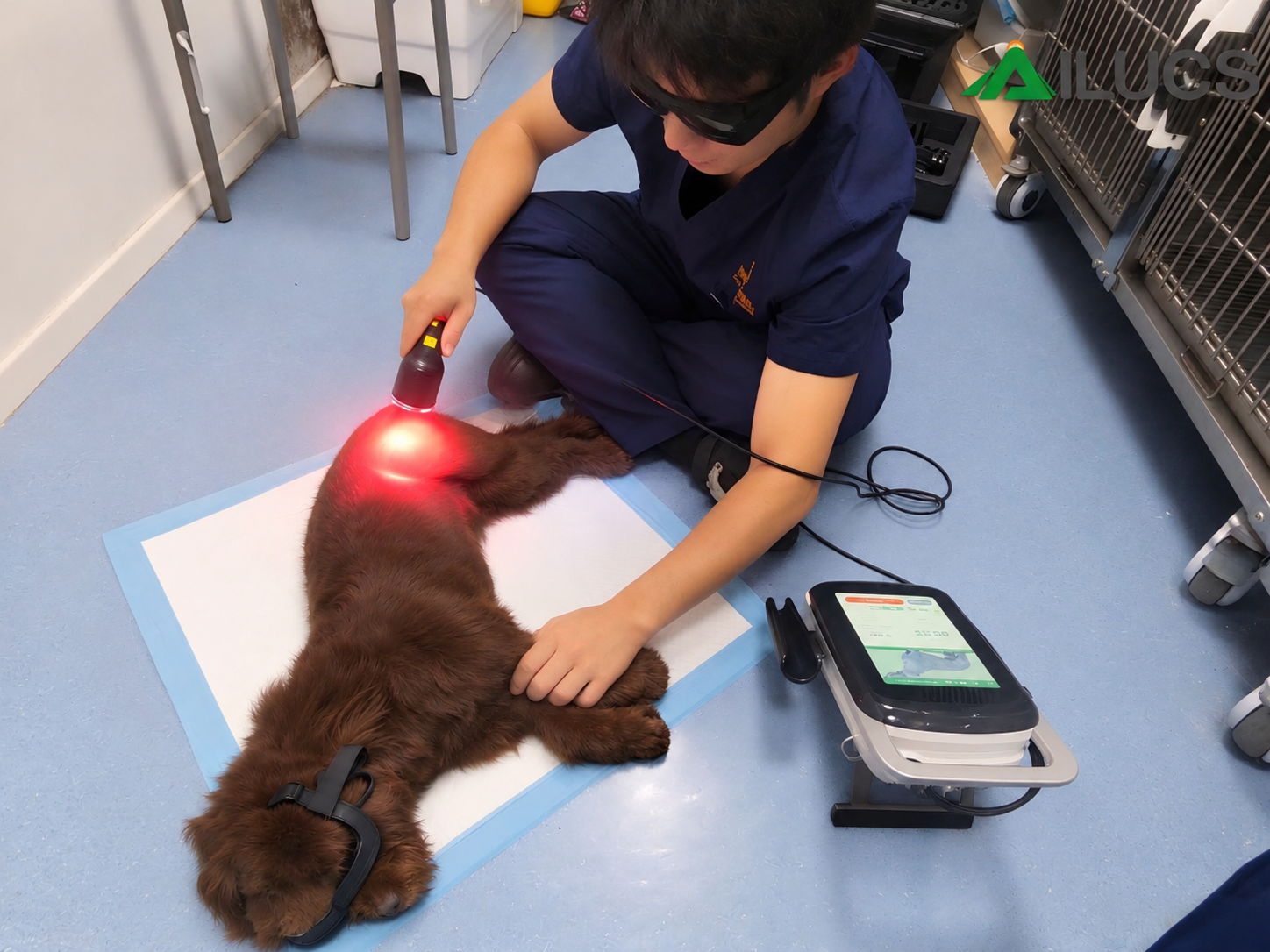
The LYRA Veterinary Laser Therapy System integrates five wavelengths: 650, 810, 915, 980, and 1064 nm.
By combining these wavelengths in one system, LYRA provides veterinary professionals with access to different optical profiles within a single platform.
The inclusion of 1064 nm adds an option with relatively low melanin absorption and distinct scattering characteristics, complementing the shorter wavelengths available in the system.
This multi-wavelength configuration allows clinicians to consider different wavelength options when planning treatment for different tissues and anatomical areas.
The goal is not to identify one wavelength as suitable for every condition, but to provide a broader range of choices for individualized treatment planning.
Conclusion
1064 nm offers distinct optical characteristics that make it an important wavelength to consider in veterinary laser therapy.
Its relatively low absorption by melanin and lower scattering characteristics, compared with certain shorter near-infrared wavelengths, provide a scientific basis for its potential role in energy delivery through pigmented tissue and toward deeper anatomical structures.
For veterinary professionals, these characteristics are particularly relevant when considering patients with different coat pigmentation, substantial tissue thickness, and varied anatomical treatment targets.
However, wavelength selection is only one part of effective treatment planning. Water absorption, tissue composition, power, irradiance, treatment technique, and thermal effects must also be considered.
Research has provided useful information about the optical properties of 1064 nm and the factors affecting laser transmission in dogs. Clinical investigations specifically evaluating 1064 nm in veterinary patients are also beginning to emerge, although evidence for individual musculoskeletal indications remains limited.
Ultimately, the value of 1064 nm is not that it replaces other therapeutic wavelengths. Its value lies in providing a different optical profile that complements shorter wavelengths and expands the options available in multi-wavelength veterinary laser systems.
For modern veterinary laser technology, this makes 1064 nm more than an additional wavelength specification. It represents another clinically relevant option for individualized treatment planning.
References
1. Penberthy WT, Vorwaller CE. Utilization of the 1064 nm Wavelength in Photobiomodulation: A Systematic Review and Meta-Analysis. Journal of Lasers in Medical Sciences. 2021;12. doi:10.34172/jlms.2021.86.
2. Hochman-Elam LN, Heidel RE, Shmalberg JW. Effects of laser power, wavelength, coat length, and coat color on tissue penetration using photobiomodulation in healthy dogs. Canadian Journal of Veterinary Research. 2020;84(2):131–137.
3. Rosenblum ST, McCarthy DA, Millis DL, Odoi A. Use of a colorimeter is a viable method to measure melanin and erythema content in the context of laser beam attenuation by use of a class IV laser in different tissues in dogs. Journal of the American Veterinary Medical Association. 2023;261(7):1–8. doi:10.2460/javma.22.11.0493.
4. Alves JC, Santos A, Pastor Sirvent N, Jorge P, Mendonça T. Transcranial photobiomodulation therapy with 808 nm and 1064 nm can affect different behavior parameters in dogs. Lasers in Medical Science. 2026;41(1):118. doi:10.1007/s10103-026-04918-0.
5. Millis DL, Bergh A. A Systematic Literature Review of Complementary and Alternative Veterinary Medicine: Laser Therapy. Animals. 2023;13(4):667.