
When is it suitable to use laser therapy after a pet is injured?
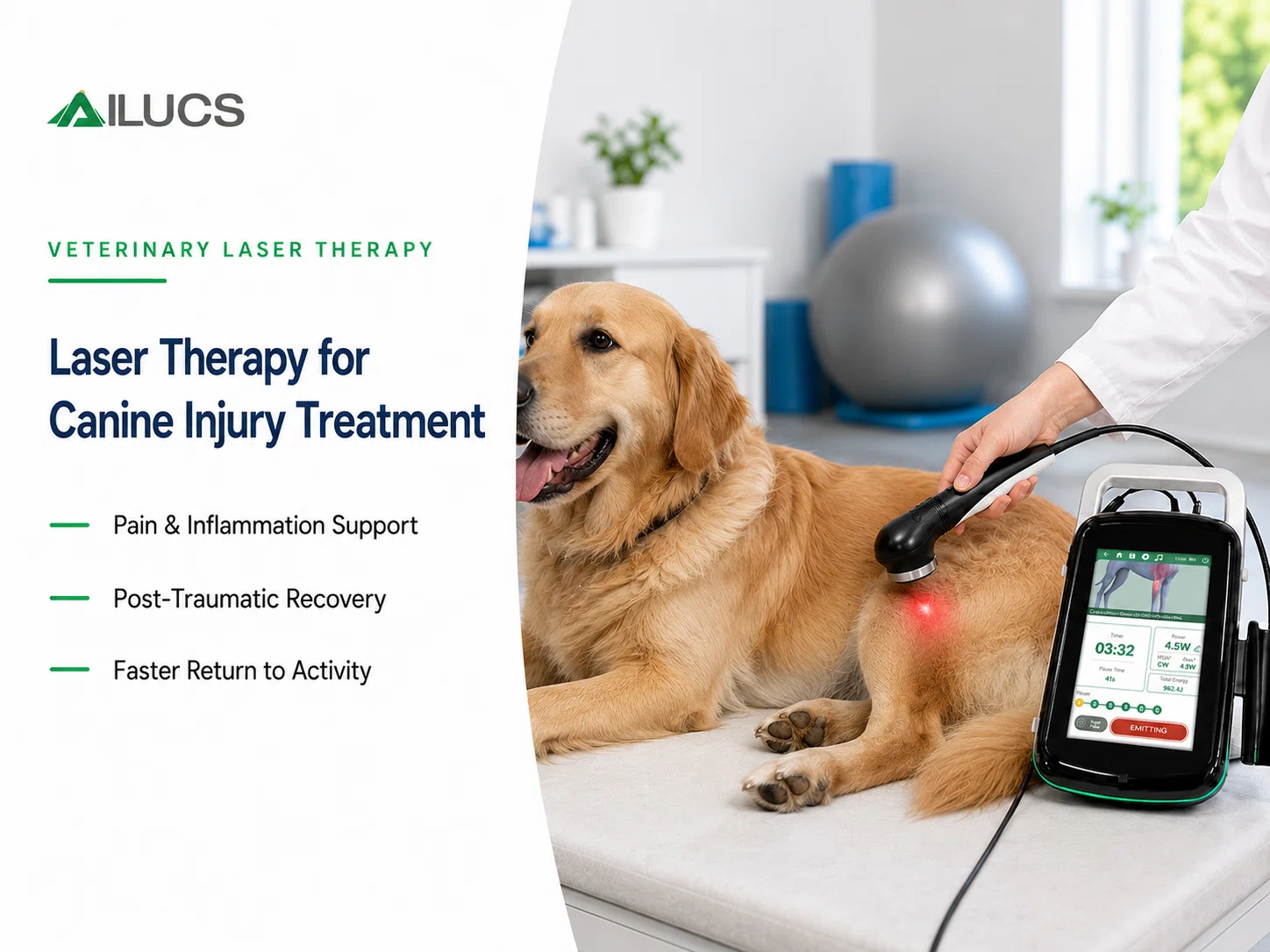
When a dog or cat is injured, pet owners often want to know how soon laser therapy can begin. Should treatment start immediately, or is it better to wait until the swelling and inflammation have subsided?
The short answer is: veterinary laser therapy can sometimes begin on the day of injury or during the immediate postoperative period—but only after the patient has been examined, the injury has been diagnosed, and any urgent problem has been stabilized.
There is no universal rule requiring every patient to wait 24, 48, or 72 hours. The appropriate starting point depends on the type of injury, tissue involved, wound condition, pain level, patient stability, and treatment objective. Laser therapy is an adjunct to veterinary care; it does not replace bleeding control, wound cleaning, fracture stabilization, surgery, medication, or rehabilitation.
First Priority: Diagnose and Stabilize the Injury
Pain and swelling do not reveal the full extent of an injury. A pet that appears to have a simple strain may have a fracture, joint instability, tendon rupture, spinal injury, or internal trauma. Starting a physical modality before identifying the problem can delay essential treatment.
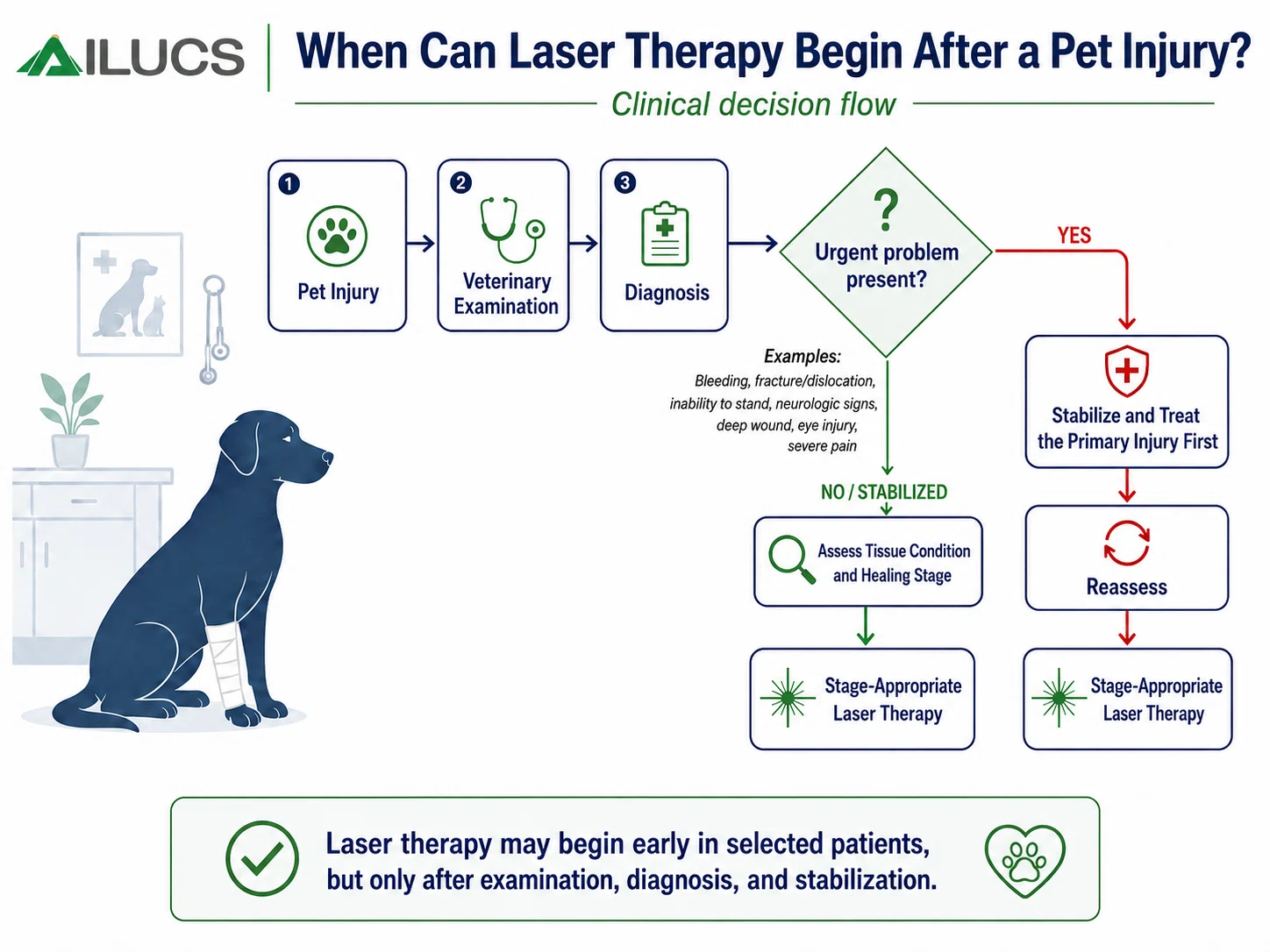
Veterinary assessment should come first when an animal has:
● Severe or uncontrolled bleeding
● Difficulty breathing or collapse
● A suspected fracture or dislocation
● Inability to stand or use a limb
● Sudden weakness, paralysis, or loss of coordination
● Severe or rapidly increasing pain
● A deep puncture, bite wound, burn, or eye injury
● A wound containing dirt, foreign material, or devitalized tissue
Once urgent problems have been controlled and a treatment plan has been established, laser therapy may be integrated at the stage considered appropriate by the veterinarian.
How Treatment Goals Change During Healing
Tissue healing is often described in inflammatory, proliferative, and remodeling phases. These phases overlap, and their timing varies with the tissue, severity of injury, age, circulation, infection status, medication, and overall health of the patient. Laser parameters should therefore follow the biological condition of the tissue rather than the calendar alone.
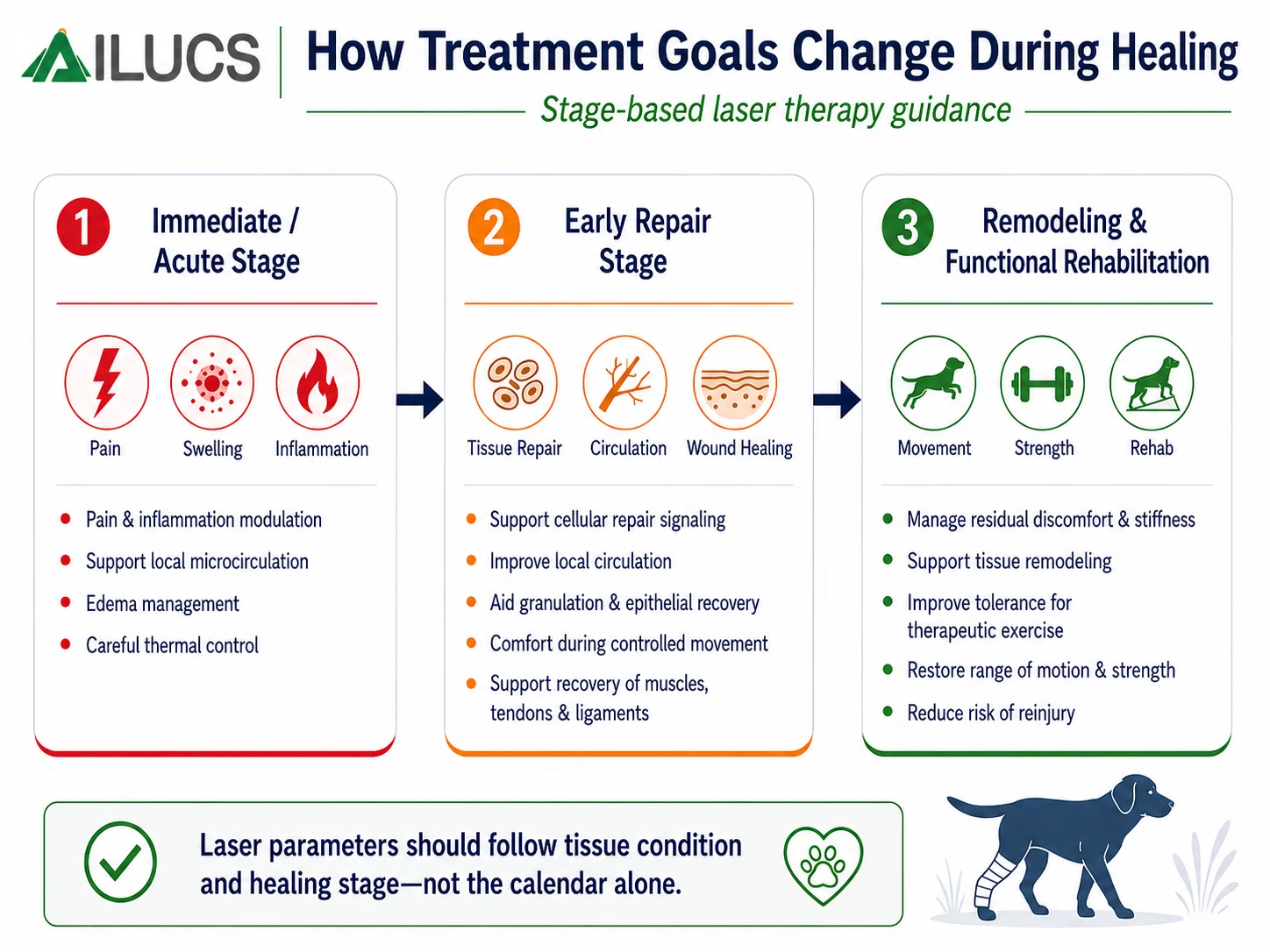
1. Immediate and Acute Stage: Protect the Tissue and Control Excessive Symptoms
The acute stage begins at the time of injury and usually includes pain, swelling, heat, and protective muscle tension. Inflammation is part of normal healing, so the goal is not to eliminate it completely. The clinical objective is to limit excessive inflammatory activity, improve comfort, and create conditions that allow safe recovery.
When laser therapy is appropriate during this stage, treatment generally emphasizes:
● Pain and inflammation modulation
● Support for local microcirculation
● Edema management as part of a broader care plan
● Low heat accumulation and careful monitoring of tissue response
For high-power Class IV laser systems, the clinician must distinguish between power and dose. Higher power delivers energy more quickly, but it does not mean that the maximum output should be used. Acute, superficial, darkly pigmented, or heat-sensitive tissue may require conservative power, controlled scanning, and continuous assessment of thermal tolerance.
2. Early Repair Stage: Support Tissue Recovery
As severe pain, swelling, and heat begin to settle, repair activity becomes more prominent. Fibroblasts, new blood vessels, collagen production, and extracellular-matrix organization contribute to tissue restoration.
At this stage, veterinary laser therapy may be used to support:
● Cellular energy production and repair-related signaling
● Local circulation and nutrient delivery
● Granulation and epithelial recovery in appropriate wounds
● Comfort during the introduction of controlled movement
● Recovery of muscles, tendons, ligaments, and periarticular tissues
Laser therapy should be coordinated with wound management, medication, protected loading, and rehabilitation exercises. Increasing the laser dose cannot compensate for excessive activity or inadequate stabilization.
3. Remodeling and Functional Rehabilitation: Restore Safe Movement
During remodeling, collagen fibers reorganize and the recovering tissue gradually adapts to mechanical load. Pain may be lower, but weakness, stiffness, altered gait, and reduced range of motion can remain.
Treatment goals now shift toward:
● Managing residual discomfort and stiffness
● Supporting tissue remodeling
● Improving tolerance for therapeutic exercise
● Restoring range of motion, strength, balance, and coordinated movement
● Reducing the risk of reinjury
Laser therapy is most useful here when it supports an active rehabilitation plan. A patient may feel more comfortable before the injured tissue has regained full strength, so pain relief should never be interpreted as permission to return immediately to unrestricted activity.
Can Laser Therapy Be Used on an Open Wound?
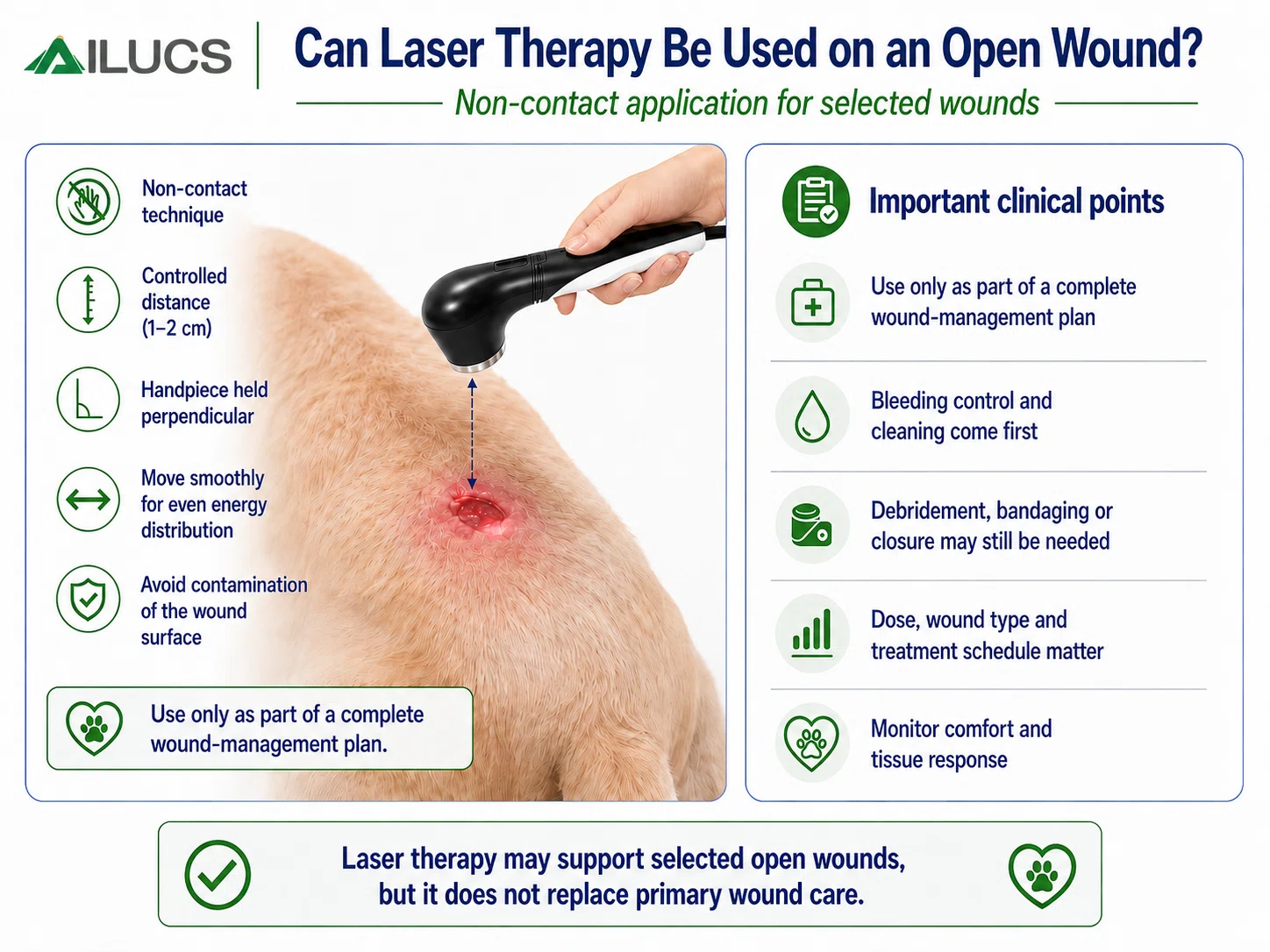
It may be used on selected open wounds, but only as part of a complete wound-management plan. Bleeding control, lavage, debridement, infection management, drainage, bandaging, and surgical closure remain the primary treatments when indicated.
A non-contact application technique is generally more appropriate when the applicator should not touch exposed or painful tissue. The treatment head is held perpendicular to the wound at a controlled distance and moved smoothly to distribute energy evenly without contaminating the treatment surface.
Research in this area is promising but not uniform. A small randomized pilot trial involving contaminated canine bite and laceration wounds reported improved wound scores and reduced bacterial counts with one of the tested photobiomodulation doses. However, other controlled studies of uncomplicated incisions and small experimental wounds have not found a clear acceleration of healing. These differences demonstrate why wound type, wavelength, dose, treatment schedule, and study design matter.
Does Earlier Treatment Always Produce a Better Result?
No. Starting early can be useful in an appropriate, stable patient, but “earlier” does not automatically mean “better.” An effective treatment plan depends on several variables:
Correct diagnosis
Laser therapy cannot correct an unstable fracture, remove a foreign body, drain an abscess, repair pet’s torn ligament, or decompress an injured spinal cord.
Treatment depth
Superficial wounds and deeper muscles or joints do not receive light in the same way. Wavelength, applicator design, tissue thickness, coat, skin pigmentation, and treatment technique all influence energy delivery.
Dose and treatment area
Power describes how quickly energy is delivered. The biological response also depends on total energy, treatment area, tissue condition, frequency, and exposure time. A dose suitable for a large chronic muscle injury may be inappropriate for a fresh superficial wound.
Thermal control
High-power diode laser systems can treat large areas efficiently, but incorrect technique can create excessive heat. The applicator should remain in controlled motion when scanning is required, and the clinician should monitor the animal and tissue continuously.
Reassessment
Treatment should be adjusted according to measurable changes in pain, swelling, wound appearance, mobility, weight bearing, range of motion, and patient tolerance. If the patient worsens or fails to progress as expected, the diagnosis and treatment plan should be reassessed rather than simply increasing the laser dose.
Stage-Based Treatment with the LYRA Veterinary Laser
The LYRA Veterinary Laser is designed to help veterinary professionals adapt treatment to the patient rather than apply one setting to every injury. Its multi-wavelength configurations support applications across superficial and deeper tissues, while more than 4,000 built-in veterinary protocols and 3D anatomical guidance help clinicians select treatment areas and establish a structured starting point.
Adjustable parameters allow the veterinarian to refine treatment according to the injury stage, target depth, treatment area, coat and skin characteristics, and patient tolerance. Dedicated treatment heads also support different clinical techniques, including non-contact application for selected wounds and broader coverage for muscles and joints.
Built-in protocols provide guidance, but they do not replace diagnosis, clinical judgment, thermal monitoring, or patient reassessment.
Conclusion
Veterinary laser therapy does not always need to be delayed for several days after a pet is injured. In selected patients, it may begin on the day of injury or during the immediate postoperative period. The essential sequence is assessment first, stabilization second, and stage-appropriate laser therapy third.
The best starting time depends on what tissue is injured, whether the area is stable and adequately treated, and what the clinician wants to achieve. Used with an appropriate diagnosis, carefully selected parameters, and regular reassessment, laser therapy can become a valuable component of pain management, wound care, and functional rehabilitation.
For information about integrating stage-based laser protocols into veterinary practice, contact AILUCS Medical to learn more about the LYRA Veterinary Laser platform.
Medical notice: This article is intended for veterinary education and general information. It does not replace examination, diagnosis, or treatment by a qualified veterinary professional. Laser parameters and treatment schedules must be selected for the individual patient.
References
1. Monteiro BP, et al. 2022 AAHA Pain Management Guidelines for Dogs and Cats. American Animal Hospital Association. 2022.
2. Wardlaw JL, Gazzola KM, Wagoner A, et al. Laser Therapy for Incision Healing in 9 Dogs. Front Vet Sci. 2019;5:349.
3. Draper WE, Schubert TA, Clemmons RM, Miles SA. Low-level laser therapy reduces time to ambulation in dogs after hemilaminectomy: a preliminary study. J Small Anim Pract. 2012;53(8):465–469.
4. Renwick SM, Renwick AI, Brodbelt DC, Ferguson J, Abreu H. Influence of Class IV laser therapy on the outcomes of tibial plateau leveling osteotomy in dogs. Vet Surg. 2018;47(4):507–515.
5. Gammel JE, Biskup JJ, Drum MG, Newkirk K, Lux CN. Effects of low-level laser therapy on the healing of surgically closed incisions and surgically created open wounds in dogs. Vet Surg. 2018;47(4):499–506.
6. Rico-Holgado S, Ortiz-Díez G, Martín-Espada MC, et al. Effect of Low-Level Laser Therapy on Bacterial Counts of Contaminated Traumatic Wounds in Dogs. J Lasers Med Sci. 2021;12.
7. Merck Veterinary Manual. What to Do in a Dog or Cat Emergency. Accessed August 25, 2026.