
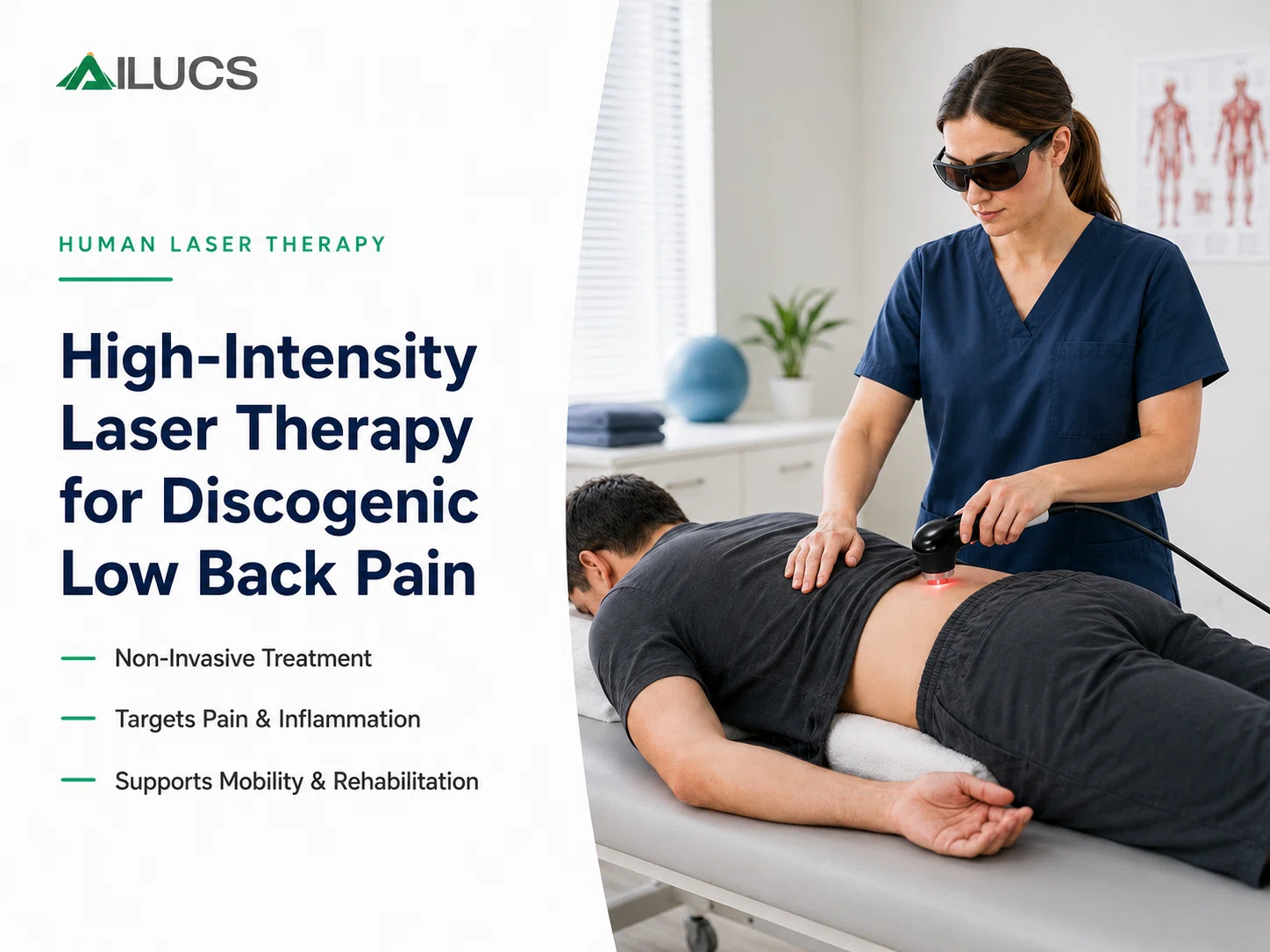
High Intensity Laser Therapy for Discogenic Low Back Pain
What Is Discogenic Low Back Pain
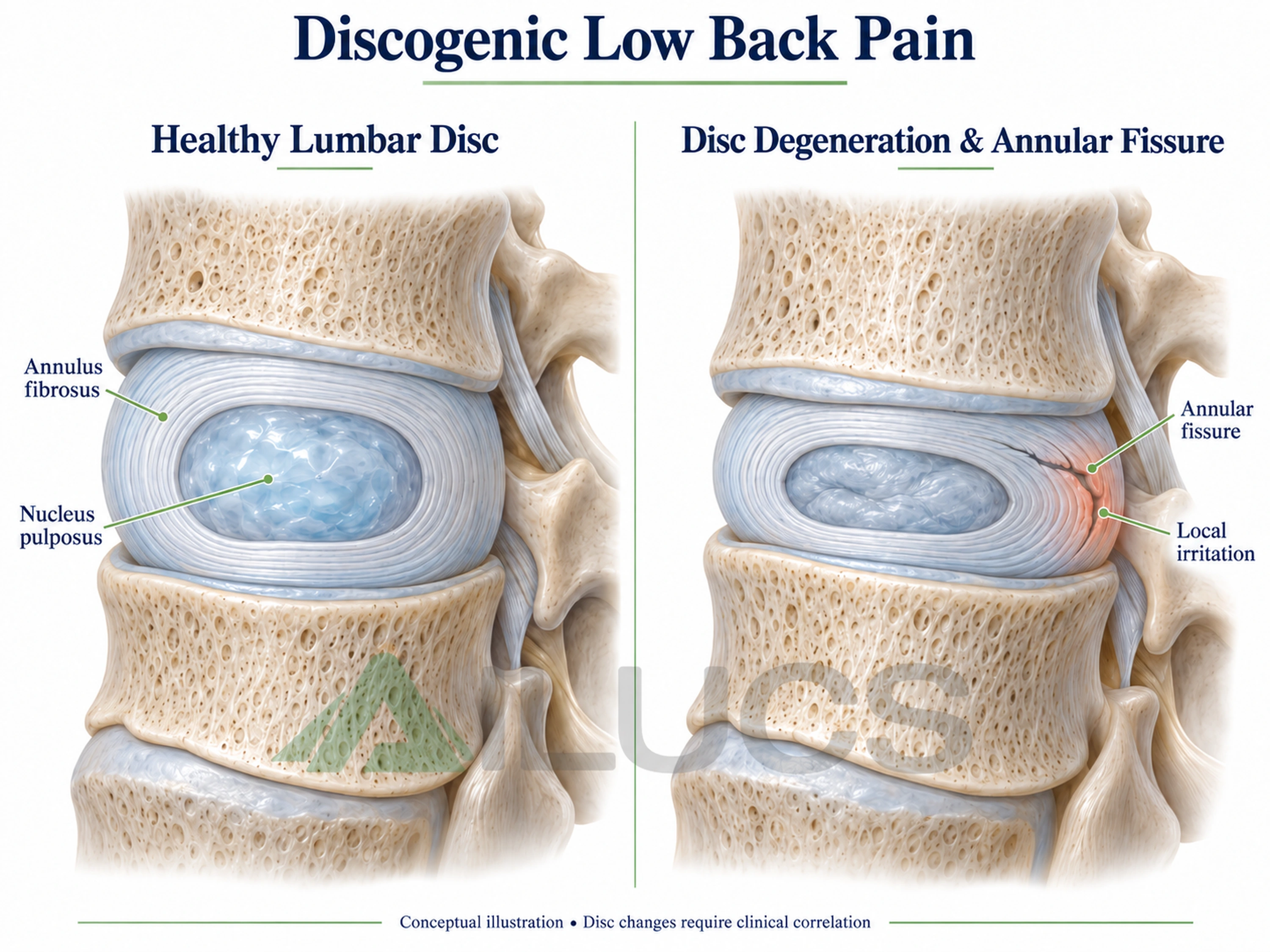
Low back pain does not always result from a typical herniated disc. Some patients experience persistent or recurrent lumbar pain even when MRI or CT imaging does not show obvious disc herniation or nerve-root compression.
One possible source is the intervertebral disc itself. Degenerative changes, small fissures in the annulus fibrosus, local inflammation, and changes in surrounding muscles and fascia may contribute to discogenic low back pain.
Patients may experience deep or central lumbar pain that becomes worse with prolonged sitting, bending, lifting, or maintaining the same position for an extended period. Some patients may also have discomfort extending toward the buttocks.
Because low back pain has many possible causes, diagnosis should be based on clinical assessment, patient history, physical examination, and appropriate imaging when indicated.
How Does High Intensity Laser Therapy Work for Low Back Pain
High intensity laser therapy (HILT) is a non-invasive treatment modality that delivers controlled laser energy to biological tissue.
For low back pain rehabilitation, HILT parameters can be adjusted according to the treatment area, target tissue, treatment objective, and patient tolerance. Important parameters include:
Wavelength
Power
Total energy
Energy density
Treatment area
Continuous or pulsed output
Scanning technique
The purpose is not simply to use the highest possible power. An appropriate therapeutic dose should be selected according to the individual patient and clinical objective.
HILT may be incorporated into rehabilitation programs that aim to support pain management, tissue recovery, mobility, and functional rehabilitation.
For background on dose and modality selection, see our comparison of HILT vs LLLT.
Why Use HILT for Deep Low Back Pain
The lumbar region contains muscles, fascia, and other soft tissues beneath the skin and subcutaneous tissue. Depending on the treatment target, clinicians may need to deliver therapeutic energy to different tissue depths.
HILT may offer several practical advantages:
Efficient Energy Delivery
Higher-power laser systems can deliver a planned amount of energy efficiently, which can be useful when treating relatively large areas such as the lumbar region.
Flexible Treatment Parameters
Clinicians can adjust power, energy, output mode, treatment area, and scanning technique according to the patient's condition and treatment response.
Multi Wavelength Treatment
Different wavelengths have different absorption and scattering characteristics. A multi-wavelength system offers options for energy delivery across superficial and deeper soft tissues. Higher power alone does not establish treatment depth or demonstrate that a therapeutic dose reaches an intervertebral disc.
Support for Active Rehabilitation
When pain and discomfort are better controlled, patients may be able to participate more comfortably in exercise, mobility training, and other rehabilitation activities.
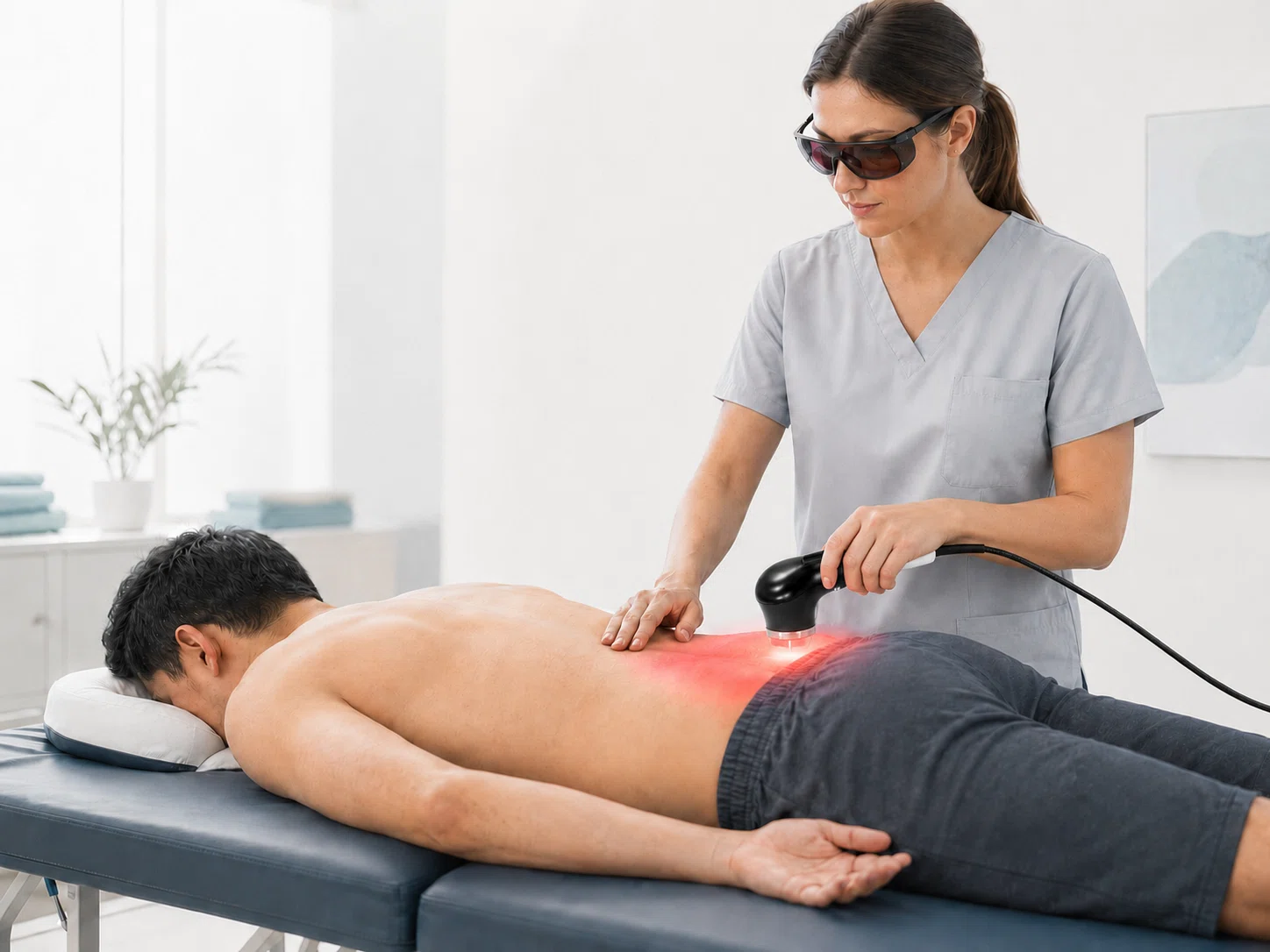
Figure 2. HILT treatment of the lower back. A moving application technique and controlled parameters deliver the planned energy across the target area.
How Do Different Wavelengths Support Low Back Pain Treatment
The LYRA high intensity laser platform combines four wavelengths:
650 nm | 808 nm | 905 nm | 1064 nm
The four wavelengths provide complementary red and near-infrared energy delivery. Treatment settings should follow the device instructions and the selected clinical protocol.
| Wavelength | Potential Application | Clinical Relevance in Discogenic Low Back Pain |
| 650 nm | Superficial photobiomodulation | ell suited to skin, superficial fascia, and other shallow soft tissues, supporting local microcirculation and recovery across the treatment area. |
| 808 nm | Photobiomodulation and cellular signaling | Supports mitochondrial and redox-related cellular signaling, including ATP-associated metabolic responses. It contributes to the treatment of paraspinal muscles, fascia, and other soft tissues surrounding the lumbar region |
| 905 nm | Complementary near-infrared energy delivery | Provides complementary near-infrared energy delivery across paraspinal muscles and fascia. It may be incorporated into protocols addressing pain, muscle tension, and inflammation-related tissue responses, depending on dose, output mode, and application technique. |
| 1064 nm | Near-infrared soft-tissue energy delivery | Can contribute to energy delivery in deeper lumbar soft tissues. Actual light distribution depends on tissue characteristics and treatment parameters; it does not establish direct treatment of the intervertebral disc. |
LYRA provides a maximum combined output of 26 W. Actual treatment power should be adjusted according to the treatment area, tissue characteristics, patient tolerance, and selected protocol.
Wavelength and power should not be considered interchangeable. Wavelength affects how light interacts with tissue, while power determines the rate of energy delivery. Total dose, treatment area, application technique, and patient characteristics also influence treatment outcomes.
Potential Mechanisms of HILT for Low Back Pain
Research into photobiomodulation and high intensity laser therapy has identified several potential biological and physiological effects.
Photobiomodulation
Red and near-infrared light may influence cellular signaling and mitochondrial activity. Research has investigated effects related to ATP production, nitric oxide signaling, oxidative stress, and tissue-repair processes.
Inflammatory Modulation
Photobiomodulation may influence inflammatory signaling and cellular responses associated with tissue irritation. This may contribute to reduced pain sensitivity and improved comfort.
Local Circulation
Laser therapy and controlled thermal effects may influence local blood flow and tissue metabolism, potentially supporting the local tissue environment during rehabilitation.
Pain Modulation
HILT may influence peripheral pain signaling and inflammatory mediators. Reducing pain may help patients move more comfortably and participate in active rehabilitation.
Controlled Thermal Effects
When appropriate parameters and scanning techniques are used, HILT can produce a controlled warming effect that may help improve comfort and reduce muscle tension.
These mechanisms should be viewed as potential therapeutic effects rather than guarantees of a specific clinical outcome. Mechanistic photobiomodulation research does not by itself establish clinical efficacy for discogenic low back pain or for a particular device.
Can HILT Repair a Degenerated Disc
This question requires careful interpretation.
Current evidence does not establish that external HILT can directly regenerate or structurally restore a degenerated intervertebral disc.
Instead, HILT may be used to support pain management and the functional recovery process around painful or irritated tissues.
Potential treatment goals may include:
Pain modulation
Inflammatory regulation
Support of local tissue recovery
Reduction of muscle tension
Improved mobility
Facilitation of active rehabilitation
For this reason, HILT is generally better considered a complementary rehabilitation modality, rather than a stand-alone treatment for disc degeneration.
What Does Research Say About HILT for Low Back Pain
Clinical evidence should be interpreted according to the population studied. Research in general or chronic low back pain does not automatically establish the same benefit in patients with confirmed discogenic pain.
A 2023 systematic review and meta-analysis evaluated HILT for low back pain and reported improvements in pain and disability compared with control interventions. Differences in study protocols and patient populations should be considered when applying these findings.
A randomized trial involving 72 male patients with chronic low back pain compared HILT plus exercise, placebo laser plus exercise, and HILT alone. HILT combined with exercise appeared more effective overall, with pain, disability, and lumbar movement assessed after treatment and at follow-up. The study was not specific proof of disc regeneration or of LYRA efficacy.
A broader review also evaluated HILT for musculoskeletal disorders. Such evidence provides context but should not be treated as direct validation of LYRA for discogenic low back pain.
However, outcomes may vary according to the patient's diagnosis, treatment parameters, treatment frequency, disease duration, and whether laser therapy is combined with exercise or other rehabilitation interventions.
HILT studies have used different wavelengths, output modes, energy doses, and treatment schedules. Findings from other devices or single-wavelength systems should not be assumed to validate LYRA’s 650/808/905/1064 nm configuration. Treatment should be individualized and integrated with active rehabilitation.
Who May Be a Candidate for HILT
Following clinical assessment, HILT may be considered as an adjunct for patients with suspected or diagnosed discogenic low back pain accompanied by the following features:
Persistent or recurrent low back pain
Predominantly axial lumbar pain
Lumbar muscle or soft-tissue discomfort
Reduced lumbar mobility
Pain-related limitations in everyday activity
Difficulty participating comfortably in active rehabilitation
Progressive muscle weakness, new bladder or bowel dysfunction, saddle anesthesia, significant trauma, fever, or suspected infection or malignancy require prompt medical evaluation. HILT should not delay diagnosis or necessary treatment.
How Are HILT Treatment Parameters Selected
There is no single HILT setting that is appropriate for every patient with low back pain.
Treatment parameters should consider:
Diagnosis and stage of the condition
Treatment area
Target tissue depth
Patient sensitivity
Thermal tolerance
Treatment objective
Wavelength
Power
Total energy
Output mode
Scanning technique
Previous treatment response
It is also important to distinguish between power (W) and energy (J). Power describes the rate of energy delivery, while energy represents the total amount delivered during treatment.
A higher maximum power does not automatically mean a better clinical outcome. Appropriate dose selection and treatment control remain essential.
HILT and Active Rehabilitation
Laser therapy is generally most useful when it supports a broader rehabilitation strategy.
For low back pain, HILT may be combined with:
Core stabilization exercises
Mobility training
Muscle strengthening
Postural correction
Movement retraining
Load management
Progressive return to physical activity
The goal is not only to reduce pain, but also to help patients restore movement and function.
Frequently Asked Questions
Is high intensity laser therapy effective for low back pain
Clinical research has reported potential improvements in pain and functional outcomes following HILT for various musculoskeletal conditions, including low back pain. Individual results depend on diagnosis, treatment parameters, and the overall rehabilitation program.
Can HILT be used for discogenic low back pain
HILT may be incorporated into rehabilitation when discogenic low back pain has been appropriately evaluated. Its potential role includes pain modulation and support of functional rehabilitation.
What is the difference between HILT and low level laser therapy
Both use therapeutic light, but HILT systems generally provide substantially higher output power and can deliver therapeutic energy more efficiently. Clinical outcomes depend on wavelength, dose, treatment technique, and indication—not power alone.
Which wavelength is suitable for deep tissue treatment
There is no single wavelength that is best for every patient. Near-infrared wavelengths, including 1064 nm, can support energy delivery into deeper soft tissues, but actual distribution depends on absorption, scattering, tissue thickness, and application parameters. This does not establish that an effective dose reaches the intervertebral disc.
Can HILT replace exercise therapy
No. HILT should generally be considered a complementary rehabilitation modality rather than a replacement for active rehabilitation.
Conclusion
Discogenic low back pain can persist even when imaging does not show an obvious disc herniation. Effective management may therefore require a combination of pain management, tissue recovery, and active rehabilitation.
High intensity laser therapy (HILT) provides a non-invasive option that may support pain modulation, inflammatory regulation, local tissue recovery, and mobility when appropriately integrated into a rehabilitation program.
The LYRA four-wavelength platform combines 650, 808, 905, and 1064 nm with a maximum combined output of 26 W, providing options for controlled energy delivery across lumbar soft tissues.
The value of HILT is not simply higher power. Appropriate wavelength selection, dose, treatment technique, and clinical assessment are all important for effective treatment.
Pain relief can be an important first step. The ultimate goal is restoring movement, function, and quality of life.
References
[1] Abdildin Y, et al. High-intensity laser therapy in low back pain management: a systematic review with meta-analysis. Lasers Med Sci. 2023;38:166. https://doi.org/10.1007/s10103-023-03827-w
[2] Song HJ, et al. Effectiveness of high intensity laser therapy in musculoskeletal disorders: a systematic review and meta-analysis of randomized controlled trials. Medicine (Baltimore). 2018;97:e13126. https://doi.org/10.1097/MD.0000000000013126
[3] Alayat MSM, et al. Long-term effect of high-intensity laser therapy in the treatment of patients with chronic low back pain: a randomized blinded placebo-controlled trial. Lasers Med Sci. 2014;29:1065–1073. https://doi.org/10.1007/s10103-013-1472-5
[4] de Freitas LF, Hamblin MR. Proposed mechanisms of photobiomodulation or low-level light therapy. IEEE J Sel Top Quantum Electron. 2016;22:7000417.