
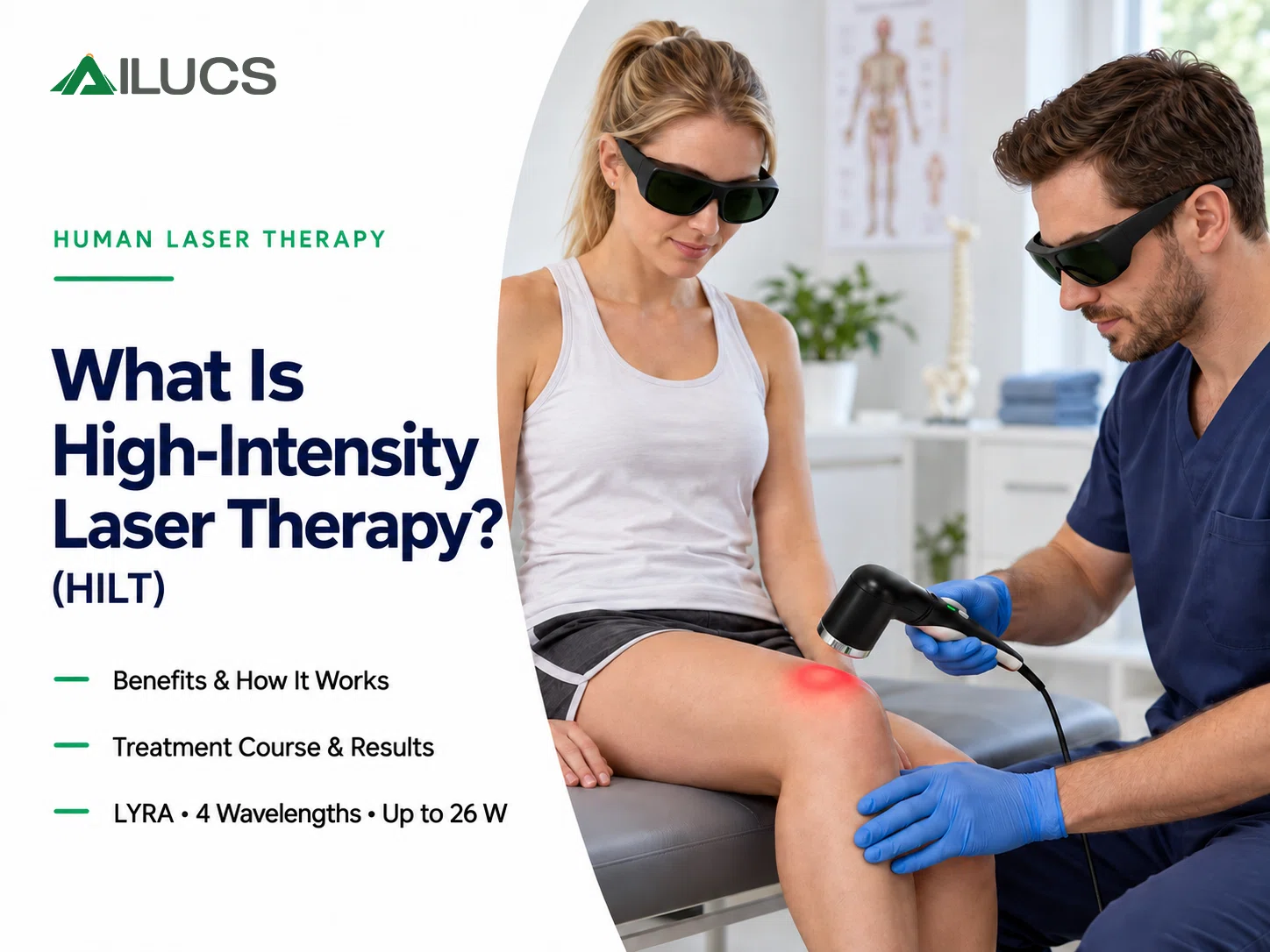
What Is High-Intensity Laser Therapy (HILT)?
What Is High Intensity Laser Therapy
High intensity laser therapy, usually shortened to HILT, is a noninvasive rehabilitation treatment that delivers red or near-infrared laser energy to a defined treatment area. It is mainly studied for pain and functional limitations in musculoskeletal conditions. In practice, HILT is generally used alongside education, therapeutic exercise, graded activity, manual therapy, medication management, or other medical care rather than as a stand-alone cure.
The term high intensity does not mean that every treatment uses maximum power. HILT systems have relatively high available power, which can deliver a planned amount of energy in a practical time or distribute it across a larger area. No universal wattage threshold defines every HILT protocol. Clinical decisions must consider wavelength, average and peak power, output mode, total energy, treatment area, beam size, scanning technique, tissue characteristics, and the patient response.
Key Takeaways
· Research suggests that HILT can reduce pain and improve selected measures of movement or function in some musculoskeletal conditions.
· The evidence is strongest when HILT is positioned as an adjunct to active rehabilitation, not as a replacement for diagnosis or exercise.
· Power alone does not define dose, treatment depth, safety, or clinical effectiveness.
· Research schedules vary widely, so no fixed number of sessions applies to every patient.
· Class IV is a laser safety category. It does not prove that a device or protocol is clinically effective.
How HILT Works
When laser light reaches the body, part is reflected and part enters the tissue. The energy that enters is absorbed, scattered, or transmitted. Its distribution changes with wavelength, skin pigmentation, blood and water content, tissue structure, beam size, contact, and movement of the treatment head. Device output therefore cannot be treated as the exact dose received by a deep anatomical structure.
HILT is generally discussed within photobiomodulation. Laboratory research suggests that absorbed red and near-infrared light can influence cellular signaling, including redox balance, nitric oxide, calcium signaling, transcription factors, and ATP-related metabolism. These pathways may affect cellular behavior, local inflammatory signaling, and pain processing. They do not establish that HILT regenerates an intervertebral disc, rebuilds cartilage, repairs a compressed nerve, or permanently cures a condition in people.
The dose response is not necessarily linear. Twice the energy does not guarantee twice the effect. Too little energy may be ineffective, while excessive local exposure may increase discomfort or thermal risk. Energy in joules equals power in watts multiplied by time in seconds, but that calculation alone does not describe energy density, absorption, beam movement, or the amount reaching a target tissue.
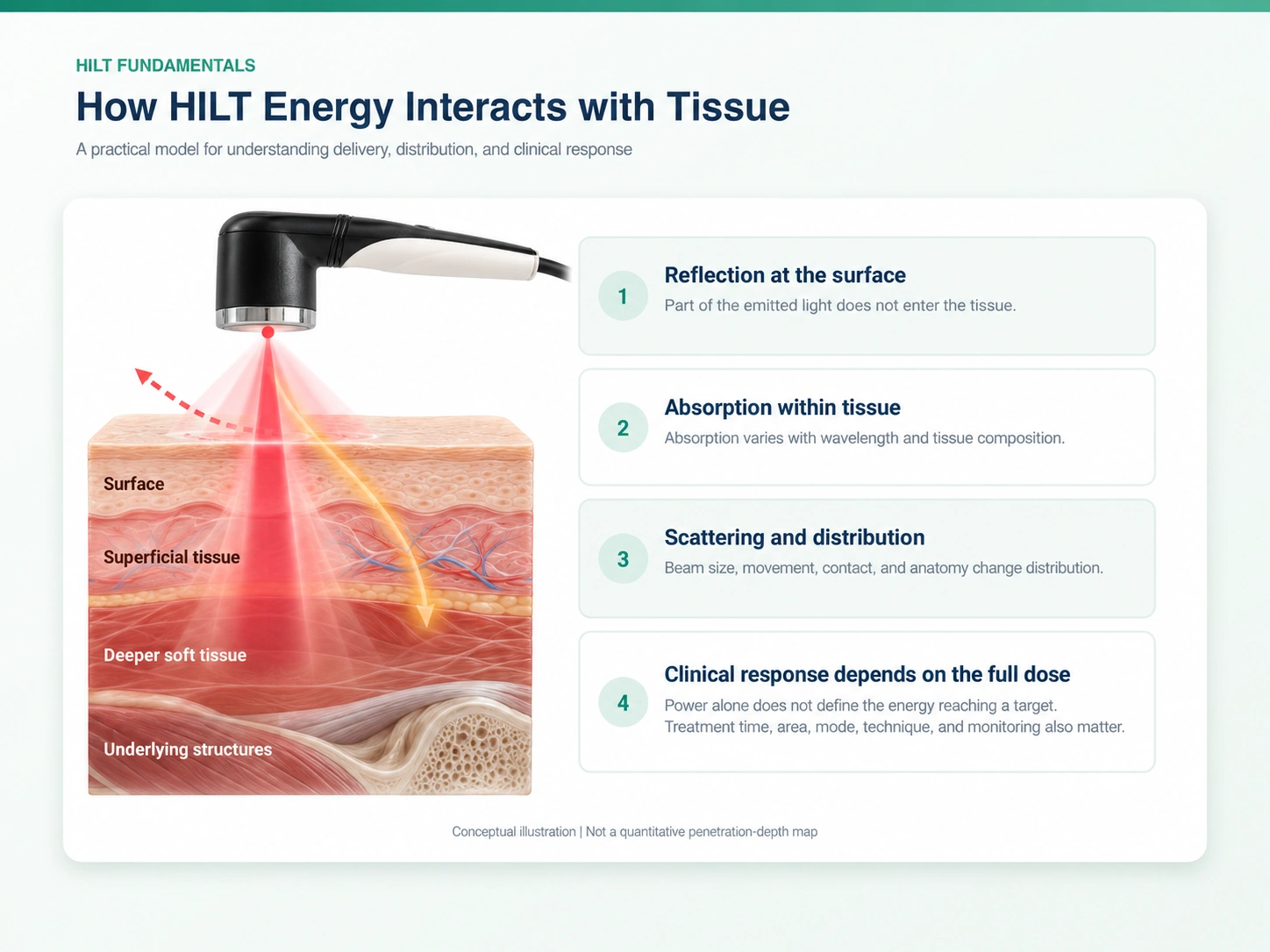
Figure 1. Tissue interaction is influenced by the complete parameter set. This is a conceptual illustration, not a penetration-depth map.
How HILT Differs from Lower Power Laser Therapy
HILT and lower-power laser therapy overlap in their use of red or near-infrared light and in the biological mechanisms proposed for photobiomodulation. The main practical difference is energy-delivery capacity. A higher-power system can deliver a selected amount of energy more quickly or distribute it over a larger area. That capacity also increases the importance of controlled technique and thermal monitoring.
| Clinical consideration | HILT | Lower power laser therapy |
| Energy delivery | Higher available power may deliver the planned total energy more quickly. | Lower power usually requires longer exposure for the same total energy. |
| Treatment area | Often used with dynamic scanning over medium or large areas. | Often used for smaller areas, points, or longer stationary exposures. |
| Patient sensation | Can produce noticeable warmth, depending on the protocol. | Usually produces little or no warmth. |
| Effectiveness | Cannot be predicted from wattage alone. | Cannot be predicted from low power or longer time alone. |
Potential Benefits and Common Research Areas
Clinical trials most often evaluate pain intensity, range of motion, condition-specific disability, physical function, and quality of life. Reviews have reported favorable short-term findings in selected populations with neck pain, knee osteoarthritis, low back pain, and other musculoskeletal disorders. The size and certainty of benefit vary by diagnosis, comparator, follow-up period, and study quality.
A clinically useful benefit is not limited to a lower pain score. When symptoms decrease enough for a patient to move, sleep, work, or participate in exercise more comfortably, HILT may help create an opportunity for active rehabilitation. That does not mean the laser produced structural repair. Pain modulation, improved movement tolerance, and measured functional change are more defensible outcomes than claims of disc regeneration, cartilage regrowth, or permanent healing.
Treatment goals should match the condition and the activity that matters to the patient. For knee osteoarthritis, this might be walking or stair tolerance. For neck or low back pain, it might be sitting, lifting, range of motion, or return to work. Using the same outcome measure at baseline and review makes a clinically meaningful response easier to identify.
| Evidence supports | Evidence does not establish | Practical meaning |
| Possible short-term pain reduction in selected musculoskeletal conditions | A guaranteed response for every diagnosis or patient | Set a measurable goal and reassess early. |
| Improvement in some movement and function measures | Structural repair of cartilage, discs, tendons, or nerves | Describe symptom and function outcomes accurately. |
| Use with exercise in several research protocols | Replacement of active rehabilitation or indicated medical care | Use HILT within a broader plan. |
What the Clinical Evidence Shows
A 2023 systematic review of randomized trials reported improvements in pain and function across several musculoskeletal disorders, while also noting substantial differences among diagnoses and protocols.A 2024 review of neck pain found that HILT added to other physical therapy improved selected pain, disability, and cervical-extension outcomes, although heterogeneity and risk of bias limited certainty.A 2023 knee osteoarthritis review also reported short-term pain benefits, particularly when HILT was combined with exercise.
A 2024 umbrella review found favorable analgesic results but identified methodological limitations in the underlying reviews. Most studies measure outcomes during treatment or shortly afterward. Evidence for long-term benefit, prevention of recurrence, structural tissue repair, and direct transfer between different laser systems remains limited. A favorable result for one diagnosis and protocol should not be used to validate a different device, wavelength combination, dose, or patient group.
Treatment Course and Expected Results
Session length depends on the planned energy, selected power, treatment area, output mode, beam movement, and safety monitoring. Higher power can deliver a selected amount of energy more quickly, but it can also increase the rate of local heat accumulation if the applicator remains in one place. Maximum device output alone cannot determine a safe or effective session time.
The number of sessions depends on the diagnosis, symptom duration, goals, other treatments, and response. Published schedules provide context, not a prescription. Research examples range from repeated sessions over several weeks to longer courses in selected trials. A clinical plan should record a baseline and set an early review point. If pain, movement, or exercise tolerance does not change meaningfully, the diagnosis, dose, technique, or overall plan should be reconsidered rather than repeated indefinitely.
| Research area | Examples used in reviews | How to interpret it |
| Neck pain | Five to twenty sessions, commonly over about four to five week | Wide variation prevents one universal schedule. |
| Knee osteoarthritis | Examples include twelve sessions over four weeks | The schedule applies to the studied protocol, not every patient. |
| Low back pain | Programs commonly use repeated sessions over several weeks | Interpret results with the exercise program and comparator. |
Some patients report a change after the first few sessions, others improve gradually, and some do not respond. An immediate reduction in pain does not prove tissue repair. Progress should be judged with repeatable measures such as pain during a defined movement, range of motion, condition-specific function, activity participation, or tolerance for exercise.
What Happens During Treatment
1. Clinical assessment The clinician confirms the diagnosis, checks the skin and sensation, screens for red flags, and records a baseline outcome.
2. Treatment planning The wavelength or combination, output mode, power, total energy, treatment area, and application technique are selected.
3. Safety preparation Everyone in the controlled area wears protective eyewear matched to the emitted wavelengths, and reflective hazards are managed.
4. Energy delivery and monitoring The clinician delivers the planned energy while monitoring skin response, warmth, discomfort, numbness, and other unusual sensations.
5. Reassessment A relevant pain or function measure is repeated. The result informs whether the next session should continue, change, or stop.
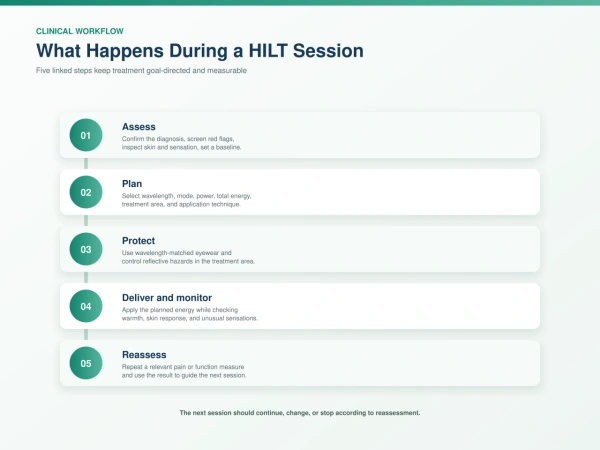
Figure 2. A practical HILT workflow links assessment, parameter selection, safety, delivery, monitoring, and reassessment.
Who May Be a Candidate
HILT may be considered for a person with a clinically assessed musculoskeletal condition, a clear symptom or functional goal, and no relevant contraindication. It may be useful when pain limits participation in exercise or when a clinician wants an additional noninvasive modality. A diagnostic label alone is not enough. The treatment should fit the patient's broader plan and have an outcome that can be measured.
HILT should never delay imaging, medical treatment, or specialist referral when the presentation suggests a fracture, infection, malignancy, major neurologic compromise, or another serious cause. Progressive weakness, new bowel or bladder dysfunction, saddle anesthesia, major trauma, fever with spinal pain, or rapidly worsening symptoms require prompt medical assessment rather than routine treatment with a physical modality.
Safety and Contraindications
High-power therapeutic lasers can injure the eyes and can cause excessive skin heating when used incorrectly. Treatment should follow the device instructions, applicable regulations, and locally authorized indications. Protective eyewear must match the emitted wavelengths and required optical density. Ordinary sunglasses are not laser safety eyewear.
The clinician should consider skin pigmentation, reduced sensation, poor circulation, medicines that affect light or heat sensitivity, tattoos or dark surface materials, acute bleeding, and any area prohibited by the device labeling. Treatment over the eyes or suspected malignant tissue should be avoided. Pregnancy, implanted devices, endocrine glands, open growth plates, and other special circumstances require decisions based on device instructions, local rules, and individual assessment rather than a generic online checklist.
Adverse-event reporting is inconsistent across HILT studies, and many trials have short follow-up. The absence of a serious event in a small study does not prove that treatment is risk-free. Safety depends on the device, parameters, site, operator training, and patient-specific factors. Burning, sharp pain, or rapidly increasing heat should be reported immediately.
The LYRA Four Wavelength Platform
LYRA combines 650 nm red light with 808 nm, 905 nm, and 1064 nm near-infrared wavelengths. Its maximum combined output is 26 W. This is the output ceiling of the platform, not 26 W from each wavelength and not a recommended setting for every treatment. The actual wavelength combination and output should be selected for the treatment goal, area, dose, technique, and patient tolerance.
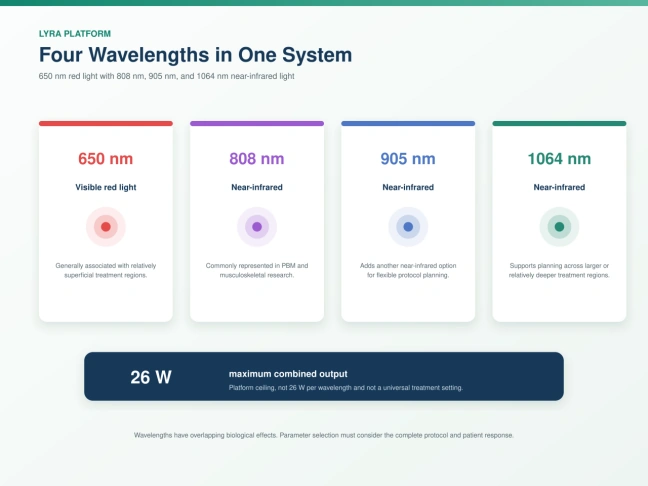
Figure 3. LYRA combines 650, 808, 905, and 1064 nm with a maximum combined output of 26 W.
The wavelength descriptions explain design flexibility. They do not define an exact penetration depth, guarantee delivery of a therapeutic dose to a named structure, or prove a wavelength-specific clinical result. The wavelengths have overlapping biological effects, so they should not be assigned exclusive labels such as pain, inflammation, circulation, or healing.
HILT studies have used different wavelengths, output modes, energy doses, and schedules. Studies using a single wavelength should not be assumed to represent LYRA's four-wavelength configuration. Appropriate laser therapy wavelength selection should be based on the target tissue, treatment area, clinical objective, and complete protocol. Guided software and protocol support can improve consistency, but a preset does not replace clinical judgment. The clinician remains responsible for the indication, parameter selection, monitoring, and documentation.
Frequently Asked Questions
Is HILT the same as Class IV laser therapy
No. HILT describes a therapeutic approach. Class IV describes a laser hazard category and the safety controls it requires.
Does HILT hurt
Treatment is generally intended to be comfortable, and mild warmth may occur. Burning, sharp pain, or rapidly increasing heat should be reported immediately.
How long does one HILT session take
Duration depends on the prescribed power, total energy, treatment area, scanning method, and safety monitoring. Maximum device power alone cannot determine session length.
How many HILT sessions are needed
Studies commonly use repeated sessions over several weeks, but there is no universal course. Continue only when reassessment supports the plan.
How soon should results appear
Some patients notice a short-term change within the first few sessions; others improve gradually or do not respond. Progress should be judged with repeatable pain and function measures rather than a guaranteed timeline.
Is higher power always better
No. Higher available power can improve energy-delivery efficiency, but effectiveness depends on the complete dose and treatment technique. Excessive local exposure can increase discomfort or thermal risk.
Can HILT replace exercise medication or surgery
Usually not. HILT may support rehabilitation, but it does not replace diagnosis, prescribed medication management, progressive exercise, or surgical evaluation when indicated.
Conclusion
HILT is a noninvasive rehabilitation modality with encouraging evidence for short-term pain relief and selected functional outcomes in some musculoskeletal conditions. Its most defensible use links an appropriate diagnosis and dose to a measurable goal, active rehabilitation, laser safety, and scheduled reassessment. LYRA's 650 nm, 808 nm, 905 nm, and 1064 nm configuration and 26 W maximum combined output expand the clinician's delivery options, but they do not guarantee a result.
Medical Notice
This article is intended for professional education and general information. It does not provide an individual diagnosis, treatment prescription, or guarantee of outcome. A qualified professional must determine indications, parameters, contraindications, and treatment frequency using the device instructions and locally authorized scope of practice.
References
1. Dompe C, Moncrieff L, Matys J, et al. Photobiomodulation underlying mechanism and clinical applications. Journal of Clinical Medicine. 2020;9(6):1724. DOI
2. de Freitas LF, Hamblin MR. Proposed mechanisms of photobiomodulation or low level light therapy. IEEE Journal of Selected Topics in Quantum Electronics. 2016;22(3):348-364. DOI
3. Arroyo Fernandez R, Aceituno Gomez J, Serrano Munoz D, Avendano Coy J. High intensity laser therapy for musculoskeletal disorders. Journal of Clinical Medicine. 2023;12(4):1479. DOI
4. de la Barra Ortiz HA, Arias M, Liebano RE. Effectiveness of high intensity laser therapy in the management of neck pain. Lasers in Medical Science. 2024;39:124. DOI
5. Cai P, Wei X, Wang W, Cai C, Li H. High intensity laser therapy on pain relief in symptomatic knee osteoarthritis. Journal of Back and Musculoskeletal Rehabilitation. 2023;36(5):1011-1021. DOI
6. de la Barra Ortiz HA, Arias Avila M, Liebano RE. Quality appraisal of systematic reviews on high intensity laser therapy for musculoskeletal pain management. Lasers in Medical Science. 2024;39:290.