
Laser Therapy for Muscle Strains in Dogs and Horses
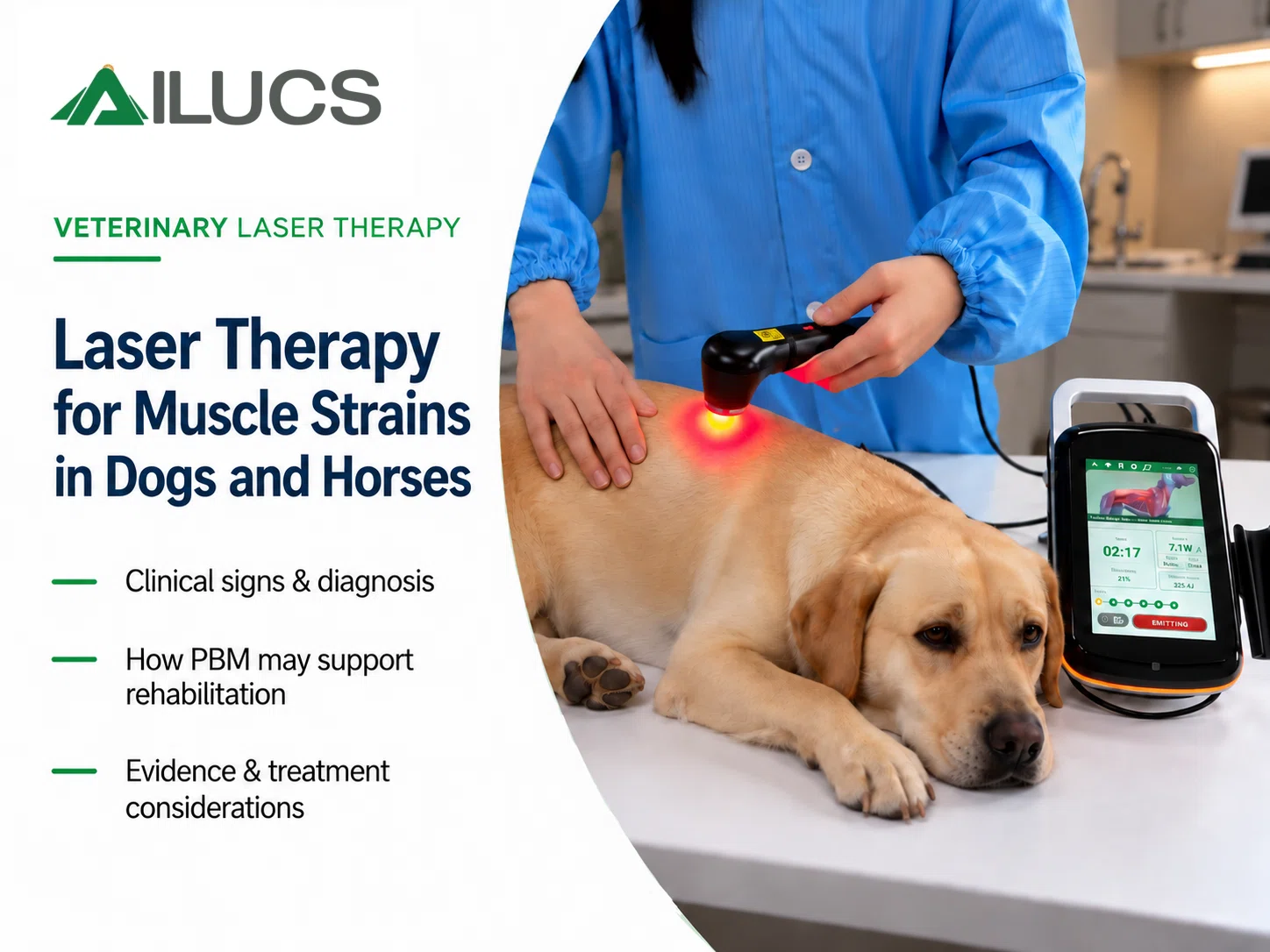
Laser therapy may be used as an adjunct to muscle strain rehabilitation in dogs and horses as part of an individualized veterinary plan. It should complement, rather than replace, appropriate diagnosis, activity modification, therapeutic exercise, pain management when indicated, and other rehabilitation strategies. Evidence specifically addressing uncomplicated muscle strains remains limited, so treatment decisions should be guided by the injury, rehabilitation goals, device characteristics, and the patient's clinical response.
Clinical Signs and Diagnosis of Muscle Strains
A muscle strain can affect how an animal moves, exercises, and bears weight. Clinical signs depend on the location and severity of the injury and may include pain, stiffness, swelling, altered gait, reduced range of motion, or decreased athletic performance.
Common signs include:
Lameness or altered gait
Pain during palpation or movement
Localized swelling or tissue changes
Increased warmth around the affected area
Reduced range of motion
Muscle stiffness or guarding
Reduced exercise tolerance or athletic performance
Reluctance to walk, stand, or exercise
Muscle spasm in some cases
Compensatory movement patterns
Diagnosis begins with patient history and physical examination. Gait assessment, palpation, orthopedic examination, and functional evaluation can help identify the affected area and determine whether diagnostic imaging is needed.
Ultrasound can be useful for evaluating soft-tissue structures and changes in muscle architecture. MRI may be considered when a deeper or more complex soft-tissue injury requires additional assessment.
Because similar signs can occur with tendon, ligament, orthopedic, neurologic, and other soft-tissue conditions, the underlying injury should be identified before rehabilitation is planned.
How Laser Therapy May Support Muscle Strain Rehabilitation
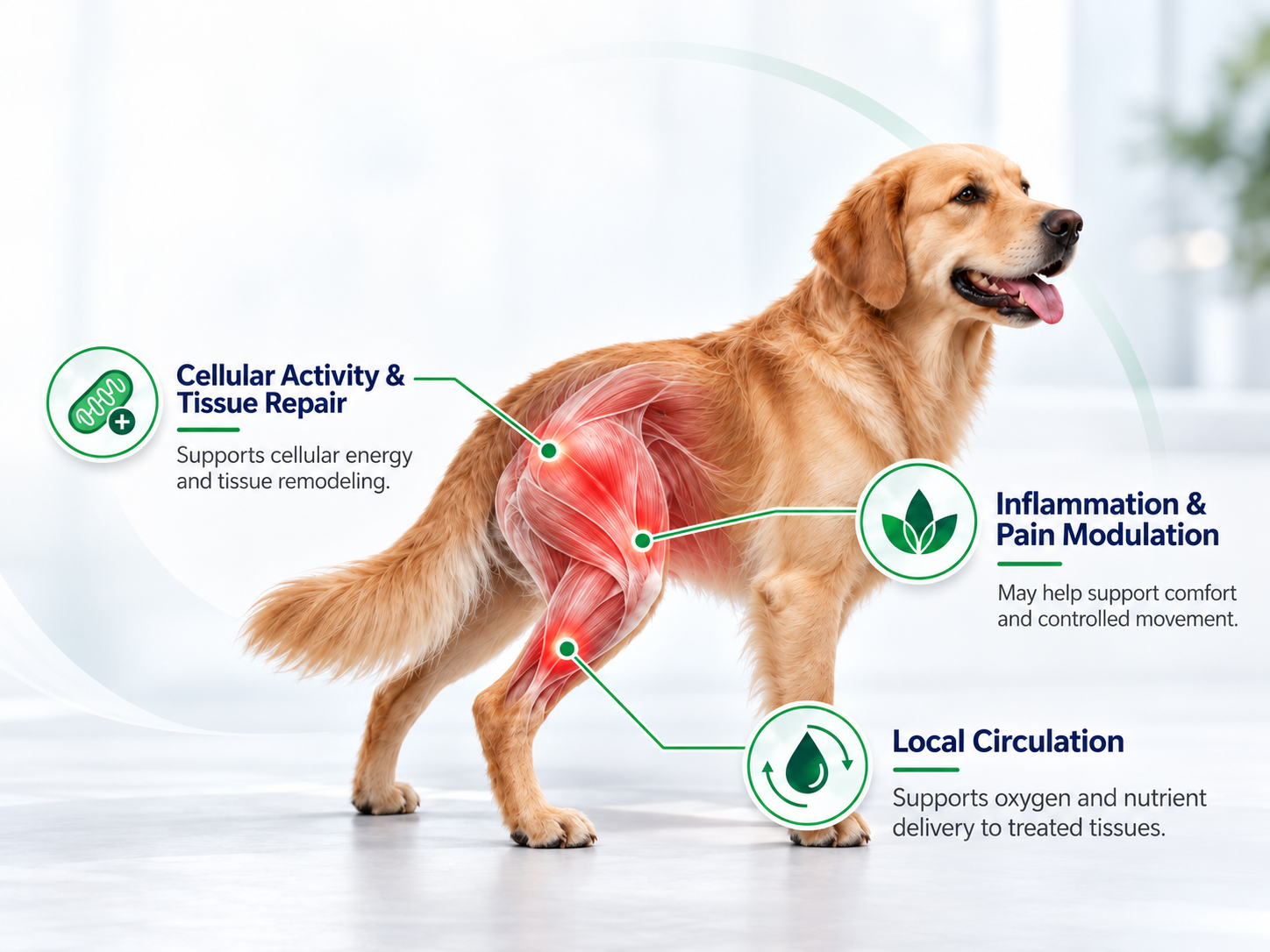
Muscle recovery typically progresses through an early inflammatory response, tissue repair, remodeling, and gradual restoration of function. Photobiomodulation (PBM), when delivered using therapeutic laser devices, uses non-ionizing light to influence biological activity in targeted tissues. Proposed mechanisms include effects on cellular metabolism, inflammatory signaling, local vascular responses, and pain-related pathways, although the strength of clinical evidence varies by condition.
Cellular Activity and Tissue Repair
Light absorbed by cellular chromophores may influence mitochondrial processes and ATP production. These changes may support cellular activity involved in tissue maintenance, repair, and remodeling.
Inflammation and Pain Modulation
PBM has been investigated for effects on inflammatory mediators and pain-related signaling. In a rehabilitation setting, these effects may help support comfort and make controlled movement or therapeutic exercise more manageable for some patients.
Local Circulation and Rehabilitation
PBM may also influence local vascular responses and tissue perfusion. This can support oxygen and nutrient delivery to treated tissues while rehabilitation progresses. These biological effects provide a rationale for using PBM as an adjunctive modality, but they do not establish the same clinical benefit for every type or severity of muscle injury.
Laser therapy should be considered one component of the broader rehabilitation plan. Depending on the patient, it may be combined with activity modification, therapeutic exercise, manual therapy, medication when indicated, and other rehabilitation techniques. Early management may emphasize comfort and controlled activity, while later rehabilitation may focus more on restoring strength, mobility, conditioning, and normal movement.
Treatment frequency and rehabilitation progression should be adjusted according to clinical assessment and the patient's response.
Dogs and Horses: Rehabilitation Considerations
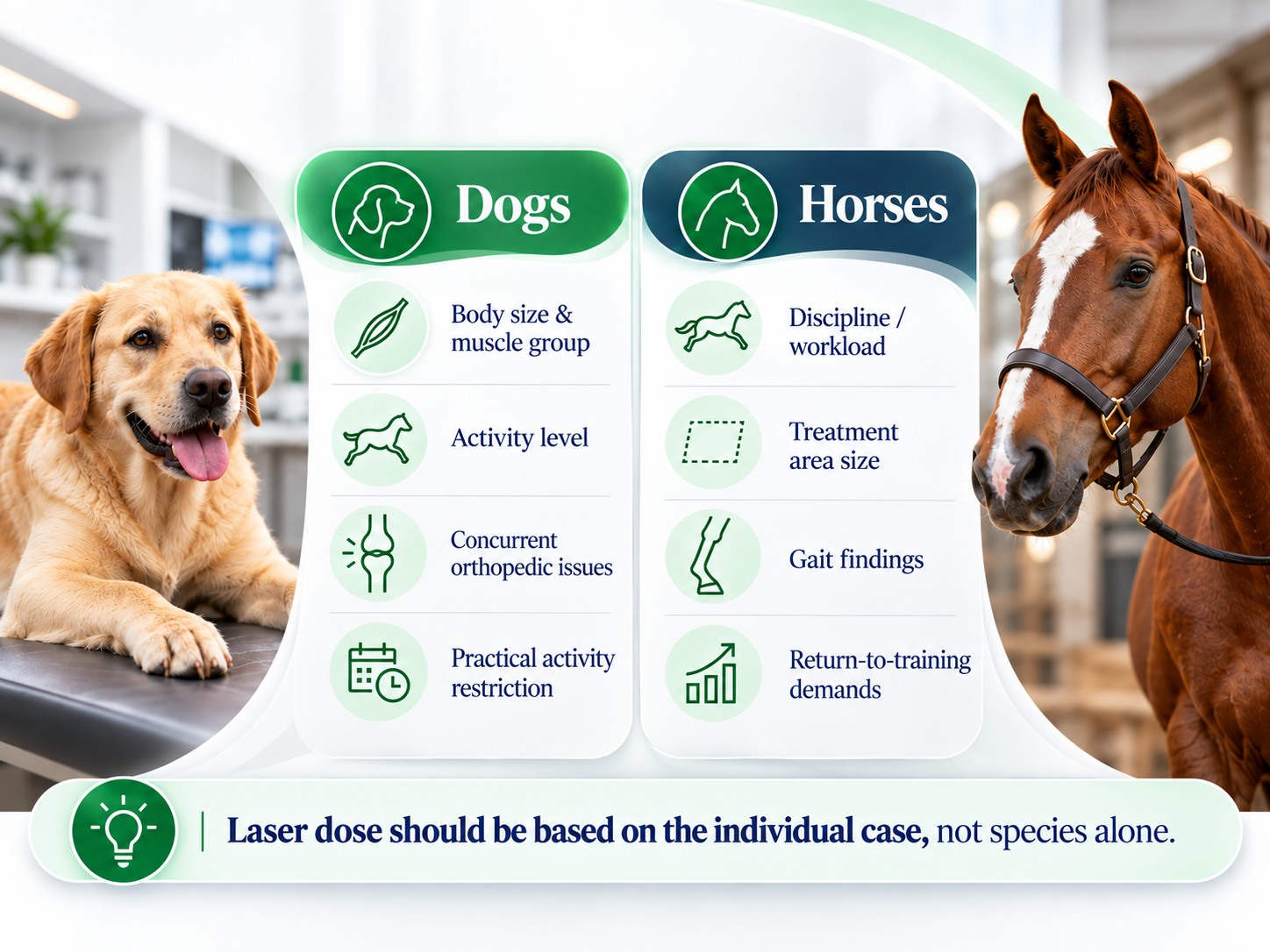
In dogs, rehabilitation goals may differ according to whether the patient is a companion, working, or sporting animal. Body size, the affected muscle group, normal activity level, concurrent orthopedic problems, and the practical ability to restrict or progress activity can all influence the plan.
In horses, clinicians may also need to consider the discipline or workload, the size and location of the treatment area, gait findings, training demands, and the progression from controlled exercise back to normal work or competition.
These species-specific considerations influence rehabilitation planning, but they do not justify selecting a fixed laser dose based on species alone.
Laser Therapy Treatment Parameters for Muscle Strains
There is no single laser protocol for every canine or equine muscle strain. Wavelength, power delivery, dose, treatment area, application technique, and treatment frequency should be selected according to the target tissue, rehabilitation objective, device characteristics, and clinical response. A systematic review of veterinary laser therapy found substantial variation in treatment parameters and no consensus regarding one optimal protocol across veterinary indications [1].
| Parameter | Clinical consideration |
| Wavelength | Consider the target tissue, treatment depth, and clinical objective. |
| Power / irradiance | Select according to the treatment area, target tissue, intended energy delivery, and device characteristics |
| Dose / total energy | Determine according to the treatment objective, tissue characteristics, treatment area, and device-specific protocol. |
| Treatment area & technique | Use an application technique that provides appropriate coverage of the target region and follows the manufacturer's instructions. |
| Treatment frequency & progression | Adjust according to injury stage, rehabilitation goals, clinical response, and changes in the broader exercise plan. |
A protocol published for one laser system should not be transferred directly to another device without considering differences in beam characteristics, power delivery, treatment area, application technique, and manufacturer-specific settings.
Evidence from Related Equine Soft-Tissue Research
Direct clinical research on laser therapy for uncomplicated equine muscle strains remains limited. However, related studies involving tendon and ligament injuries provide useful context for how high-intensity laser therapy (HILT) has been applied in controlled equine rehabilitation settings.
One randomized controlled study included 26 performance horses with tendon and ligament injuries. All horses followed the same rehabilitation program, while the treatment group received 15 HILT sessions. The study used 808 nm and 980 nm wavelengths simultaneously, with reported settings of 5 W at 700 Hz and 16 J/cm² for 808 nm, and 4 W at 1000 Hz and 16 J/cm² for 980 nm. Treatment intervals progressed from 24 hours to 48, 72, and 96 hours .
In that study, the treated horses showed improvements in pain, swelling, and lameness compared with the control group, along with a greater reduction in lesion percentage. No significant difference was found in lesion echogenicity . These findings relate to tendon and ligament injury and should not be interpreted as direct evidence for uncomplicated muscle strains.
The reported parameters should not be considered a universal protocol. They represent the treatment conditions used in one controlled study and should not be transferred directly to different injuries, patients, or laser systems.
More detailed information on veterinary laser therapy dosage is available in the dedicated dosage guide.
What Does the Evidence Say About Laser Therapy?
Research on photobiomodulation in veterinary medicine has expanded, particularly in rehabilitation and musculoskeletal care. However, clinical results vary between conditions and treatment protocols.
A 2023 systematic review of veterinary laser therapy identified studies involving dogs, cats, and horses. It reported conflicting results, substantial variation in wavelength, laser class, dose, treatment frequency, and duration, and generally limited study quality .
A 2023 review of PBM in small-animal medicine similarly described a growing body of clinical research in veterinary rehabilitation and sports medicine, with evidence stronger for some conditions and mixed or limited for others .
Equine research provides useful context, but the available clinical evidence is more often focused on tendon and ligament injuries than on uncomplicated muscle strains. This distinction is important when interpreting findings from related soft-tissue studies and applying them to clinical decision-making.
Current Evidence in Context
Current veterinary evidence supports PBM as a potential adjunctive rehabilitation modality, but evidence specifically addressing uncomplicated muscle strains in dogs and horses remains limited. Treatment decisions should therefore be based on diagnosis, rehabilitation goals, device characteristics, and individual patient response rather than on a single standardized protocol.
Frequently Asked Questions
Is laser therapy safe for muscle strains?
Therapeutic laser can be incorporated into veterinary rehabilitation when used by trained professionals with appropriate parameters and safety procedures. Protective eyewear, treatment-room controls, and other device-specific precautions should follow the manufacturer's instructions and applicable clinical guidance.
How many laser sessions are usually required?
There is no fixed number of sessions for every muscle strain. The treatment schedule depends on the injury, treatment goal, rehabilitation plan, and patient response.
Can laser therapy replace medication?
No. Laser therapy is an adjunctive modality. When medication is indicated, it may be used alongside laser therapy and other rehabilitation strategies.
Can laser therapy be used during the acute phase of a muscle strain?
Whether laser therapy is appropriate during the acute phase should be determined after veterinary assessment. The decision should reflect the type and severity of injury, current clinical findings, treatment goals, and the broader rehabilitation plan.
Can laser therapy be used together with rehabilitation exercises?
Yes. Laser therapy can be incorporated alongside therapeutic exercise, hydrotherapy, manual therapy, and other rehabilitation techniques when appropriate.
Can laser therapy help prevent recurrent muscle injuries?
Laser therapy may support recovery, but reducing reinjury risk also requires appropriate conditioning, progressive exercise, strength and mobility work, and attention to contributing factors.
Does the hair coat need to be clipped?
Not necessarily. The coat can influence light delivery to the skin and underlying tissues. Whether clipping is useful depends on coat characteristics, the treatment area, the device, the intended target tissue, and the manufacturer's recommended technique.
What safety precautions should be considered?
Protective eyewear should be used according to the device manufacturer's instructions, and the laser should not be directed toward the eyes. Clinicians should also follow device-specific contraindications, precautions, treatment-room controls, and current veterinary guidance before treating any patient.
Conclusion
Muscle strains can affect comfort, movement, and athletic performance in dogs and horses. Diagnosis, appropriate activity management, and progressive rehabilitation remain central to recovery.
Laser therapy may be a useful adjunct during rehabilitation when the treatment plan is tailored to the injury, the device being used, and the patient's clinical response. For muscle strains specifically, direct clinical evidence remains limited, and no single protocol can be assumed to apply across dogs, horses, injury stages, or laser systems.
For this reason, laser therapy is best considered as part of a broader rehabilitation plan rather than as a stand-alone treatment.
References
1. Millis DL, Bergh A. A Systematic Literature Review of Complementary and Alternative Veterinary Medicine: Laser Therapy. Animals (Basel). 2023;13(4):667. doi:10.3390/ani13040667.
2. Hochman L. Photobiomodulation Therapy in Veterinary Medicine: A Review. Topics in Companion Animal Medicine. 2018;33(3):83–88. doi:10.1053/j.tcam.2018.06.004.
3. Bunch J. Photobiomodulation (Therapeutic Lasers): An Update and Review of Current Literature. Veterinary Clinics of North America: Small Animal Practice. 2023;53(4):783–799. doi:10.1016/j.cvsm.2023.02.010.
4. Zielińska P, Nicpoń J, Kiełbowicz Z, Soroko M, Dudek K, Zaborski D. Effects of High Intensity Laser Therapy in the Treatment of Tendon and Ligament Injuries in Performance Horses. Animals (Basel). 2020;10(8):1327. doi:10.3390/ani10081327.